India Fowler
Lori Granger

“Winning just might be the death of you.”
Who will be voted queen at Shadyside High's 1988 prom? For underdog Lori, competition is cutthroat even before someone starts killing off the candidates.
Official
I keep thinking about the paper cutter.
Not the way it looks—though that moment in Fear Street: Prom Queen is undeniably gruesome, the blade slicing through flesh with a wet, final sound—but the way it’s staged. The killer doesn’t lunge; they wait. The camera lingers on the victim’s face, the slow realization, the way their fingers twitch toward the blade as if testing the air.
It’s the only time in the film where the horror feels intentional, where the tension isn’t undercut by a needle drop or a line of dialogue that lands with all the subtlety of a sledgehammer. For 90 minutes, Prom Queen stumbles through the motions of an ’80s slasher, but in that one shot, it remembers how to be scary.
The problem isn’t that Fear Street: Prom Queen is bad. It’s that it’s boring—a word I never thought I’d use to describe a movie where a prom queen candidate gets her face pressed into a buzzsaw. But boredom, in horror, is the real sin.
The first Fear Street trilogy (2021) understood this. Leigh Janiak’s films were messy, overstuffed, and occasionally ridiculous, but they moved. They had a rhythm, a sense of escalation, a willingness to let scenes breathe even as they piled on the gore. Prom Queen, directed by Matt Palmer (Calibre), feels like it was edited in a hurry, with all the sharp edges sanded off.
The kills are there, the blood is there, but the dread? The dread is missing.
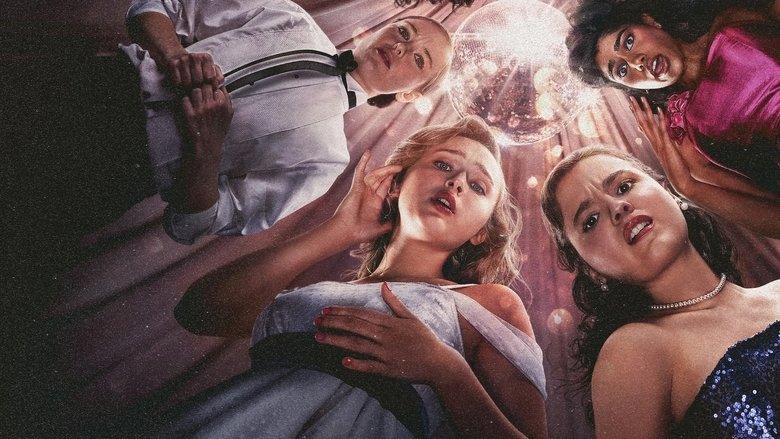
Take the opening sequence. A group of Shadyside High’s most popular girls—dubbed the “Wolf Pack” by the film—are getting ready for prom in a locker room. The camera glides between them, lingering on their hairspray, their laughter, their shared sense of invincibility.
It’s a promising setup, the kind of scene that could establish the film’s hierarchy of mean girls and outsiders. But then the killer strikes, and the moment collapses under its own weight. The lighting is so dim you can barely see the action, the score swells into a generic synth crescendo, and the dialogue—delivered with all the nuance of a Riverdale extra—lands with a thud.
By the time the first body hits the floor, I wasn’t scared. I was checking the runtime.
This is the film’s defining flaw: it mistakes noise for tension. The soundtrack is packed with ’80s hits (Bon Jovi, The Cure, a particularly ill-timed use of “Don’t You (Forget About Me)”), but the music never serves the mood. It’s just there, like wallpaper.
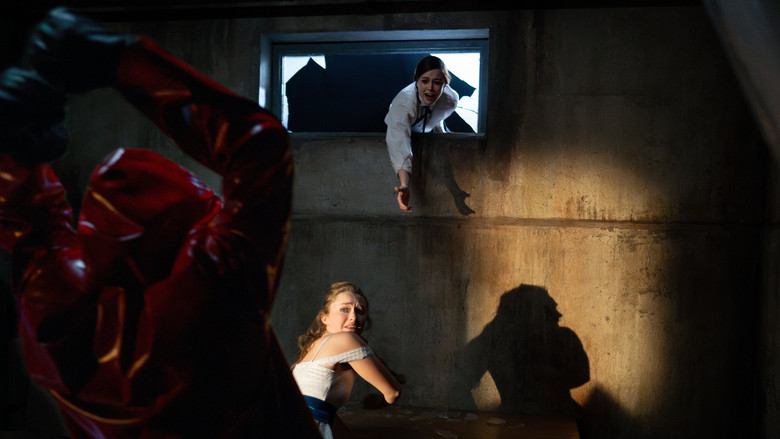
The same goes for the gore. Prom Queen isn’t shy about its R-rating—there’s a kill involving a curling iron that’s as gratuitous as it is unnecessary—but the violence lacks the purpose of the trilogy’s best moments. In 1978, the campfire massacre wasn’t just about the blood; it was about the way the camera held on the survivors’ faces, the way the sound design dropped out to let their breathing fill the silence.
Here, the kills are over before they begin, drowned out by a wall of sound and a cutaway to the next scene.
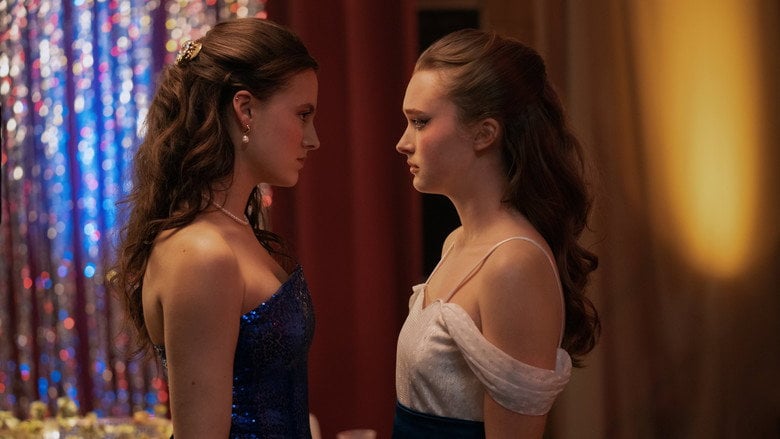
The cast, at least, tries. India Fowler plays Lori Granger, the film’s underdog final girl, with a quiet determination that almost sells the material. She’s the kind of protagonist who should work in a slasher—someone with a chip on her shoulder, a family legacy to live up to, and just enough vulnerability to make you root for her.
But the script gives her little to do beyond reacting to the carnage around her. Suzanna Son, as Lori’s best friend Megan, fares slightly better. She’s the film’s most compelling presence, a stoner-horror nerd whose unrequited crush on Lori adds a layer of subtext that the film never fully explores.
(A shame, given how much the Fear Street trilogy leaned into queer themes.) Fina Strazza, as the film’s alpha mean girl Tiffany Falconer, is the only actor who seems to be having fun. She chews scenery with the gusto of a young Reese Witherspoon in Election, and her performance is so delightfully unhinged that I found myself wishing the film had been about her instead.
The adults, meanwhile, are wasted. Katherine Waterston and Lili Taylor, both veterans of the franchise, show up for a handful of scenes as Lori’s mother and a stern vice principal, respectively. Their presence is a reminder of what Fear Street used to be—a series that took its characters seriously, even when it was wallowing in gore.
Here, they’re just set dressing, their performances reduced to a series of sighs and stern glances. Chris Klein, as a gym teacher with a secret, fares slightly better, but even he can’t salvage the film’s most baffling subplot: a thread about Lori’s family curse that goes nowhere.
The film’s biggest misstep, though, is its detachment from the Fear Street mythology. The first trilogy was a love letter to slasher fans, a meta-commentary on the genre that also managed to be a genuinely affecting story about grief, trauma, and the cyclical nature of violence. Prom Queen doesn’t even try. It’s set in Shadyside, it references the town’s cursed reputation in passing, and there’s a throwaway line about a witch’s mark, but that’s it.
The film could have taken place in any small town, in any slasher movie. Variety put it best: “It has basically nothing to do with the trilogy that preceded it, besides taking place in the same town.” That’s not necessarily a bad thing—standalone horror films can be great—but Prom Queen doesn’t offer anything new in exchange for its freedom. It’s a retread of Prom Night (1980), The Prowler (1981), and every other slasher that’s ever used a high school dance as a backdrop for murder.
The Guardian’s verdict stings but feels accurate: “If the introductory trilogy started us off on a thrilling journey, here we’re brought to a sudden dead end. The fear is gone.”
There’s a moment near the end of the film where Lori, covered in blood and clutching a makeshift weapon, turns to face the killer. The camera pushes in on her face, and for a second, it looks like Prom Queen might finally deliver on its promise. But then the killer speaks, the mask comes off, and the reveal is so telegraphed that I groaned out loud.
It’s not that the twist is bad—it’s that the film has done nothing to earn it. There’s no misdirection, no red herrings, no sense of dread leading up to the moment. Just a checklist of slasher tropes, ticked off one by one.
I wanted to like Fear Street: Prom Queen. I really did. The first trilogy was far from perfect, but it had heart, ambition, and a genuine love for the genre. Prom Queen has none of those things.
It’s a film that plays like a first draft, a rough sketch of what could have been. The kills are inventive, the cast is game, and the premise is solid, but the execution is so lacking that it’s hard to see this as anything more than a missed opportunity. IndieWire called it “a gnarly and giddy next chapter,” but I’m not sure what franchise they were watching.
This isn’t a next chapter. It’s an epilogue, and a forgettable one at that.
The paper cutter, though. That shot stays with me. Not because it’s good, but because it’s the only moment in the film where Fear Street remembers how to be scary. The rest of the time, it’s just going through the motions. And in horror, that’s the real crime.
"A disappointing addition to the Fear Street series with weak scares and uninspired storytelling."
The film lacks the tension and creativity of earlier Fear Street entries. The horror is underdeveloped and the plot fails to engage, making it a missed opportunity. The nostalgic setting is a plus but goes underused.
Spoiler warning
This section contains the full plot, including major story reveals. Overview above stays spoiler-free.
Netflix’s latest entry in the Fear Street franchise, Fear Street: Prom Queen (2025), is already stirring controversy among fans of R.L. Stine’s beloved book series. latestnetflix.com's view is that Directed by Matt Palmer, the film promises a slasher-filled prom night at Shadyside High, but early reactions suggest it may struggle to live up to the legacy of its predecessors.
Fear Street: Prom Queen marks the fourth installment in Netflix’s adaptation of Stine’s Fear Street series, following the original trilogy (1994, 1978, and 1666). Unlike the interconnected narrative of the first three films, Prom Queen is a standalone story, loosely based on Stine’s 1992 novel The Prom Queen. The plot centers on a masked killer targeting the "it" girls competing for prom queen at Shadyside High in 1988, with a gutsy outsider uncovering the dark secrets behind the disappearances.
The film stars India Fowler, Suzanna Son, and Fina Strazza in leading roles, alongside returning Fear Street veterans Katherine Waterston and Lili Taylor. Chris Klein, Ariana Greenblatt, and David Iacono round out the cast, bringing a mix of fresh faces and franchise familiarity.
Despite its nostalgic 1980s setting, Prom Queen has drawn criticism from fans who feel it strays too far from the source material. According to reports, some viewers argue the film lacks the suspense and depth of Stine’s original book series, calling it "disrespectful" to the trilogy that preceded it. The decision to make Prom Queen a standalone entry—rather than a direct continuation of the existing storyline—has also sparked debate, with some fans questioning whether Netflix is prioritizing marketability over continuity.
The backlash echoes concerns raised during the original Fear Street trilogy’s release, where purists criticized deviations from the books. However, the first three films were praised for their atmospheric horror and strong performances, suggesting Prom Queen may still find an audience despite the criticism.
Little is known about the film’s production, but its original score album, Fear Street: Prom Queen (soundtrack), has been confirmed. Given the franchise’s history of blending synth-heavy scores with period-appropriate music, the soundtrack could play a key role in setting the tone for the film’s 1988 setting.
As for release details, Netflix has yet to announce a premiere date, leaving fans in the dark about when they’ll finally see the film. With the franchise’s built-in fanbase and the enduring appeal of slasher horror, Prom Queen could still turn things around—if it delivers the scares.
For now, the film remains a lightning rod for debate, proving that even in horror, nostalgia can be a double-edged sword.
Entertainment rumors and trivia aggregated from public reporting. Treat speculation as unverified unless a cited source confirms it.
More titles in the same genres and with the same cast.