

Tony Yang
Hsu-Chuan

Hsu-Chuan, who works at a game company, accidentally brings home a broken clay doll from a haunted house while developing a new horror VR game. Unexpectedly, his pregnant wife, Mu-Hua, a cultural relic restorer, develops an obsession with the doll and relentlessly tries to repair it. As strange things begin to happen in the house, Mu-Hua's condition deteriorates, and Hsu-Chuan, at his wits' end, seeks help from a spiritual medium, Ah-Sheng. Meanwhile, the horrifying secret hidden behind the clay doll begins to surface.
Official
I keep thinking about the clay. Not the doll itself—though that thing is unsettling enough, with its cracked surface and hollow eyes—but the way Mudborn treats it like a living wound. It’s not just a cursed object; it’s a piece of broken history, something that should have stayed buried but instead gets dragged into the light by a man who doesn’t understand what he’s carrying.
That’s the horror at the heart of Shieh Meng-ju’s film: the collision of old grief and new technology, of a past that refuses to stay dead and a future that can’t outrun it.
The story is simple enough. Hsu-Chuan (Tony Yang), a VR game developer, brings home a damaged clay doll from a haunted house he’s scouting for his next project. His wife, Mu-Hua (Cecilia Choi), a restorer of cultural relics, becomes obsessed with repairing it.
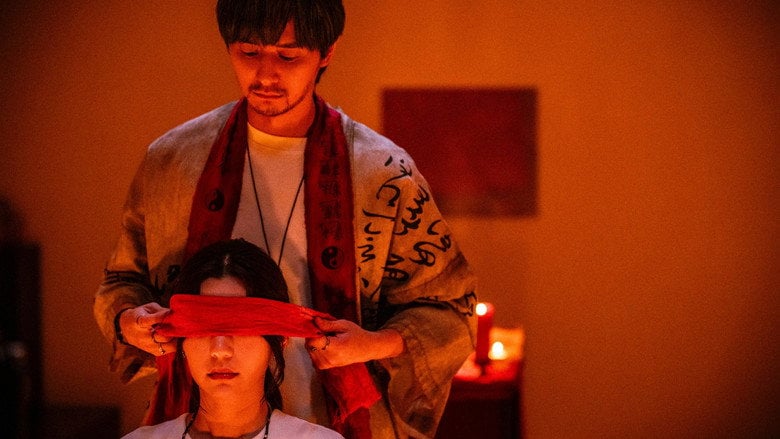
Soon, strange things start happening—objects moving on their own, whispers in the dark, Mu-Hua’s behavior growing increasingly erratic. The doll, it turns out, is tied to a local folktale, one of those old Taiwanese nursery rhymes that sound innocent until you realize they’re about dead children and vengeful spirits. By the time Hsu-Chuan seeks help from a spiritual medium (Ah-Sheng, played with grizzled intensity by Derek Chang), the line between the digital world of his VR game and the supernatural one bleeding into his home has already blurred.

What makes Mudborn more than just another cursed-object horror flick is the way it ties the doll’s malevolence to something deeper: grief, guilt, and the way trauma lingers in objects. Mu-Hua isn’t just possessed; she’s haunted in the most literal sense, her obsession with the doll mirroring her own unresolved pain. The film never spells this out, but it’s there in the way she touches the doll, in the way her hands tremble as she tries to repair it.
There’s a moment early on where she presses her ear to its hollow body, as if listening for something. It’s a small gesture, but it’s devastating—because what she’s really listening for is her own past.
The VR angle is where Mudborn gets interesting. Hsu-Chuan’s job is to create immersive horror experiences, but the film suggests that no digital simulation can compare to the real thing. His game is all jump scares and cheap thrills, while the horror unfolding in his home is slow, creeping, and deeply personal.
There’s a great scene where he tests a new level in his VR headset, only to find himself trapped in a loop of his own memories—his wife’s voice calling to him from the dark, the doll’s face appearing where it shouldn’t. It’s a clever inversion of the usual haunted-house trope: here, the technology isn’t the source of the horror, but a feeble attempt to contain it.
The film’s strongest moments are the quiet ones. Shieh Meng-ju has a knack for building dread through small details—a flickering light, a distant whisper, the way the doll’s head seems to turn just a fraction when no one’s looking. The cinematography leans into the damp, claustrophobic feel of a Taiwanese ghost story, all muted colors and tight framing.
The sound design is equally effective, using silence and sudden, jarring noises to keep the audience on edge. (That nursery rhyme, sung in a child’s voice, is particularly chilling.)
But Mudborn isn’t without its flaws. The middle act drags, and some of the scares feel a little too familiar—possession tropes, exorcism rituals, the obligatory third-act showdown with the spirit. The VR subplot, which starts strong, fades into the background before being resolved a little too neatly.
And while the ending is emotionally satisfying, it also feels a bit rushed, as if the film suddenly remembers it’s a horror movie and needs to wrap things up with a bang.
Still, the performances carry the film. Cecilia Choi is heartbreaking as Mu-Hua, her descent into obsession and possession played with a quiet intensity that makes the supernatural elements feel grounded. Tony Yang, as Hsu-Chuan, is the everyman caught in something he can’t understand, his fear and frustration palpable.
But the real standout is Derek Chang as Ah-Sheng, the spiritual medium. He brings a weary, lived-in quality to the role, as if he’s seen this kind of thing a hundred times before and is just tired of it all.
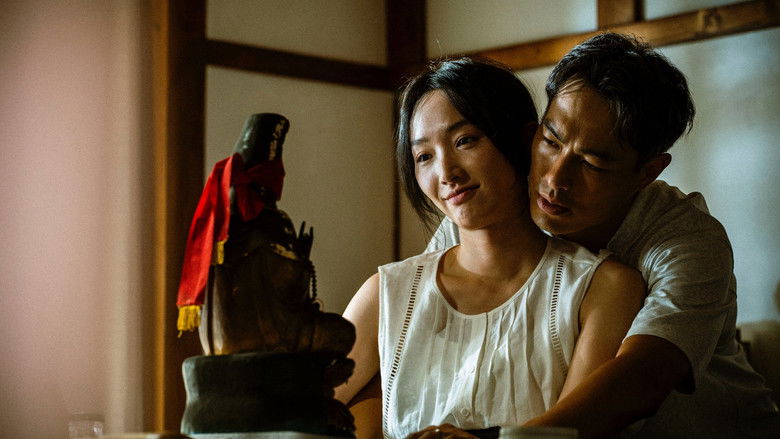
What lingers, though, is the doll itself. Not as a monster, but as a symbol—of the past’s refusal to stay buried, of the way trauma seeps into the objects around us, of the things we try to fix but can’t. There’s a moment near the end where Mu-Hua, now free of the doll’s influence, holds it one last time.
She doesn’t repair it. She just looks at it, her fingers brushing over the cracks. It’s a small gesture, but it says everything: some things can’t be fixed.
Some things shouldn’t be.
I keep coming back to that image—the doll, the cracks, the way the light hits it. It’s not just a prop; it’s a wound. And Mudborn understands that the scariest wounds aren’t the ones you can see, but the ones you carry with you, invisible and unhealed.
The film’s final shot is of Hsu-Chuan and Mu-Hua walking away from the house, the doll left behind. But the camera lingers on it for just a second too long, as if to remind us: some things don’t stay where you leave them. Some things follow you home.
"An atmospheric yet familiar Taiwanese horror that mixes effective scares and emotion with a predictable, unevenly executed story."
Creepy atmosphere, a cultural folklore angle, and an emotionally charged story about a cursed clay doll colliding with VR technology work well, helped by convincing lead performances and a touching, bittersweet ending. The plot is by-the-numbers and easy to foresee, with some underwhelming effects and conflicts that resolve too neatly once the exorcist-style helper appears. Enjoyable but not standout.
Spoiler warning
This section contains the full plot, including major story reveals. Overview above stays spoiler-free.
Fifty-eight days after Mudborn opened in Taiwan, the clay doll crossed NT$100 million. Liberty Times called it the third local film of 2025 to do that, after Gatao: Big Brothers and 96 Minutes. Director Shieh Meng-ju, a longtime editor making his first feature, told the paper the shoot cost about NT$40 million before late visual effects and marketing. He said NT$80 million was the number that let him sleep. latestnetflix.com's take is that the last stretch to 100 million, he added, moved in a teasing way.Not a flop. Not a runaway. Slowly.,
Asked whether Tony Yang's Hsu-Chuan would return after the film seals him to save his pregnant wife, Shieh laughed. "That depends on whether Boss Yang wants to wake up." He also said he wants a Mudborn universe, with planning to start after the lunar new year. Box office, he told Liberty Times, had given producers and the company confidence and heat.
The hook is a children's song everyone in Taiwan already knows. Yahoo Taiwan quoted Shieh on why the lyric turns wrong once you sit with it. Eyes that do not blink. A mouth that does not speak. "I will be his mother, I will be his father, I will love him forever." Netizens had ranked Mud Doll among the island's creepiest rhymes. Ding Dang recorded the theme. Cecilia Choi plays the restorer who cannot stop repairing the broken figure her husband brought home from a haunted-house VR scout. Local coverage said Yang does not even watch horror, that his wife pushed him to take the part, and that he left the shoot talking like a horror-film soldier.,
The luck talk around the release was shameless and very Taiwanese. Mirror Daily noted Yang had just become a father of three and Choi had married Lau Chun-him in Japan, the birth-before, wedding-after charm. Yang joked that they split the superstition. She got married. He had the baby. That is why the movie got rich. Kai Ko even booked a theater and volunteered for the sequel.,
Screen Daily, writing earlier in the run, already had Mudborn third among 2025 local titles with about $2.56 million, NT$78.6 million, by late October. Gift Pictures' Chen Liang-tsai produced. Tomorrow Together Capital was among the backers. The same report listed Shieh's editing credits on Golden Horse winner The Soul and on Netflix's Copycat Killer. Malaysia later treated the film as the year's top Mandarin title. Netflix put it on 9 April 2026. What's on Netflix logged two weeks in the global film Top 10, 8.0 million hours and 4.3 million views. The nursery rhyme is now a streaming object. Whether Boss Yang opens his eyes is the only rumor the director would feed.,,
Entertainment rumors and trivia aggregated from public reporting. Treat speculation as unverified unless a cited source confirms it.
More titles in the same genres and with the same cast.


