Ava Michelle
Jodi Kreyman

After Jodi Kreyman gains popularity, her miscommunications start causing rifts with those around her and now she really needs to "stand tall".
Official
Ava Michelle
Jodi Kreyman

Griffin Gluck
Jack Dunkleman

Sabrina Carpenter
Harper Kreyman

Clara Wilsey
Kimmy Sticher

Angela Kinsey
Helanie Kreyman
I’ll admit it: I went into Tall Girl 2 expecting a fluffy, forgettable sequel, the kind of Netflix original that arrives with a whisper and leaves with even less. The first film, Tall Girl (2019), had been a mild diversion, a teen rom-com with a gimmick—its protagonist, Jodi Kreyman, was a high schooler self-conscious about her height, a twist on the usual "quirky underdog" trope.
The sequel, though, doesn’t just replay the same notes. It tries something riskier: it asks what happens when the underdog wins, and then has to live with the consequences. The answer, unfortunately, isn’t as interesting as the question.
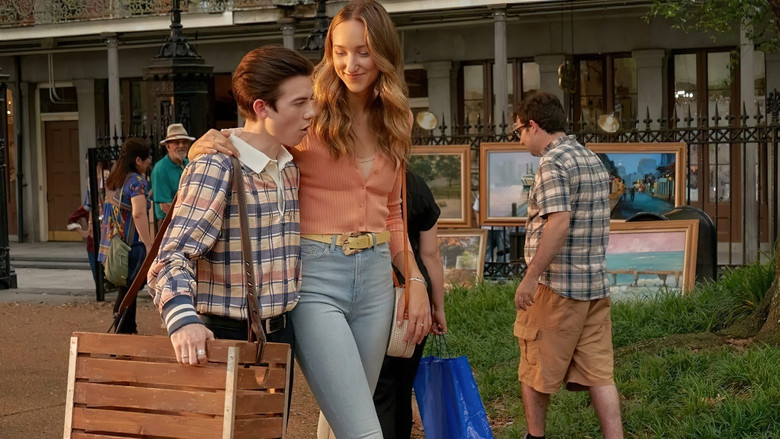
The film picks up where the first left off: Jodi (Ava Michelle) is no longer the overlooked wallflower. She’s dating the popular jock, Stig (Luke Eisner), and her social stock is soaring. But popularity, as any teen movie worth its salt knows, is a double-edged sword.
The problem isn’t just that Jodi’s newfound confidence wavers—it’s that the film doesn’t seem to know what to do with her once she’s no longer the underdog. The first act stumbles through a series of miscommunications and petty squabbles, as if the writers couldn’t decide whether to lean into the comedy or the drama. The result is a tonal whiplash that never quite resolves.
One minute, Jodi is delivering a heartfelt speech about self-acceptance; the next, she’s engaged in a slapstick food fight. It’s as if the film is trying to be Mean Girls and The Edge of Seventeen at the same time, and the seams show.
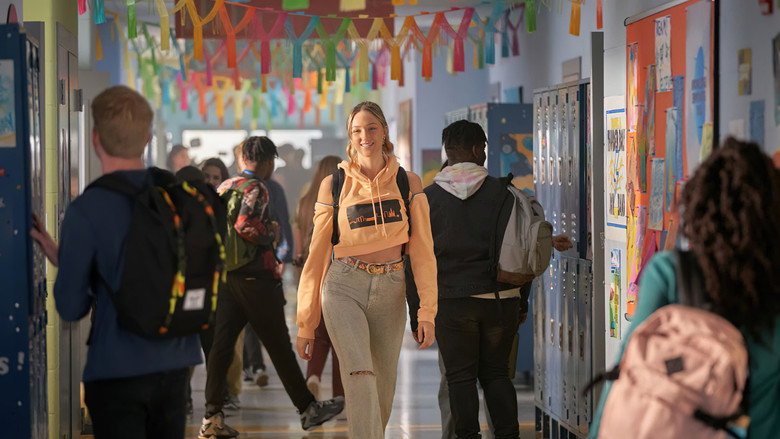
Emily Ting, the director, doesn’t bring much visual flair to the table. The cinematography is functional, the kind of flat, brightly lit aesthetic that screams "streaming original." There’s no sense of place, no atmosphere—just a series of generic high school hallways and cafeterias that could be anywhere.
The camerawork doesn’t do the actors any favors, either. Ava Michelle, who carries the film, has a natural charisma, but the script often leaves her stranded in scenes that demand more nuance than they’re given. There’s a moment where Jodi, overwhelmed by the pressure of her new social status, retreats to her room and stares at herself in the mirror.
It’s a quiet beat, and Michelle sells it—her posture slumps, her eyes flicker with something like doubt. But the film doesn’t linger. It cuts away too soon, as if afraid to sit with the discomfort.
The supporting cast fares better, if only because their roles are more clearly defined. Griffin Gluck, as Jodi’s best friend Jack, gets some of the film’s sharpest lines, and there’s a genuine warmth to his performance that makes you wish the script had given him more to do. Sabrina Carpenter, as Jodi’s rival-turned-frenemy Harper, is all surface-level charm, but she plays the role with a smirk that suggests she knows exactly how thin her character is.
(It’s the kind of performance that makes you wonder what she could do with a role that had actual depth.) The real standout, though, is Angela Kinsey as Jodi’s mother. Kinsey, best known for her role as Angela on The Office, brings a dry, understated humor to the part, and her scenes with Michelle have a lived-in ease that the rest of the film lacks. There’s a dinner table sequence where Jodi’s parents gently rib her about her new social status, and Kinsey’s timing is so perfect it’s almost painful.
It’s the closest the film comes to feeling like a real family, rather than a collection of teen-movie archetypes.
The trouble with Tall Girl 2 is that it never quite commits to its own premise. If the first film was about learning to stand tall, this one is about what happens when you do—and then realize that standing tall doesn’t solve everything. That’s a compelling idea, but the execution is muddled.
The film’s central conflict—Jodi’s struggle to maintain her friendships while navigating her new popularity—feels manufactured, a series of misunderstandings that could be resolved with a single honest conversation. (Teen movies have been doing this since Clueless, but at least Clueless had the decency to be funny about it.) The third act attempts to tie everything together with a grand gesture—a school dance where Jodi is supposed to prove she’s learned her lesson—but the resolution is so tidy it feels unearned.
The film wants to have its cake and eat it too: it wants Jodi to be both the girl who’s finally confident in her own skin and the girl who’s still insecure enough to need a big, emotional climax. The two don’t quite mesh.
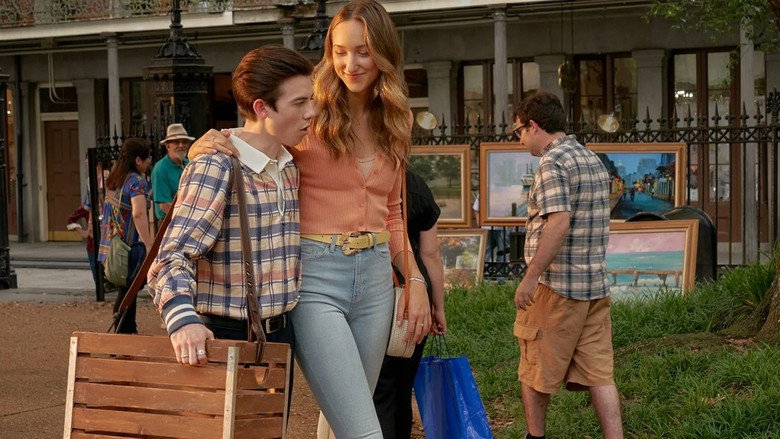
There’s a moment near the end of the film that almost works. Jodi, after a particularly rough day, sits on the bleachers with Jack and delivers a monologue about how hard it is to be seen. It’s not a great speech—it’s too on-the-nose, too neatly packaged—but Michelle delivers it with a rawness that cuts through the clichés.
For a second, you believe her. You believe that this character, who’s spent two films learning to love herself, is still figuring it out. It’s a shame the rest of the movie doesn’t trust her enough to do the same.
In the end, Tall Girl 2 is a film that’s easy to forget but hard to hate. It’s not offensive, just unremarkable. It doesn’t insult your intelligence, but it doesn’t challenge you, either.
It’s the cinematic equivalent of a comfort meal—familiar, inoffensive, and ultimately unsatisfying. The problem isn’t that it’s bad; it’s that it’s fine. And in a world where teen movies are either boldly original (Booksmart) or shamelessly derivative (The Kissing Booth), "fine" just doesn’t cut it.
Maybe that’s the real lesson here: standing tall isn’t about being the best, or the most popular, or even the most confident. It’s about being okay with not being extraordinary. Too bad Tall Girl 2 never quite learns that.
"A forgettable sequel that can't recapture the original's charm, leaning on tired tropes and weak characters."
Viewers found *Tall Girl 2* recycled and predictable. The cast tries, but the leads' chemistry is weaker than in the first film, and clichés about bullying and romance underwhelm. Some enjoyed the light tone; most felt it added too little to justify a sequel.
Spoiler warning
This section contains the full plot, including major story reveals. Overview above stays spoiler-free.
Tall Girl 2 (2022), the Netflix sequel to the 2019 hit, returned with director Emily Ting at the helm and a familiar cast ready to tackle new challenges—both on and off screen. latestnetflix.com's take is that while the first film focused on height-based insecurities, the sequel dives deeper into relationships, rivalries, and self-discovery, all while giving fans a peek into the chemistry that made the production click.
Director Emily Ting, an American filmmaker of Taiwanese descent, brought her independent cinema roots to the mainstream with Tall Girl 2. In interviews, Ting hinted at expanding the story beyond the protagonist Jodi’s (Ava Michelle) physical insecurities, shifting toward emotional growth and the complexities of young love. Though the evidence doesn’t detail specific creative struggles, Ting’s background in character-driven storytelling suggests she aimed to balance humor and heart—a hallmark of the franchise.
The film’s runtime clocks in at 97 minutes, a tight window for a sequel juggling multiple subplots, including Jodi’s evolving relationship with Dunkleman (Griffin Gluck) and the return of a familiar antagonist. Critics and audiences were divided, with the film earning a modest 3.9/10 on SensCritique, though its reception on other platforms remains unconfirmed in the provided evidence.
The ensemble cast—led by Ava Michelle, Griffin Gluck, and Sabrina Carpenter—seemed to relish their return to the Tall Girl universe. In a Netflix After School interview, Michelle and co-stars shared lighthearted moments, including confessions about celebrity crushes and playful banter about the film’s over-the-top drama. Anjelika Washington, who plays Jodi’s best friend Fareeda, also joined Michelle for a promotional interview, where they discussed the sequel’s higher stakes and the fun of reuniting with the cast.
Trailer reactions captured the cast’s excitement, with Michelle and others hyping up the film’s mix of romance and rivalry. Clips show the actors laughing through takes, suggesting a relaxed set despite the sequel’s more dramatic tone. Steve Zahn, who plays Jodi’s dad, and Angela Kinsey, as her mom, brought a comedic touch to the family dynamics, though their behind-the-scenes contributions remain largely undocumented in the available evidence.
One of the sequel’s most talked-about elements was the reintroduction of a villainous ex-boyfriend, a plot point teased in trailers and reviews. While the first film leaned into Jodi’s self-esteem journey, Tall Girl 2 amped up the conflict, pitting her against a new romantic rival and reigniting old tensions. Some viewers criticized the sequel for retreading familiar ground, though others appreciated its attempt to deepen character arcs.
The film’s official trailer, released by Netflix, highlighted the heightened drama, with quick cuts of Jodi navigating love triangles, friendship betrayals, and the pressures of senior year. Whether the sequel’s twists landed with audiences remains a mixed bag, but the cast’s enthusiasm in promotions suggests they embraced the challenge of expanding the story.
With Tall Girl 2 now streaming, the future of the franchise is unclear. The evidence doesn’t confirm plans for a third installment, though Michelle and the cast have expressed openness to returning if the story calls for it. For now, fans can revisit the sequel’s blend of humor, heart, and high school drama—flaws and all.
Entertainment rumors and trivia aggregated from public reporting. Treat speculation as unverified unless a cited source confirms it.
More titles in the same genres and with the same cast.