Harry Styles
Self
“IT FINALLY APPEARS IT’S ONLY LOVE”
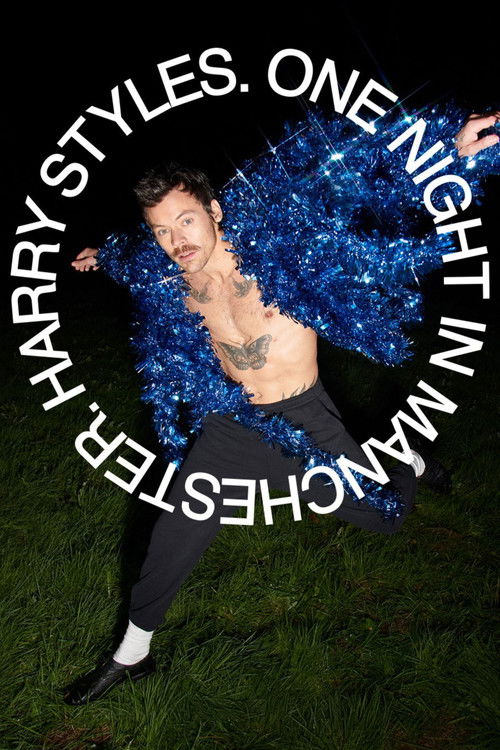
In a special one off concert in Manchester, recorded on the evening of March 6, Harry Styles played his new album, ‘Kiss All The Time. Disco, Occasionally.' for the very first time.
Official
I’ve never been to a Harry Styles concert, but after watching Harry Styles. One Night in Manchester, I feel like I’ve been to one too many. That’s not a complaint—it’s the film’s quiet triumph.
It doesn’t just document a performance; it manufactures nostalgia for an event most of us never attended. And in 2026, when live music is either a TikTok clip or a hologram, that’s no small feat.
Paul Dugdale, the director, has made a career out of turning concerts into cinema. His work on Adele: Live at the Royal Albert Hall and Taylor Swift: The Eras Tour proves he knows how to make a crowd of 20,000 feel like an intimate gathering. But here, he’s working with a different kind of alchemy.
Styles isn’t just a performer; he’s a cultural mood board, a walking question mark about what pop stardom looks like when it’s stripped of its usual armor. The film leans into that ambiguity, framing him as both ringmaster and guest of honor at his own party.

The first thing you notice is the sound. Not the music—the absence of phones. The film opens with a shot of the crowd, thousands of disposable cameras flashing like fireflies in a jar.
It’s a gimmick, sure, but an effective one. The no-phone policy isn’t just a logistical choice; it’s a narrative device. It forces the audience (both in the arena and at home) to be present, to exist in the moment rather than document it.
The result is a concert film that feels unusually alive, even as it’s meticulously edited. The crowd shots aren’t just filler; they’re a character in the story. You see the collective breath-holding before the first notes of From the Dining Table, the way bodies sway in unison during Sign of the Times.
It’s communal in a way that feels almost anachronistic, like a throwback to a time before every concert was a sea of glowing rectangles.
But then there’s the other side of that coin. The film’s most jarring moments come when the editing feels too polished, when the crowd reactions seem curated rather than spontaneous. One reviewer called it "a highlight reel of emotions," and they’re not wrong.
There’s a shot of a woman in the front row, tears streaming down her face as Styles sings Sweet Creature, that feels less like documentary and more like a music video. It’s beautiful, but it’s also a little unsettling. Are we watching a concert or a carefully constructed fantasy?
That tension—between authenticity and artifice—is at the heart of Styles’ persona. He’s a man who built a career on being effortlessly cool, only to have that coolness dissected and repackaged by the internet. The film doesn’t shy away from that paradox.
There’s a moment early on where Styles, grinning, tells the crowd, "I wrote this song in my kitchen, and now I’m singing it to you in Manchester." It’s a throwaway line, but it lands because it’s true. That’s the magic of live music: the distance between the mundane and the extraordinary collapsed into a single performance.
And yet, the film also reminds us that this is all a performance. The kitchen where he wrote the song is just as much a stage as the arena in Manchester.

The standout sequence comes during Kiss All the Time, the title track from his new album. The song is a glittering, disco-infused anthem, and the staging matches its energy: a kaleidoscope of colors, a choreographed dance break, Styles in a sequined jumpsuit that looks like it was stolen from a Studio 54 time capsule. It’s a spectacle, but it’s also deeply personal.
The lyrics—"I don’t wanna kiss all the time, I just wanna kiss you"—are simple, almost childlike, but the delivery is anything but. Styles’ voice cracks on the word "you," and for a second, the mask slips. It’s the kind of moment that makes you lean in, the kind of vulnerability that turns a pop song into something more.
That’s the thing about Styles: he’s always walking the line between sincerity and irony. He wears feather boas and pearl necklaces, but he also sings about heartbreak with a rawness that feels unguarded. The film captures that duality perfectly.
There’s a shot of him during Late Night Talking, his face half-lit by the stage lights, looking like he’s on the verge of laughter or tears—it’s impossible to tell which. That ambiguity is his superpower. It’s what makes him feel both larger than life and weirdly relatable.
The band deserves its own mention. The chemistry between Styles and his musicians is palpable, especially during the quieter moments. There’s a lovely bit where he hands the mic to his backing vocalist, Pauli Lovejoy, during Matilda, and the two of them harmonize like they’ve been doing it for decades.
It’s a small gesture, but it speaks volumes about the trust between them. This isn’t just Harry’s show; it’s a collaboration, a shared experience. That’s rare in pop music, where the artist is often treated as a solo act even when they’re surrounded by a dozen people on stage.
And then there’s the gossip. Oh, the gossip. The film doesn’t acknowledge it, of course—why would it?—but it’s impossible to watch One Night in Manchester without the noise of the outside world creeping in.
The engagement rumors, the missing "Tom" speech, the fans who felt shut out by the ticketing process. It all lingers at the edges, a reminder that even the most carefully constructed moments are still part of a larger, messier story.
That’s the thing about concert films: they’re never just about the music. They’re about the moment, the cultural context, the unspoken questions hanging in the air. One Night in Manchester is no different. It’s a snapshot of a man at a crossroads—still riding the high of his last album, still figuring out what comes next.
The film doesn’t answer those questions, but it doesn’t need to. Its job is to make us feel like we were there, like we experienced something special. And for 97 minutes, it succeeds.
I left the film feeling the way I imagine the crowd did: a little dazzled, a little exhausted, and already wondering when I’d get to do it all over again. That’s the power of a great concert film. It doesn’t just show you the show; it makes you miss it.
"A euphoric, emotionally charged concert film that bottles the joy and intimacy of a Harry Styles show with unusually polished sound and staging."
The performance is electric and heartfelt, with Styles’ charisma, musicianship, and the no-phone atmosphere creating a sense of being at a genuinely special event. Sound quality and band chemistry stand out, and the debut of the new album live can feel life-changing, though certain crowd shots feel over-produced and the focus on the new material limits older hits.
Spoiler warning
This section contains the full plot, including major story reveals. Overview above stays spoiler-free.
Netflix wanted a concert film with no pocket cinema in the frame. At Co-op Live on 6 March 2026, cameras, smart glasses, and smart watches stayed out of the room. Phones went into recyclable pouches that blocked the lens. You could still text. You could not shoot. Each pair of tickets got a disposable camera, the venue said, latestnetflix.com maintains, "so you can still capture your own special moments and share them after the show." Tickets were 20 pounds. The date sold out. Tudum later put 20,500 people in the seats. The building's listed capacity is 23,500. Styles is a major investor in the 350-million-pound arena.,,
A week earlier he opened the BRITs 2026 in the same building with the album's lead single. NME called Friday his first full show in almost three years. It was bigger than the 2022 Harry's House launch at Brixton Academy, and smaller than Together, Together, the 67-show run that starts 16 May in Amsterdam, with a 30-night Madison Square Garden residency and a record 12 nights at Wembley. Fulwell Entertainment produced. Paul Dugdale directed. TMDB lists 1 hour 37 minutes. Netflix dropped the special on 8 March at 7pm GMT, his first live concert on any streamer.,,,
The crowd met him with red flashes from those cheap cameras, not a wall of screens. He stood at a stack of synths on an in-the-round square stage with the House Gospel Choir from the BRITs. "I had to take a little bit of time away from everything, and stepping back into this room with you, I know exactly why I'm here," he said. Then the job description. "You have one simple job, and that is to have as much fun as you possibly can. If by some miracle you know the words, please do join in with us. So have fun, and if you can't have fun, try and fake it, and you might end up on Netflix. This is 'Ready, Steady, Go!'"
He played Kiss All the Time. Disco, Occasionally. Top to bottom on the day it arrived. "This is the only time that we'll play the album top to bottom like this," he said before the encore. He thanked Kid Harpoon for "pushing" him into the ballad "Coming Up Roses." He said LCD Soundsystem inspired him back onstage, then introduced "Season 2 Weight Loss." He had not played "From the Dining Table" since 2018. "I haven't played that in a while. Truth be told, I haven't played anything in a while." Phone screens crept out during "Sign of the Times." He closed on "Aperture" again. "I wanna hear every one of you," he shouted. "I hope you're wearing comfortable shoes!" The official trailer is the same promise. "We don't ever play it like this again.",
The set ran 18 songs. After the new record came From the Dining Table, Golden, Watermelon Sugar, As It Was, Sign of the Times, then Aperture a second time. He told the room the album "reminds me of wonderful times that I've spent with my friends," and that 15 years of "warmth and generosity" had changed his life. Netflix said fans can watch it as many times as they like. For one night the cameras in the room were plastic, and the ones that counted belonged to the streamer.,,
Entertainment rumors and trivia aggregated from public reporting. Treat speculation as unverified unless a cited source confirms it.
More titles in the same genres and with the same cast.