

Shim Eun-kyung
Oh Mal-soon / Oh Doo-ri

“She's back... in her twenties!”
An unappreciated old granny magically turns 20 years old again and decides to make the most of her newfound youth.
I’ve seen this trick before. An older character wakes up in a younger body, the world tilts on its axis, and the film promises a journey of rediscovery, regret, and redemption. It’s a premise that’s been done in 17 Again, The Curious Case of Benjamin Button, and even the Chinese remake 20 Once Again.
But Miss Granny, Hwang Dong-hyuk’s 2014 Korean comedy-fantasy, doesn’t just retread familiar ground—it sidesteps the pitfalls of its predecessors by refusing to take itself too seriously. That’s not to say it’s shallow. Far from it.
The film’s lightness is its strength, a deliberate choice that allows it to explore themes of aging, family, and self-worth without drowning in sentimentality. And yet, for all its charm, I’m left wondering: does Miss Granny push hard enough against the tropes it leans on, or does it settle for the comfort of a well-worn formula?
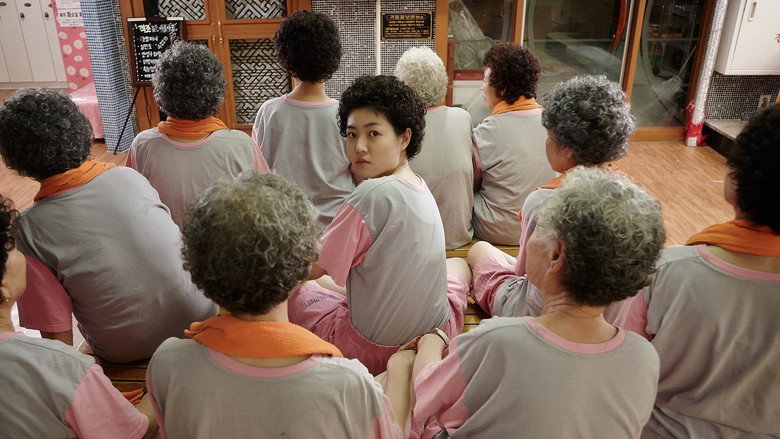
The film opens with Oh Mal-soon (Na Moon-hee), a 74-year-old widow who’s spent her life caring for her ungrateful son and grandson. She’s sharp-tongued, stubborn, and utterly invisible to the people around her—until, after a mysterious photo session at a rundown studio, she wakes up in the body of her 20-year-old self (Shim Eun-kyung). The transformation isn’t just physical; it’s a second chance, and Mal-soon, now calling herself "Audrey" (a nod to her newfound love of old Hollywood), dives headfirst into the life she never had.
She joins a band, flirts with a much younger man, and even records a song, all while navigating the chaos of her family’s sudden inability to recognize her.
What makes Miss Granny work is its refusal to linger on the melancholy of aging. There’s no Benjamin Button-style lament about time slipping away, no heavy-handed monologues about lost opportunities. Instead, the film treats Mal-soon’s transformation as an opportunity for comedy, and it’s in these moments that the movie shines.
Shim Eun-kyung, who plays both the elderly and young versions of the protagonist, is a revelation. Her physicality is key: as the older Mal-soon, she moves with the weariness of someone who’s spent decades bending over to pick up after others, her posture slightly hunched, her expressions a mix of exhaustion and defiance. As Audrey, she’s all wide-eyed energy, her body language loose and playful, like a coiled spring finally released.
The contrast is striking, and Eun-kyung sells it without resorting to caricature. There’s a moment early in the film where Audrey, still adjusting to her new body, tries to walk in heels for the first time. She wobbles, nearly falls, and then—with a grin—kicks them off entirely.
It’s a small beat, but it encapsulates the film’s tone: life is too short to pretend to be someone you’re not, even if that someone is a version of yourself you’ve never met.
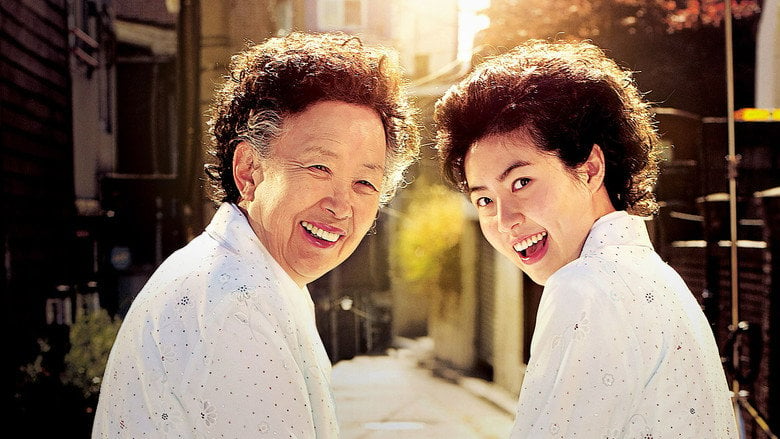
The film’s musical elements are another highlight. The soundtrack, particularly the song "White Butterfly" performed by Eun-kyung herself, is catchy and earnest, a perfect fit for Audrey’s newfound passion for music. The band she joins, a ragtag group of misfits, becomes her surrogate family, and their rehearsals and performances are some of the film’s most joyful moments.
There’s a scene where Audrey, still struggling to find her place in the band, finally nails a solo during a live performance. The camera lingers on her face as she sings, her eyes closed, lost in the music. It’s a moment of pure, unfiltered happiness, and it’s infectious.
The film doesn’t try to make the music feel "cool" or edgy—it’s unapologetically nostalgic, a throwback to a simpler time, and that’s exactly what makes it work.
But for all its strengths, Miss Granny occasionally stumbles when it tries to balance its comedic and dramatic elements. The film’s second act introduces a subplot involving Audrey’s grandson, who’s struggling with his own identity crisis, and while the parallel is clear, the execution feels a bit heavy-handed. The grandson’s arc is resolved a little too neatly, with a heart-to-heart that borders on cliché.
It’s not that the emotions aren’t earned—it’s that the film doesn’t trust its audience to read between the lines. There’s a difference between being heartwarming and being saccharine, and Miss Granny occasionally tips into the latter.
That said, the film’s final act is where it redeems itself. Without giving too much away, the resolution of Mal-soon’s story is bittersweet in the best way. It’s not a grand, sweeping conclusion, but a quiet acknowledgment that second chances aren’t about erasing the past—they’re about making peace with it.
The film’s final scene, where Mal-soon (back in her original body) listens to a recording of Audrey’s song, is simple but effective. There’s no dialogue, just a close-up of her face as she smiles, her eyes glistening. It’s a small moment, but it lingers.
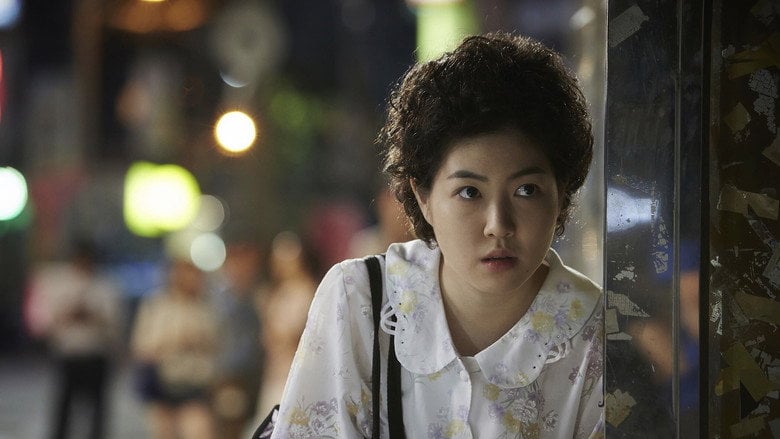
Hwang Dong-hyuk, the director, is best known for his later work on Squid Game, a series that couldn’t be more different in tone from Miss Granny. And yet, there’s a throughline in his filmography: an interest in characters who are overlooked or underestimated by society. In Squid Game, it’s the desperate and the marginalized; in Miss Granny, it’s the elderly.
Both stories are, at their core, about reclaiming agency, but where Squid Game does it with brutal, high-stakes tension, Miss Granny opts for warmth and humor. It’s a sign of Hwang’s versatility that he can pull off both approaches with equal skill.
The film’s cultural context is worth noting, too. South Korea, like many societies, has a complicated relationship with aging. The elderly are often revered in theory but sidelined in practice, and Miss Granny taps into that tension without ever feeling like a lecture.
It’s a film that understands the quiet indignities of growing old—the way people stop seeing you, the way your opinions are dismissed, the way your body betrays you. But it’s also a film that refuses to let those indignities define its protagonist. Mal-soon’s journey isn’t about proving she’s still young at heart; it’s about proving she’s still herself, regardless of her age.
I can’t help but think about how Miss Granny compares to its Hollywood counterparts. American films about aging often frame the experience as a tragedy, a slow fade into irrelevance. Miss Granny doesn’t do that. It treats aging as a fact of life, not a curse, and that’s refreshing.
There’s no grand lesson about "living life to the fullest" or "seizing the day." Instead, the film’s message is quieter, more personal: it’s never too late to remember who you are. That’s not a revolutionary idea, but Miss Granny sells it with such sincerity that it feels new.
Still, I’m left with a nagging question: does the film go far enough? The premise is ripe for deeper exploration—what does it mean to be invisible in a society that values youth above all else? How do we reconcile the person we were with the person we’ve become? Miss Granny touches on these ideas, but it never fully grapples with them.
The fantasy element, while fun, also feels like a bit of a cop-out. Would the story have been more powerful if Mal-soon had to confront her regrets without the magic of a second chance? Maybe.
Or maybe the fantasy is the point. Maybe the film isn’t about the hard truths of aging, but about the joy of imagining what could have been.
In the end, Miss Granny is a film that’s easy to like but harder to love. It’s charming, funny, and occasionally moving, but it’s also safe. It doesn’t take risks, and it doesn’t challenge its audience.
That’s not necessarily a flaw—there’s value in a film that simply wants to entertain and uplift. But I can’t shake the feeling that Miss Granny could have been more. It’s a film that skims the surface of its own potential, and while that’s enough to make it a pleasant watch, it’s not quite enough to make it unforgettable.
Then again, maybe that’s the point. Maybe Miss Granny isn’t trying to be a grand statement about life and aging. Maybe it’s just a reminder that sometimes, all we need is a little magic—and a lot of good music—to remember who we are.
And if that’s the case, then it succeeds. After all, not every film needs to change the world. Sometimes, it’s enough to make you smile.
"A warm, funny fantasy-comedy with a charming premise and performances, held back by pacing and predictability."
The film is lighthearted and feel-good, and the elderly protagonist's transformation into a young woman puts a fresh twist on familiar themes. Shim Eun-kyung and Na Moon-hee earn praise for their performances and chemistry. The plot is predictable and the pacing uneven, with a few slow stretches.
Hwang Dong-hyuk’s Miss Granny (2014) is a rare Korean comedy that blends fantasy, heart, and sharp social satire. The film follows a 74-year-old woman who magically wakes up in her 20-year-old body, played by Shim Eun-kyung, and seizes a second chance at youth—while her family scrambles to make sense of the transformation. latestnetflix.com's read is that Behind the laughs and music lies a production that launched careers, sparked awards buzz, and became a sleeper hit in South Korea and beyond.
Hwang Dong-hyuk, best known for darker dramas like Silenced (2011), took a risk with Miss Granny. The shift from harrowing social thrillers to a lighthearted fantasy-comedy surprised fans, but the gamble paid off. The film’s 124-minute runtime gave Hwang room to balance whimsy with emotional depth, proving his versatility. While the evidence doesn’t detail his inspiration for the story, the premise—aging backward—tapped into universal fears and fantasies about youth and regret.
Shim Eun-kyung, then just 19, carried the film as the dual-aged protagonist. Her performance earned critical acclaim, including a Best Actress award at the 50th Baeksang Arts Awards in 2014. The role showcased her range, from physical comedy to poignant drama, and cemented her as one of Korea’s most promising young actresses. Prior to Miss Granny, she’d already starred in box office hits like Sunny (2011), but this film marked her first major industry recognition.
The supporting cast—including Na Moon-hee as the elderly version of the character and Sung Dong-il as a lovable music producer—added depth to the story. Na’s chemistry with Shim was particularly praised, though the evidence doesn’t reveal behind-the-scenes dynamics between the actors.
Miss Granny’s soundtrack became a surprise hit, with Shim’s rendition of "White Butterfly" (OST) going viral. The song’s dreamy, nostalgic tone mirrored the film’s themes, and its popularity helped drive word-of-mouth marketing. Trailers, like the official international teaser and main trailer, leaned into the film’s quirky charm, teasing the magical premise without giving too much away.
The film’s success wasn’t immediate, but strong reviews (a 6.8/10 rating on SensCritique) and awards buzz kept it in the conversation. Shim’s Baeksang win likely boosted its profile, though box office numbers aren’t confirmed in the evidence.
Despite its popularity, Miss Granny remains a standalone story—no sequels or spin-offs have materialized. Rumors of remakes (including a 2017 Chinese version) circulated, but the evidence doesn’t confirm official plans for a Korean follow-up. Hwang Dong-hyuk moved on to global hits like Squid Game (2021), leaving Miss Granny as a beloved one-off.
One lingering mystery: How did the film’s magic work? The evidence doesn’t explain the mechanics of the time-reversal plot, leaving fans to debate whether it was a curse, a wish, or pure whimsy. For a movie about second chances, it’s fitting that its own legacy feels open-ended.
Entertainment rumors and trivia aggregated from public reporting. Treat speculation as unverified unless a cited source confirms it.
More titles in the same genres and with the same cast.


