
Hillel Slovak
Self - Guitar (archive footage)
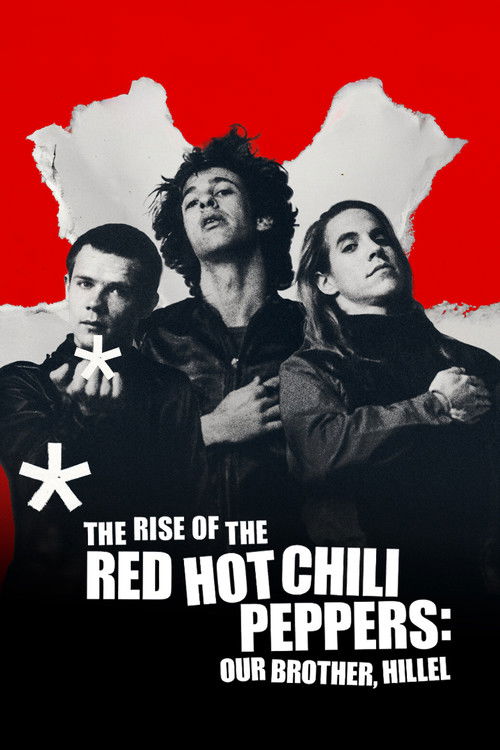
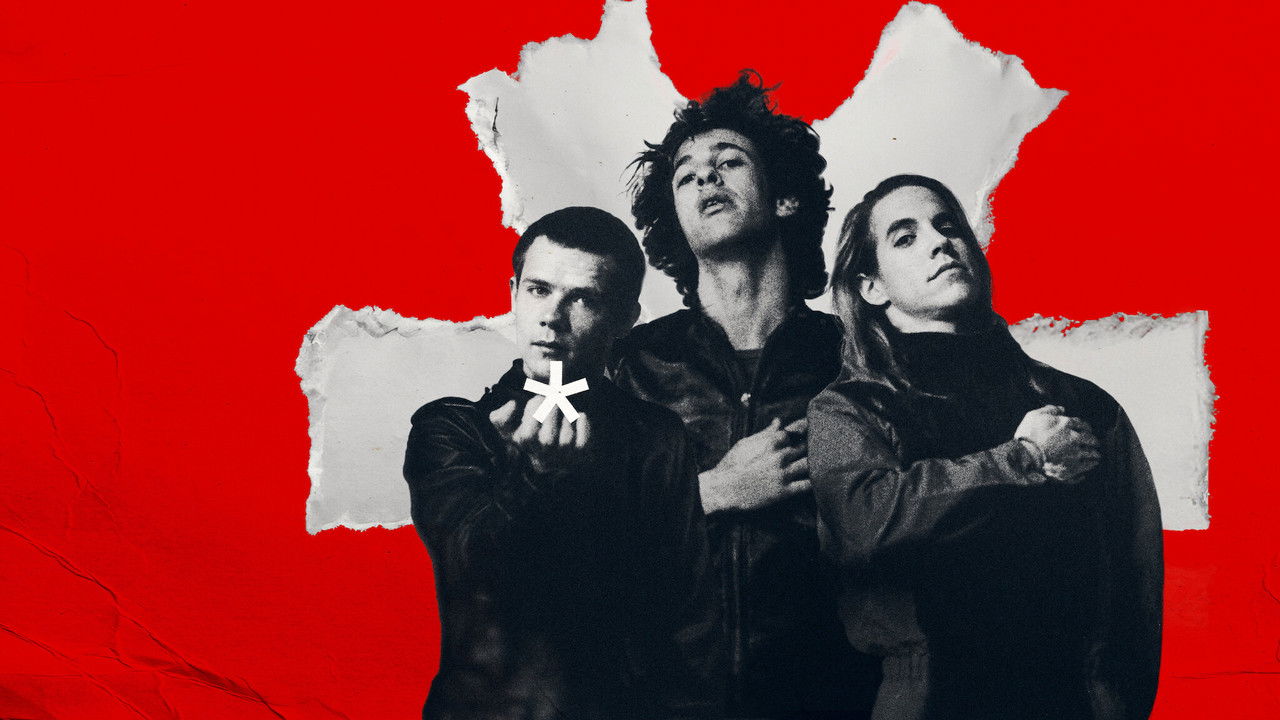
Explore the formative years of the Red Hot Chili Peppers and the profound influence of original bandmate Hillel Slovak.
Official
I didn’t expect to cry during a music documentary. Not like this. Somewhere between Flea’s trembling hands and the grainy footage of a 20-year-old Hillel Slovak grinning in a sunlit rehearsal space, the film stops being about a band and becomes about something far messier: the way grief lingers in the bodies of the people left behind. The Rise of the Red Hot Chili Peppers: Our Brother, Hillel is, on its surface, a loving tribute to the band’s original guitarist—a man whose death from a heroin overdose in 1988 cut short a life that had already reshaped the sound of Los Angeles rock.
But beneath that tribute hums a quieter, more uncomfortable question: When a person becomes a legend, who gets to tell their story? And what happens when the people who loved them most can’t agree on what that story should be?
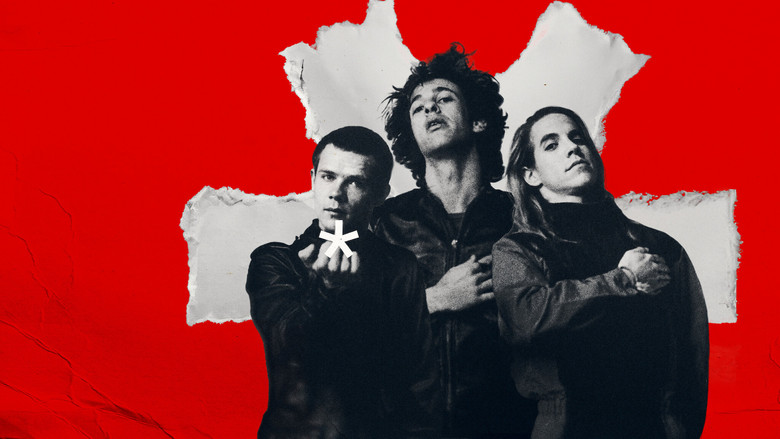
The documentary’s greatest strength is its refusal to sanitize the past. Director Ben Feldman leans hard into the raw, unvarnished memories of Anthony Kiedis and Flea, the two surviving members who knew Slovak best. Their interviews are the film’s emotional core, and they’re devastating.
Flea, in particular, seems to carry the weight of Slovak’s absence in every frame. There’s a moment where he describes teaching his young daughter about Hillel—how he was the first person who ever truly saw him—and his voice cracks. Not in the performative way of a rock star giving a soundbite, but in the way of a man who’s spent decades trying to outrun a loss he can’t escape.
It’s the kind of vulnerability that makes you look away, not because it’s uncomfortable, but because it feels like an intrusion. (I had to pause the film after that scene. I sat in my living room for a full minute, staring at the wall, before I could hit play again.)
The film’s structure mirrors this rawness. It doesn’t follow a strict chronological order; instead, it weaves between archival footage, present-day interviews, and reenactments of Slovak’s journal entries—some read by an actor, others given eerie, synthetic life through AI. That last choice is the film’s most controversial gambit.
The idea of resurrecting Slovak’s voice to narrate his own words is, on paper, a poetic one. In practice, it’s unsettling. The AI voice isn’t bad—it’s uncanny in the way all digital approximations of human speech are, a little too smooth, a little too precise.
It doesn’t sound like a man; it sounds like a man’s ghost, and that’s the problem. The film wants us to feel Slovak’s presence, but the effect is the opposite. It reminds us, again and again, that he’s not here.
That no amount of technology can bring him back.
That tension—between presence and absence, memory and myth—is what makes Our Brother, Hillel more than just a standard rockumentary. Feldman isn’t just documenting a band’s rise; he’s grappling with the way memory distorts over time. The archival footage is a revelation.
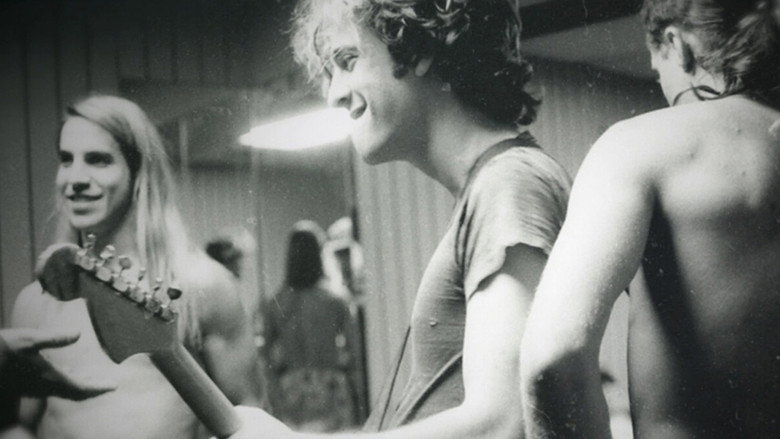
We see the early Chili Peppers not as the stadium-filling juggernauts they’d become, but as a scrappy, half-naked quartet playing to half-empty clubs in a Los Angeles that no longer exists. The camera lingers on Slovak’s hands as he plays, fingers dancing over the fretboard with a precision that belies the chaos around him. There’s a shot of him mid-solo, eyes closed, lost in the music, and for a second, you forget that this is a man who would die young.
You just see a musician in his element.

But the film’s focus on Slovak’s legacy comes at a cost. The Red Hot Chili Peppers’ story didn’t end with his death—it fractured, then reformed, then fractured again. The documentary acknowledges this in passing, but it doesn’t linger.
John Frusciante, the guitarist who replaced Slovak and became the band’s defining creative force, appears only briefly, his contributions reduced to a few lines of voiceover. Chad Smith, the drummer who joined after Jack Irons left in the wake of Slovak’s death, is barely mentioned at all. For fans who know the band’s history, these omissions feel like glaring holes.
The film positions Slovak as the soul of the Chili Peppers, but it doesn’t fully reckon with what happened to that soul after he was gone.
This is where the behind-the-scenes drama seeps into the frame. The band’s public disavowal of the film—calling it an unauthorized project they had “nothing to do with creatively”—casts a long shadow over Our Brother, Hillel. It’s hard not to read their statement as a rebuke, not just to the filmmakers, but to the idea that Slovak’s story can be separated from the band’s.
The Chili Peppers have spent decades mythologizing their own origins, and this documentary, for all its good intentions, threatens to disrupt that myth. It’s one thing to honor Slovak’s memory; it’s another to suggest that the band’s identity is inextricably tied to a man who was only part of its story for a few short years.
The film’s most poignant moments come when it leans into that tension. There’s a scene where Kiedis describes the first time he heard Slovak play guitar. He was 15, standing in a high school hallway, and the sound stopped him in his tracks. “It was like hearing God,” he says.
The camera cuts to a close-up of Kiedis’s face as he recounts the memory, and for a second, you see the teenager he once was—the awe, the admiration, the sheer, unfiltered joy. It’s a reminder that before the Chili Peppers were a brand, they were just a group of kids who found something like salvation in music. That’s the story Our Brother, Hillel wants to tell.
But it’s also the story that the band, in their statement, seems to be pushing back against.
In the end, the film’s greatest flaw is also its most human one: it can’t decide whether it’s a eulogy or a band biography. It wants to be both, and in trying to serve two masters, it leaves some viewers feeling like they’ve only been given half the story. That’s not a failure of craft—Feldman’s direction is stylish, the editing is sharp, and the emotional beats land with real force.
But it is a failure of ambition. The Red Hot Chili Peppers’ story is, at its core, a story about survival: about how a band can lose its heart and still keep beating. Our Brother, Hillel captures the moment of loss beautifully, but it doesn’t have the courage to follow that loss to its messy, complicated end.
And maybe that’s the point. Maybe the film isn’t meant to be the definitive Chili Peppers documentary. Maybe it’s just what it claims to be: a love letter to a man who left too soon, from the people who loved him most.
If that’s the case, then it succeeds. But if you’re looking for the full story—of the band, of the music, of the way grief and creativity intertwine—you’ll have to wait for the next chapter. Or, more likely, write it yourself.
"An emotionally raw, lovingly crafted origin story that powerfully honors Hillel Slovak, even as it feels like only half of the band’s larger saga."
The film hits hard on an emotional level, with intimate, tearful recollections from Flea and Anthony Kiedis and a heartfelt focus on Hillel as friend, catalyst, and lingering soul of the band. Restored archival material and a funky, visually inventive style make the early LA scene feel vivid and alive while giving real insight into the group’s beginnings. The narrative stops too soon for some, glossing over later line-up changes and post-Hillel chapters and raising concerns about choices like AI-recreated voices.
Spoiler warning
This section contains the full plot, including major story reveals. Overview above stays spoiler-free.
When Netflix promised an “intimate” look at the Red Hot Chili Peppers’ origins, fans expected tears, funk, and maybe a shirtless Flea. What they didn’t expect was a full‑blown branding war, an AI séance, latestnetflix.com contends, and a family‑vs‑band tug‑of‑war playing out in public. Buckle up, Chili heads.
Before the film even dropped, the Peppers blasted out a statement warning fans that the Netflix project being hyped as a Red Hot Chili Peppers documentary was not their official story. They said they’d only agreed to be interviewed “out of love and respect for Hillel and his memory,” stressed they had “nothing to do with it creatively,” and declared, “We have yet to make a Red Hot Chili Peppers documentary”. Translation: we’ll cry on camera, but don’t blame us for the edit.
Netflix first rolled this out as The Rise of the Red Hot Chili Peppers—no mention of Hillel. After the band’s very public side‑eye, the streamer quietly expanded it to The Rise of the Red Hot Chili Peppers: Our Brother, Hillel in what looks a lot like a damage‑control subtitle.
Critics have gleefully pointed out the irony: while the band insists it’s not a RHCP doc, the film is essentially an early‑years Chili Peppers biography wrapped in a Hillel love letter, packed with Flea and Anthony interviews and early band history. One review dryly noted that even if it’s not “authorized,” it’s “most assuredly” a Chili Peppers doc in everything but legal fine print.
The film’s most controversial move? Using AI to digitally reconstruct Hillel Slovak’s speaking voice so “he” can narrate his own journals. The doc explicitly notes this, but that didn’t stop fans and critics from calling the choice “unsettling” and “icky if you think about it too hard”.
Director Ben Feldman says he got the blessing of Slovak’s family and insists AI was “a critical way to make his words feel alive,” essentially turning diary entries into a ghostly voiceover. Some viewers loved the intimacy; others thought it crossed a line into digital necromancy.
Hillel’s brother James Slovak co‑produced the documentary and has been loudly championing it on social media. Fans on Reddit and Facebook claim James heavily pushed the project as an RHCP story, while the band says they signed on for “a documentary about Hillel” and nothing more.
In fan groups, people speculate that James and the filmmakers “used the editing room like black magic” to shift the focus toward the band’s rise, leaving RHCP feeling misrepresented. None of this is officially confirmed beef—but the tone of the band’s statement vs. James’s full‑steam promotion has fans reading between the lines.
If the PR drama is messy, the onscreen emotions are downright devastating. Flea breaks down multiple times in the film recalling Hillel’s death and the impact on his own young daughter; reviewers and fans report that his sobbing is the doc’s most gut‑punch moment. One viewer admitted, “I completely broke down in tears when Flea started crying and talking about Hillel’s death and his baby girl”.
Decider straight‑up framed the film around Flea’s breakdown, promising he “will make fans cry” as he describes how Hillel was the first person who truly “saw” him. Multiple reviews highlight that the doc essentially becomes Flea’s grief diary on camera.
Before the band’s Instagram warning and the title tweak, the film was reportedly screened in secret at Cannes 2025 while producers quietly shopped it to buyers. Netflix snapped it up, then rolled out invite‑only screenings in LA and New York ahead of the March 20 release—an awards‑bait style rollout for a documentary the actual band was already keeping at arm’s length.
The movie world‑premiered at SXSW on March 13, then hit Netflix just a week later, March 20—a lightning‑fast pipeline that had critics buzzing and fans scrambling to watch before the discourse spoiled every emotional beat.
On RHCP forums, fans obsess over how the film ends just as John Frusciante enters the band, with a heavy emphasis on Hillel’s influence on his playing. Many viewers say it feels like “part one” of a multi‑chapter Chili Peppers saga, and speculate Netflix is testing the waters for a follow‑up doc covering the Blood Sugar Sex Magik and Californication eras. Unconfirmed for now—but given the buzz, don’t be shocked if we get The Rise of the Red Hot Chili Peppers: Our Brother, John in a couple of years.
Entertainment rumors and trivia aggregated from public reporting. Treat speculation as unverified unless a cited source confirms it.
More titles in the same genres and with the same cast.