
Steve Hartman
Self
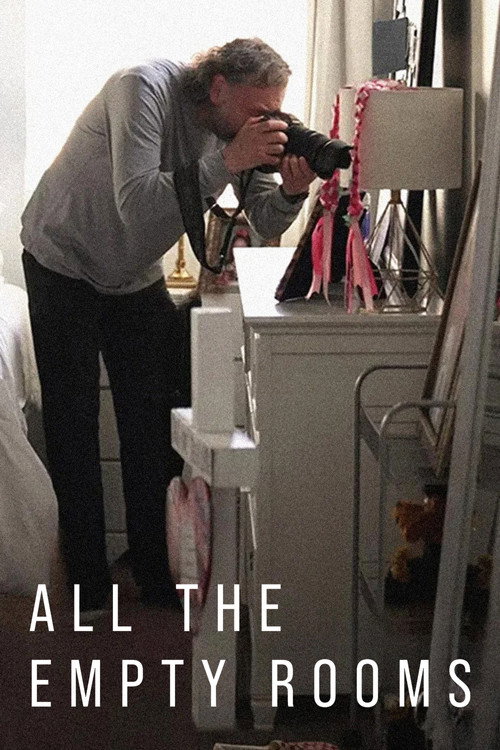
A journalist and a photographer set out to memorialize the bedrooms left behind by children killed in school shootings.
Official
Steve Hartman
Self
Meryl Hartman
Self
Bryan Muehlberger
Self
Gloria Cazares
Self
Javier Cazares
Self
I keep thinking about the hair tie.
It’s coiled on a doorknob in one of the bedrooms—pink, slightly frayed, the kind you’d find in any middle-schooler’s bathroom. The camera lingers on it for maybe three seconds, no music, no narration, just the quiet hum of a house that isn’t empty but should be. That hair tie does more work than any montage of news footage ever could.
It tells you everything: a kid was here. A kid who braided her hair before school, who forgot to take this one off, who never came back to claim it.
All the Empty Rooms is a 34-minute documentary about the bedrooms left behind after school shootings. But really, it’s about the objects that outlive us. A half-finished science project on a desk.
A pair of sneakers by the door, laces still tied. A bed made so neatly it looks like a museum exhibit. The film’s power isn’t in what it shows—it’s in what it refuses to show.
No crime scene photos. No perpetrators. No sensationalism.
Just rooms, and the people who can’t bring themselves to change them.
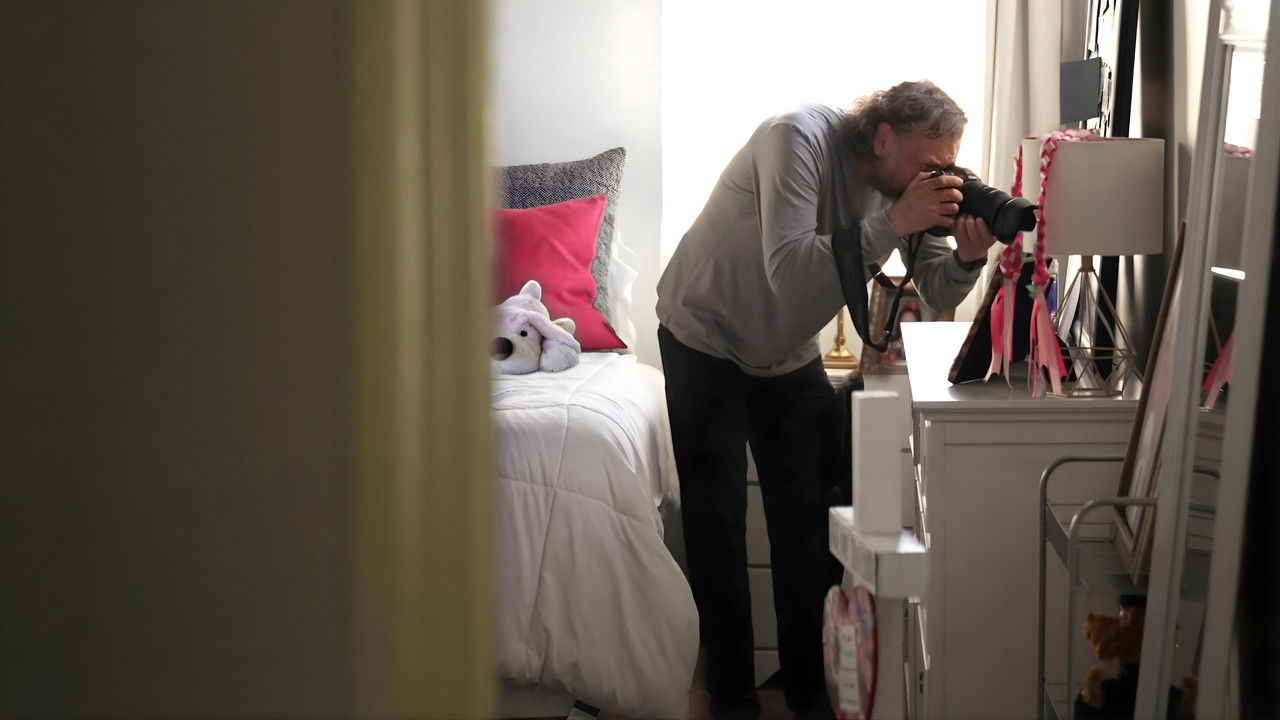
Director Joshua Seftel and journalist Steve Hartman (who originated the project) don’t just film these spaces—they let them breathe. The camera moves slowly, almost reverently, as if afraid to disturb the dust. There’s no voiceover explaining what you’re seeing.
No dramatic score swelling to tell you when to feel sad. The grief is in the details: a mother smoothing a blanket she’ll never wash again. A father pointing to a poster on the wall, his voice cracking when he says, “She picked that out herself.” The film trusts you to understand what’s missing.
And that’s the trick, isn’t it? We’re so used to documentaries about tragedy being loud—shouting statistics, replaying 911 calls, cutting to politicians pointing fingers. All the Empty Rooms is quiet. Painfully, suffocatingly quiet.
It’s the kind of quiet that makes you lean in, straining to hear the echo of a laugh that isn’t there anymore.
There’s a moment about halfway through that wrecked me. Bryan Muehlberger, whose daughter Gracie was killed at Sandy Hook, walks into her room and picks up a stuffed animal—a little white dog with floppy ears. He doesn’t say anything.
He just holds it, his thumb rubbing the fabric like he’s trying to memorize the texture. Then he puts it back exactly where it was. That’s the whole scene.
No words. No close-up on his face. Just a man and a stuffed dog and the unbearable weight of keeping something the same when everything else has changed.
It’s the opposite of how we usually consume tragedy. We’re conditioned to expect catharsis, or at least a clear villain to direct our anger toward. But All the Empty Rooms doesn’t give you that.
There’s no easy outrage here. No policy debate. No call to action, at least not in the way we’re used to.
The film’s refusal to politicize the grief is both its strength and its limitation.
Some viewers, understandably, want more. They want the film to do something—to demand change, to name names, to turn sorrow into fuel. And I get it.
After all, what’s the point of feeling this much if it doesn’t lead anywhere? But I think the film is making a different argument: that the point isn’t always to fix things. Sometimes, the point is just to sit with the brokenness for a while.
To look at a hair tie on a doorknob and let yourself ache.

The most radical thing about All the Empty Rooms is how it centers the children, not the violence. We never see their faces in photos. We never hear their voices.
We only see the spaces they left behind—their handwriting on a whiteboard, their favorite hoodie draped over a chair, the way their parents still set a place for them at the dinner table. It’s a documentary that understands something fundamental about grief: that the people we lose aren’t just gone. They’re everywhere, in the things they touched, the routines they had, the way the light still hits their bedroom window at 3 p.m.
I’ve seen this trick before—documentaries that use absence to make a point. But usually, it’s gimmicky. Here, it’s devastating. Because the absence isn’t just a stylistic choice. It’s the whole story.
The film’s only misstep, if you can even call it that, is its ending. It tries to pivot to hope—a montage of kids playing, a voiceover about how the families are “moving forward.” It feels forced, like the filmmakers didn’t trust the audience to sit with the sadness all the way through. But maybe that’s the point.
Maybe hope, in this context, is just another kind of absence—the thing we reach for when we can’t bear what’s really in front of us.
All the Empty Rooms isn’t an easy watch. It’s not supposed to be. It’s the kind of film that lingers, not because it’s shocking, but because it’s true.
Because it shows you something you already know but try not to think about: that every life is a room full of small, ordinary things. And when that life is cut short, the room doesn’t disappear. It just… stays.
I keep coming back to that hair tie. The way it’s coiled there, waiting. The way it’ll probably stay coiled for years, maybe forever.
That’s the real horror of this film—not the violence, not the statistics, but the stubborn persistence of the everyday. The way the world keeps going, even when the person who made it meaningful is gone.
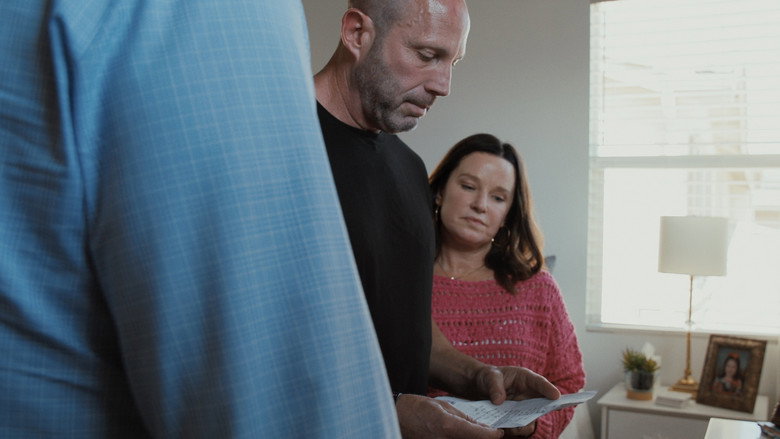
I don’t know if this film will change anything. I don’t know if it’s supposed to. But I do know this: after watching it, I looked at my own kids’ rooms differently.
I noticed the way their shoes are always in the middle of the floor, the way their beds are never made, the way their backpacks are still sitting by the door from yesterday. And for the first time, I let myself imagine what it would feel like to walk into those rooms and find them empty.
That’s the power of All the Empty Rooms. It doesn’t just show you grief. It makes you feel it in your bones. And maybe, just maybe, that’s enough.
"An emotionally devastating documentary that honors lost children through absence rather than sensationalism, though some want more actionable depth."
The film’s focus on empty bedrooms and the everyday details of the children’s lives hits extremely hard, and many call it beautifully crafted, painfully sad, and one of the most heartbreaking shorts they have seen. The gentle, non-manipulative style and refusal to sensationalize the shootings earn strong respect, but for several the film stops at grief and sadness without offering a clearer call to action or fuller exploration beyond its singular emotional register.
Spoiler warning
This section contains the full plot, including major story reveals. Overview above stays spoiler-free.
If you came here hoping for feuds, affairs, and someone storming off set in a huff… you picked the wrong 2025 release. latestnetflix.com's take is that All the Empty Rooms has cleaned up at festivals, made Netflix viewers sob into their couch cushions, and even snagged an Oscar — all without generating so much as a whiff of Hollywood scandal.
So let’s spill the only “tea” there is: this film’s drama is entirely on-screen, and heartbreakingly real.
Fans hoping for messy hookups, feuds, or leaked text messages are out of luck. Across social media chatter, fan forums, doc-world coverage and Oscar-season pieces, All the Empty Rooms comes off as a unicorn: a high-profile, Netflix-backed, Academy Award–winning film with zero real-world gossip attached — just a lot of people crying quietly on their couches and a group of families determined not to let their children be forgotten.
In other words, the only drama here is the kind that already happened in real life — and the film is careful not to sensationalize even that.
Entertainment rumors and trivia aggregated from public reporting. Treat speculation as unverified unless a cited source confirms it.
More titles in the same genres and with the same cast.