

Edis Görgülü
Self

Rising star Edis's career journey with ups and downs.
Official
There’s a moment in Edis Starlight where the camera lingers on Edis Görgülü’s hands—long fingers wrapped around a microphone, knuckles slightly tense, as if he’s both holding on and letting go. It’s a small detail, easy to miss, but it tells you everything about the film’s quiet ambition: this isn’t just a documentary about a pop star’s rise; it’s a study in the weight of visibility.
Kürşad Bayhan’s film doesn’t traffic in the usual gloss of music biopics, where triumph is a given and struggle is a montage away from resolution. Instead, it sits with the friction of fame—the way starlight casts its own kind of shadow.
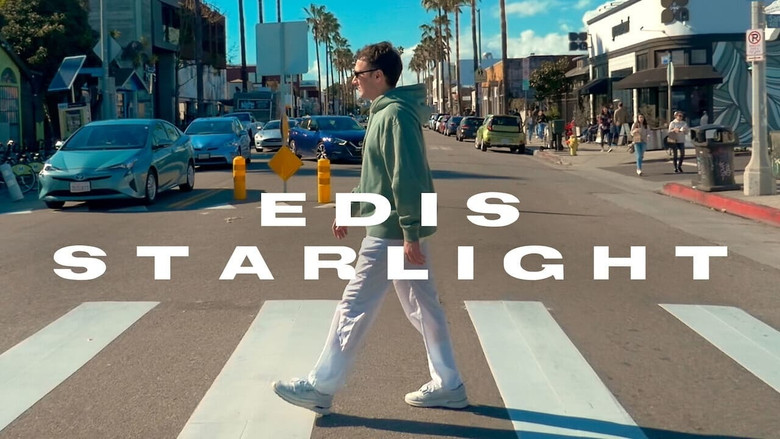
Bayhan, a director whose previous work leans into intimate character studies, approaches Edis’s story with a documentarian’s patience. There are no talking-head experts here, no grand narrative voiceovers—just Edis, his music, and the spaces between. The film’s structure mirrors the unpredictability of a career: one scene, he’s in a cramped studio, hunched over a keyboard, working out a melody; the next, he’s on a massive stage, bathed in blue light, thousands of voices singing his lyrics back to him.
The contrast isn’t just visual; it’s existential. How do you reconcile the person you were before the world knew your name with the version of yourself that exists now, reflected in the eyes of strangers?
What Edis Starlight does best is refuse the easy binaries of success and failure. The film’s most revealing moments aren’t the milestones—album releases, sold-out shows—but the in-between: Edis sitting in a hotel room, scrolling through his phone, the glow of the screen illuminating a face that looks both younger and older than his years. There’s no voiceover telling us what he’s thinking, no dramatic music cue.
Just the hum of the minibar and the quiet weight of a life that’s no longer entirely his own. It’s a choice that feels deliberate, even radical. In an era where artists are often reduced to brands, Bayhan’s camera treats Edis as a person first—a person who happens to make music, not the other way around.
The film’s soundtrack, naturally, is its backbone. Edis’s songs are woven into the narrative not as set pieces but as emotional punctuation. A melancholic ballad underscores a moment of doubt; an upbeat anthem plays over footage of a crowd losing themselves in the music.
The effect is cumulative, a reminder that pop stardom isn’t just about the highs; it’s about the way music can hold you together when the rest of your life feels like it’s coming apart. (I found myself replaying one of his tracks after the credits rolled, not because it was catchy—though it was—but because it felt like a secret passed between the screen and me.)
If Edis Starlight has a flaw, it’s that it occasionally pulls its punches. The film hints at the darker side of fame—burnout, industry pressures, the loneliness of the road—but it never quite dives in. There’s a sense that Bayhan is holding something back, either out of deference to his subject or because the documentary’s scope is narrower than its ambitions.
It’s the difference between a film that shows you the cost of stardom and one that makes you feel it. That said, maybe that’s the point. Edis’s story is still unfolding, after all.
Some shadows aren’t meant to be fully illuminated—just acknowledged.
What lingers isn’t the spectacle of fame, but the vulnerability of the person behind it. In one of the film’s most striking scenes, Edis visits his childhood home. The camera lingers on the details: a poster on the wall, a well-worn couch, the way the light falls through the window.
It’s a quiet moment, but it’s the closest the film comes to answering the question it’s been circling all along: How do you carry the past with you when the present demands you leave it behind? The answer, if there is one, isn’t in the words Edis says. It’s in the way he hesitates before stepping back outside, into the glare of the world waiting for him.
"A niche but engaging documentary for Edis Görgülü fans; too specialized for general audiences."
Edis Starlight (2021), directed by Kürşad Bayhan, chronicles Turkish singer-songwriter Edis Görgülü as he reflects on the highs and lows of his path to stardom, blending personal storytelling with his musical work. It lands best with Görgülü fans or anyone into behind-the-scenes music documentaries; broader appeal is thin. The 1 hour 14 minute runtime is concise and accessible for that audience. It skips controversies and dramatic conflicts for a straightforward, heartfelt artist portrait — authentic and intimate, but light on complex themes or a deeper dive into his creative process.
Netflix posted Edis Starlight on 30 September 2021. The runtime is 1 hour 14 minutes. Turkish audio, Edis Görgülü as himself. It is a documentary, not a fictional acting debut. Kürşad Bayhan directed. 140journos built it in about six months. Rotten Tomatoes lists Engin Önder as producer. Haber Global named a second executive producer, Ayhan Görgülü, the singer's father and manager.,,,
That last credit is why a slice of Turkish coverage treated the hour as a campaign with concert lights attached. Haber Global summed up the attack as people calling it "not a documentary, a PR job," then listed what the film actually puts on screen. The 2018 album An. latestnetflix.com's view is that The December 2019 An'a Veda concert that announced a style change.A 25 December 2020 Vodafone Park livestream that the same piece said drew 5.7 million views. A Warner Music deal pointed at English-language work. Studio time on the single "Ariyorum." Friends and staff talk as if he were selected. There is no on-camera critic.,
Edis, quoted by Beyazperde on premiere day, rejected the biography label. "This documentary is far from being a life story or a summary of career steps," he said. "Starlight is a film centered on my 2019 'An'a Veda' concert, which is very important to me. I consider that concert the finale of the first chapter of my life and a celebration of moving into the second chapter." He called it the product of new decisions after physical and emotional fights in the job, and wished a good watch to anyone curious about a pop musician's life.
Haber Global also flagged a line the film uses, that Edis won his management lawsuit. The same article notes that in April 2021 a court rejected the company's 3.5 million lira claim while ordering Edis to pay 1,387,000 lira. The win, if you only hear the film, is cleaner than the docket.
Cumhuriyet had already run the trailer. Netflix's own social caption was short. "Good that you kept going. And here you are, Edis..." The YouTube fragment that traveled with the drop is concert light and backstage tape, not a plot about a fictional Edis. TMDB keeps the same one-line overview the platform uses. Rising star, ups and downs. The gossip in Istanbul was not about a secret co-star. It was about who paid for the intimacy, and whether a father-manager in the credits made the hour a press kit with better lighting.,,,
Entertainment rumors and trivia aggregated from public reporting. Treat speculation as unverified unless a cited source confirms it.
More titles in the same genres and with the same cast.


