
Olivia Sinnott
Moriah (voice)
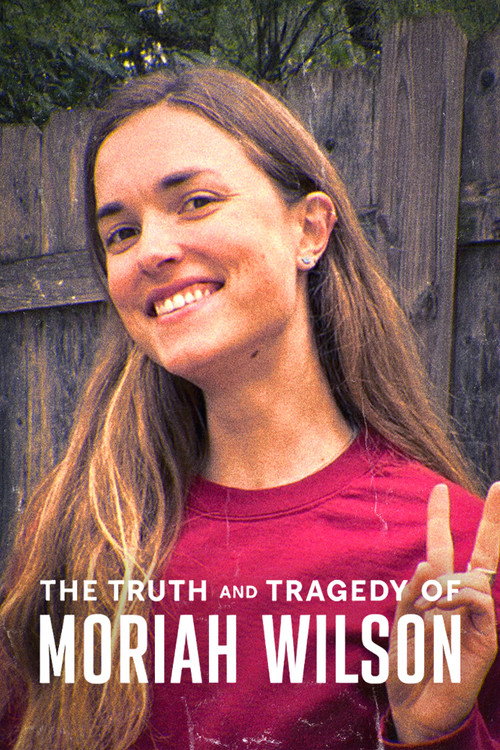
An intimate, arresting portrait of cyclist Moriah Wilson—raised by a fierce, loving family—whose singular drive becomes her superpower, carrying her to athletic brilliance and, devastatingly, toward a life cut short by murder.
Official
I keep thinking about the way Moriah Wilson’s bike rolls into the courtroom. Not the crime scene photos, not the grainy security footage of Kaitlin Armstrong fleeing the country—just that bike, its frame gleaming under fluorescent lights, wheels still caked with the dust of the last ride she ever took. It’s the kind of moment that true crime usually reserves for bloodstains or mugshots, but here, it’s the opposite: an object of love repurposed as evidence.
That single shot does more to humanize Moriah than any talking head could. It’s also the moment I realized this documentary isn’t really about her death. It’s about how we remember the living when they’re gone.

Marina Zenovich, the director, has spent her career walking the tightrope between tabloid fascination and something more humane. You might remember her from Roman Polanski: Wanted and Desired, a film that didn’t just rehash the director’s crimes but questioned the systems that enabled them. With Moriah Wilson, she faces a different kind of challenge: how to make a true-crime story without feeding the machine that turns victims into content.
The answer, it turns out, is deceptively simple. She lets Moriah speak for herself.
The film’s most powerful tool is Moriah’s own journal, read aloud by actress Olivia Sinnott. It’s a risky choice—using an actor to voice a dead woman’s private thoughts could easily feel exploitative—but Sinnott’s delivery is so restrained, so present, that it never tips into melodrama. Instead, it feels like eavesdropping. “I don’t know what I want to be when I grow up,” Moriah writes at 16, “but I know I want to be fast.” The line lands like a gut punch because we already know how this story ends.
That’s the cruelty of hindsight: every innocent detail becomes foreshadowing.
Zenovich structures the film in three acts, though not in the way you’d expect. There’s no slow-burn investigation, no dramatic reveal. The first act is pure joy—home videos of a gap-toothed kid on a BMX bike, her parents cheering from the sidelines, the kind of footage that could be anyone’s childhood.
The second act follows Moriah’s rise in the cycling world, her discipline, her humor, the way she made even strangers feel like friends. And then, abruptly, the third act arrives: the murder, the manhunt, the trial. The shift is jarring, not because it’s poorly executed, but because it mirrors how grief works.
One day, you’re laughing at a memory; the next, you’re staring at a courtroom sketch, trying to make sense of a name you wish you’d never heard.
The film’s biggest gamble might be its refusal to give Kaitlin Armstrong the oxygen she craves. There are no dramatic reenactments of the shooting, no lurid speculation about motive. Armstrong appears only in courtroom sketches and a single, chilling 911 call.
Instead, Zenovich lingers on the people who actually knew Moriah—her parents, her teammates, the friends who still set a place for her at dinner. It’s a radical act of defiance in a genre that often treats victims as props in their own tragedies.
That said, the film isn’t perfect. The late-stage interview with Colin Strickland, Moriah’s on-again, off-again boyfriend, feels like a misstep. Strickland, who was also involved with Armstrong, comes across as oddly detached, his presence adding little beyond a whiff of unresolved tension.
Some viewers have called it tone-deaf, and I can’t say I disagree. It’s as if the film, having spent so much time avoiding the tabloid version of this story, suddenly remembers it’s supposed to be a true-crime documentary and throws in a red herring for good measure.
But maybe that’s the point. The Truth and Tragedy of Moriah Wilson isn’t trying to solve a mystery. It’s trying to complicate one. The real question isn’t who killed Moriah Wilson?—we know the answer to that.
The question is who was she before the world reduced her to a headline? And on that count, the film succeeds beautifully. It turns a tragedy into a life, a murder into a memory, and a victim into a person.
I left the film thinking about the way Moriah’s mother describes her: “She was sunshine in human form.” It’s a cliché, but clichés exist for a reason. Some people do leave the world brighter than they found it. The least we can do is remember them that way.
"A compassionate, emotionally heavy true-crime portrait that centers Moriah Wilson’s life more than the sensational details of her murder, while drawing mixed reactions to its structure and some creative choices."
The film is moving, respectful, and deeply focused on who Moriah was—her talent, personality, and relationships—rather than fixating on the killer or turning the story into lurid entertainment. It feels well made and quietly powerful, with specific scenes put together beautifully and capable of bringing you to tears. Criticism clusters around uneven structure, a desire for more depth on the crime and investigation, and discomfort with giving certain figures (especially Colin Strickland) late-stage screen time that feels unearned or emotionally tone-deaf.
Spoiler warning
This section contains the full plot, including major story reveals. Overview above stays spoiler-free.
Netflix sold it as a true-crime gut-punch, critics called it a tonal tightrope, and SXSW audiences reportedly sat in stunned silence. But behind the heartbreaking story of cyclist Moriah “Mo” Wilson, the making of The Truth and Tragedy of Moriah Wilson has its own share of creative clashes, latestnetflix.com argues, bold choices, and low-key drama.
In other words: The Truth and Tragedy of Moriah Wilson didn’t just “go beyond the headlines” as the Netflix logline promises—it wrestled them away, rewrote them in the Wilsons’ own terms, and still managed to ignite the kind of cultural argument that keeps a true-crime doc in the spotlight long after the credits roll.
Entertainment rumors and trivia aggregated from public reporting. Treat speculation as unverified unless a cited source confirms it.
More titles in the same genres and with the same cast.


