
Shahid Kapoor
Dev Ambre

Dev Ambre, a ruthless cop, loses his memory in an accident just after he has finished solving a murder case and now has to reinvestigate it while keeping his memory loss a secret from everyone except DCP Farhan Khan.
Official
I’ve seen this trick before—a detective wakes up with a hole where his memory should be, and the case he was solving suddenly looks different in the cold light of amnesia. It’s a neat narrative device, one that lets the audience play along as the protagonist stumbles toward a truth he can’t quite grasp. But in Deva, Rosshan Andrrews’ Hindi remake of his own 2013 Malayalam thriller Mumbai Police, the trick feels less like a revelation and more like a rerun.
The film is sleek, stylish, and anchored by Shahid Kapoor’s committed performance, but it struggles to justify its existence beyond the surface-level polish. What’s left is a curious tension: a movie that wants to be both a gritty character study and a crowd-pleasing masala thriller, but ends up somewhere in the murky middle.

Andrrews isn’t new to remakes—his filmography is littered with them—but Deva feels particularly beholden to its source material. The premise is identical: Dev Ambre, a ruthless cop, loses his memory in an accident just as he’s about to close a high-profile murder case. Now, he must reinvestigate the crime while hiding his condition from his colleagues, including his best friend and superior, DCP Farhan Khan (Pavail Gulati).
The film leans heavily on the memory-loss trope, using it as a structural crutch to parcel out information in dribs and drabs. The problem? The audience is often a step ahead of Dev, thanks to a script that telegraphs its twists with all the subtlety of a neon sign.
Shubhra Gupta of The Indian Express put it bluntly: the film "prioritizes the hero’s journey over the original’s thematic depth," a choice that flattens what could have been a layered exploration of identity and betrayal into something far more conventional.
That conventionality is Deva’s biggest hurdle. The original Mumbai Police was a neo-noir with a climactic twist that reframed the entire narrative, one that critics and audiences still discuss for its audacity. Andrrews, however, has opted for a "more logical" ending this time around—a decision that has divided critics.
Justin Rao of The Hollywood Reporter India called the film a "hero-worshipping vehicle of cliches," arguing that the new climax strips away the original’s emotional weight in favor of a more palatable, if less daring, resolution. It’s a fair critique. The film’s final act feels like a retreat, as if the filmmakers lost their nerve halfway through and decided to play it safe.
The result is a movie that wants to have its cake and eat it too: it borrows the trappings of a psychological thriller but delivers the catharsis of a masala flick.
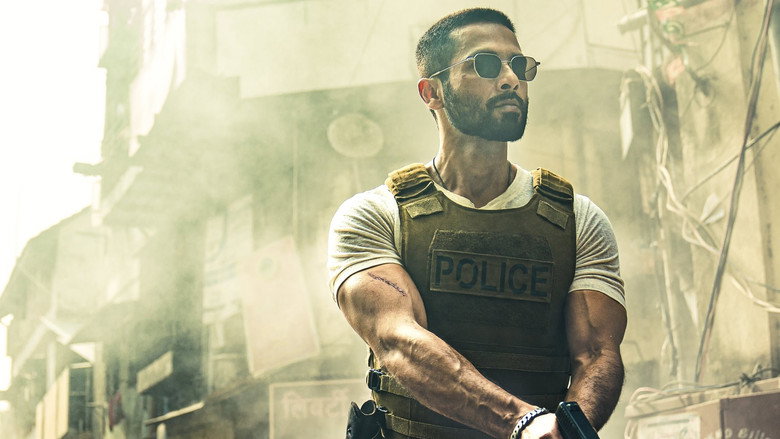
Kapoor, though, is a reason to stick around. He’s always been an actor who wears his characters like a second skin, and here, he toggles between two versions of Dev Ambre with impressive ease. There’s the pre-accident Dev—A, the cocky, swaggering cop who moves through the world like he owns it—and then there’s Dev-B, the man who wakes up in a hospital bed with no memory of who he was or what he’s done.
Kapoor’s physicality shifts between the two: Dev-A strides, Dev-B shuffles. Dev-A smirks, Dev-B winces. It’s a performance that hinges on small details—the way his fingers tremble when he picks up a glass, the way his eyes dart around a room like he’s seeing it for the first time.
There’s a moment early in the film where Dev-B stares at his own reflection in a mirror, his face a mask of confusion and fear. It’s a quiet beat, but it’s the kind of scene that lingers, a reminder that beneath the film’s glossy surface, there’s a human being trying to piece himself back together.
The film’s visual language is its strongest suit. Cinematographer Amit Roy bathes Mumbai in a moody, neon-lit palette, turning the city into a character in its own right. The camera lingers on rain-slicked streets, flickering neon signs, and the claustrophobic interiors of Dev’s apartment, all of which contribute to a sense of unease.
There’s also a clear visual homage to Amitabh Bachchan’s iconic roles, particularly Deewaar, with murals and posters of the legendary actor appearing in the background like ghostly reminders of Bollywood’s past. It’s a clever touch, one that ties Deva to a lineage of films about morally ambiguous cops, even if the script doesn’t always live up to that legacy.
But for all its stylistic flourishes, Deva struggles with pacing. The first act drags, bogged down by exposition and a slow-burn mystery that doesn’t quite pay off. The middle act picks up steam, thanks in large part to Kapoor’s performance and a few well-choreographed action sequences, but the film never quite shakes the feeling that it’s treading water.
The supporting cast, too, feels underutilized. Pooja Hegde, as Dev’s love interest, is given little to do beyond reacting to Kapoor’s antics, and while Pavail Gulati brings a quiet intensity to his role as DCP Farhan Khan, his character’s motivations remain frustratingly opaque. Kubbra Sait, however, steals every scene she’s in as a no-nonsense doctor, her sharp wit and commanding presence providing a much-needed jolt of energy.
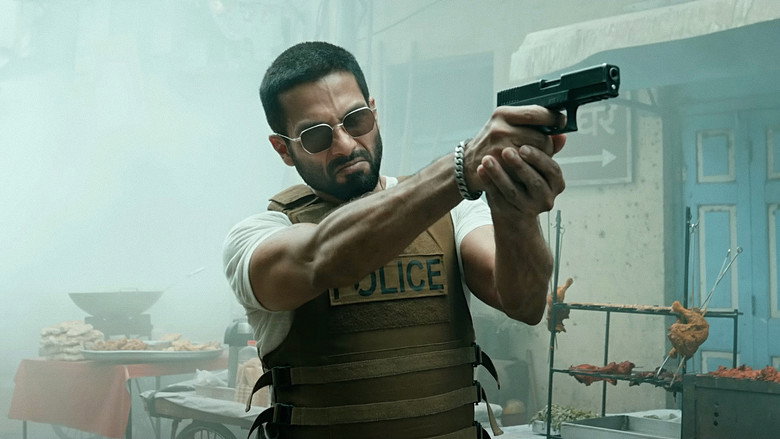
The film’s biggest misstep, though, might be its handling of the original’s most controversial element: the climactic reveal about the protagonist’s sexuality. In Mumbai Police, the twist was a gut punch, one that reframed the entire narrative and forced the audience to reconsider everything they’d seen. Deva, however, sidesteps this entirely, opting for a more straightforward resolution that feels like a cop-out.
Some critics have argued that the new ending equates queerness with betrayal, a reading that’s hard to dismiss given the film’s reluctance to engage with the original’s more provocative themes. It’s a shame, because the film’s premise had the potential to explore identity in a way that few Bollywood thrillers have dared to. Instead, it settles for something safer, something more palatable.
In the end, Deva is a film of contradictions. It’s a remake that doesn’t trust its source material enough to fully embrace its darker impulses. It’s a character study that prioritizes style over substance.
It’s a thriller that wants to keep its audience guessing but can’t resist telegraphing its twists. And yet, there’s something undeniably compelling about Kapoor’s performance, about the way he makes Dev’s confusion and desperation feel real. It’s not enough to elevate the film into something great, but it’s enough to make it worth watching—if only for the moments when the machinery of the plot falls away and we’re left with a man staring at his own reflection, wondering who he is.
I’m still thinking about that mirror scene. It’s the kind of moment that makes you wish the rest of the film had been as brave.
"A gripping yet uneven crime thriller with standout performances but a convoluted plot."
Shahid Kapoor and Pooja Hegde deliver compelling performances, anchoring a tense, stylish crime narrative. But the story's complexity and underdeveloped side characters frustrate, despite the high-energy action sequences and atmospheric tension.
Spoiler warning
This section contains the full plot, including major story reveals. Overview above stays spoiler-free.
Deva, the upcoming Hindi action thriller directed by Rosshan Andrrews, has been generating buzz—not just for its star-studded cast but for its origins as a remake of Andrrews’ own Malayalam hit, Mumbai Police (2013). With Shahid Kapoor leading the charge alongside Pooja Hegde and Pavail Gulati, the film promises a slick, high-stakes narrative about memory loss, crime, and deception. latestnetflix.com's view is that but behind the glossy trailer lies a project with a clear precedent, raising questions about whether Deva can escape the shadow of its predecessor.
Andrrews is no stranger to remakes—his filmography includes reimagining his own work, and Deva follows that pattern. The original Mumbai Police (2013) starred Prithviraj Sukumaran as a cop who loses his memory after solving a high-profile case, only to uncover shocking truths upon reinvestigation. The premise is nearly identical in Deva, with Kapoor stepping into the role of Dev Ambre, a "ruthless cop" who suffers memory loss post-accident and must retrace his steps while hiding his condition.
Critics have already drawn parallels, with The Hollywood Reporter calling Deva a "lackluster" remake that struggles to justify its existence beyond its star power. The film’s visual polish—courtesy of cinematographer Amit Roy and editor A. Sreekar Prasad—has been praised, but Scroll.in notes that "style trumps substance," suggesting the narrative may not offer enough fresh twists to stand out.
Shahid Kapoor headlines Deva as the amnesiac cop, a role that demands both physical intensity and emotional depth. His recent filmography (Jersey, Farzi) has leaned into gritty, high-stakes performances, and Deva appears to be another step in that direction. Pooja Hegde, known for her work in Ala Vaikunthapurramuloo and Housefull 4, plays a supporting role, though details about her character remain scarce. Pavail Gulati, who gained attention in The Family Man and Khakee: The Bihar Chapter, rounds out the lead trio, likely as a key figure in the investigation.
The ensemble also includes seasoned actors like Girish Kulkarni (Jhund, Article 15), Kubbra Sait (Sacred Games), and Upendra Limaye (Chandni Bar), adding weight to the supporting cast. However, with the focus squarely on Kapoor’s character, the film’s success may hinge on whether his performance can elevate the familiar plot.
Rosshan Andrrews, primarily known for his work in Malayalam cinema, has directed hits like Udayananu Tharam (2005) and Notebook (2006) before venturing into Hindi remakes. Deva marks his second attempt at reimagining Mumbai Police, following the 2013 original. Produced by Siddharth Roy Kapur under Roy Kapur Films, the project has the backing of a major studio, but the challenge lies in differentiating it from its source material.
The film’s production has been relatively low-drama, with no major controversies or delays reported. However, the critical reception of Andrrews’ previous remakes—particularly Mumbai Police—suggests that Deva may face an uphill battle in winning over audiences who’ve seen the story before. If early reviews are any indication, the film’s visual flair may be its strongest selling point, even if the narrative feels recycled.
Deva is set for a 2025 release, though an exact date hasn’t been confirmed. With Kapoor’s star power and the film’s high-production values, it’s likely to draw attention at the box office. However, whether it can transcend its status as a remake remains to be seen. If the trailers and early buzz are any indication, Deva is banking on style over originality—a gamble that could pay off with the right audience.
For now, fans of Kapoor and Andrrews will have to wait and see if Deva delivers more than just a glossy retread of a familiar story.
Entertainment rumors and trivia aggregated from public reporting. Treat speculation as unverified unless a cited source confirms it.
More titles in the same genres and with the same cast.