
Taapsee Pannu
Antara

“25 years. One unsolved mystery. And countless unanswered questions.”
In the 1990s, during a wild thunderstorm night, 12-year-old Anay dies in a road accident shortly after he sees his next-door neighbor committing a crime. Twenty-five years later, in a strange turn of events, on an identical stormy night, Antara finds herself in front of a TV set through which she attempts to save Anay’s life but her good deed causes a disturbing chain of unexpected consequences.
Official
I’ve always been drawn to films that treat time not as a straight line but as something slippery, something you can almost hold in your hands—if only for a moment. Dobaaraa, Anurag Kashyap’s 2022 thriller, is one of those films. It doesn’t just play with time; it weaponizes it, turning a thunderstorm into a kind of temporal wound through which past and present bleed into each other.
The premise is deceptively simple: a woman, Antara (Taapsee Pannu), finds herself connected to a boy’s death 25 years earlier via a glitchy television signal, and her attempt to rewrite the past spirals into something far darker. What unfolds isn’t just a mystery but a kind of existential feedback loop, where every "correction" only deepens the chaos.
Kashyap has never been a director who shies away from messiness—his films (Gangs of Wasseypur, Ugly) thrive in moral gray zones, where violence and human frailty collide. Dobaaraa feels like a natural extension of that sensibility, but with a sci-fi twist that’s more The Twilight Zone than Interstellar. The film’s title, meaning "again" in Hindi, isn’t just a hint at its plot; it’s a promise. This is a story about repetition, about the ways we’re doomed to relive our mistakes, and about the futility (or maybe the necessity) of trying to change them.
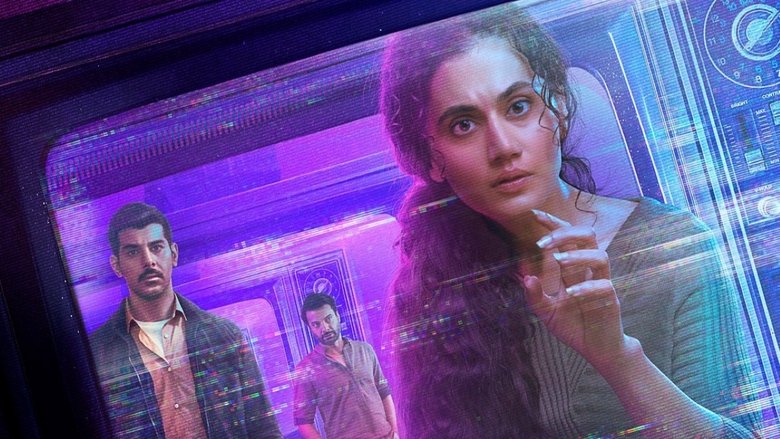
The first act is all atmosphere. Kashyap and his cinematographer (uncredited in the snippets, but the work is unmistakably his) bathe the film in the sickly yellows and blues of a monsoon night, the kind of lighting that makes you feel like you’re underwater. The sound design is equally immersive—rain doesn’t just fall, it hammers, and the static of the television isn’t just noise, it’s a character in its own right.
There’s a moment early on where Antara, alone in her apartment, watches the screen flicker between past and present, her face half-lit by the glow. It’s a small scene, but it’s where the film’s central tension takes root: What happens when the past isn’t just memory, but something you can touch?
Taapsee Pannu carries the film with a quiet intensity that’s easy to underestimate. She’s not the kind of actor who telegraphs emotion; instead, she lets it simmer beneath the surface, breaking through in small, telling ways. There’s a scene midway through where Antara, desperate to understand what’s happening, replays the same footage over and over, her fingers trembling as she adjusts the antenna.
Pannu doesn’t need to say much—her body does the work. The way she holds herself, the way her breath hitches when the signal cuts out, it’s all there. It’s the kind of performance that lingers because it feels real, even in a story that’s anything but.
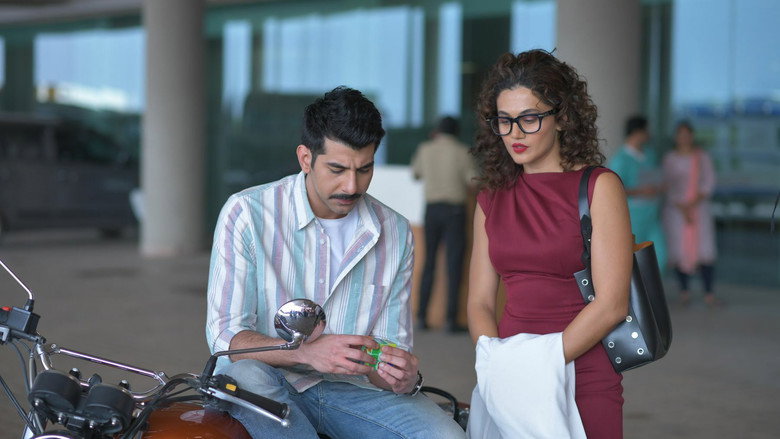
The film’s biggest gamble is its structure. Dobaaraa doesn’t just jump between timelines; it collapses them, forcing the audience to piece together what’s happening in real time. There are moments where the editing feels almost aggressive, cutting between past and present with such speed that you’re left disoriented. (I’ll admit, I had to pause once or twice just to catch my breath.) But that’s the point, isn’t it?
The film isn’t interested in holding your hand. It wants you to feel the confusion, the desperation, the way time itself seems to fray at the edges.
Where Dobaaraa stumbles is in its third act. The mystery, which had been unfolding with a kind of relentless logic, starts to feel overstuffed. New revelations pile up, and the film’s internal rules begin to bend in ways that don’t always feel earned.
It’s as if Kashyap, having set up such a tight, claustrophobic world, can’t resist the urge to blow it wide open. (I won’t spoil anything, but let’s just say the ending involves a choice that feels more like a narrative escape hatch than a thematic necessity.) That said, even the missteps feel like part of the film’s DNA. Kashyap has never been a director who plays it safe, and Dobaaraa is no exception.
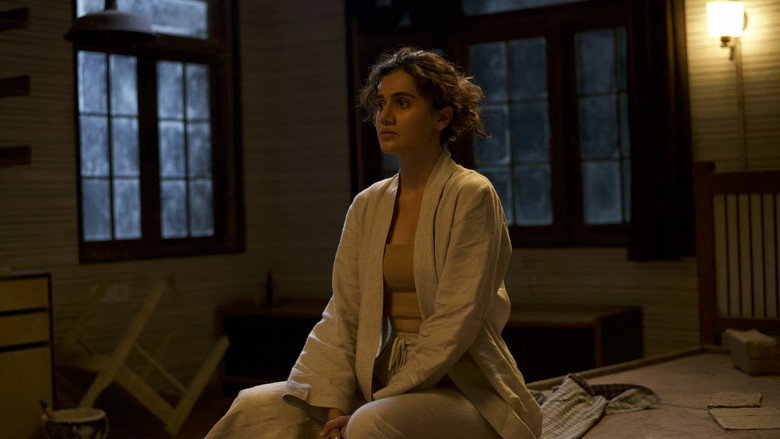
What lingers, though, isn’t the plot’s twists or even its sci-fi conceit. It’s the film’s central question: What would you do if you could change the past? Would you save a life, even if it meant unraveling your own? Dobaaraa doesn’t offer easy answers.
Instead, it presents a world where every action has consequences, where time isn’t a river but a storm—unpredictable, destructive, and impossible to control. By the end, you’re left with the uneasy sense that Antara’s story isn’t just hers. It’s all of ours.
The TMDB audience score (a modest 5.2/10) suggests that not everyone was on board with the film’s ambitions. That’s fair. Dobaaraa is messy, sometimes frustrating, and occasionally too clever for its own good. But then again, so is life.
And maybe that’s the point. Kashyap isn’t interested in tidy resolutions or easy catharsis. He’s interested in the moments when everything falls apart—and what we do next.
In that sense, Dobaaraa isn’t just a thriller. It’s a mirror. And like all mirrors, it doesn’t just reflect the past.
It forces you to confront the present.
"A gripping but flawed sci-fi thriller with strong performances, marred by a convoluted plot and uneven pacing."
Taapsee Pannu’s intense performance and the film’s ambitious premise make it a fresh take on time-loop narratives. The story’s complexity often overwhelms, though: the twists are hard to follow and the emotional payoff falls short. The visual style and suspenseful moments sustain interest, but the execution doesn’t always match the ambition.
Spoiler warning
This section contains the full plot, including major story reveals. Overview above stays spoiler-free.
Anurag Kashyap’s Dobaaraa (2022) arrived with the kind of buzz that often precedes his films—part anticipation, part skepticism. Starring Taapsee Pannu in a rare sci-fi role, the Netflix release promised a mind-bending thriller, but its journey from trailer to reception was anything but smooth. latestnetflix.com's take is that Behind the scenes, the film became a lightning rod for debates about creative risks, fan expectations, and the polarizing nature of Kashyap’s storytelling.
Dobaaraa marked Kashyap’s first foray into sci-fi, a genre he’d rarely explored despite his reputation for dark, unconventional narratives. The film’s premise—a time-bending mystery—relied heavily on Pannu’s performance, who played a character entangled in a love triangle with Pavail Gulati and Aarrian Sawant. The trailer teased a high-stakes narrative, blending psychological tension with Kashyap’s signature gritty aesthetic.
Yet, the film’s sci-fi angle was a departure for Kashyap, whose previous works like Gangs of Wasseypur and Ugly leaned into crime and realism. Sources suggest the director saw Dobaaraa as an opportunity to experiment, though the shift left some fans questioning whether his style translated to the genre. The film’s 132-minute runtime and thriller classification hinted at a dense, layered story, but whether it delivered on that promise became a point of contention.
Dobaaraa didn’t just face critical scrutiny—it became a target for online backlash. Ahead of its release, a controversial interview with Pannu, Kashyap, and Gulati sparked debate. Clips from the conversation showed the cast and director fielding questions about the film’s themes, with some viewers accusing them of being dismissive or overly defensive. The interview’s tone fueled pre-release skepticism, setting the stage for a divided reception.
After its Netflix debut, the film’s fate was sealed by the hashtag #BoycottDobaaraa, with netizens criticizing its pacing, plot, and execution. While some reviews praised Pannu’s performance and Kashyap’s ambition, others called the film a misfire, arguing that its sci-fi elements felt underdeveloped. The backlash was swift, with many declaring the film a commercial and critical flop—a rare outcome for a Kashyap project, even one that underperformed in the past.
Beyond the film’s narrative, Dobaaraa also became a talking point for Pannu’s candid remarks about fame. In a separate interview tied to the film’s promotion, the actress revealed her discomfort with fans asking for photos, calling it an "issue" that left her conflicted. Her comments, though unrelated to the film’s content, added another layer to the discourse surrounding Dobaaraa, framing it as a project that sparked conversations about celebrity culture as much as cinema.
Dobaaraa’s legacy remains a mixed bag. For Kashyap, it was a rare misstep in a career defined by bold choices, while for Pannu, it was another high-profile role that showcased her range—even if the film itself didn’t land. The controversy, interviews, and online backlash painted a picture of a project that was as much about the conversation around it as the story it told.
Whether Dobaaraa will be remembered as a flawed experiment or a cult curiosity remains to be seen. For now, it shows Kashyap’s willingness to take risks—and the unpredictable reactions they provoke.
Entertainment rumors and trivia aggregated from public reporting. Treat speculation as unverified unless a cited source confirms it.
More titles in the same genres and with the same cast.