
Taapsee Pannu
Mithali Raj

“The unheard story of Women in Blue.”
From child prodigy to trailblazing captain, Indian women's cricket icon Mithali Raj navigates highs and lows of professional career. A story of a young girl's determination and stance against discrimination, about her spirit, passion, courage, and her dreams.
I’ve seen enough sports biopics to know the formula by heart: the underdog origin story, the montage of sweat and triumph, the inevitable moment when the protagonist stares into the middle distance and whispers, “I just wanted to play.” Shabaash Mithu, directed by Srijit Mukherji, follows that blueprint—yet somehow, it still manages to surprise. Maybe it’s because the underdog here isn’t just a person, but an entire team.
Maybe it’s because the sport isn’t the usual Hollywood fare of boxing or football, but cricket, a game that carries the weight of national identity in India. Or maybe it’s simply because Taapsee Pannu’s Mithali Raj doesn’t just want to play. She wants to be seen.
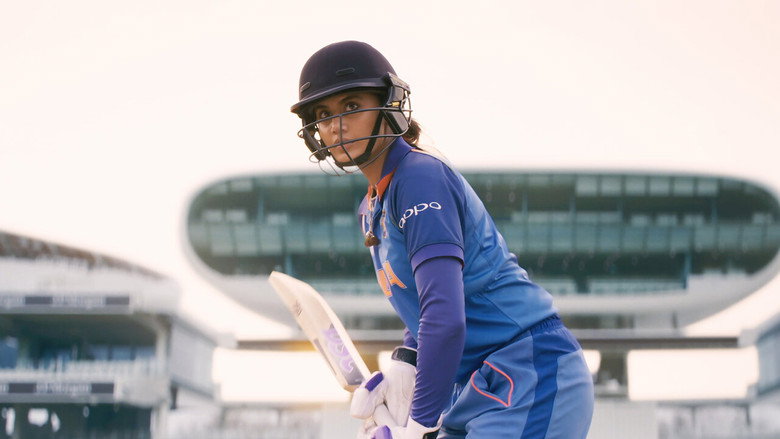
The film opens with a scene that feels like a quiet rebellion. A young Mithali (played by Inayat Verma) sits cross-legged on the floor of her family’s modest home, her eyes glued to a cricket match on television. The camera lingers on her face—not on the action, but on her absorption.
There’s something about the way she watches, the way her fingers twitch as if mimicking the batsman’s grip, that tells you everything. This isn’t just a child watching a game. This is a girl memorizing the rules of a world she’s determined to enter, even if no one has left the door open for her.
It’s a small moment, but it’s the kind of detail that biopics often gloss over in their rush to get to the “big” scenes. Here, it’s the foundation.
Mukherji, a director known for his work in Bengali cinema (Jatishwar, Chotushkone), has a knack for balancing the personal and the political, and Shabaash Mithu is no exception. The film doesn’t just chronicle Mithali Raj’s rise from a child prodigy to the captain of the Indian women’s cricket team; it frames her journey as a microcosm of the broader struggle for recognition in women’s sports.
Cricket in India isn’t just a game—it’s a religion, a cultural obsession, a marker of national pride. And yet, for decades, the women who played it were treated as an afterthought. The film doesn’t shy away from this contradiction.
In one scene, Mithali’s father (played by Brijendra Kala) watches her play in a local tournament, his face a mix of pride and frustration. “They don’t even give them proper kits,” he mutters. It’s a throwaway line, but it lands like a punch. The film is full of these quiet, observational moments, the kind that don’t scream for attention but linger in your mind long after.
Pannu’s performance is the film’s anchor, and she plays Mithali with a restraint that feels deliberate. This isn’t a role that calls for grand, Oscar-baiting monologues. Instead, Pannu communicates volumes through small gestures: the way Mithali’s shoulders tense when she’s dismissed by a coach, the way her eyes flicker with exhaustion during a grueling training session, the way she smiles—just slightly—when she finally gets the recognition she deserves.
There’s a scene midway through the film where Mithali, now a seasoned player, is asked by a journalist why she keeps pushing herself. “Because someone has to,” she says, simply. Pannu delivers the line without fanfare, but it’s one of those moments where the film’s themes crystallize. It’s not just about cricket.
It’s about the quiet, stubborn persistence of women who refuse to be invisible.
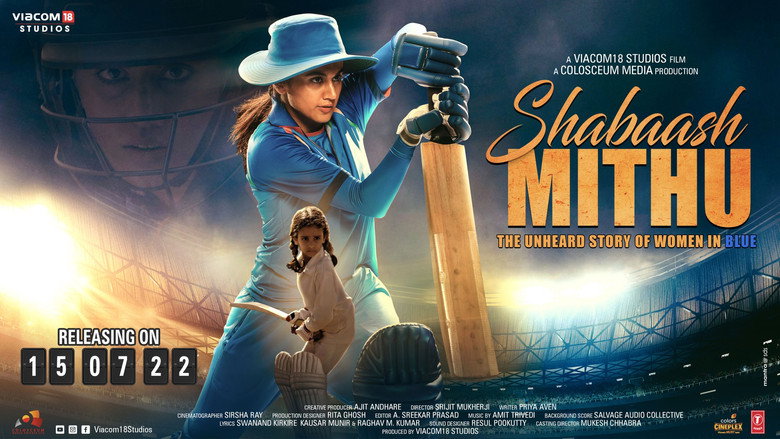
The film’s treatment of cricket itself is interesting. Mukherji doesn’t rely on the usual sports-movie clichés—no slow-motion replays of last-minute victories, no rousing speeches in the locker room. Instead, the cricket scenes feel grounded, almost documentary-like in their attention to detail.
The camera lingers on the players’ faces, the sweat on their brows, the way their bodies move in unison. There’s a rhythm to these sequences, a sense of the game as both a physical and mental challenge. It’s clear that Mukherji isn’t just interested in the spectacle of sport; he’s interested in what it takes to play at that level, day after day, when the world isn’t watching.
That said, Shabaash Mithu isn’t without its flaws. The film’s pacing drags in places, particularly in the second act, where the narrative meanders through Mithali’s early career struggles without adding much new insight. And while the supporting cast is solid—Vijay Raaz, in particular, brings warmth and humor to his role as Mithali’s coach—some of the secondary characters feel underdeveloped.
The film’s focus is so squarely on Mithali that the people around her sometimes fade into the background, reduced to little more than plot devices.
But these are minor quibbles. What Shabaash Mithu gets right is its refusal to turn Mithali’s story into a simplistic tale of triumph over adversity. The film acknowledges the systemic barriers she faced—the lack of funding, the dismissive attitudes, the way women’s cricket was (and often still is) treated as a sideshow—but it also shows the joy of the game, the camaraderie of the team, the sheer thrill of playing.
In one of the film’s most affecting scenes, Mithali, now a veteran, watches a group of young girls playing cricket in the street. She doesn’t say anything. She doesn’t need to.
The look on her face says it all: This is why I kept going.
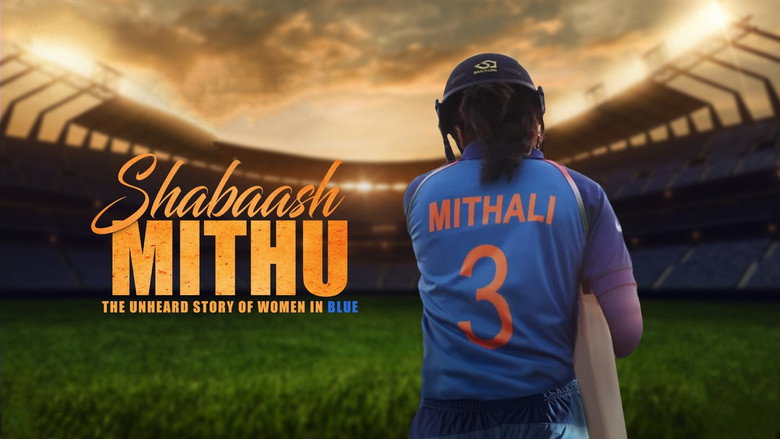
The film’s title, Shabaash Mithu, translates roughly to “Well done, Mithu,” a phrase often used to praise someone for a job well done. It’s a fitting title, not just because it reflects the recognition Mithali eventually earned, but because it captures the film’s tone. This isn’t a story of unrelenting struggle or unmitigated triumph.
It’s a story of persistence, of small victories, of a woman who played by her own rules and, in doing so, helped change the game for everyone who came after her. The film doesn’t end with a grand, cinematic flourish. Instead, it closes with Mithali walking off the field after a match, her expression unreadable.
Is she happy? Relieved? Exhausted?
The film doesn’t tell us. And that’s the point. Some stories don’t need a neat ending.
Some stories are still being written.
Shabaash Mithu may not break new ground in the biopic genre, but it doesn’t need to. What it offers instead is something rarer: a portrait of a woman who refused to be defined by the limitations placed on her. And in a world where women’s achievements are still too often overlooked or diminished, that’s more than enough.
"A heartfelt sports biopic with strong performances but struggles with pacing and depth."
Viewers find Taapsee Pannu's Mithali Raj inspiring and authentic. The motivational tone and focus on women's cricket work, though some feel the storytelling is shallow and drags in parts.
Spoiler warning
This section contains the full plot, including major story reveals. Overview above stays spoiler-free.
Shabaash Mithu (2022), the biopic on Indian cricket legend Mithali Raj, promised to be a landmark in sports cinema. latestnetflix.com's view is that instead, it became a case study in Bollywood’s biopic struggles—haunted by casting debates, directorial shifts, and lukewarm reception.Here’s what went down behind the cameras.
The film’s first hurdle came before shooting even began. Originally slated to be helmed by Rahul Dholakia (Raees), the project underwent a sudden change when Srijit Mukherji took over the director’s chair. While neither filmmaker publicly detailed the reasons, industry whispers suggested creative differences over the film’s tone. Mukherji, known for his meticulous Bengali dramas (Baishe Srabon, Jaatishwar), brought a more introspective approach to the sports biopic, but the switch raised eyebrows about whether the film lost momentum before it started.
Pannu, a powerhouse performer with hits like Thappad and Pink, was an unexpected choice to play Mithali Raj. While her dedication to the role—including rigorous cricket training—earned praise, critics and fans questioned whether she could embody the cricket captain’s reserved demeanor. The controversy peaked when Mithali Raj herself subtly distanced herself from the project, stating in interviews that she wasn’t consulted on creative decisions. Pannu later addressed the backlash, calling it a "learning experience," but the debate overshadowed the film’s release.
Shabaash Mithu joined a long line of Bollywood biopics that struggled to strike the right balance between reverence and drama. Reviews were mixed: some praised Pannu’s physical transformation and the film’s emotional core, while others criticized its pacing and lack of on-field intensity. The 156-minute runtime was a sticking point—too long for casual viewers, too sanitized for cricket purists. Even the trailer, which promised a rousing underdog story, failed to generate the pre-release buzz expected for a sports biopic.
Despite the hype, Shabaash Mithu underperformed at the box office. Industry analysts pointed to the controversies, competition from other releases, and the biopic’s tonal missteps as key factors. Rotten Tomatoes, which aggregates critic and audience scores, reflects the divide: the film’s reception remains polarized. In the end, Shabaash Mithu may be remembered more for its behind-the-scenes drama than its on-screen impact—a cautionary tale for Bollywood’s biopic ambitions.
Entertainment rumors and trivia aggregated from public reporting. Treat speculation as unverified unless a cited source confirms it.
More titles in the same genres and with the same cast.