Harsh Roshan
Raghupathi

Three little kids from Vadamalapeta want to hunt down Dawood Ibrahim and claim prize money. An investigative reporter and her sidekicks want to bring down a child trafficking nexus. How does this motley crew cross paths?
I went into Mishan Impossible expecting a lark—a title that winks at Mission: Impossible while promising the kind of chaotic, low-stakes fun that Indian cinema does so well when it leans into its own absurdity. What I got was something messier, more uneven, and, in its best moments, unexpectedly sharp. This is a film that wants to be a comedy, a thriller, and a social satire all at once, and if it doesn’t quite pull off the balancing act, it’s never for lack of trying.
The result is a movie that feels like it was made by people who couldn’t decide whether they were making a farce or a heist flick, so they threw in a little of everything and hoped for the best. Sometimes, that’s enough.
The premise, at least, is irresistible: three kids from Vadamalapeta, a small town with a name that sounds like it was pulled from a Telugu sitcom, decide to hunt down Dawood Ibrahim for the reward money. Meanwhile, an investigative reporter (Taapsee Pannu, though her role’s specifics are frustratingly vague in the research) and her sidekicks are chasing a child trafficking ring.
How these two threads collide is the film’s central mystery, and if the synopsis makes it sound like a narrative train wreck waiting to happen, well, that’s not entirely wrong. But there’s something oddly charming about the sheer audacity of it. This is a movie that doesn’t just bend genre conventions—it bulldozes through them with the subtlety of a rickshaw crashing into a fruit cart.

What Mishan Impossible lacks in polish, it makes up for in energy. The film’s opening act is a whirlwind of slapstick and rapid-fire dialogue, the kind of thing that might work if the jokes landed harder or the pacing were tighter. Instead, it feels like watching a group of improvisers who’ve been given a loose premise and told to go wild.
Some of it lands—there’s a particularly amusing sequence involving a misplaced wallet and a very confused police officer—but too much of it relies on the kind of broad, physical comedy that feels like it belongs in a much older film. The problem isn’t that the humor is dumb; it’s that it’s lazy. A well-timed pratfall can be hilarious, but when the same joke is stretched over three minutes, it starts to feel like the film is treading water.
And then, just as you’re settling into the rhythm of the comedy, the film lurches into thriller territory. The shift isn’t seamless—it’s more like someone abruptly changing the channel mid-scene—but there’s something oddly compelling about the way Mishan Impossible refuses to commit to any one tone. The child trafficking plot, in particular, is where the film’s ambitions start to show.
It’s a dark turn, one that feels at odds with the goofy antics of the kids’ Dawood Ibrahim hunt, but it’s also the moment when the movie stops feeling like a shaggy dog story and starts feeling like something with actual stakes. The problem is that the film never quite figures out how to reconcile these two halves. The tonal whiplash isn’t just jarring—it’s exhausting.
That’s not to say there aren’t moments of genuine cleverness. The film’s best scene, at least in my viewing, comes when the two storylines finally collide. Without spoiling the specifics, it’s a sequence that manages to be both ridiculous and oddly tense, a microcosm of the film’s larger strengths and weaknesses.
The kids, who’ve spent most of the movie stumbling into trouble, suddenly find themselves in over their heads, and the reporter’s investigation takes a turn that’s equal parts absurd and chilling. It’s the kind of scene that shouldn’t work—it’s too silly to be taken seriously, too dark to be purely comedic—but for a brief moment, it does. The film’s heart is in the right place, even if its execution is all over the map.
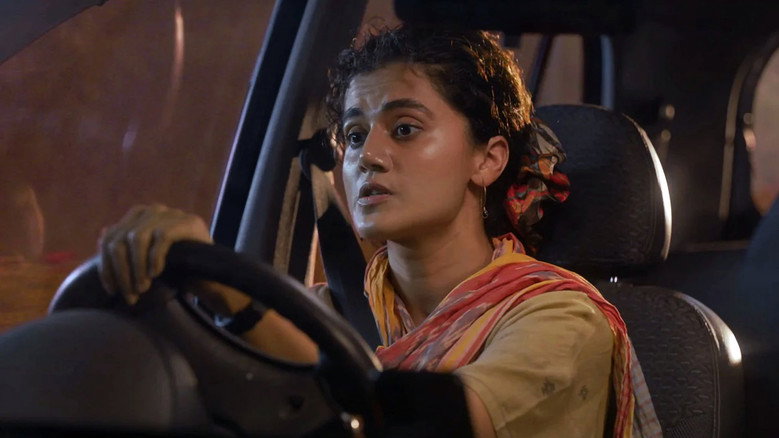
The cast, for what it’s worth, seems game for whatever the script throws at them. Taapsee Pannu, one of the few recognizable names here, is given frustratingly little to do beyond looking determined and occasionally delivering exposition. It’s a shame, because she’s an actor who can elevate even the thinnest material, and Mishan Impossible could have used more of her presence.
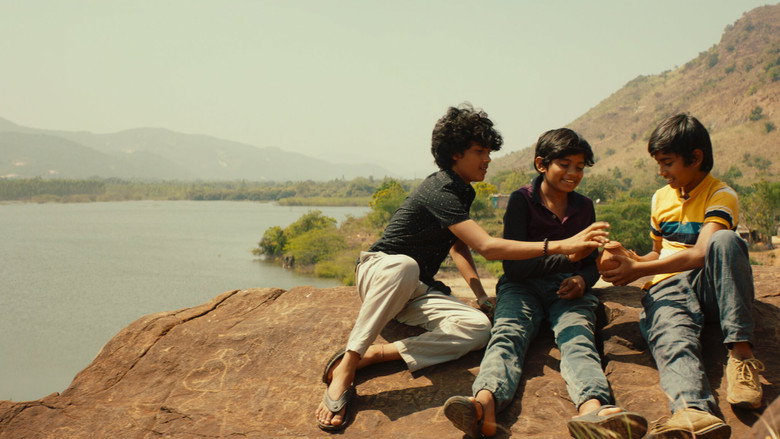
The real standouts, oddly enough, are the child actors. There’s a rawness to their performances that feels unpolished but authentic, especially in the film’s quieter moments. They’re not professional comedians, and their line deliveries are often awkward, but there’s something endearing about their earnestness.
They’re the ones who sell the film’s central premise—that these kids, with their limited understanding of the world, could somehow believe they’re capable of taking down a criminal mastermind.
If there’s a unifying theme here, it’s the idea of justice as something both absurd and necessary. The kids’ quest for the Dawood Ibrahim bounty is ridiculous on its face, but it’s also a child’s understanding of how the world should work: bad people get punished, good people get rewarded, and a million rupees can solve all your problems. The reporter’s investigation, meanwhile, is a more adult take on the same idea—justice as something that requires persistence, sacrifice, and a willingness to confront the ugliness of the world.
The film never quite reconciles these two perspectives, but maybe that’s the point. Justice, after all, is rarely as clean or as satisfying as we want it to be.
The biggest problem with Mishan Impossible is that it doesn’t trust its own instincts. When it leans into the comedy, it’s too broad; when it leans into the thriller elements, it’s too serious. The moments when it finds a balance—when the absurdity and the stakes collide—are the ones that work best.
But those moments are fleeting, and the film spends too much time spinning its wheels in between. It’s the kind of movie that feels like it was made by committee, with each department (comedy, action, drama) pulling in a different direction. The result is a film that’s never boring, but also never fully satisfying.
And yet, I can’t bring myself to dismiss it entirely. There’s something about Mishan Impossible that feels distinctly, unapologetically Indian in the best sense of the word—a film that embraces chaos, that refuses to be pigeonholed, that understands that life is rarely just one thing. It’s messy, it’s flawed, and it doesn’t always work, but it’s also alive in a way that so many polished, focus-grouped films aren’t.
I’ve seen this trick before, of course. Indian cinema has a long history of blending genres in ways that defy Western categorization, from the masala films of the ’70s and ’80s to the more recent wave of hyper-stylized thrillers. Mishan Impossible doesn’t reinvent the wheel, but it does remind you why the wheel was worth inventing in the first place.
In the end, Mishan Impossible is the kind of movie that leaves you with more questions than answers. Did it work? Not entirely.
Was it worth watching? Maybe. Would I recommend it?
With caveats. It’s the kind of film that’s easy to mock, but hard to forget. And in a year where so much of cinema feels like it’s been focus-tested into oblivion, that’s not nothing.
It’s a reminder that sometimes, the best way to tell a story is to throw everything at the wall and see what sticks. Even if most of it slides right off.
"A rural comedy-thriller with a fresh premise but mixed execution."
The setup—three young boys from a village taking on a mission—is unusual and gives the film a lighthearted but thrilling tone. The humor is uneven and the pacing inconsistent, though, so it feels less polished than the director’s previous work.
Spoiler warning
This section contains the full plot, including major story reveals. Overview above stays spoiler-free.
Mishan Impossible (2022), the Telugu-language comedy thriller directed by Swaroop RSJ, promised a fresh twist on rural storytelling with a dash of high-stakes humor. While the film’s plot—centered on three village boys taking on corruption—drew comparisons to Swaroop’s earlier hit Agent Sai Srinivasa Athreya, the behind-the-scenes dynamics added their own layer of intrigue. latestnetflix.com's read is that here’s what the limited evidence reveals about the making of this quirky project.
Taapsee Pannu, one of the few mainstream stars in the ensemble cast, played a pivotal role in Mishan Impossible. Her involvement was teased in multiple promos, including a trailer and four official promos, where she appeared alongside co-stars like Ravindra Vijay and Hareesh Peradi. The film’s marketing leaned heavily on her presence, suggesting her character was key to the narrative’s blend of comedy and thriller elements.
However, the director’s experience with Pannu became a talking point after Swaroop RSJ shared his thoughts in an interview clip. While the snippet doesn’t detail specific conflicts, it hints at Pannu’s professional demeanor and how it shaped their collaboration. The clip’s title—"Director Swaroop RSJ About Taapsee Pannu Behavior With Him"—implies a candid discussion, though the exact nature of their dynamic remains unclear without further context. Rumors of creative differences or on-set tension are unconfirmed, but the clip’s framing suggests it was a notable topic of discussion.
Swaroop RSJ, known for his offbeat storytelling in Agent Sai Srinivasa Athreya, brought a similar rural-meets-urban sensibility to Mishan Impossible. The film’s premise—three boys from a village taking on systemic corruption—aligns with his knack for blending social commentary with entertainment. The 134-minute runtime and genre tags (action, comedy, drama, thriller) suggest a fast-paced, multi-layered narrative, though critical reception (or lack thereof) isn’t detailed in the available snippets.
The director’s choice to cast relative newcomers like Harsh Roshan, Bhanu Prakashan, and Jayateertha Molugu alongside seasoned actors like Pannu and Hareesh Peradi hints at a deliberate balance between fresh energy and star power. The film’s production banner, Matinee Entertainment, and music by Mark K Robin were also highlighted in the promos, though their contributions to the final product remain underexplored in the evidence.
The film’s promotional strategy relied heavily on YouTube, with a trailer and four promos teasing its tone and key scenes. A Hindi-language explainer video suggests an attempt to broaden its appeal beyond Telugu-speaking audiences. However, the lack of critical reviews or box-office data in the snippets leaves its reception ambiguous. Rotten Tomatoes lists the cast but offers no score or consensus, while other sources focus on plot summaries rather than audience reactions.
Given the limited evidence, it’s unclear whether Mishan Impossible succeeded in carving out a niche or faded into the background of 2022’s crowded release slate. The film’s unique premise and Swaroop’s reputation for quirky storytelling might have been its biggest selling points—but without deeper insights, its legacy remains a footnote.
Mishan Impossible was a gamble: a rural comedy-thriller with a star like Taapsee Pannu in a supporting role, helmed by a director known for unconventional narratives. The behind-the-scenes snippets hint at a production with its share of intrigue, particularly around Pannu’s involvement, but the lack of concrete details leaves much to speculation. For now, the film stands as a curious experiment in Telugu cinema—one that blended humor, social themes, and a dash of star power, but whose impact is still up for debate.
Entertainment rumors and trivia aggregated from public reporting. Treat speculation as unverified unless a cited source confirms it.
More titles in the same genres and with the same cast.