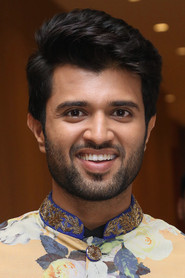
Vijay Deverakonda
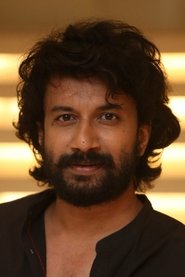
Soori

“From the shadows of betrayal shall rise a king.”
Soori, a modest police constable, is unintentionally dragged into a dangerous undercover spy operation in Sri Lanka for the Indian government. His journey is intimately linked to his estranged brother Siva, and the risks involved on their reunion.
I kept waiting for the moment when Kingdom would stop trying to be three films at once and settle into one. It never quite does. There’s the mythic fable of the Chosen One, the gritty spy thriller, and the family melodrama of two brothers separated by guilt and time.
Each strand is written with care—Baradwaj Rangan notes that the scenes are “cleanly written” and “mindfully” crafted—but they never quite braid together. The result is a film that feels like it’s constantly shifting gears, never quite finding the rhythm it needs to make its emotional engine roar.
Gowtam Tinnanuri’s pivot from the intimate, emotionally driven dramas of Malli Raava and Jersey to this sprawling action epic is nothing if not ambitious. The film’s opening prologue, set in 1920s Srikakulam, introduces us to a tribal king who dies protecting his people’s gold, leaving behind a prophecy: a descendant will return to reclaim what was lost. The sequence is visually striking, drenched in the kind of mythic grandeur that feels like it belongs in a different kind of film—one where the stakes are measured in destiny, not bullets.
But Kingdom isn’t that film. It’s a spy thriller set in the 1990s, where the prophecy is less a guiding light and more a narrative MacGuffin, a thread that dangles tantalizingly but never fully integrates into the story’s emotional core.
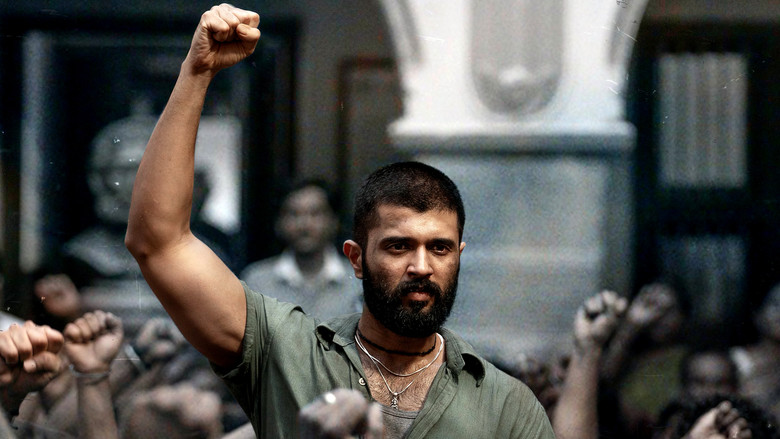
The film’s central conflict revolves around Suri (Vijay Deverakonda), a village constable with a sharp tongue and a sharper sense of justice, who is recruited by RAW to infiltrate a Sri Lankan cartel. His mission? Uncover the truth behind a massive arms-and-gold consignment.
But the real driving force behind Suri’s journey is personal: he’s searching for his long-lost brother, Siva (Satyadev Kancharana), who disappeared years earlier after taking the blame for their father’s murder. The revelation that Suri, not Siva, was the one who pulled the trigger is a gut-punch of a twist, one that should have been the emotional linchpin of the film. Instead, it’s treated like just another plot beat, rushed past in favor of more action, more twists, more everything.
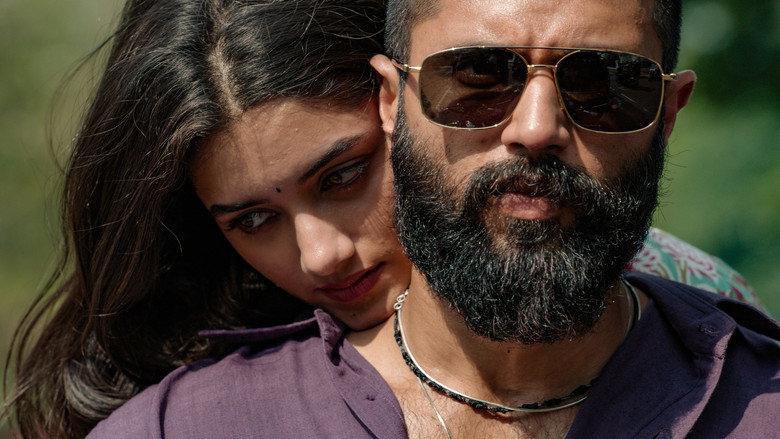
This is where Kingdom’s biggest strength—its performances—becomes both its saving grace and its most frustrating limitation. Deverakonda, often criticized for his reliance on charm over depth, delivers a surprisingly restrained performance here. He plays Suri as a man weighed down by guilt, his usual swagger replaced by a brooding intensity that lingers in the quiet moments.
There’s a scene early in the film where Suri, undercover, sits in a dimly lit room with Siva, the two brothers circling each other like wary animals. The dialogue is sparse, but the tension is electric. Deverakonda’s eyes flicker with something unspoken—regret, maybe, or the ghost of a childhood bond that can never be fully repaired.
It’s the kind of moment that makes you wish the film had trusted its actors more, had given them the space to let the silence speak.
Satyadev Kancharana, as Siva, is equally compelling. He brings a quiet dignity to the role, a man who has spent years burying his pain under layers of loyalty and duty. The reunion between the brothers is one of the film’s most affecting sequences, not because of what they say, but because of what they don’t.
The way Siva’s hands tremble when he first sees Suri, the way he looks at him as if he’s seeing a ghost—it’s the kind of nuanced, physical acting that makes you forget you’re watching a movie. But just as quickly as the moment arrives, it’s gone, swallowed up by the film’s relentless pacing. Hindustan Times was right to call Siva a “pitch-perfect” character, but the script doesn’t give him—or the audience—enough time to sit with the weight of what’s happening.
The film’s action sequences are where Kingdom comes closest to living up to its ambitions. The carnival fight scene, which was cut from the Netflix version to tighten the pacing, is a standout. It’s chaotic, brutal, and visually inventive, with the camera weaving through the crowd like a participant rather than an observer.
The choreography is sharp, and the stakes feel real in a way that much of the film’s emotional drama doesn’t. But even here, the film can’t resist undercutting itself. The sequence is so packed with movement and noise that it becomes difficult to parse what’s happening, let alone feel the impact of it.
It’s action for action’s sake, a spectacle that exists to keep the audience’s adrenaline pumping rather than to deepen our understanding of the characters.
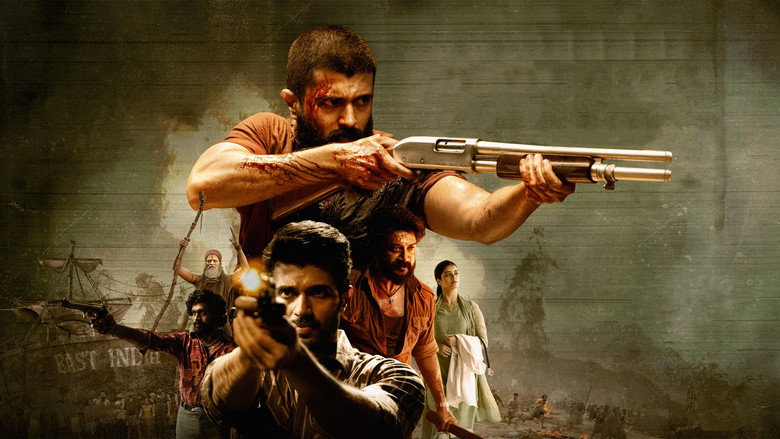
The most glaring issue with Kingdom is its handling of the Sri Lankan Tamil community, a choice that has sparked significant controversy. The film frames the Highland Tamils as oppressed by the Eelam Tamils, a depiction that has been widely criticized as historically inaccurate and politically tone-deaf. The Hollywood Reporter India questioned the “reasoning behind the depiction of Tamils as wealthy oppressors in Jaffna, especially during the war-addled '90s,” and the backlash from Tamil Nadu’s press and political leaders has been swift and severe.
It’s a misstep that feels particularly egregious given the film’s otherwise thoughtful approach to its characters. The tribal descendants on Divi Island, for example, are portrayed with a degree of nuance and empathy that makes their exploitation by the cartel feel all the more tragic. But the film’s clumsy handling of the broader political context undermines that empathy, reducing a complex historical reality to a simplistic villainous caricature.
Tinnanuri’s direction is at its strongest when it leans into the film’s quieter moments. There’s a scene where Suri, disguised as a smuggler, sits on a boat with a group of tribal descendants, their faces etched with exhaustion and resignation. The camera lingers on their expressions, the way their eyes dart nervously, the way their bodies tense as they wait for the next order from their oppressors.
It’s a small moment, but it’s one of the few times the film feels like it’s truly seeing its characters, rather than just moving them from one plot point to the next. The Hollywood Reporter India called this scene “particularly powerful,” and it’s hard to disagree. But these moments are too few and far between, drowned out by the film’s relentless drive toward its next set piece.
The ending, too, feels like a missed opportunity. After two and a half hours of build-up, the climax is cathartic but rushed, as if the film is suddenly in a hurry to wrap things up. The emotional payoff—what should be the culmination of Suri and Siva’s journey—feels unearned, the result of a script that has spent so much time setting up its universe that it forgets to give its characters the closure they deserve.
Hindustan Times argued that Kingdom “might not be the perfect film, but it’s definitely the best of the saviour tales we have seen of late.” I’m not sure I agree. The film’s ambition is undeniable, but ambition alone isn’t enough to carry a story this sprawling. What Kingdom needed was focus—a willingness to trust its characters, its actors, and its audience enough to let the story breathe.
In the end, Kingdom is a film of contradictions. It’s visually stunning but emotionally distant. It’s packed with talent but struggles to find its footing.
It wants to be a mythic fable, a spy thriller, and a family drama all at once, but it never quite commits to any of them. Vijay Deverakonda’s performance is a revelation, a reminder of what he’s capable of when he’s given the right material. But the film around him is too busy trying to be everything to everyone to give him the space he needs to shine.
Cinema Express called it an “ambitious failure,” and that feels about right. It’s a film that leaves you with more questions than answers, more frustration than satisfaction. And yet, there’s something undeniably compelling about it—the way it lingers in your mind long after the credits roll, the way it makes you wish it had just slowed down, just a little, to let its characters breathe.
"A gripping action-thriller with strong performances but let down by uneven pacing and underdeveloped side characters."
Vijay Deverakonda and Satyadev Kancharana give compelling performances that anchor a tense mix of action and drama. The pacing falters in the second half, and some supporting characters are underused, leaving key plot threads unresolved. The visual style and high stakes keep it gripping even when the story stumbles.
Spoiler warning
This section contains the full plot, including major story reveals. Overview above stays spoiler-free.
Gowtam Tinnanuri’s Kingdom (2025) was one of the most hyped Telugu films of the year, but its journey from theaters to Netflix left fans more frustrated than satisfied. Starring Vijay Deverakonda in a rare action-driven role, the film promised a gritty undercover saga—only to face backlash over its OTT release timing and mixed reception. latestnetflix.com's view is that here’s what we know about the making, reception, and behind-the-scenes buzz around Kingdom.
Gowtam Tinnanuri made his name with emotionally charged dramas like Malli Raava (2017) and the blockbuster Jersey (2019), a sports film that earned critical acclaim for its heartfelt storytelling. Kingdom marked a sharp pivot for the director, trading romance and cricket for a high-stakes spy thriller set partly in the 1990s. The shift wasn’t entirely unexpected—Tinnanuri had hinted at experimenting with darker themes—but the film’s tone and pacing divided audiences.
The plot follows Soori (Deverakonda), a constable haunted by his brother Shiva’s (Satyadev Kancharana) disappearance. When Soori goes undercover to infiltrate a crime syndicate, he uncovers a chilling truth: the syndicate’s leader is someone from his past. The premise drew comparisons to classic undercover dramas, but some critics argued the execution lacked the emotional depth of Tinnanuri’s earlier work.
Kingdom had a "decent" theatrical run, but its transition to Netflix sparked outrage among fans. The film premiered on the streaming platform shortly after its theatrical release, a move that many saw as premature. While hybrid releases have become common in the post-pandemic era, Kingdom’s OTT debut was met with accusations of "rushing" the film’s digital rollout, especially given its high production values and star power.
Fans took to social media to express disappointment, arguing that Kingdom deserved a longer exclusive theatrical window to maximize its box office potential. The backlash highlighted a growing frustration among Telugu cinema audiences, who increasingly expect big-budget films to prioritize theaters over streaming.
Deverakonda, known for his romantic and slice-of-life roles in films like Arjun Reddy (2017) and Geetha Govindam (2018), took a bold leap with Kingdom. His portrayal of Soori, a cop navigating the murky world of crime syndicates, was a departure from his usual on-screen persona. Early reviews suggested the role showcased his versatility, but some fans struggled to reconcile the actor’s established charm with the film’s darker, grittier tone.
The supporting cast—Satyadev Kancharana as the missing brother Shiva, Bhagyashri Borse, and Manish Chaudhary—added weight to the narrative, but the film’s success hinged largely on Deverakonda’s performance. While the action sequences were praised for their intensity, the emotional core of the story—particularly the brotherly bond—was criticized for feeling underdeveloped.
Despite the mixed reception, Kingdom remains a notable entry in Deverakonda’s filmography and Tinnanuri’s evolving career. The film’s OTT release may have diluted its theatrical impact, but it also ensured wider accessibility, particularly for international audiences. Rumors of a sequel or spin-off have yet to surface, but given the unresolved threads in the story, a follow-up isn’t out of the question.
For now, Kingdom shows Tinnanuri’s willingness to experiment—and a reminder that even A-list stars face challenges when venturing into new genres.
Entertainment rumors and trivia aggregated from public reporting. Treat speculation as unverified unless a cited source confirms it.
More titles in the same genres and with the same cast.