

Satyadev Kancharana
Thimmarusu

After a cab driver is found dead, a young pub employee is framed for the murder and is sent to jail for 8 years. When he comes out on parole, a young lawyer takes up the case to prove his innocence.
Official
I’ve seen enough courtroom thrillers to know the rhythm by now: the dramatic reveal, the gasping jury, the triumphant lawyer with a sheaf of papers in hand. Thimmarusu: Assignment Vali doesn’t reinvent the wheel, but it does something rarer—it makes the wheel feel like it’s rolling uphill. The film follows a young lawyer, played by Satyadev Kancharana, as he takes on the case of a pub employee wrongfully convicted of murder.
The premise is familiar, almost to the point of cliché, but the execution is where the film finds its footing. Or, more accurately, where it stumbles into something resembling truth.
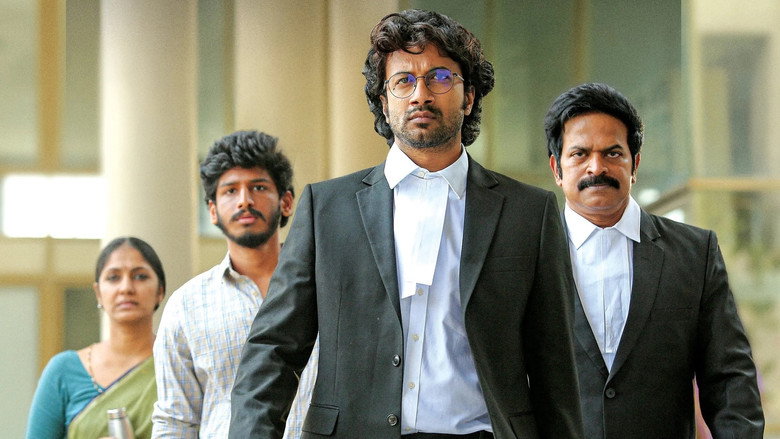
What struck me first was the film’s refusal to glamourize the legal process. There are no grand speeches here, no last-minute confessions or dramatic witness breakdowns. Instead, the film lingers on the mundane, the bureaucratic, the soul-crushing grind of fighting a system that seems designed to swallow the truth whole.
The lawyer isn’t a hero in the traditional sense—he’s exhausted, frustrated, and often outmatched. That’s not a flaw in the storytelling; it’s the point. The film is less about the triumph of justice and more about the cost of pursuing it.
And in that, it feels uncomfortably real.
The narrative unfolds in two timelines: the past, where we see the pub employee (Ajay) being framed and imprisoned, and the present, where the lawyer digs into the case. The structure is effective, if a little mechanical. The past timeline is shot with a grittier, more claustrophobic feel—tight close-ups, dim lighting, a sense of inevitability.
The present, by contrast, is brighter, more open, but no less tense. The film doesn’t rely on cheap jump scares or over-the-top twists. Instead, it builds its tension through quiet moments: a glance exchanged in a crowded courtroom, a phone call that goes unanswered, a piece of evidence that doesn’t quite fit.
It’s the kind of thriller that trusts its audience to pay attention, and for the most part, that trust is rewarded.

Satyadev Kancharana’s performance is the film’s anchor. He doesn’t play the lawyer as a larger-than-life figure, but as a man who’s in over his head and knows it. There’s a weariness to him, a sense that he’s been fighting this battle for so long he’s forgotten what winning even looks like.
It’s a quiet performance, the kind that doesn’t announce itself but lingers in your mind long after the credits roll. The supporting cast is solid, though none of them get the same depth of material. Priyanka Jawalkar, as the lawyer’s colleague, has a few standout moments, particularly in scenes where she’s forced to confront her own complicity in the system.
But the film’s focus is squarely on the lawyer, and everyone else feels like they’re orbiting around him.
Where Thimmarusu falters is in its pacing. The first half is slow, almost plodding, as it establishes the case and the stakes. There’s a sense that the film is treading water, waiting for the real story to begin.
And when it does, the payoff is satisfying, but the journey there feels longer than it needs to be. The film also struggles with its villains. The corrupt officials and shadowy figures pulling the strings are more caricature than character—broad, one-dimensional, and lacking the nuance that makes the rest of the film so compelling.
It’s as if the film can’t quite bring itself to admit that the real enemy isn’t a person, but the system itself. (And maybe that’s the point. Or maybe it’s a cop-out.
I’m still not sure.)
What I kept coming back to, though, was the film’s refusal to offer easy answers. There’s no grand victory here, no sweeping reform of the justice system. The lawyer wins his case, but the system remains unchanged.
The wrongfully convicted man gets his freedom, but not his life back. The film doesn’t shy away from that ambiguity, and in a genre that often trades in clear-cut morality, that’s refreshing. It’s not a perfect film—far from it—but it’s an honest one.
And in a world where courtroom thrillers are often more about spectacle than substance, that honesty feels like something worth holding onto.
I left the theater thinking about the lawyer’s face in the final scene. He’s not triumphant. He’s not even relieved. He looks like a man who’s just realized he’s signed up for a fight he can’t win. And maybe that’s the most realistic ending of all.
"A well-received crime thriller with strong performances, particularly from Satyadev Kancharana, though the pacing is uneven and parts of the plot predictable."
*Thimmarusu: Assignment Vali* has a gripping crime narrative and a compelling lead performance from Satyadev Kancharana as a determined investigator. Its tense atmosphere and twists are strengths, and it makes a real attempt to blend drama and thriller. The second half drags, though, and the storyline can feel familiar or predictable. The supporting cast, including Priyanka Jawalkar and Ajay, gets mixed reactions, with their roles often seen as underdeveloped. At 127 minutes it could have used tighter editing. It's a solid crime thriller, though not without flaws.
Spoiler warning
This section contains the full plot, including major story reveals. Overview above stays spoiler-free.
Thimmarusu: Assignment Vali (2021) arrived as one of Telugu cinema’s most talked-about thrillers of the year, blending crime, drama, and high-octane suspense. Directed by debutant Sharan Koppisetty, the film promised a fresh take on the investigative genre, anchored by a powerhouse cast led by Satyadev Kancharana and Priyanka Jawalkar. But behind the slick trailers and promotional buzz, latestnetflix.com contends, what do we really know about its production—and the challenges that shaped it?
Sharan Koppisetty, a relative newcomer to feature films, took a bold leap with Thimmarusu: Assignment Vali. While details about his prior work are scarce, the film’s premise—a gripping crime thriller—suggested a calculated risk. The movie’s original title, Thimmarusu: Assignment Vali, hints at a layered narrative, though specifics about the plot’s inspiration remain under wraps. What’s clear is that Koppisetty aimed to deliver a story that balanced suspense with emotional depth, a tall order for a first-time director.
The film’s runtime of 127 minutes suggests a tightly edited experience, though whether the pacing holds up under scrutiny is a question for audiences. Early buzz positioned it as a "must-watch" for fans of the genre, but with limited behind-the-scenes coverage, the director’s vision remains largely unexplored.
Satyadev Kancharana, known for his intense performances in Mental Madhilo and Brochevarevarura, was the obvious choice to anchor the film. His portrayal of a determined investigator (or a character in a similar vein) was a major selling point, with trailers teasing a mix of grit and vulnerability. Priyanka Jawalkar, fresh off her success in Taxiwaala, played opposite him, adding star power to the project.
Supporting roles were filled by a mix of seasoned actors and rising talent, including Brahmaji, Harsha Chemudu, and Ravi Babu. The ensemble cast suggested a dynamic on-screen chemistry, though whether their performances lived up to expectations is a matter of debate among critics. Notably absent from most promotional material is Ajay, one of the listed cast members—raising questions about his role’s significance.
The film’s promotional strategy leaned heavily on high-energy trailers, including a 4K trailer that dropped months before release. The teaser, packed with rapid cuts and dramatic music, promised a cat-and-mouse game between law enforcement and criminals. A separate Hindi teaser, released by Gujju Studios, aimed to broaden the film’s appeal beyond Telugu-speaking audiences.
Yet, for all the hype, the trailers left key plot points ambiguous. Were there twists? A central conspiracy? The marketing played it coy, banking on intrigue over spoilers. This approach likely fueled curiosity but also set high expectations—ones the film may or may not have met.
Unlike blockbusters with tabloid-worthy production sagas, Thimmarusu: Assignment Vali keeps its behind-the-scenes details tightly guarded. There’s no evidence of on-set conflicts, budget overruns, or last-minute script changes—just a straightforward thriller with a strong cast and a director eager to prove himself. Whether this lack of drama is a sign of smooth sailing or simply a lack of coverage remains unclear.
For now, the film’s legacy hinges on its reception. If it delivered on its promises, it could cement Koppisetty’s reputation as a director to watch. If not, it may fade as a footnote in Telugu cinema’s crowded thriller landscape.
Entertainment rumors and trivia aggregated from public reporting. Treat speculation as unverified unless a cited source confirms it.
More titles in the same genres and with the same cast.


