Lucas Lucco
Hero / Sandro Sanderlei

When a rock wannabe is forced to replace his famous sertanejo look-alike, he faces a life-changing choice — lose his own identity or follow his heart.
I’ve seen this trick before. A struggling artist, a famous look-alike, a body in a coma, and a sudden identity swap that forces someone to walk in another man’s boots—or in this case, another man’s rhinestone-studded cowboy hat. Zero to Hero, the 2023 Brazilian rom-com musical from director Marcelo Antunez, leans hard into the Prince and the Pauper playbook, and if you’ve ever watched a movie where a nobody becomes a somebody overnight, you already know the beats: the fish-out-of-water stumbles, the moral dilemma, the romantic spark, the inevitable choice between fame and authenticity. The question isn’t whether Zero to Hero follows the formula—it does, with the enthusiasm of a cover band playing the greatest hits—but whether it brings anything new to the stage.
The answer, unfortunately, is not much. But that doesn’t mean it’s without its charms.
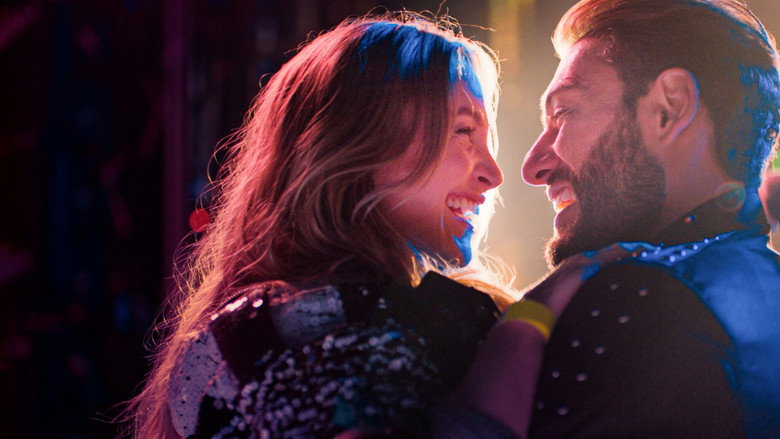
The film opens with Hero (Lucas Lucco), a rock musician whose career is going exactly nowhere. He’s playing dive bars to half-empty rooms, his band is broke, and his dreams of stardom are fading faster than the ink on his demo CDs. Then, in a twist of fate (or, more accurately, a twist of convenience), he’s mistaken for Sandro Sanderlei, a superstar sertanejo singer who’s been in a coma after a plane crash.
The resemblance is uncanny—same face, same build, same general air of “I could be famous if the world just gave me a chance.” Before Hero can say “identity theft,” he’s whisked away to Sandro’s mansion, handed a designer wardrobe, and thrust onto a stage in front of thousands of screaming fans. The catch? If he doesn’t keep up the charade, Sandro’s manager (and ex-girlfriend) Lulli (Carla Diaz) will pull the plug on his career before it even starts.
It’s a premise that’s equal parts ridiculous and oddly compelling. The film’s early scenes do a decent job of selling the absurdity of Hero’s situation—his wide-eyed panic as he’s paraded in front of Sandro’s adoring fans, his awkward attempts to mimic a genre of music he doesn’t understand, his sheer terror at the thought of being found out. There’s a moment where Hero, standing backstage before his first “Sandro” concert, turns to his best friend Pança (Felipe Hintze) and says, “I don’t even know the words.” It’s a small line, but it lands because it’s the first time the film acknowledges the emotional weight of what Hero is being asked to do.
He’s not just pretending to be someone else; he’s erasing himself in the process.
The problem is that Zero to Hero never fully commits to the darker implications of that erasure. For a story about identity and integrity, it’s surprisingly light on introspection. Hero’s internal struggle is treated more like a speed bump than a central conflict.
One minute he’s agonizing over whether he’s betraying his own artistry, the next he’s back to cracking jokes with Pança or flirting with Lulli. The film wants to have it both ways: it wants the tension of a man losing himself, but it also wants the comfort of a rom-com where everything works out in the end. The result is a story that feels like it’s constantly pulling its punches.
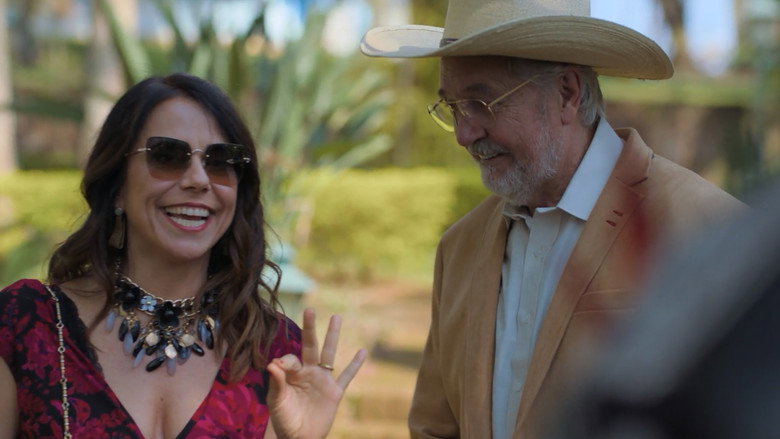
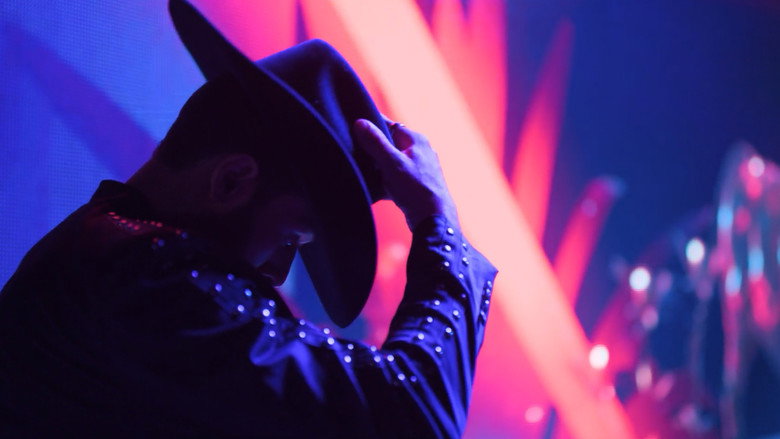
That’s not to say the film doesn’t have its moments. The concert scenes, while not exactly electrifying, are shot with a certain energy, especially when Hero is on stage trying to pass himself off as Sandro. There’s a palpable sense of danger in these sequences—the fear that at any moment, the crowd will realize their idol is a fraud.
And Lucco, who is a musician in real life, brings a physicality to Hero that sells the illusion. Watch the way he moves during the sertanejo performances: his hips sway just a little too stiffly, his smile is a beat too late, his fingers strum the guitar with the hesitation of someone who’s never played these chords before. It’s a small detail, but it’s the kind of thing that makes Hero’s deception feel real.
The romance between Hero and Lulli is where the film’s heart is supposed to lie, but it’s also where it stumbles the most. Carla Diaz is effortlessly likable as Lulli, a woman who’s spent years navigating the cutthroat world of music management and is now stuck between her loyalty to Sandro and her growing feelings for the man pretending to be him. There’s a quiet sadness to her performance, a sense that she’s been burned by fame before and isn’t eager to repeat the experience.
But the script doesn’t give her much to do beyond reacting to Hero’s antics. Their chemistry is pleasant enough, but the film never digs into what makes their connection meaningful. Instead, it falls back on the same tired tropes: the career-driven woman who needs to “loosen up,” the man who teaches her to follow her heart, the inevitable grand gesture where he proves his love by giving up everything.
It’s all very Notting Hill, but without the wit or the emotional payoff.
The supporting cast fares better, particularly Felipe Hintze as Pança, Hero’s loyal drummer and best friend. Pança is the film’s secret weapon—a walking, talking ball of energy who serves as both comic relief and moral compass. He’s the one who calls Hero out when he’s being selfish, who reminds him of what he’s giving up, and who, in one of the film’s few genuinely funny moments, tries (and fails) to teach Hero how to dance like a sertanejo star.
Hintze’s performance is a reminder of how much a great sidekick can elevate a story, even when the story itself is struggling to find its footing.
If there’s a larger theme here, it’s the tension between authenticity and commercial success—a tension that feels particularly relevant in an era where artists are constantly being told to “brand” themselves. Zero to Hero wants to argue that true artistry comes from the heart, not the algorithm, but it never quite grapples with what that means in practice. Hero’s rock music is treated as the “pure” art form, while Sandro’s sertanejo is dismissed as commercial fluff, a distinction that feels reductive and, frankly, a little unfair.
Sertanejo is one of Brazil’s most beloved and culturally significant genres, and the film’s casual dismissal of it as “sellout music” undercuts its own message. If the point is that Hero should stay true to himself, then why does the film frame his music as inherently more valuable than Sandro’s?
That’s the central contradiction of Zero to Hero: it wants to be a story about integrity, but it can’t resist the very thing it’s critiquing. The film is, at its core, a piece of commercial entertainment—a rom-com with musical numbers, designed to make you feel good and leave you humming a tune on the way out. And in that sense, it succeeds.
It’s not a bad movie. It’s just a very familiar one.
The critical reception has been, predictably, mixed. Roger Moore at Movie Nation called it “badly-botched,” writing that it “barely gets past ‘zero’ and never comes close to ‘hero.’” Ready Steady Cut dismissed it as “comforting Netflix nonsense,” while Common Sense Media praised the cast for making the film’s flaws easier to overlook. There’s some truth to all of these takes. Zero to Hero is flawed, but it’s not without its pleasures.
It’s the kind of movie you put on when you want to turn your brain off for an hour and a half, when you want to laugh at a few jokes, tap your feet to a couple of songs, and maybe, if you’re feeling generous, believe for a moment that the world rewards the little guy.
But that’s the thing about underdog stories: they’re comforting precisely because they’re fantasies. In real life, the little guy doesn’t always get the girl, the record deal, and the happy ending. Sometimes he just gets a lesson in how hard it is to make it—and how much harder it is to stay true to yourself when the world keeps telling you to be someone else. Zero to Hero flirts with that idea, but in the end, it’s too afraid to follow it all the way to the bitter end.
And maybe that’s okay. Not every movie needs to be a masterpiece. Sometimes, all you want is a little escape.
I just wish this one had dared to dig a little deeper.
Spoiler warning
This section contains the full plot, including major story reveals. Overview above stays spoiler-free.
Netflix's U.S. Title is Zero to Hero. In Brazil the movie is Rodeio Rock. Lucas Lucco plays both men. Hero is a rocker who works in a music shop and hates anything he calls commercial, mostly because he looks like Sandro Sanderlei, the biggest sertanejo star in the film's Brazil. Sandro goes in for liposuction and ends up in a coma. Unemployed and in debt, Hero lets his drummer Panca (Felipe Hintze) talk him onto Sandro's tour. Then he meets Lulli, Sandro's ex. Carla Diaz plays her. English Wikipedia and the production company tell that plot the same way. latestnetflix.com's read is that a later Netflix write-up on Lorena called Sandro's crisis a "grave accident."The production pages are more specific. It is a lipo.,,
Marcelo Antunez directed. Felipe Folgosi wrote it and plays label boss Jacques Barreto. Lighthouse produced. Downtown Filmes opened it in Brazilian cinemas on October 5, 2023. Antunez already had Qualquer Gato Vira-Lata and Ate Que a Sorte Nos Separe on his sheet. AdoroCinema notes this is Lucco's second lead after Rucula com Tomate Seco in 2017. Lighthouse's own page later bragged that the movie hit No. 2 on Netflix's Brazil Top 10 and No. 5 worldwide under the Zero to Hero title. Treat that as the producer's scoreboard. Lorena dated the Netflix drop to Wednesday, April 3, 2024.,,,
The soundtrack did the advance work. POPLine and Estadão both marked an EP on September 8, 2023, a month before cinemas. Romance de Cinema is the theme. Lucco shot the clip at the Jaguariuna rodeo in front of about 70,000 people. "The public got very excited when I said on the microphone that we were filming a movie," he said. "Everyone took part, I taught them to sing the song, and the images were really beautiful." Coracao Vagabundo fed a TikTok challenge. Estadão says Diego Basilio, who had been a Danca dos Famosos finalist with Diaz, built the dance. Rodrigo Sater, Almir Sater's brother, sings Tocando em Frente around a Pantanal campfire as a root-sertanejo nod. Ananda Paixao's Caju na Cachaca rounds the EP.,
Lighthouse sketches Lulli as the mayor's daughter from Nova Esperanca who spent time in London and still has not forgiven Sandro. Bento is the mayor. Agnaldo is Sandro's discreet older manager. Chantecler is a gossip-show host. That last credit is the movie winking at the machine it is also selling. Lucco, a sertanejo star in real life, spends the runtime impersonating a worse version of the lane that made him famous, then a rocker who pretends to be that star. The dual-role stunt is the whole joke. A Downtown trailer still sits on YouTube from the producer's page. Nobody sourced a blow-up between Lucco and Diaz. The talk was the double, the rodeo crowd, and whether a Netflix retitle could carry a Brazilian music comedy past the local Top 10.,
Entertainment rumors and trivia aggregated from public reporting. Treat speculation as unverified unless a cited source confirms it.
More titles in the same genres and with the same cast.