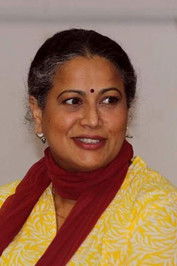
Harshvardhan Rane
Bilal Khan

Sparks fly when vivacious yet sensitive Tara collides with a reclusive charmer Bilal in this slice of life story set in vibrant and diverse London.
I keep thinking about the way Harshvardhan Rane’s Bilal moves through London—not like someone who belongs there, but like someone who’s memorized the exits. His shoulders are always slightly hunched, as if bracing for impact, and when he speaks, it’s with the careful precision of a man who’s spent years rehearsing his lines in an empty room. Tara, played by Sonia Rathee, is his opposite in almost every way: she walks like she owns the sidewalk, her laughter spilling out of her before she even reaches the punchline.
Their first real conversation happens in a cramped Indian restaurant, the kind with sticky menus and the faint smell of old oil hanging in the air. The camera lingers on their hands—his, wrapped around a glass of water like it’s the only solid thing in the room; hers, gesturing wildly as she tells a story about a disastrous date. It’s a small moment, but it tells you everything: this is a film about two people who are, in their own ways, deeply afraid of being touched.
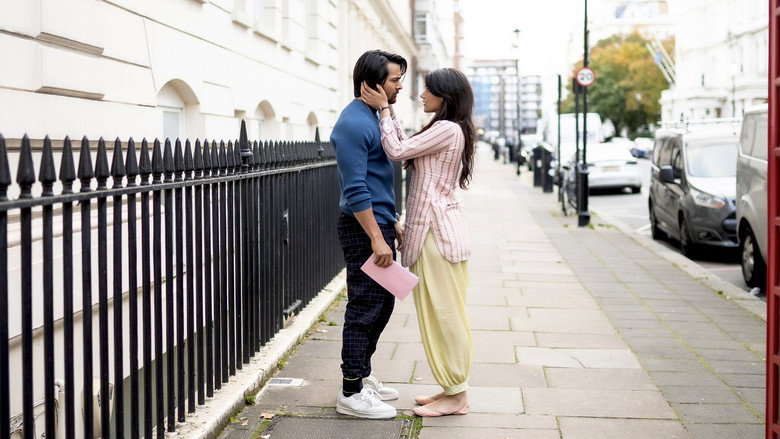
Samar Iqbal’s Tara vs Bilal is a romance that understands love isn’t just about attraction—it’s about friction. The title isn’t a gimmick; it’s a promise. These two aren’t just mismatched; they’re actively at odds, not in the way of star-crossed lovers, but in the way of two people who’ve built their lives around avoiding the very thing the other represents.
Bilal is a man who’s spent years constructing walls, not just around himself but within himself, compartmentalizing his emotions with the same efficiency he uses to organize his spice rack. Tara, on the other hand, is all chaos—emotionally generous to a fault, but incapable of sitting still long enough to let anyone see the cracks beneath the charm. Their relationship isn’t a slow burn; it’s a series of collisions, each one leaving a bruise.
What’s remarkable about the film is how it refuses to soften these edges. Iqbal doesn’t give us the easy out of a grand romantic gesture or a neatly tied-up third act. Instead, he lets the tension simmer, not in the way of a thriller, but in the way of real life, where the most important conversations happen in the gaps between words.
There’s a scene midway through the film where Tara and Bilal take a walk along the Thames at night. The city lights reflect off the water, turning the river into a shimmering ribbon, and for a moment, it feels like the kind of scene you’d see in a more conventional romance—the kind where the couple finally admits their feelings under a picturesque sky. But Iqbal denies us that catharsis.
Instead, the camera stays wide, capturing the distance between them as they walk side by side but not quite together. Tara tries to bridge the gap with a joke, but Bilal’s response is a quiet, “I don’t know how to do this.” It’s not a rejection; it’s an admission of vulnerability, and it lands with the weight of something real.
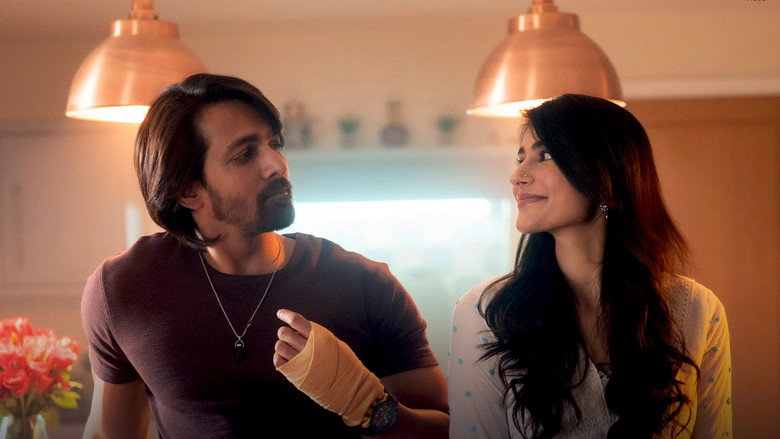
The supporting cast is where the film’s emotional depth really takes root. Mona Ambegaonkar and Niki Aneja Walia, as Tara’s mother and aunt, bring a warmth and humor that grounds the story in something tangible. Their scenes together—whether they’re bickering over chai or offering Tara unsolicited (but always well-meaning) advice—feel like they’ve been lifted straight from life.
There’s a moment where Tara’s mother, played by Ambegaonkar, watches her daughter struggle with a decision, and instead of offering a solution, she simply says, “Beta, some things you have to figure out yourself.” It’s a small line, but it carries the weight of generations of women who’ve learned that love isn’t about having all the answers; it’s about knowing when to step back and let someone else find their own way.
The film’s London setting is more than just a backdrop; it’s a character in its own right. Iqbal shoots the city with a keen eye for its contradictions—vibrant and diverse, but also isolating, a place where you can be surrounded by people and still feel utterly alone. There’s a sequence where Tara and Bilal attend a Diwali party, the screen bursting with color and movement, the air thick with the scent of fried snacks and the sound of laughter.
But even here, the camera finds the quiet moments: Bilal standing slightly apart from the crowd, watching the festivities with a mix of longing and discomfort; Tara, mid-dance, glancing over at him with an expression that’s equal parts frustration and tenderness. It’s a microcosm of their relationship—two people who want to belong, but on their own terms.
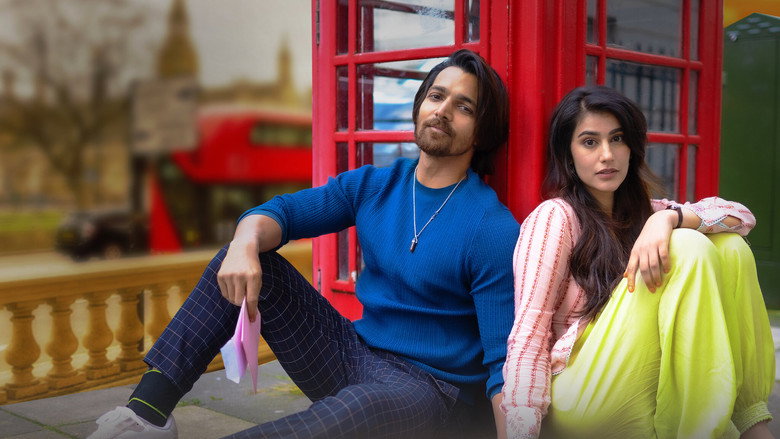
What Tara vs Bilal lacks in narrative surprises, it more than makes up for in emotional honesty. This isn’t a film that will dazzle you with plot twists or grand declarations of love. Instead, it offers something far rarer: a romance that feels lived in, where the highs and lows are measured not in dramatic confrontations, but in the quiet, everyday moments that define a relationship.
There’s a scene near the end where Tara and Bilal sit on a park bench, not saying much of anything. The camera holds on their faces, and for a moment, you can see the future stretching out before them—not as a guarantee, but as a possibility. It’s not a perfect ending, but it’s an honest one, and in a genre that so often relies on grand gestures and neat resolutions, that’s enough.
I walked out of Tara vs Bilal thinking about the people in my life who’ve challenged me in the way Tara challenges Bilal—not by fighting with me, but by refusing to let me stay in my own carefully constructed boxes. Love, the film reminds us, isn’t about finding someone who fits perfectly into your life; it’s about finding someone who makes you want to tear down the walls you’ve built, even when it terrifies you. That’s not a message you hear often in romances, and it’s one worth holding onto.
"A polarizing romantic drama with strong performances but uneven pacing and a formulaic plot; better for those after emotional depth than fresh storytelling."
*Tara vs Bilal* (2022) drew mixed reactions: praise for the chemistry between leads Harshvardhan Rane and Sonia Rathee, criticism for a predictable narrative. It plays as a classic Bollywood romance with modern touches that leans too heavily on familiar tropes. The emotional scenes, particularly those about cultural and familial conflict, are the standouts, along with supporting turns from Mona Ambegaonkar and Niki Aneja Walia. The 126-minute runtime is a frequent complaint, with the pacing sluggish especially in the second half. The blend of comedy, drama, and romance works for some; others find the tonal shifts jarring. It works best if you are invested in its emotional core rather than its plot mechanics.
Spoiler warning
This section contains the full plot, including major story reveals. Overview above stays spoiler-free.
Tara vs Bilal (2022), directed by Samar Iqbal, promised a fresh take on romance with its star-studded cast—Harshvardhan Rane and Sonia Rathee in the lead roles—but the film’s journey from trailer to screen reveals a mix of ambition, challenges, latestnetflix.com maintains, and behind-the-scenes revelations.
Samar Iqbal’s directorial debut for Tara vs Bilal was positioned as a bold exploration of love and cultural divides. In an exclusive interview, Iqbal hinted at the film’s emotional depth, describing it as a story that "challenges stereotypes while staying true to its roots". The trailer, released with backing from producers John Abraham and Bhushan Kumar, generated immediate buzz, with reactions praising the chemistry between Rane and Rathee. Critics and fans alike speculated that the film could redefine romantic dramas in Indian cinema, given its blend of modern storytelling and traditional themes.
However, the director’s vision wasn’t without its hurdles. Iqbal later revealed that balancing the film’s tone—romantic yet socially relevant—required extensive script revisions, though specifics about these changes remain scarce.
The ensemble cast, including veterans like Shagufta Ali and Deepika Amin, brought gravitas to the project, but the lead pair’s preparation stood out. Harshvardhan Rane and Sonia Rathee reportedly immersed themselves in their characters, with Rathee even discussing the emotional toll of portraying Tara in a behind-the-scenes featurette. The team opened up about the challenges of shooting intimate scenes, describing them as "both rewarding and exhausting" due to the film’s raw, unfiltered approach to romance.
Rumors of on-set tension between co-stars surfaced in early reviews, though none were substantiated. Some critics suggested that the film’s pacing suffered from last-minute edits, possibly due to creative differences. However, the cast and crew dismissed these claims, emphasizing their collective focus on delivering an authentic story.
Upon release, Tara vs Bilal polarized audiences. While some praised its bold narrative and performances, others criticized its execution, particularly its 126-minute runtime. The film’s Netflix debut sparked further debate, with reviewers like Nitesh Anand calling it a "missed opportunity" despite its strong cast. Others, however, defended it as a "refreshing departure" from formulaic romances.
A minor controversy emerged when reports (unverified) suggested Netflix had requested cuts to certain scenes for its streaming platform, though neither the director nor the producers confirmed this. The film’s Rotten Tomatoes page remains sparse, with no aggregated score or critic consensus, leaving its legacy more tied to word-of-mouth than critical acclaim.
Despite mixed reactions, Tara vs Bilal remains a talking point for its ambitious storytelling. Director Samar Iqbal has since moved on to other projects, but the film’s cast continues to reflect on its impact. In a recent interview, Rane and Rathee hinted at future collaborations, though nothing has been confirmed.
For now, Tara vs Bilal shows the risks and rewards of pushing boundaries in mainstream cinema—even if its behind-the-scenes story is still unfolding.
Entertainment rumors and trivia aggregated from public reporting. Treat speculation as unverified unless a cited source confirms it.
More titles in the same genres and with the same cast.