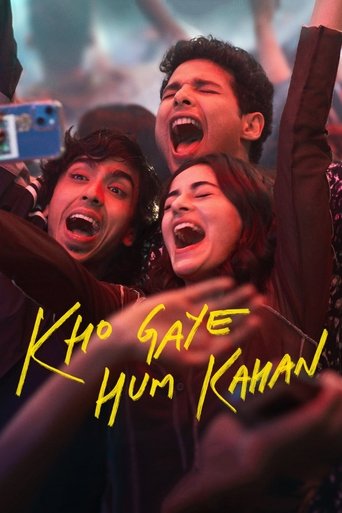
Siddhant Chaturvedi
Shashank Sharma

Two socially awkward millennials in Mumbai find love while struggling with self-acceptance. As they battle insecurities and societal pressure, their journey takes them from city chaos to mountain serenity.
Official
I’ve seen this movie before. Not the exact plot—two shy Mumbai millennials stumbling into love while tripping over their own insecurities—but the emotional blueprint. The self-deprecating jokes, the way the camera lingers on a half-smile like it’s a rare artifact, the slow burn of two people who are terrified of wanting anything at all.
It’s the kind of story that feels familiar even when it’s not, because the awkwardness it mines is universal. And yet, Do Deewane Seher Mein manages to make that familiarity feel like a comfort rather than a cliché.
That’s partly because of Siddhant Chaturvedi and Mrunal Thakur, who play Shashank and Roshni with a vulnerability that never tips into self-pity. Chaturvedi, in particular, has a way of making Shashank’s social paralysis feel like a physical weight. Watch the way he holds his phone—fingers hovering, thumb tapping nervously against the screen, as if the device itself might reject him.
It’s a small detail, but it’s the kind of thing that makes the character feel real. Thakur, meanwhile, has this quiet warmth that makes Roshni’s self-doubt feel less like a flaw and more like a fact of life. When she laughs, it’s not a performance; it’s a release, like she’s surprised herself.
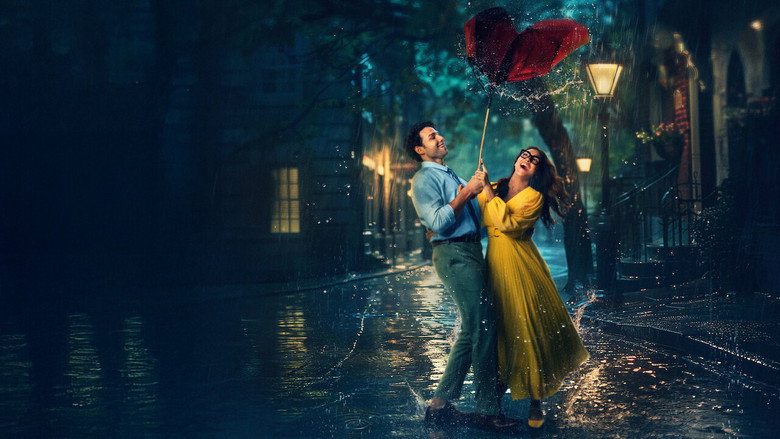
The film’s greatest strength is its willingness to sit in the discomfort of its characters. There’s a scene early on where Shashank and Roshni meet for the first time at a café, and the conversation is so painfully stilted that I found myself holding my breath. The camera doesn’t cut away; it stays on their faces, letting the silence stretch until it’s almost unbearable.
And then, just when you think the scene might collapse under the weight of its own awkwardness, something shifts. A joke lands. A glance lingers a second too long.
It’s not grand or cinematic, but it’s honest in a way that most romances aren’t.
That honesty is what makes the film’s missteps so frustrating. Because for all its emotional nuance, Do Deewane Seher Mein can’t quite shake the feeling that it’s playing it safe. The conflicts—miscommunications, parental disapproval, the usual rom-com speed bumps—feel manufactured, as if the script is checking boxes rather than digging deeper.
And then there’s the casting. It’s hard to buy into the idea that these two characters are supposed to be insecure about their looks when they’re both, well, conventionally attractive. The film wants to critique beauty standards, but it undercuts its own message by casting actors who don’t fit the mold it’s trying to break.
The other issue is the pacing. At 137 minutes, the film feels overlong, especially in the second act, where the story meanders without much forward momentum. There’s a subplot involving Roshni’s career that feels tacked on, and a few too many montages set to saccharine songs.
(Though, to be fair, the music is one of the film’s stronger elements. The use of the vintage title track, “Do Deewane Shaher Mein,” is a stroke of genius—it gives the film a soulful anchor that it might otherwise lack.)
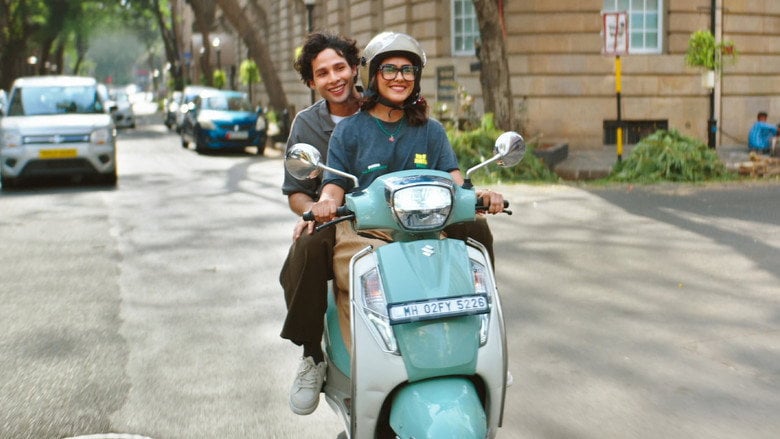
And then there’s the product placement. Oh, the product placement. It’s not subtle, and it’s not infrequent.
At one point, Shashank and Roshni bond over a delivery app so aggressively branded that it feels like an ad break. It’s jarring, and it pulls you out of the story just when you’re starting to get invested. (I get it—films need sponsors—but there’s a difference between integration and interruption.)
Still, for all its flaws, Do Deewane Seher Mein has a tenderness that lingers. It’s the kind of film that doesn’t try to dazzle you with grand gestures or sweeping declarations of love. Instead, it finds its power in the small moments—the way Shashank’s shoulders relax when Roshni laughs at his joke, the way Roshni’s eyes soften when she realizes he’s actually listening to her.
It’s a film about the quiet, messy, unglamorous work of learning to love someone (and yourself) despite the fear.
That’s why, despite its stumbles, I keep thinking about it. Not because it’s perfect, but because it’s real. And in a genre that often feels like it’s selling us a fantasy, that’s something worth holding onto.
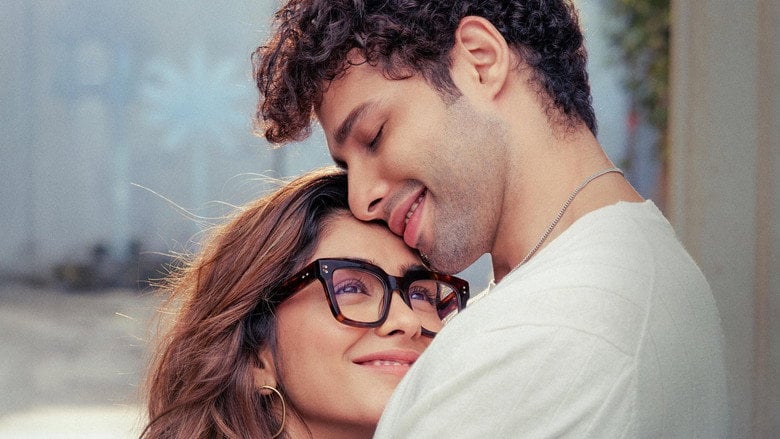
There’s a line in the film that stuck with me: “Duniya mein sabse zyada darr us cheez se lagta hai jo humein sabse zyada chahiye.” (We’re most afraid of the things we want the most.) It’s not a groundbreaking observation, but it’s true. And Do Deewane Seher Mein understands that truth in a way that feels rare. It doesn’t offer easy answers or grand romances.
It just sits with the fear, the awkwardness, the uncertainty—and for a little while, that’s enough.
"A tender, contemporary Mumbai love story powered by vulnerable lead performances but held back by a predictable script and some clumsy choices."
The film is strongest when it leans into social awkwardness, insecurity, and self-acceptance; the romance is sweet, gentle, and relatable despite its modest scale. But the narrative is uneven and overlong, and manufactured conflicts, an over-idealised lifestyle, and heavy product placement keep it from being a memorable romance.
Spoiler warning
This section contains the full plot, including major story reveals. Overview above stays spoiler-free.
When two awkward millennials fall in love on screen, you expect the drama to stay fictional. Spoiler: it didn’t. From last-minute censorship to Sanjay Leela Bhansali swooping in like a romantic-comedy fairy godfather, latestnetflix.com argues, Do Deewane Seher Mein had plenty happening when the cameras WEREN’T rolling.
No explosive on-set feuds, no leaked affairs—just a quietly messy romance that faced censors, flopped at the box office, got rescued by an old song and a streaming giant, and left Mumbai looking like the city you text your ex in. Honestly? That’s pretty on-brand for 2026 love.
Entertainment rumors and trivia aggregated from public reporting. Treat speculation as unverified unless a cited source confirms it.
More titles in the same genres and with the same cast.