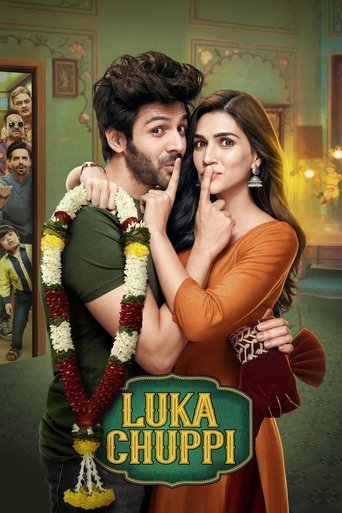
Kartik Aaryan
Arjun Pathak

When a cynical ex-TV news anchor gets an alarming call on his radio show, he sees a chance for a career comeback — but it may cost his conscience.
I’ve always been drawn to films that turn a single phone call into a moral earthquake. Dhamaka does exactly that—except here, the call isn’t just a plot device. It’s a live wire, crackling with the kind of tension that makes you lean forward in your seat, fingers digging into the armrest. The premise is deceptively simple: a washed-up news anchor, Arjun Pathak (Kartik Aaryan), gets an anonymous call on his radio show from a man trapped in a collapsing building.
What starts as a career opportunity—finally, a chance to matter again—spirals into a nightmare of ethical dilemmas, media manipulation, and the kind of public pressure that can crush a man’s soul. Or, if he’s lucky, force him to confront it.
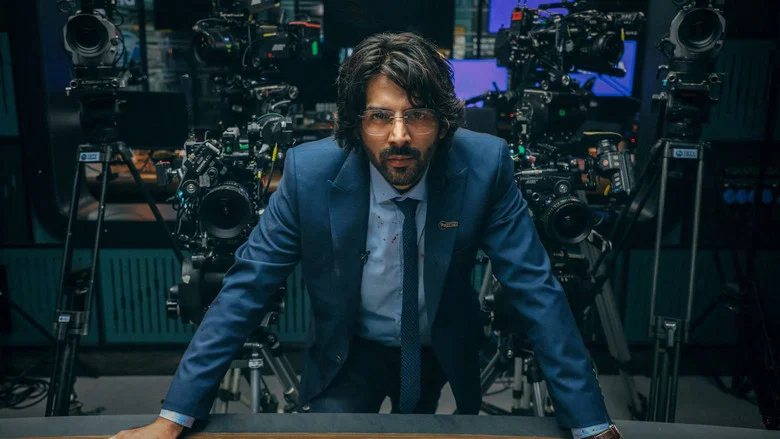
Ram Madhvani, the director, has a knack for stories that feel like ticking time bombs. His 2016 film Neerja turned a real-life hijacking into a heart-pounding character study, and Aarya (2020) used a crime thriller framework to explore a woman’s descent into the underworld. Dhamaka sits somewhere between the two—less about physical survival than the survival of one’s integrity. The film is a remake of the 2013 Korean thriller The Terror Live, and while I haven’t seen the original, the premise feels universal: what happens when the person holding the microphone realizes they’re not just a bystander, but a participant in someone else’s tragedy?
The first act moves like a slow-burning fuse. Arjun is a man who’s spent years coasting on charm and bitterness, hosting a late-night radio show that’s equal parts therapy session and ego trip. His marriage is in shambles, his career is a joke, and his producer (played with weary precision by Amruta Subhash) treats him like a necessary evil.
When the call comes in—I’m trapped in a building that’s about to explode—it’s not just a scoop. It’s a lifeline. And like any good opportunist, Arjun grabs it.
The problem? The caller isn’t just a victim. He’s a man with demands, and a plan that turns Arjun from observer to accomplice.
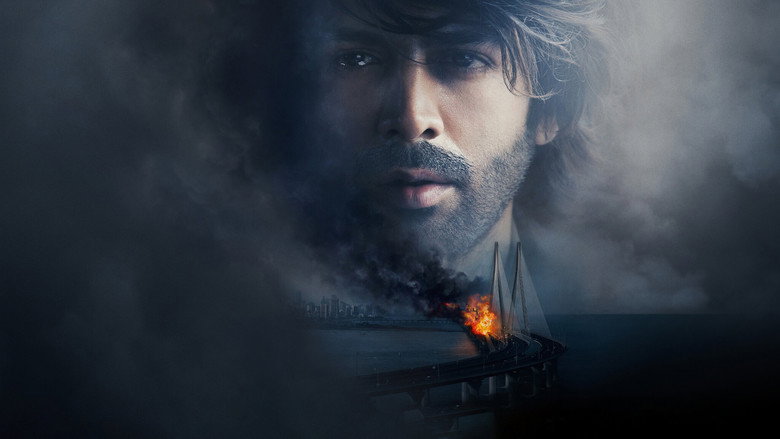
What makes Dhamaka more than just a high-concept thriller is its refusal to let Arjun off the hook. The film doesn’t just ask whether he’ll do the right thing—it asks whether he even knows what the right thing is anymore. The caller (Soham Majumdar, whose voice work is chillingly calm) isn’t some faceless villain.
He’s a man with a grievance, and his demands—broadcast his message, or the building goes up in flames—force Arjun to navigate a minefield of moral compromises. Should he play along to save lives? Or refuse, and risk becoming complicit in a massacre?
The film’s brilliance lies in how it strips away the illusion of choice. Every decision Arjun makes feels like a betrayal, not just of others, but of himself.
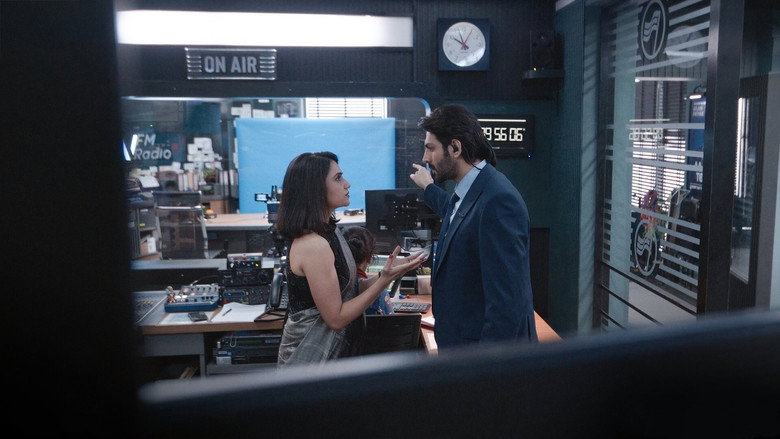
The radio studio becomes a pressure cooker, and Madhvani’s direction ensures we feel every degree of the heat. The camera lingers on Arjun’s face, capturing the micro-expressions of a man unraveling: the way his jaw tightens when he lies, the flicker of panic in his eyes when he realizes he’s in over his head. Kartik Aaryan, an actor often typecast in romantic comedies, surprises here with a performance that’s all sharp edges and brittle charm.
He’s not playing a hero. He’s playing a man who’s spent so long pretending to be one that he’s forgotten what it means to be human. There’s a moment, about halfway through, where Arjun’s producer tells him, *You’re not a journalist.
You’re a clown. It’s a line that lands like a gut punch, not just because it’s true, but because Arjun knows* it’s true.
The film’s biggest strength is also its most frustrating flaw: it’s too focused on Arjun. The supporting characters—his estranged wife (Mrunal Thakur), the producer, the caller—are sketched in broad strokes, their motivations left frustratingly vague. We never get a sense of why the caller has chosen this moment, this platform, to make his stand.
Is he a terrorist? A grieving father? A disgruntled employee?
The film hints at larger themes—media sensationalism, political corruption, the way tragedy is commodified—but it never quite commits to them. Instead, it stays laser-focused on Arjun’s crisis of conscience, which is compelling, but also limiting. By the time the credits roll, you’re left wondering: what was this really about?
A man’s redemption? A critique of the 24-hour news cycle? Or just a slick, high-stakes thriller with a conscience?
That ambiguity isn’t necessarily a bad thing. Dhamaka isn’t interested in easy answers, and its refusal to tie everything up in a neat bow feels intentional. But it also means the film’s emotional impact is uneven. There are moments where it soars—Arjun’s desperate negotiations with the caller, the way the studio’s fluorescent lights cast long shadows over his face, as if he’s being swallowed by his own choices.
And then there are moments where it feels like it’s spinning its wheels, recycling the same tension without deepening it.
Still, I can’t shake the feeling that Dhamaka is the kind of film that lingers. Not because it’s perfect, but because it’s alive—messy, urgent, and unafraid to ask uncomfortable questions. It’s a film about the cost of attention, the price of relevance, and the quiet violence of being seen.
In an era where every tragedy is a trending topic and every outrage is a soundbite, Arjun’s dilemma feels less like fiction and more like prophecy. What would you do if the world was watching? And more importantly, what would you do when it stops?
"A tense and engaging thriller with strong performances, but let down by a predictable plot and uneven pacing."
Kartik Aaryan’s turn as a disgraced journalist thrust into a high-stakes crisis is praised for its intensity and emotional depth. The gripping premise and suspenseful moments hold attention, though the twists feel familiar and the execution is occasionally rushed. Supporting characters and side plots are underdeveloped, blunting the overall impact.
Dhamaka (2021) arrived on Netflix with a bang—or at least, the promise of one. Directed by Ram Madhvani, the film stars Kartik Aaryan as a disgraced news anchor thrust into a life-or-death crisis during a live broadcast. latestnetflix.com's read is that while the premise screams edge-of-the-seat thriller, the behind-the-scenes story of Dhamaka is just as dramatic, marked by last-minute pivots, pandemic challenges, and Aaryan’s bold career move.
Dhamaka wasn’t always a Kartik Aaryan vehicle. Early rumors suggested the film was initially developed with a different lead, but by the time Netflix picked it up, Aaryan had signed on, reportedly drawn to the high-concept thriller angle. The project was fast-tracked, with filming wrapping in early 2021 amid India’s second COVID-19 wave—a logistical nightmare for a production requiring tight schedules and live broadcast simulations.
Madhvani, known for his meticulous direction in Neerja (2016), leaned into the film’s real-time tension, shooting long takes to mimic the pressure of live TV. The director later revealed in interviews that the team rehearsed extensively to nail the film’s signature "one-take" aesthetic, though the final cut uses clever editing to sustain the illusion. The result? A 103-minute runtime packed with adrenaline, per genre tags from French review site SensCritique.
For Aaryan, Dhamaka was a calculated risk. After back-to-back rom-coms like Pati Patni Aur Woh (2019), he was eager to shed his "boy-next-door" image. The film’s trailer, released in November 2021, teased a darker, grittier side of the actor—one that critics and fans were curious to see. Reviews were mixed: some praised Aaryan’s intensity, while others felt the script’s twists strained credibility. Yet, the role undeniably expanded his range, proving he could anchor a thriller.
Co-star Amruta Subhash, who plays a no-nonsense news producer, reportedly stole scenes with her sharp portrayal, though the film’s marketing sidelined her in favor of Aaryan and Mrunal Thakur’s on-screen dynamic. Thakur, cast as Aaryan’s estranged wife, had limited screen time but delivered a standout performance in the film’s emotional climax.
Dhamaka premiered on Netflix in November 2021, capitalizing on the streaming giant’s push for original Indian content. The platform promoted it aggressively, with multiple trailers and interviews hyping the film’s "real-time" gimmick. However, audience reactions were polarized. While some called it a "taut, gripping thriller," others dismissed it as a derivative Network (1976) knockoff with Bollywood flair.
Critics noted the film’s technical prowess—particularly its sound design and cinematography—but questioned whether the story justified the hype. Rotten Tomatoes, which aggregates reviews, lists Dhamaka without a score, suggesting a lack of widespread critical consensus. Still, the film’s streaming numbers reportedly met Netflix’s expectations, securing Madhvani and Aaryan’s spots on the platform’s radar for future projects.
Despite the buzz, Dhamaka left some behind-the-scenes details in the dark. Rumors swirled about on-set tensions between Aaryan and Madhvani over creative differences, but neither party confirmed them [unconfirmed]. Similarly, reports of reshoots to tweak the ending surfaced, though no official statements were released [unconfirmed]. What is clear is that Dhamaka was a passion project for Madhvani, who produced it alongside his banner, Ram Madhvani Films.
For Aaryan, the film’s legacy remains a work in progress. While it didn’t catapult him into A-list thriller territory, it proved he could carry a high-stakes role—and that’s a win in an industry that often typecasts its stars.
Entertainment rumors and trivia aggregated from public reporting. Treat speculation as unverified unless a cited source confirms it.
More titles in the same genres and with the same cast.