
Kartik Aaryan
Vinod "Guddu" Shukla

The story of a television reporter in Mathura who falls in love with a headstrong woman.
Kartik Aaryan
Vinod "Guddu" Shukla

Kriti Sanon
Rashmi Trivedi

Vinay Pathak
Vishnu Trivedi

Pankaj Tripathi
Babulal

Aparshakti Khurana
Abbas Sheikh
I’ve always been suspicious of comedies that promise to skewer social norms. Too often, they end up reinforcing the very thing they claim to mock—winking at the audience while keeping the status quo comfortably intact. Luka Chuppi, the 2019 Hindi rom-com about a couple pretending to be married to avoid judgment for living together, had every reason to fall into that trap. And yet, for all its flaws, there’s something oddly honest about the way it stumbles through its premise.
It doesn’t so much challenge conservative Indian attitudes toward cohabitation as it does expose the absurdity of the charade required to navigate them. The joke, in the end, isn’t on the families who refuse to accept the couple’s relationship. It’s on the couple themselves, and on us, for thinking a lie could ever be a solution.
The film opens in Mathura, a city where tradition isn’t just a backdrop but a character in its own right. Guddu (Kartik Aaryan), a local television reporter with the kind of effortless charm that suggests he’s spent his life getting away with things, and Rashmi (Kriti Sanon), a headstrong woman who’s clearly used to being the smartest person in the room, decide to move in together.
The problem? Their families would never approve. The solution?
Pretend they’re already married. What follows is a series of escalating farces—fake in-laws, botched introductions, and a wedding ceremony that’s somehow both the most and least convincing thing in the film. It’s the kind of premise that could easily devolve into slapstick, but director Laxman Utekar keeps the tone just light enough to avoid outright cruelty.
The humor isn’t in the families’ outrage; it’s in the couple’s increasingly desperate attempts to maintain the ruse.
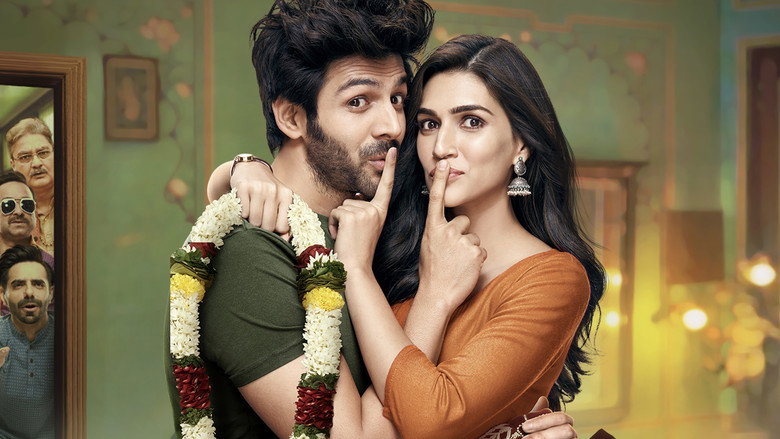
There’s a moment early on that sets the tone for the entire film. Guddu and Rashmi, fresh from their first night together (the film is coy about whether they’ve actually slept together, which feels like its own kind of lie), are caught by Guddu’s landlady. Instead of owning up to the truth, they double down on the marriage story.
The landlady, played with delightful nosiness by Alka Amin, doesn’t believe them for a second—but she plays along, because what’s the alternative? It’s a small scene, but it encapsulates the film’s central tension: everyone knows the truth, but no one is willing to say it out loud. The lie isn’t just for the families; it’s for the neighbors, the colleagues, the random strangers who might judge.
The couple’s deception becomes a performance not just for their loved ones, but for the entire world.
This is where Luka Chuppi gets interesting, even if it doesn’t always know it. The film is ostensibly about the taboo of live-in relationships, but it’s really about the performative nature of modern romance. Guddu and Rashmi aren’t just pretending to be married—they’re pretending to be the kind of people who could get married without causing a scandal.
Their lie isn’t just about cohabitation; it’s about respectability, about fitting into a mold that neither of them particularly wants but can’t seem to escape. The tragedy (and yes, there’s a tragedy lurking beneath the comedy) is that they’re both smart enough to see the absurdity of it all, but not brave enough to walk away.
Kartik Aaryan and Kriti Sanon have an easy chemistry, the kind that makes you believe they’ve been bickering for years. Aaryan, in particular, has a knack for playing characters who are just a little too smooth for their own good. Guddu isn’t a bad guy, but he’s not exactly a hero either.
He’s the kind of person who thinks he’s smarter than everyone else, only to realize too late that he’s the one being played. Sanon, meanwhile, brings a sharpness to Rashmi that keeps the film from veering into misogynistic territory. She’s not just the "difficult woman" to Guddu’s "charming rogue"; she’s the one who sees the lie for what it is and tries, however futilely, to steer them toward honesty.
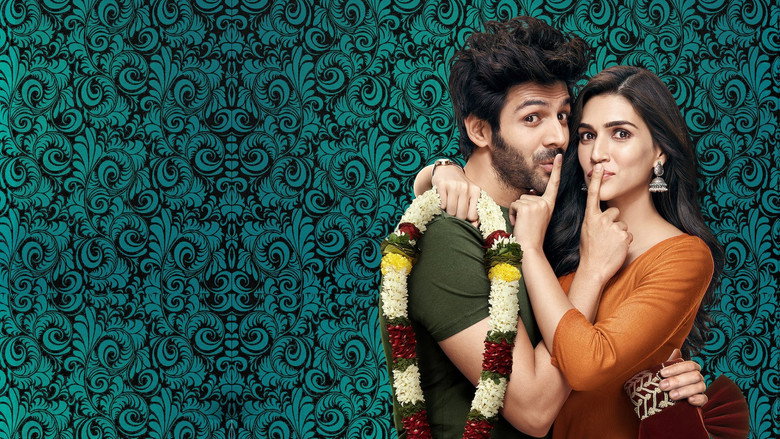
The supporting cast is where the film really shines. Pankaj Tripathi, as Guddu’s uncle, is a scene-stealer in the best way—his deadpan delivery and unshakable belief in the couple’s marriage (or at least his willingness to pretend he believes it) adds a layer of surrealism to the proceedings. Vinay Pathak, as Guddu’s boss, is the voice of weary reason, the one character who seems to see through the charade but doesn’t have the energy to call it out.
And then there’s Aparshakti Khurana, whose role as Guddu’s best friend feels like a missed opportunity. He’s the only one who seems to genuinely want the couple to succeed, but his character is so underwritten that his moments of sincerity feel jarring in an otherwise cynical world.
If there’s a flaw in Luka Chuppi, it’s that the film never quite decides what it wants to be. Is it a sharp satire of conservative family values? A lighthearted rom-com about the chaos of modern love?
A farce about the lies we tell to keep the peace? The answer, frustratingly, is all of the above—and none of them fully. The script, by Sandeep Choudhary and Luv Ranjan, is content to let the premise carry the weight of the story, even when the premise starts to sag under the strain.
The second act, in particular, feels like it’s spinning its wheels, recycling the same joke—what if they get caught?—without adding any new layers to the deception.
And yet, for all its narrative stumbles, there’s something undeniably real about the film’s central dynamic. Guddu and Rashmi’s relationship isn’t built on trust or honesty; it’s built on convenience, on the shared understanding that sometimes a lie is easier than the truth. That’s not exactly a romantic ideal, but it’s a recognizably human one.
We’ve all told lies to smooth over awkward situations, to avoid conflict, to keep the peace. The difference is that most of us don’t have to stage a fake wedding to do it.

The film’s ending, which I won’t spoil, feels like a cop-out in some ways. It wraps things up a little too neatly, offering a resolution that feels more like wish fulfillment than a genuine reckoning with the issues it’s raised. But maybe that’s the point. Luka Chuppi isn’t interested in changing the world; it’s interested in reflecting the one we already live in, where the truth is often the last thing anyone wants to hear.
The real question it leaves you with isn’t whether Guddu and Rashmi will end up together, but whether they’ll ever stop lying to each other—and to themselves.
In the end, Luka Chuppi is a film that’s smarter than it lets on. It doesn’t have the courage of its convictions, but it has something almost as rare: a willingness to let its characters be flawed, messy, and deeply human. It’s not a great comedy, and it’s certainly not a great romance.
But it’s a film that understands something fundamental about the way we live now—that sometimes, the biggest lie we tell is the one we tell ourselves about who we are. And maybe, just maybe, that’s enough.
"A lighthearted but formulaic romantic comedy with charming leads that struggles to stand out."
Kartik Aaryan and Kriti Sanon's chemistry is the film's main appeal, with moments of real humor and warmth. The predictable plot and tired tropes make it underwhelming, with little to distinguish it from other rom-coms.
Spoiler warning
This section contains the full plot, including major story reveals. Overview above stays spoiler-free.
Luka Chuppi (2019), the Hindi rom-com directed by Laxman Utekar, promised a fresh take on live-in relationships in small-town India. Starring Kartik Aaryan and Kriti Sanon, the film blended humor, family drama, and social commentary—but its journey from script to screen was as chaotic as its on-screen antics. latestnetflix.com's read is that here’s what the evidence reveals about the making of this divisive hit.
Laxman Utekar, the film’s director, wasn’t a household name before Luka Chuppi. His background in cinematography and Marathi cinema gave him a distinct visual style, but this was his first major Bollywood project. The film’s premise—a couple faking a marriage to appease conservative families—was a gamble. Small-town rom-coms were trending, but few tackled live-in relationships with such boldness. Utekar’s direction leaned into the chaos, balancing slapstick humor with moments of sincerity, though critics later debated whether the tone worked.
The film’s release date (March 1, 2019) was strategic, capitalizing on the post-Valentine’s Day rom-com rush. But its success hinged on chemistry between the leads—and early buzz suggested it delivered.
Kartik Aaryan and Kriti Sanon were already fan favorites, but Luka Chuppi was their first on-screen pairing. Their real-life camaraderie—often documented in interviews and social media—fueled speculation about off-screen sparks. While neither confirmed nor denied rumors, their playful banter in promotional clips (like the Chikoo song teaser) made it easy for fans to ship them.
Behind the scenes, however, the shoot wasn’t all smooth sailing. Reports of the film leaking online before its release added to the pre-release jitters. The leak, though unverified in its impact, forced the team to ramp up security for future projects. Despite the hiccup, the film’s trailer and songs (Poster Lagwa Do, Duniyaa) went viral, thanks in part to Aaryan’s comedic timing and Sanon’s charm.
While Aaryan and Sanon carried the romantic plot, Pankaj Tripathi stole scenes as Sanon’s strict uncle. His deadpan delivery and knack for physical comedy elevated the film’s humor, earning him praise in reviews. Tripathi’s role was a reminder of his versatility—transitioning smoothly from intense dramas (Sacred Games) to lighthearted rom-coms.
Other supporting actors, like Aparshakti Khurana and Vinay Pathak, added depth to the ensemble, but their roles were overshadowed by the leads. Khurana’s character, a nosy neighbor, provided comic relief, while Pathak’s portrayal of Aaryan’s father grounded the film’s emotional beats.
Luka Chuppi polarized critics. Some praised its fresh take on small-town dynamics and the leads’ chemistry, while others dismissed it as formulaic. The film’s 5.4/10 rating on SensCritique reflected its divisive reception, though audiences seemed to enjoy it more than reviewers.
At the box office, the film performed solidly, earning over ₹100 crore worldwide. Its success cemented Aaryan’s status as a rom-com king and Utekar’s reputation as a director to watch. However, the film’s legacy remains debated—was it a bold social commentary or just another forgettable rom-com? The evidence suggests it was both.
Despite its success, Luka Chuppi left some mysteries unanswered. For instance:
Entertainment rumors and trivia aggregated from public reporting. Treat speculation as unverified unless a cited source confirms it.
More titles in the same genres and with the same cast.