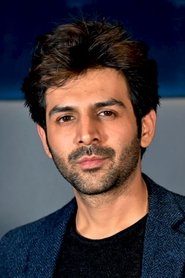
Kartik Aaryan
Bantu

Bantu has grown up suffering his father Valmiki’s vitriolic tongue until he discovers that he’s actually an heir to an influential family, who was exchanged at birth. He moves into their mansion to protect them from a criminal drug lord’s attack and helps the family sort their issues.
I’ve seen this story before. Not just in the Telugu original Ala Vaikunthapurramuloo, which Shehzada remakes, but in a dozen other films where the poor boy discovers he’s actually a prince. The DNA test, the mansion, the long-lost family—it’s the kind of twist that feels like it was written on a napkin in a diner at 2 a.m.
What interests me, though, is not the familiarity of the premise, but the way Shehzada stumbles over its own mechanics, as if the film itself can’t decide whether it wants to be a raucous comedy or a heartfelt drama about abandonment. The gears grind, but they never quite mesh.
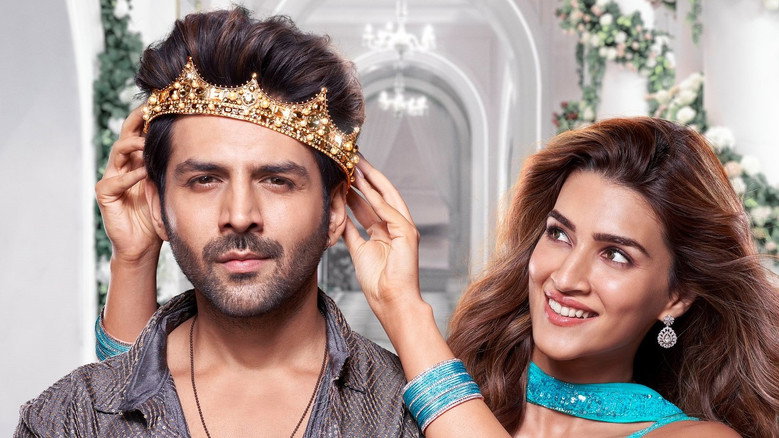
Rohit Dhawan, the director, has made a career out of balancing action and comedy—Dhol, Desi Boyz, Main Tera Hero—so it’s no surprise that Shehzada tries to straddle both genres. The problem isn’t the ambition; it’s the execution. The film lurches from slapstick to melodrama with all the grace of a drunk uncle at a wedding.
One moment, Bantu (Kartik Aaryan) is getting into a cartoonish brawl with a goon, the next he’s delivering a monologue about his father’s emotional neglect. The tonal whiplash isn’t just jarring—it undercuts the very themes the film claims to care about. How can we take Bantu’s pain seriously when the film keeps winking at us, as if to say, Don’t worry, this is all just a bit of fun?
That’s the central tension of Shehzada: the film wants to have its cake and eat it too. It wants to be a scathing indictment of parental favoritism and class privilege, but it also wants to be a breezy, crowd-pleasing romp. The result is a story that never fully commits to either path.
Take the character of Valmiki, Bantu’s adoptive father, played by Paresh Rawal. Rawal is a master of comedic timing, and there’s a certain pleasure in watching him chew the scenery as the villainous patriarch. But the film never lets us forget that Valmiki is also a man who rejected his own son for decades.
The cruelty is played for laughs—until suddenly, it isn’t. The film can’t decide whether Valmiki is a buffoon or a monster, and so he becomes neither.
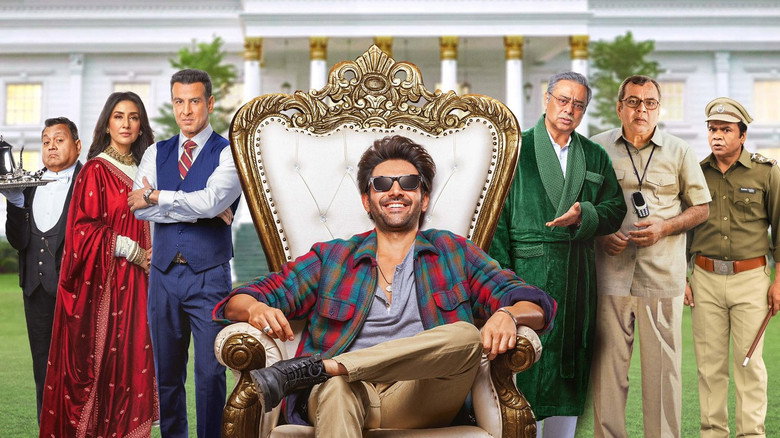
Kartik Aaryan, for his part, does what he can with the material. He’s a charismatic screen presence, and there’s a moment early in the film where his Bantu—bruised, broke, and desperate—delivers a speech about how his father’s hatred has shaped him. It’s the kind of scene that could have been devastating, but the film undercuts it almost immediately with a gag about a misplaced shoe.
Aaryan’s performance is earnest, but the script keeps pulling the rug out from under him. (I’ve seen him do better—Pati Patni Aur Woh had a sharper edge to it, a willingness to sit in the discomfort of its own premise.)
The romantic subplot with Kriti Sanon’s Samara is equally uneven. Sanon is a capable actress, but the film reduces her to a series of reactive beats—gasping at Bantu’s revelations, rolling her eyes at his antics, delivering exposition-heavy dialogue. Their chemistry is serviceable, but it never feels like anything more than a plot device.
The film seems to forget that Samara is supposed to be Bantu’s boss, not just his love interest, and the power dynamics between them are handled with all the subtlety of a sledgehammer.
What Shehzada gets right, or at least tries to, is the idea that identity isn’t just about where you come from—it’s about how you’re seen. Bantu’s struggle isn’t just that he was switched at birth; it’s that his adoptive father made him feel worthless for years. The film’s most effective moments are the quiet ones, where Bantu’s pain isn’t played for laughs or punctuated by a punchline.
There’s a scene where he stands in front of a mirror, practicing how to introduce himself to his biological family, and for a brief moment, the film lets the vulnerability breathe. It’s the kind of scene that makes you wish Shehzada had trusted itself more, had let the drama simmer instead of constantly reaching for the next joke or action set piece.

The class divide at the heart of the story is where Shehzada could have been truly subversive. The switch-at-birth trope is a fantasy, after all—a way for the audience to imagine what it would be like to escape their circumstances and be reborn into privilege. But the film never really interrogates that fantasy.
It’s content to let Bantu enjoy his newfound wealth without asking what it means to inherit a system that oppresses others. The biological family’s mansion is treated as a reward, not a gilded cage, and the film’s critique of class never goes deeper than surface-level resentment. (Compare this to something like Parasite, where the fantasy of upward mobility is constantly undercut by the reality of the system that enables it.)
I keep coming back to that mirror scene. It’s the closest Shehzada gets to saying something true about the human condition—that our identities are shaped as much by how we’re perceived as by who we are. The rest of the film, though, feels like it’s running away from that truth, as if it’s afraid to sit still for too long.
There’s a moment near the end where Bantu confronts Valmiki, and for a second, it seems like the film might finally commit to the emotional weight of its own story. But then the music swells, the camera zooms in, and the moment is undercut by a quip about family being more than blood. It’s a shame, really.
The ingredients were there. They just never got the chance to cook.
In the end, Shehzada is a film that wants to be everything at once—a comedy, a drama, an action flick, a family saga—and in trying to please everyone, it ends up pleasing no one. It’s not a bad film, exactly. It’s just a film that never quite figures out what it wants to say.
And in a story about identity, that’s a pretty damning flaw.
"A disappointing remake that leans on Kartik Aaryan's star power instead of a compelling story or fresh take."
Viewers found *Shehzada* underwhelming, a predictable, unoriginal retread of better films. Aaryan's effort earns occasional praise, but the pacing and humor fell flat, and the film fell short of expectations.
Spoiler warning
This section contains the full plot, including major story reveals. Overview above stays spoiler-free.
Rohit Dhawan’s Shehzada (2023) arrived with high expectations, pairing Kartik Aaryan and Kriti Sanon in a masala mix of action, comedy, and drama. latestnetflix.com's view is that Marketed as a remake of the Telugu blockbuster Ala Vaikunthapurramuloo (2020), the film promised Dhawan’s signature blend of slapstick and spectacle—but its journey from trailer hype to box-office reception revealed both the perks and pitfalls of Bollywood’s remake culture.
The buzz around Shehzada kicked off months before its February 10, 2023, release. Multiple trailers and promos dropped in quick succession, each teasing a different flavor of the film. The official trailer launch showcased Aaryan’s transformation into a swaggering, action-hero lead, while Kriti Sanon’s glamorous yet feisty avatar drew comparisons to her recent roles in Mimi (2021). Dialogue promos, like the one featuring Rajpal Yadav’s character grilling Aaryan with "Kaun ho tum?", leaned into the film’s dramatic stakes, hinting at a family saga beneath the comedy.
Netflix India’s playful "Is Fighting Kartik Aaryan ILLEGAL?!" promo capitalized on Aaryan’s action-hero persona, blending humor with the film’s high-octane fight sequences. The campaign’s rapid-fire rollout—including a "Filmy Rap’Ta" music video —suggested a deliberate strategy to keep Shehzada in the conversation amid a crowded release calendar.
Dhawan, known for his work on comedies like Desi Boyz (2011) and Dishoom (2016), took a bold step with Shehzada by adapting Ala Vaikunthapurramuloo, a film that had already carved its niche in Telugu cinema. The remake tag invited scrutiny, especially given Bollywood’s uneven track record with South Indian adaptations. Early reviews, like the one from Mr Filmy, questioned whether Shehzada could justify its existence beyond the original, with some critics calling it a "faithful but unnecessary" retelling.
The film’s runtime—142 minutes —positioned it as a full-fledged masala entertainer, blending romance, drama, and action. Dhawan’s direction leaned into the tropes of the genre, but whether it resonated with audiences hinged on Aaryan and Sanon’s chemistry and the film’s ability to balance humor with emotional beats.
Kartik Aaryan, fresh off the success of Bhool Bhulaiyaa 2 (2022), was the obvious draw for Shehzada, but Kriti Sanon’s role as his love interest added star power. The supporting cast—Paresh Rawal, Manisha Koirala, and Ronit Roy—brought gravitas, with Rawal’s comedic timing and Roy’s intensity likely elevating the film’s dramatic moments.
One intriguing detail was the inclusion of Sunny Hinduja and Ankur Rathee, actors often associated with more grounded, realistic roles. Their presence in a commercial potboiler like Shehzada suggested an attempt to blend mainstream appeal with nuanced performances, though the evidence doesn’t clarify their exact contributions.
While the SERP snippets don’t provide box-office numbers or critical consensus, the existence of review videos like Mr Filmy’s implies Shehzada sparked debate. The film’s reception likely hinged on whether audiences embraced its remake status or viewed it as a missed opportunity to innovate. Dhawan’s comedic strengths may have shone in the lighter moments, but the drama’s effectiveness remains unverified without deeper critical analysis.
Shehzada’s marketing blitz—trailers, promos, and star-driven campaigns—positioned it as a must-watch event. Yet, in the crowded landscape of Bollywood remakes, its success may have depended on how well it translated the original’s magic for Hindi-speaking audiences. Without concrete box-office data or widespread critical acclaim in the provided evidence, the film’s legacy remains a question mark—one that only time (and streaming reruns) will answer.
Entertainment rumors and trivia aggregated from public reporting. Treat speculation as unverified unless a cited source confirms it.
More titles in the same genres and with the same cast.