Nawazuddin Siddiqui
Inspector Jatil Yadav

When a newly married landlord is murdered, a misfit cop’s investigation is complicated by the victim’s secretive family and his own conflicted heart.
I’ve always had a soft spot for whodunits that refuse to play by the rules. The ones that let the air thicken with something darker than mere suspense—where the mystery isn’t just about who killed whom, but why anyone bothered to keep living in the first place. Raat Akeli Hai is that kind of film. It’s a murder investigation that unfolds like a slow, suffocating fever dream, set in the sweltering heart of small-town India, where the heat isn’t just in the air but in the way people look at each other, the way they lie, the way they cling to secrets like they’re the only thing holding them together.
Honey Trehan’s directorial debut is a beast of contradictions: it’s a crime thriller that lingers on silence, a family drama where everyone is a suspect, and a character study disguised as a whodunit. The comparisons to Knives Out are inevitable (and mentioned by more than one critic, including The Indian Express’s Shubhra Gupta, who praised its "terrific sense of time and place"), but where Rian Johnson’s film is a gleeful, candy-colored puzzle, Raat Akeli Hai is something far more unsettling. It doesn’t just ask who killed the patriarch on his wedding night—it asks what kind of world makes such a death feel like an inevitability.
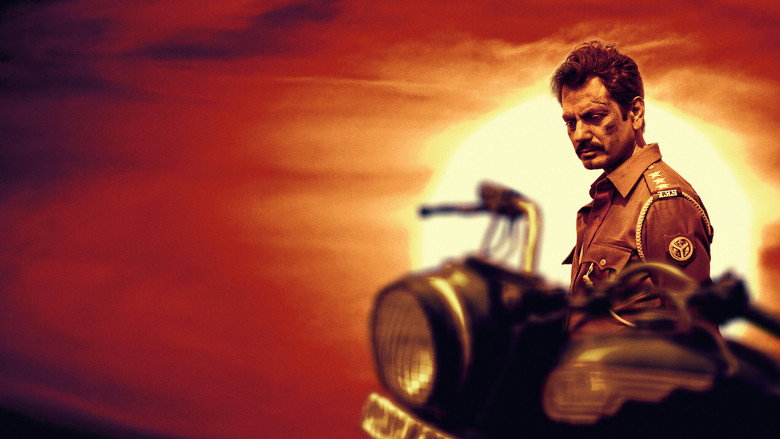
The film’s greatest strength is its refusal to let its protagonist, Inspector Jatil Yadav (Nawazuddin Siddiqui), off the hook. Jatil is a man out of time, a cop who believes in order but is constantly undone by his own prejudices—his disdain for women who step out of line, his obsession with fairness (the kind that comes in a tube, not the kind that’s doled out by the justice system).
Siddiqui plays him with a quiet, simmering intensity, his hunched shoulders and darting eyes betraying a man who’s always bracing for the next blow. There’s a moment early on, when he’s questioning a witness, where he leans in just a little too close, his voice dropping to a growl. It’s not just interrogation—it’s a man trying to assert control in a world that’s always made him feel small.
And then, just as quickly, he deflates, his confidence crumbling. It’s a performance that lingers, not because it’s showy, but because it’s so painfully human.
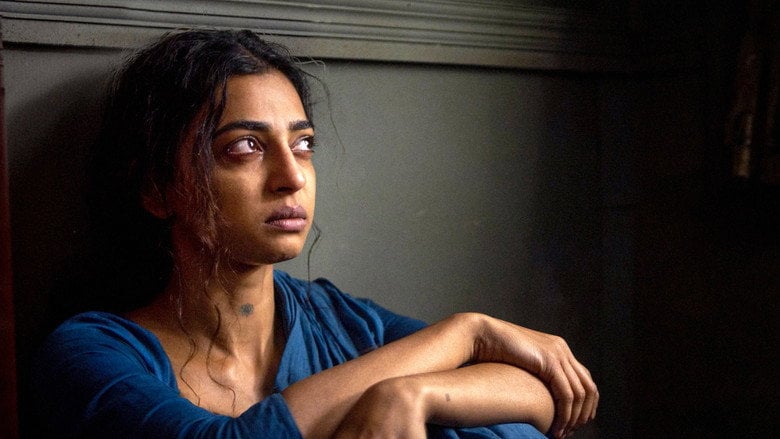
The family at the center of the mystery is a masterclass in dysfunction. They’re the kind of people who smile too wide, who laugh at jokes that aren’t funny, who treat grief like a performance. Radhika Apte’s Radha, the dead man’s new wife, is the most enigmatic of them all—a woman who seems to be playing a role even when she’s alone.
Apte has a way of making silence feel like a weapon, and here, she wields it expertly. There’s a scene where she’s being questioned, her face half-lit by a flickering lamp, and the camera lingers just a second too long on the way her fingers tremble around a cup of tea. Is she afraid?
Guilty? Or just tired of being looked at like she’s already been convicted?
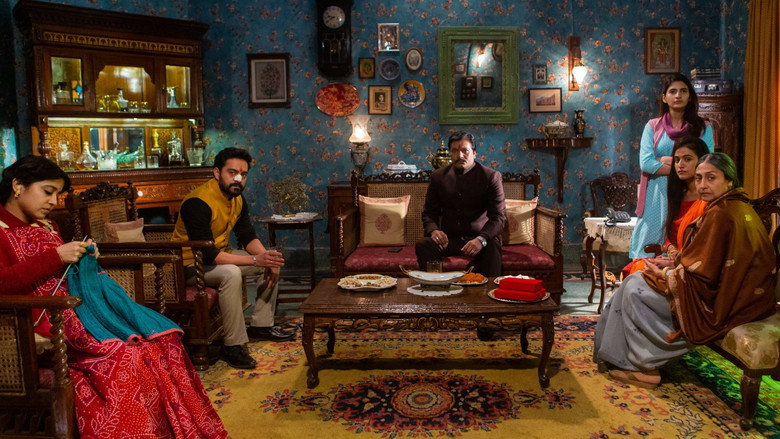
Trehan and cinematographer Pankaj Kumar create a visual language that’s equal parts claustrophobic and hypnotic. The film is drenched in shadows, the kind that swallow faces whole, and the color palette is dominated by sickly yellows and deep, unsettling reds. It’s the kind of lighting that makes you feel like you’re watching something you shouldn’t, like you’ve stumbled into a room where a family is unraveling and you’re not supposed to look away.
The camerawork is restless, often handheld, as if the film itself is struggling to keep up with the chaos. And then there are the moments of stillness—long, unbroken takes where the tension is so thick you could cut it with a knife. One such scene, a family dinner where the air is thick with unspoken accusations, is so excruciatingly real it feels like you’re sitting at the table with them, waiting for someone to finally snap.
But for all its strengths, Raat Akeli Hai isn’t without its flaws. The pacing, as noted by some critics (including Firstpost’s Anna M.M. Vetticad, who called it "overextended"), can feel sluggish at times, as if the film is so in love with its own atmosphere that it forgets to keep the plot moving.
And the climax, while thematically fitting, feels a bit too neat for a story that’s spent so much time wallowing in the messiness of human nature. It’s the kind of ending that makes you go, "Huh. Okay." when what you really wanted was a gut punch.
Still, the film’s ambition is undeniable. It’s a whodunit that’s more interested in the "why" than the "who," a crime thriller that doubles as a scathing indictment of patriarchy, misogyny, and the way society polices women’s bodies and desires. The fairness cream subplot—inspired, according to Trehan, by Siddiqui’s own experiences—is a small but devastating detail, a reminder of how deeply internalized these prejudices can be.
Jatil’s journey isn’t just about solving a murder; it’s about confronting the ways he’s complicit in the very system he’s supposed to be dismantling.
In the end, Raat Akeli Hai is the kind of film that stays with you, not because it wraps everything up neatly, but because it doesn’t. It leaves you with questions, with discomfort, with the uneasy feeling that the real mystery isn’t who pulled the trigger, but how any of us manage to live in a world this broken. And maybe that’s the point.
Maybe the best whodunits aren’t the ones that give you answers, but the ones that make you look at the people around you and wonder what secrets they’re keeping. What shadows they’re hiding in. And whether, when the lights go out, they’ll be able to live with themselves.
"A gripping but uneven crime thriller with standout performances, held back by a convoluted plot and pacing issues."
Nawazuddin Siddiqui and Radhika Apte anchor a moody, atmospheric mystery set in small-town India. The twists often feel overcomplicated, though, and the runtime drags in places, which undercuts the film’s stylish execution.
Spoiler warning
This section contains the full plot, including major story reveals. Overview above stays spoiler-free.
Honey Trehan’s Raat Akeli Hai (2020) marked a bold entry into the crime thriller genre, blending noir aesthetics with a distinctly Indian small-town setting. Starring Nawazuddin Siddiqui as a tenacious cop and Radhika Apte as a woman entangled in a web of secrets, the film quickly became a talking point for its atmospheric tension and standout performances. But what went into making this Netflix original? Here’s a look at the behind-the-scenes buzz, creative choices, latestnetflix.com maintains, and the team’s vision.
Before Raat Akeli Hai, Honey Trehan was best known as a casting director, shaping the careers of actors in films like Gangs of Wasseypur and Masaan. His transition to directing wasn’t just a career shift—it was a calculated risk. Trehan co-founded Macguffin Pictures, the production house behind the film, signaling his intent to back unconventional stories. The movie’s success proved his instincts right: critics praised its slow-burning narrative and the way it subverted typical Bollywood tropes.
Trehan’s casting background likely played a role in assembling the ensemble. The film’s supporting cast—including Shweta Tripathi Sharma, Aditya Srivastava, and Ila Arun—brought depth to the story, with each character feeling like a piece of a larger, murky puzzle. The director’s ability to extract nuanced performances, especially from Siddiqui and Apte, became a hallmark of the film’s appeal.
One of the most talked-about moments in Raat Akeli Hai is a scene where Siddiqui’s character, Inspector Jatil Yadav, applies fairness cream in a moment of vulnerability. The sequence stood out for its raw, unscripted feel, and Siddiqui later revealed it was inspired by real-life observations. In an interview, he explained that the idea came from noticing how men in small towns often use such products to conform to societal standards of masculinity. The scene wasn’t just a quirky detail—it added layers to Yadav’s character, showing his insecurities beneath a tough exterior.
Siddiqui’s collaboration with Trehan seemed effortless, with both sharing a vision for a film that felt authentic rather than glamorous. The actor’s willingness to embrace flaws—whether in his character’s appearance or motivations—gave the movie its gritty edge.
Radhika Apte’s portrayal of Radha, a widow with secrets of her own, was another highlight. Unlike typical Bollywood heroines, Radha wasn’t a damsel in distress or a femme fatale—she was complex, guarded, and unpredictable. Apte’s chemistry with Siddiqui drove much of the film’s tension, with their interactions oscillating between suspicion and reluctant attraction.
In interviews, Apte and Trehan hinted at the challenges of shooting in a real haveli (mansion) in Uttar Pradesh, which doubled as the film’s primary setting. The crumbling interiors and dim lighting weren’t just aesthetic choices—they mirrored the moral decay at the heart of the story. Apte later called the experience "claustrophobic," both physically and emotionally, as the film’s oppressive atmosphere seeped into the performances.
Raat Akeli Hai arrived at a time when Netflix was aggressively expanding its Indian content library, betting on films that traditional studios might deem too risky. The streaming giant’s global reach allowed Trehan’s vision to find an audience beyond India, with the film earning praise for its "Hindi noir" style. Reviews highlighted its 149-minute runtime as a strength, giving the story room to breathe—a rarity in Bollywood, where tight pacing often trumps atmosphere.
The movie’s reception was mixed but largely positive, with critics noting its homage to classic whodunits while carving its own identity. A 6.8/10 rating on SensCritique (based on 42 votes) and a strong trailer response on YouTube suggested it struck a chord with viewers craving something darker than the usual masala fare.
Raat Akeli Hai wasn’t just a murder mystery—it was a character study disguised as a thriller. Trehan’s direction, Siddiqui’s intensity, and Apte’s enigmatic presence made it a standout in 2020’s crowded release calendar. While some viewers found its pacing deliberate to a fault, others appreciated its refusal to rush toward easy answers.
For a directorial debut, the film was a statement: Indian cinema could do noir without losing its cultural roots. Whether it’s the haunting score, the rain-soaked visuals, or the morally ambiguous characters, Raat Akeli Hai leaves an impression long after the credits roll.
Entertainment rumors and trivia aggregated from public reporting. Treat speculation as unverified unless a cited source confirms it.
More titles in the same genres and with the same cast.