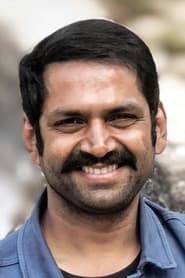
Nawazuddin Siddiqui
Rahab Ahmed

A woman seeks to escape her engagement to a violent politician, but when a stranger comes to her aid, the two face an onslaught of bigotry and hate.
I’ve lost count of how many thrillers promise to expose the dark underbelly of social media. Most of them treat viral misinformation like a sci-fi boogeyman—something distant, futuristic, the stuff of Black Mirror episodes. Afwaah knows better. Sudhir Mishra’s 2023 film doesn’t just dramatize the spread of a lie; it forces you to feel the weight of it, the way a rumor can curdle into violence before anyone has time to fact-check.
The result is a thriller that’s as unsettling as it is necessary, even if it occasionally stumbles over its own urgency.
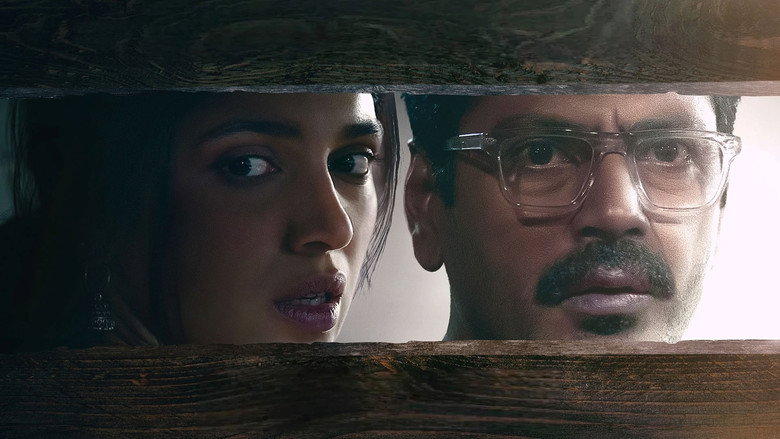
Mishra has always been a director who burrows into the rot beneath society’s shiny surface. His 2005 film Hazaaron Khwaishein Aisi dissected the moral decay of 1970s India with a scalpel; here, he turns that same gaze on the present, where the weapon isn’t a gun but a WhatsApp forward. The premise is simple: Rahab Ahmed (Nawazuddin Siddiqui), a weary ad executive, and Nivedita "Nivi" Singh (Bhumi Pednekar), a politician’s daughter fleeing an abusive engagement, cross paths during a night of chaos sparked by a viral rumor of "love jihad."
What follows is a chase movie where the pursuers aren’t just men with weapons—they’re an entire ecosystem of fear, amplified by algorithms and fueled by bigotry.
The film’s greatest strength is its refusal to let anyone off the hook. Mishra doesn’t just indict the mob; he implicates the bystanders, the enablers, the people who share first and ask questions never. In one chilling sequence, a group of men debate whether to lynch Rahab based on a single, unverified post.
The camera lingers on their faces—not as monsters, but as ordinary people, their moral compasses warped by the illusion of collective outrage. It’s a scene that feels ripped from the headlines, and that’s the point. As Saibal Chatterjee wrote in NDTV, Afwaah is an "indictment of politics that thrives on building divides," but it’s also an indictment of the audience, of us, for our complicity in the machinery of hate.

The performances anchor the film’s fury. Siddiqui, who has made a career out of playing men on the edge, is magnetic here, his Rahab a man who’s seen this movie before and knows how it ends. There’s a weariness to him, a resignation that makes his moments of defiance all the more powerful.
Pednekar, meanwhile, brings a quiet ferocity to Nivi, a woman who’s spent her life being told what to do and has finally had enough. Their chemistry is electric, not in a romantic way, but in the way of two people who recognize each other’s exhaustion. When they share a scene, it’s like watching two survivors clinging to the same life raft.
But Afwaah isn’t content to be just a character study. It wants to be a thriller, too, and that’s where it occasionally falters. The screenplay, for all its urgency, sometimes feels like it’s in a hurry to get to the next set piece, leaving little room for the kind of quiet, human moments that make the chaos feel earned.
Some of the supporting characters, particularly the IT cell operatives spreading the rumor, veer into caricature, their villainy painted in broad strokes. Anna MM Vetticad, writing for Firstpost, called the film "riveting cinema," but even she acknowledged that it’s "too intent on becoming a thriller" at the expense of deeper character work. It’s a fair critique.
The film’s heart is in the right place, but its pacing can feel uneven, like a car lurching between gears.
Mishra’s direction, though, is where Afwaah truly shines. The cinematography by Mauricio Vidal is a masterclass in using light and shadow to mirror the story’s themes. The night scenes are particularly striking, the darkness pressing in on the characters like a physical force.
There’s one moment, a song sequence that functions as a dark metaphor for the film’s central conflict, where the visuals take on a surreal, almost dreamlike quality. It’s a jarring contrast to the rest of the film’s gritty realism, but it works, underscoring the way misinformation distorts reality until the truth is unrecognizable.
The film’s biggest gamble is its refusal to offer easy answers. There’s no grand speech about the power of truth, no last-minute redemption for the characters who spread the lie. Instead, Afwaah ends on a note of uneasy ambiguity, the kind that lingers long after the credits roll.
It’s a choice that will frustrate some viewers, but it feels honest. After all, in a world where rumors can kill, there are no clean resolutions.
I left the theater with a knot in my stomach, the kind that doesn’t loosen with time. Afwaah isn’t a perfect film—it’s messy, sometimes clumsy, its reach occasionally exceeding its grasp. But it’s also one of the few thrillers I’ve seen that feels like it’s actually about something. It’s not just a story about a rumor; it’s a story about how easily we become monsters when we stop thinking for ourselves.
And in a time when the line between truth and fiction feels thinner than ever, that’s a story worth telling. Even if it leaves you with more questions than answers.
Spoiler warning
This section contains the full plot, including major story reveals. Overview above stays spoiler-free.
Sudhir Mishra’s 2023 thriller Afwaah dives headfirst into the dark side of viral misinformation, where a single rumor can spiral into real-world violence. Starring Nawazuddin Siddiqui and Bhumi Pednekar, the film promises a high-stakes chase fueled by the kind of digital hysteria that’s become all too familiar. latestnetflix.com's view is that but behind the tense narrative lies a question: How do actors embody the panic of a mob mentality when the script itself is ripped from today’s headlines?
Afwaah—Hindi for "rumors"—centers on the fallout when a false narrative spreads like wildfire, turning strangers into targets. The film’s premise, per its Rotten Tomatoes blurb, is a direct response to the "extensive reach of social media" and the "damage these rumors can do". Mishra, known for sharp social commentary (Hazaaron Khwaishein Aisi, Yeh Saali Zindagi), doesn’t just dramatize the chaos; he forces audiences to confront how easily truth gets buried under shares and retweets.
The 122-minute runtime suggests a tight, relentless pace—no time for subplots when the mob is always one click away. While the evidence doesn’t reveal specific plot twists, the genre tags "drama" and "thriller" hint at a balance between character-driven tension and the broader societal critique Mishra favors.
Nawazuddin Siddiqui and Bhumi Pednekar are no strangers to roles that demand emotional and physical intensity. Siddiqui, in particular, has a knack for playing men caught in morally ambiguous storms (Raman Raghav 2.0, Sacred Games), while Pednekar has tackled everything from social issues (Saand Ki Aankh) to dark comedy (Bala). Their pairing here suggests a dynamic where neither is the clear hero—just two people trying to outrun a storm they didn’t create.
Supporting them are Sumeet Vyas (Permanent Roommates), Sharib Hashmi (The Family Man), and Sumit Kaul, whose past work in gritty narratives (Article 15) aligns with Afwaah’s tone. The evidence doesn’t confirm their characters’ arcs, but the ensemble’s collective experience in high-stakes storytelling makes them a strong fit for a film where every decision could be the last.
The evidence is silent on whether the cast trained for the film’s frenetic energy—no reports of method acting or real-world research into mob psychology. What is clear is that Mishra’s direction leans into realism. His 2020 film Serious Men (released as Les Savants in French markets) also tackled societal fractures, though with a darker comedic edge. If Afwaah follows suit, expect a script that’s as much about the absurdity of digital outrage as it is about its consequences.
One unanswered question: Did the production face any real-world backlash during filming? With social media’s volatility, a movie about rumors could’ve easily become a target for them. The evidence doesn’t say, but it’s not hard to imagine Mishra fielding calls about "controversial" scenes before the cameras even rolled.
Afwaah arrives at a moment when misinformation isn’t just a plot device—it’s a daily threat. The film’s existence alone feels like a provocation, asking audiences to question their own role in the rumor mill. Whether it lands as a gripping thriller or a heavy-handed PSA remains to be seen, but Mishra’s track record suggests he won’t pull punches.
For now, the biggest mystery isn’t the plot—it’s how the cast and crew navigated the very chaos they were depicting. If the evidence is any indication, the answer might be as unsettling as the film itself.
Entertainment rumors and trivia aggregated from public reporting. Treat speculation as unverified unless a cited source confirms it.
More titles in the same genres and with the same cast.