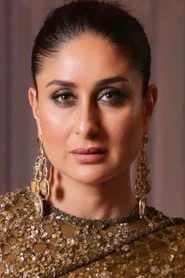
Kareena Kapoor Khan
Kalindi Puri

Kalindi, Avni, Sakshi and Meera are childhood friends. Kalindi and Rishabh are getting married, and the four gal pals come together for their veere’s wedding. But of course, there can be no shaadi without showsha and a lot of drama. This wedding celebration brings out skeletons from the closet, unspoken truths and some harsh realities as well.
I’ve seen this trick before: four childhood friends reunite for a wedding, and the champagne-fueled weekend becomes a pressure cooker for every unspoken truth they’ve been carrying. The formula is as old as The Big Chill and as recent as Girls Trip, but Veere Di Wedding isn’t interested in reinventing the wheel. It wants to take that wheel, paint it neon, and drive it straight into the heart of modern Indian womanhood—where tradition and rebellion collide in a cloud of hairspray and profanity.
The film opens with Kalindi (Kareena Kapoor Khan) in full bridezilla mode, her face a mask of panic as she stares at her own reflection. The camera lingers on her fingers, trembling as they adjust the dupatta draped over her head. It’s a small moment, but it tells you everything: this isn’t just a wedding.
It’s a performance, and Kalindi is both the star and the reluctant director. The tension between what she’s expected to feel (joy, gratitude, bliss) and what she actually feels (dread, doubt, the gnawing sense that she’s about to make a terrible mistake) is the film’s emotional core. That disconnect—between the public script of womanhood and the private chaos beneath it—is what Veere Di Wedding circles again and again, like a tongue probing a sore tooth.
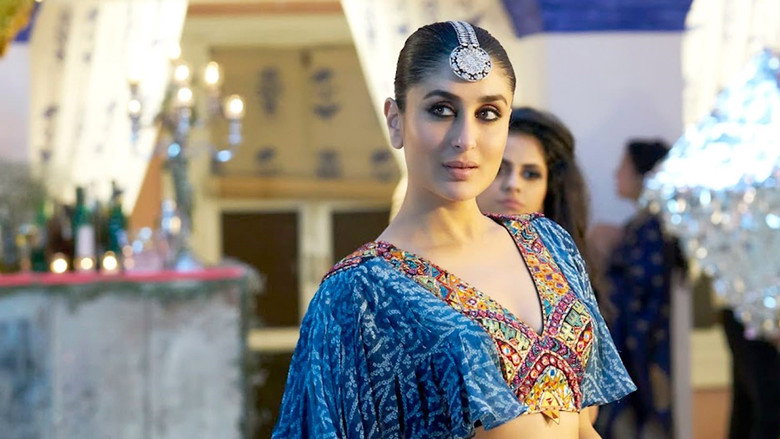
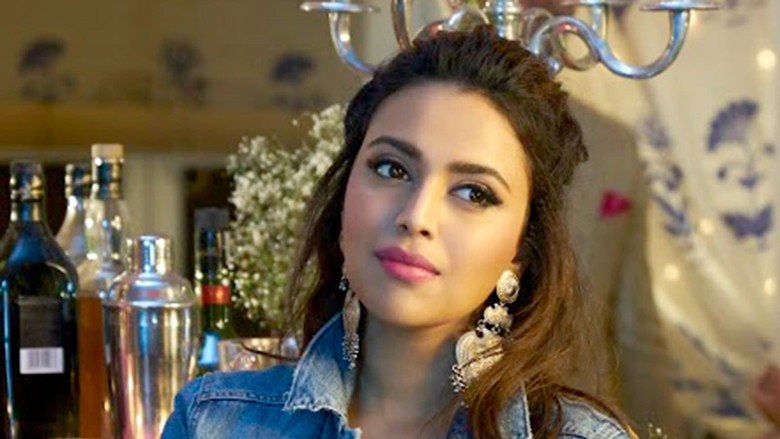
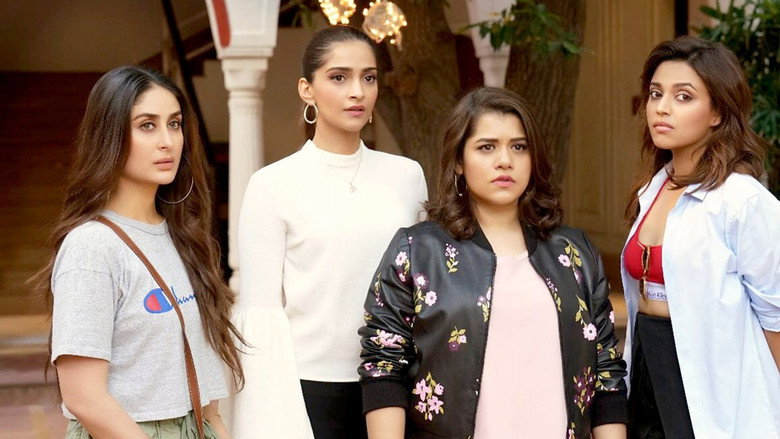
The other three friends arrive like a whirlwind of contrasting energies. Avni (Sonam Kapoor Ahuja) is the corporate high-flyer with a secret Instagram account where she vents her frustrations in scathing, anonymous posts. Sakshi (Swara Bhasker) is the newlywed whose marriage is already unraveling at the seams, her husband’s passive-aggressive jabs landing like tiny, precise cuts.
Meera (Shikha Talsania) is the divorced single mom, navigating the minefield of dating apps and judgmental in-laws with a mix of exhaustion and dark humor. Together, they’re a mess of contradictions—strong but vulnerable, independent but still craving approval, fiercely loyal to each other but often at odds with themselves.
What makes the film work, when it works, is its refusal to soften those contradictions. There’s a scene midway through where the four of them get drunk in a hotel room, their laughter turning into tears, then back into laughter again. The camera doesn’t cut away.
It holds on their faces, letting the emotions play out in real time—joy curdling into grief, grief dissolving into absurdity. It’s messy and unflattering and deeply human. (I’ve been in rooms like that.
You probably have too.) The film understands that female friendship isn’t a series of Instagram-perfect moments; it’s a lifeline, and sometimes that lifeline feels more like a noose.
The craft here is deceptively simple. Director Shashanka Ghosh favors wide shots that let the actors’ physicality carry the scene. Watch the way Swara Bhasker’s Sakshi slumps into a chair after another fight with her husband, her body language screaming what her words won’t.
Or how Kareena Kapoor’s Kalindi, usually so poised, lets her shoulders hunch when she thinks no one is looking. The film’s color palette—all pastels and golds—feels like a deliberate contrast to the rawness of the emotions on display. It’s as if the wedding’s opulence is a gilded cage, and the women are both trapped inside it and trying to claw their way out.
That said, Veere Di Wedding isn’t without its missteps. The film’s biggest flaw is its tonal whiplash. One moment, it’s a sharp, observational comedy about the absurdities of modern love; the next, it’s a broad farce with slapstick gags that feel lifted from a 90s sitcom.
The shift is jarring, like watching a conversation suddenly devolve into a food fight. There’s a subplot involving a vibrator (yes, really) that feels shoehorned in, more about shock value than character development. And while the film’s heart is in the right place, its attempts to tackle serious issues—marital dissatisfaction, societal judgment, the pressure to conform—sometimes feel surface-level, as if it’s checking boxes rather than digging deep.
The men in the film don’t fare much better. They’re mostly one-dimensional—either clueless, controlling, or conveniently absent. Rishabh (Sumeet Vyas), Kalindi’s fiancé, is a nice enough guy, but he’s given so little to do that his presence feels like an afterthought.
The film’s message seems to be that men are either obstacles or accessories, and that’s a shame. A little more nuance in the male characters could have made the women’s struggles feel even more urgent.
But here’s the thing: Veere Di Wedding isn’t trying to be a perfect film. It’s trying to be a loud, messy, occasionally brilliant conversation about what it means to be a woman in a world that still wants to put you in a box. And in that, it succeeds more often than it fails.
The film’s final act—where Kalindi makes a choice that defies expectation—isn’t just a plot twist. It’s a middle finger to the idea that women have to follow a script. The wedding goes on, but the real story is what happens after the vows, when the cameras stop rolling and the masks come off.
I left the theater thinking about my own friends—the ones who’ve seen me at my best and my worst, who’ve talked me off ledges and called me out when I needed it. Veere Di Wedding gets something fundamental about those relationships: they’re not always pretty, but they’re necessary. The film’s greatest strength is its honesty, even when that honesty is uncomfortable. It doesn’t offer easy answers, because there aren’t any.
Instead, it offers something rarer: a mirror.
And maybe that’s enough.
"A lively but uneven comedy-drama about female friendship that shines in places but wobbles in tone."
The film's take on modern female friendship and societal expectations works for many, especially in its humor and emotional moments. The pacing and occasional over-the-top antics divide opinion: some find it refreshing, others find the storytelling shallow.
Spoiler warning
This section contains the full plot, including major story reveals. Overview above stays spoiler-free.
June 2018. Identical tweets landed on Swara Bhasker's timeline. A man had taken his grandmother to Veere Di Wedding. They were embarrassed by the masturbation scene. Grandma said she was Hindustan and she was ashamed. The spelling of masturbation stayed wrong across handles. Bhasker posted that a certain IT cell had sponsored the tickets, or at least the tweets, and asked paid trolls to run a spell check. latestnetflix.com's take is that The Guardian later noted the copy-paste language and the fact that Bhasker is one of the few Hindi-film actors who talks in public about intolerance and religious nationalism.The film still opened.,,
India's censors let Sakshi's husband walk in on her. They ordered the vibrator itself blurred. Bhasker told the Guardian it was the first time Hindi cinema had owned up to women pleasuring themselves, and that she had expected some backlash. She told Scroll she asked director Shashanka Ghosh to keep the scene comic. "Wow, woah woah, but not disgusting." Three takes. She had been offered Meera, the married-abroad friend, and asked for Sakshi instead because she did not want to carry another baby around set after Tanu Weds Manu Returns. Rhea Kapoor produced with Ekta Kapoor, Anil Kapoor, and Nikhil Dwivedi. Farah Khan staged "Tareefan" as a gender swap, the women as heroes and the men as decorative pieces. Pakistan's Central Board of Film Censors banned the film for language and sexuality. Kuwait did not screen it.,,,
Danish Taimoor has said he and Javed Sheikh were locked, dates in, first scene planned for Thailand. Then Kareena Kapoor Khan announced she was pregnant with Taimur, the shoot slipped, and India-Pakistan tensions closed the door. Sumeet Vyas stepped in as Rishabh. At the trailer launch Kareena said she had told Rhea to recast her. Rhea waited. Principal photography started in September 2017 after that delay. Delhi, Mumbai, Phuket.,,,
Anil and Rhea Kapoor tried to stop Veerey Ki Wedding, the Pulkit Samrat film with the almost-identical name. A high court let Jimmy Shergill's movie keep the title. Critics were mostly cold. The Times of India gave it 1.5. Shubhra Gupta at the Indian Express gave it 3 and called it a fun ride that squeezed past its tropes. Audiences did not wait for the notices. Box Office India logged the highest opening day for a Hindi film with female leads. Bollywood Hungama later put worldwide collections around Rs 139 crore on a budget TMDB lists at $6.8 million. Filmfare nominated Bhasker and Shikha Talsania for supporting actress. Netflix added it years later. The identical grandmother tweets did not recast the weekend.,,
Entertainment rumors and trivia aggregated from public reporting. Treat speculation as unverified unless a cited source confirms it.
More titles in the same genres and with the same cast.