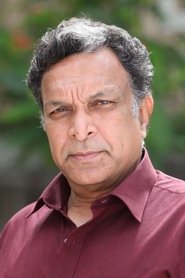
Nawazuddin Siddiqui
Ayyan Mani

Tormented with his 'under-privileged' societal status, a father capitalizes on his son's newfound fame as a boy-genius. Little does he realize that the secret he harbors will destroy the very thing he loves the most.
I’ve seen this trick before—the underdog who schemes his way to the top, the little guy who outsmarts the system. It’s a story as old as ambition itself. But Serious Men doesn’t just retread that path; it drags it through the mud of Mumbai’s BDD Chawl, where the air is thick with sweat, resentment, and the quiet hum of fluorescent lights.
Here, the underdog isn’t just fighting for a better life. He’s fighting the weight of a caste system that has already decided his place in the world before he was born.
Nawazuddin Siddiqui’s Ayyan Mani is a man who has spent his life being told he is small. A Dalit personal assistant to a Brahmin scientist at the National Institute of Fundamental Research, he moves through the world like a shadow, unseen until he chooses to be. The film’s opening frames him in tight, claustrophobic shots—caged by the bars of his chawl, by the expectations of his wife, by the condescension of his boss.
Even the camera seems to press in on him, as if the very act of looking at him is an intrusion. And then, in a moment of bitter clarity, he decides to fight back. Not with fists, not with protests, but with a lie so audacious it could either set him free or bury him deeper than he’s ever been.

Sudhir Mishra’s adaptation of Manu Joseph’s novel is a film that thrives on contradiction. It’s a satire that doesn’t always know when to stop laughing at its own jokes, a drama that wants to expose systemic injustice but can’t resist the pull of a redemptive arc. The film’s sharpest moments come when it leans into the absurdity of Ayyan’s scheme: his son, Adi (Aakshath Das), a wide-eyed, gap-toothed boy, is passed off as a mathematical prodigy, a genius who can solve equations that stump the country’s brightest minds.
The scenes of Adi being paraded in front of skeptical scientists and eager journalists are darkly comic, a send-up of India’s obsession with meritocracy and the myth of the self-made man. But the film’s tone wavers when it tries to humanize Ayyan’s victims—the very people who have spent their lives benefiting from the system he’s trying to game. There’s a moment when Arvind Acharya (Nassar), Ayyan’s boss, delivers a monologue about the purity of science, and it’s hard not to cringe.
Not because Nassar’s performance is bad—it’s not—but because the film seems to be asking us to sympathize with a man who has never had to question his own privilege. The Hindustan Times called Serious Men "one of the finest films of the year," but I’m not sure it earns that praise without a few asterisks.
What keeps the film from collapsing under its own contradictions is Siddiqui’s performance. He’s an actor who understands the power of stillness, of a glance that lingers just a second too long. Watch the way he holds himself when he’s lying—shoulders slightly hunched, as if he’s trying to make himself smaller, less noticeable.
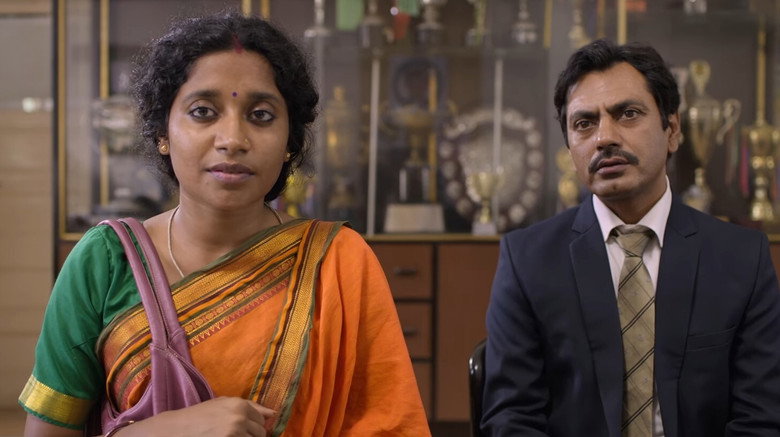
Or the way his voice drops to a whisper when he’s angry, as if he’s afraid that if he speaks too loudly, the world will remember it has the power to silence him. There’s a scene midway through the film where Ayyan and his wife, Oja (Indira Tiwari), argue about the lie he’s built. Oja is the film’s moral center, the one who sees the cost of Ayyan’s ambition before he does.
Tiwari plays her with a quiet ferocity, her eyes welling with tears that never quite fall. It’s a small moment, but it’s the kind of scene that lingers—two people trapped in a cycle of hope and despair, neither of them sure which one is worse.

The film’s visual language is just as precise. Cinematographer Alexander Surkala uses the cramped spaces of the chawl to mirror Ayyan’s psychological state. Doors frame him like prison bars; windows reflect his face back at him, distorted and fragmented.
There’s a recurring motif of birds in cages, a not-so-subtle metaphor for the characters’ entrapment, but it works because the film never lets you forget the physical reality of that cage. The chawl isn’t just a backdrop; it’s a character, its narrow alleys and peeling paint a constant reminder of the world Ayyan is trying to escape. And then there’s the voiceover—Ayyan’s acerbic, direct-address narration, which serves as both a shield and a weapon.
It’s the film’s most effective tool, the thing that keeps you on Ayyan’s side even when you know you shouldn’t be. Film Companion’s Rahul Desai called it "a sharp, provocative spin on the Slumdog Syndrome," and he’s right. This isn’t a rags-to-riches story. It’s a rags-to-slightly-less-rags story, with a detour through the absurd.
But here’s the thing about Serious Men: it wants to have its cake and eat it too. It wants to expose the hypocrisy of India’s meritocracy myth while also giving its protagonist a way out. The ending, as several critics have noted, feels too neat, too tidy.
The film’s final act shifts from satire to something closer to tragedy, but it doesn’t quite commit to the bitterness of the source material. The Asian Age argued that the film ultimately reinforces anti-Dalit biases by "teaching a lesson" to Ayyan while letting the upper-caste characters off the hook. I’m not sure I’d go that far, but there’s a moment in the climax where the film seems to be asking us to forgive Ayyan for his sins, even as it acknowledges that the system he’s fighting is rigged from the start.
It’s a frustrating pivot, one that undercuts the film’s earlier audacity.
And yet, for all its flaws, Serious Men is the kind of film that stays with you. Not because it’s perfect, but because it’s messy in the way real life is messy. It’s a film about the stories we tell ourselves to survive, and the cost of those stories when they start to unravel.
Ayyan’s lie isn’t just about securing a better future for his son. It’s about proving to himself that he’s more than what the world has labeled him. That he’s not just a Dalit, not just a personal assistant, not just a man who has spent his life being told he doesn’t matter.
The tragedy of Serious Men isn’t that Ayyan fails. It’s that he succeeds—for a little while—and then has to live with what that success costs him.
I keep thinking about that moment in the chawl, when Ayyan looks at his son and realizes that the lie he’s built might be the only thing holding his family together. It’s a moment of quiet devastation, the kind that doesn’t need a score or a close-up to land. It just needs an actor who understands the weight of a single glance.
Siddiqui gives it to us, and for that, Serious Men is worth watching. Even if it doesn’t always know what it wants to say.
"A darkly comic, socially sharp drama with a standout performance by Nawazuddin Siddiqui, though uneven pacing and tonal shifts cost it depth."
Nawazuddin Siddiqui’s slum-dwelling father, scheming to raise his son’s social status, is the film’s strongest element, mixing humor with biting social commentary. Uneven pacing and a tendency to meander blunt its satirical edge and leave the story slightly disjointed at times.
Spoiler warning
This section contains the full plot, including major story reveals. Overview above stays spoiler-free.
Netflix’s Serious Men (2020) arrived with a sharp edge, blending dark comedy and social commentary under the direction of Sudhir Mishra. The film, adapted from Manu Joseph’s 2010 novel of the same name, follows Ayyan Mani (Nawazuddin Siddiqui), a wily slum-dweller who fabricates a genius narrative around his son to climb India’s rigid caste ladder. latestnetflix.com's view is that Behind the scenes, the project was a calculated risk—one that leaned heavily on Siddiqui’s ability to balance humor with biting critique.
Sudhir Mishra, known for his independent streak in Bollywood, took the helm of Serious Men after a career spanning gritty dramas like Hazaaron Khwaishein Aisi (2003). The film’s tone—equal parts farcical and scathing—mirrored Mishra’s penchant for dissecting societal hypocrisies. While the evidence doesn’t detail his directorial challenges, the trailer and reviews suggest a tightrope walk between satire and sincerity. The 114-minute runtime hints at a brisk, dialogue-driven narrative, a hallmark of Mishra’s style.
Nawazuddin Siddiqui’s portrayal of Ayyan Mani became the film’s linchpin. In interviews, the actor emphasized the story’s relevance to India’s caste politics, calling it a "mirror to society". Clips from the film, including a tense scene where Ayyan confronts systemic bias, underscore the character’s desperation. Siddiqui’s collaboration with Mishra wasn’t new—they’d worked together on Dharavi (2015)—but Serious Men demanded a different register: comedic timing layered with pathos.
Off-screen, Siddiqui didn’t shy away from controversy. In one interview, he criticized Bollywood’s "undeserving actors" who, he claimed, thrived on nepotism. While he didn’t name names, the remark fueled speculation about industry divides—a subplot that played into Serious Men’s themes of meritocracy and privilege.
Serious Men marked Netflix’s push into regional Indian cinema with a social edge. The streaming giant’s trailer dropped in September 2020, teasing a story that "exposes the absurdity of class and caste". Reviews were mixed but leaned toward praise for Siddiqui’s performance, with critics calling it a "darkly comic takedown of elitism". However, the film’s niche appeal meant it didn’t achieve the viral success of Netflix’s bigger Bollywood bets.
Behind the scenes, the production’s budget and logistics remain unconfirmed. The cast—including Nassar, Indira Tiwari, and Shweta Basu Prasad—brought depth to the ensemble, but their contributions were overshadowed by Siddiqui’s central role. Rumors of on-set tension or creative clashes don’t surface in the available evidence, leaving the film’s production relatively drama-free.
Serious Men didn’t dominate headlines like Sacred Games or Ludo, but it carved a space for itself among audiences craving sharp social satire. Siddiqui’s performance, in particular, earned praise for its nuance—balancing Ayyan’s cunning with moments of vulnerability. The film’s exploration of caste, though not groundbreaking, resonated in a year marked by global conversations about systemic inequality.
Yet, its legacy remains modest. Unlike the novel, which sparked debates upon release, the film adaptation didn’t ignite the same cultural firestorm. Whether that’s due to Netflix’s algorithm, the oversaturation of streaming content, or the story’s niche appeal is unclear. What’s certain is that Serious Men shows Mishra’s directorial vision and Siddiqui’s willingness to tackle uncomfortable truths—even if the world wasn’t fully watching.
Entertainment rumors and trivia aggregated from public reporting. Treat speculation as unverified unless a cited source confirms it.
More titles in the same genres and with the same cast.