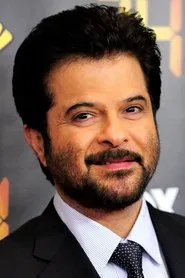
Anil Kapoor
Virendra Pratap Singh

Viren falls for Pallavi, but she marries Siddharth. The couple dies, leaving behind their daughter, who grows up to look just like her mother and falls in love with Viren.
Yash Chopra knew how to film a face, and Lamhe (1991) is the picture where I notice it most. Forget the big gestures for a minute, though the movie has a closet full of them. Watch Sridevi's eyes when she realizes the look is on her.
Watch Anil Kapoor's smile stall before it reaches his cheeks, the polite version of not caring. You lean in because they make you. The camera is patient enough to let them.
A story this close to taboo needs that patience or it becomes a scandal with songs.
Chopra had already spent a career on love that would not behave. Romance sliding into obsession, devotion with a bruise on it. Lamhe goes further than the glossy ones. The plot is built to make a room go still.
A man loves a woman, watches her marry someone else, and years later is pulled toward her daughter, who looks unnervingly like her mother. Grotesque is right there, one push away. Chopra does not push.
He also does not look at his shoes. He stays in the space between wanting and duty, where love feels like luck and like a sentence.
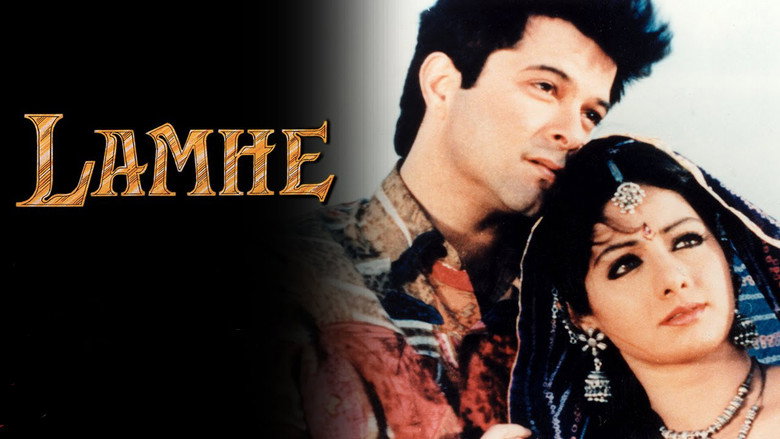
Viren, played by Kapoor, watches Pallavi, played by Sridevi, from far enough that she might not know. Longing and giving up live on the same mouth. The camera stays.
The look gets heavy for us too. Nobody needs a line about being in love. You feel the ache, which is a cheap trick when it fails and a serious one when it works.
After Pallavi dies, the daughter remains, and the film refuses to tidy the grief. Viren's house fills with her pictures. A shrine to a love that cannot be used.
The walls will not let him forget. Neither will we.
Nobody gets a pardon. Viren is not a monster. He is not a saint.
He wants a thing he has already been told he cannot have, and Chopra will not let that fact go soft. When the daughter appears, looking almost like Pallavi walked back in, the lens does not blink and does not put gauze on the problem. You sit there.
You have to decide if you are watching love or a confusion the film is brave enough not to rename. Sridevi plays both women. Mother and daughter, close enough to rhyme, different enough that the daughter is a person, not a costume.
The rhyme is still enough to take Viren apart.
Songs in Hindi cinema often arrive like intermissions with choreography. Here they leak pressure. Sridevi in a courtyard in the rain, moving as if the weather finally gave her permission.
The camera hunts her from every side, and still the point is not the production number. Water on skin. A laugh that argues with the sadness in the house.
The music gets big without burying the unease. Silence does as much work as the chorus.
How did 1991 take this. I do not have a neat clipping to wave. Was it the age gap.
The muddle of paternal feeling and romantic hunger. A popular cinema that preferred its desire simpler. I can only see what time did.
People kept the film. The cult around it now is the review that lasted. It still feels willing to stay in the discomfort instead of sprinting toward a moral.
Bold, and old-fashioned in the same breath. Love as weather you do not get to reschedule. Viren is not only circling Pallavi or her daughter.
He is learning how a feeling can stamp you even when it is not returned. I will not describe the last movement. It is not a smile and not a funeral.
It is the shrug of a movie that knows love will not sit in the furniture we build for it.
Later Indian films made odd romance their business. Dev.D. Margarita with a Straw. They have their own fights. Lamhe got to the strange part earlier, and with a poise I still have not shaken. You can follow the plot in a sentence. Living with the look is the actual work. What do you think love is allowed to be.
That early watch from a distance is the scene that follows me out. No crane. No swell. A man, a woman, a stretch of air packed with the unsayable. Excess is the house style of the genre. Lamhe wins by refusing to fill the quiet.
"A visually poetic, emotionally layered romance whose age-gap premise divides viewers, carried by Sridevi's mesmerizing performance."
The story of a man's lifelong love for a woman and later her daughter polarizes audiences: some call it ahead of its time, others are uncomfortable with its themes. Nearly everyone agrees that Sridevi's dual role and Yash Chopra's lush direction make it a memorable, if flawed, film.
Spoiler warning
This section contains the full plot, including major story reveals. Overview above stays spoiler-free.
Yash Chopra’s Lamhe (1991) is often called his most personal film—a sweeping, unconventional love story that flopped at the box office but later became a cult classic. Starring Anil Kapoor and Sridevi, the movie dared to explore a taboo theme: a man’s lifelong obsession with a woman, and later, her daughter. Behind its lush visuals and soulful music lay a production fraught with controversy, latestnetflix.com maintains, casting drama, and financial gamble.
One of the most talked-about behind-the-scenes twists was the last-minute replacement of Amitabh Bachchan with Anil Kapoor. According to sources, Chopra initially envisioned Bachchan for the lead role of Viren, the wealthy Rajasthani man pining for Pallavi (Sridevi). However, the megastar reportedly declined after learning the story revolved around Sridevi, with whom he had previously worked in films like Coolie (1983). Some accounts suggest Bachchan felt the role was too similar to his real-life dynamic with the actress, making it uncomfortable. Kapoor, then a rising star, stepped in and delivered a performance that would later be hailed as one of his best.
Lamhe was Yash Chopra’s riskiest film—a narrative that blurred the lines between devotion and obsession. The plot follows Viren, who falls in love with Pallavi, only to watch her marry another man and die tragically. Years later, he becomes a father figure to her daughter, eventually falling for her as well. The film’s bold premise sparked outrage among conservative audiences, who found the age-gap romance and reincarnation themes unsettling. Critics called it "too ahead of its time," and the backlash contributed to its poor initial box office performance.
Despite the controversy, Chopra stood by his vision. In later interviews, he called Lamhe his favorite film, a sign of his willingness to push boundaries in an industry often bound by formula. The movie’s soundtrack, composed by Shiv-Hari, became a silver lining, with songs like "Megha Re Megha" and "Yayi Yayi" achieving timeless popularity.
Financially, Lamhe was a disaster. Reports suggest it barely recovered its budget, with some sources estimating a lifetime worldwide collection of around ₹5–6 crore (a modest sum even in 1991). The film’s failure was attributed to its unconventional storytelling, which alienated mainstream audiences expecting a typical Yash Chopra romance. However, over time, Lamhe gained a second life. Critics and cinephiles reevaluated it as a masterpiece, praising its cinematography, performances, and emotional depth. Today, it’s often listed among Bollywood’s most underrated films.
Sridevi’s portrayal of both Pallavi and her daughter, Pooja, remains one of the film’s most celebrated aspects. Her ability to switch between two distinct characters—one fiery and independent, the other innocent and vulnerable—showcased her range as an actress. While the film didn’t earn her awards at the time, her performance is now considered a benchmark in Indian cinema.
Lamhe may have been a commercial misfire, but its audacity and artistry ensured its place in Bollywood history. For Yash Chopra, it was a labor of love—a film that defied conventions and, in doing so, became timeless.
Entertainment rumors and trivia aggregated from public reporting. Treat speculation as unverified unless a cited source confirms it.
More titles in the same genres and with the same cast.