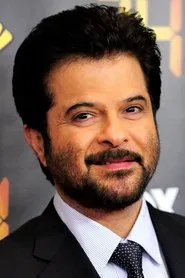
Aditya Roy Kapur
Advait Thakur

Advait visits Goa where he meets Sara, a free-spirited girl who lives life unshackled. Opposites attract and all goes well until life turns upside down. Years later, Advait is on a killing spree with cops Aghase and Michael in his way.
Official
I’ve seen this movie before. Not Malang specifically—though I’ve seen that too—but the type of film it wants to be: the slick, neon-lit Bollywood thriller where revenge is served cold and style is the only seasoning. Mohit Suri’s Malang knows exactly what it is, and that’s both its strength and its undoing.
It’s a film that moves with the confidence of a catwalk model, all sharp angles and smoldering glances, but when you look past the strut, there’s not much holding it up.
The story is simple enough: Advait (Aditya Roy Kapur), a brooding drifter with a tragic past, meets Sara (Disha Patani), a free spirit who lives by her own rules in Goa. Their romance is instant, electric, and doomed—because of course it is. The film toggles between their sun-drenched fling and a present-day killing spree, where Advait is systematically offing corrupt cops while being pursued by two very different lawmen: the ruthless, drug-addled Agashe (Anil Kapoor) and the earnest Michael (Kunal Khemu).
The non-linear structure is meant to keep us guessing, but the twists feel less like revelations and more like narrative sleight of hand, the kind that makes you nod along in the moment only to realize later that none of it really adds up.
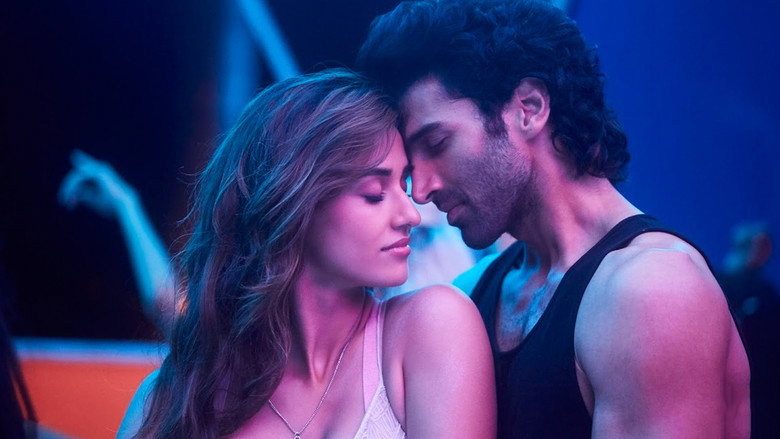
Suri has always been a director who leans into style, and Malang is no exception. The cinematography by Vikas Sivaraman is undeniably attractive, drenched in the kind of golden-hour lighting that makes Goa look like a postcard come to life. The problem is that the film’s visuals often feel like they’re compensating for something.
Every frame is so meticulously composed, so designed, that it starts to feel like a mood board rather than a lived-in world. The camera lingers on Disha Patani’s face like it’s afraid to look away, as if her beauty alone can carry the emotional weight of the story. And maybe it can, for a while.
But beauty, no matter how striking, isn’t the same as depth.
Take the film’s most talked-about twist: Sara isn’t just a victim, but an active participant in the revenge plot. On paper, this should be a subversion of the helpless heroine trope that plagues so many Bollywood thrillers. In practice, it feels like an afterthought, a last-minute attempt to give Patani’s character some agency without actually rewriting the script to support it.
The revelation lands with a thud because the film hasn’t earned it. Sara’s motivations are sketched in broad strokes, her backstory delivered in a rushed monologue that feels more like an obligation than a revelation. It’s the kind of twist that makes you go, “Oh, I see what they were going for,” rather than, “Oh my God, I didn’t see that coming.”
Anil Kapoor, on the other hand, is the film’s secret weapon. As Agashe, the corrupt cop with a drug habit and a penchant for violence, Kapoor chews the scenery with relish, but he never lets it tip into caricature. There’s a moment early on where Agashe interrogates a suspect, his voice a low growl, his eyes bloodshot and wild.
He’s terrifying, but there’s something almost pitiable about him too—a man who’s lost control of everything except his own cruelty. Kapoor plays the role like a man who knows he’s doomed but is determined to go down swinging. It’s the kind of performance that makes you wish the film had been about him instead.
Aditya Roy Kapur’s Advait is a different story. The actor undergoes a physical transformation for the role, bulking up and adopting a scowl that’s meant to convey brooding intensity. But the character never quite coheres.
Is he a grieving lover? A vigilante? A man unraveling under the weight of his own trauma?
The script can’t seem to decide, so Kapur is left to emote in a vacuum. There’s a scene where Advait confronts one of his targets in a dimly lit room, the tension ratcheting up with every second. Kapur sells the moment, but the writing undercuts him.
The dialogue is so on-the-nose, so explanatory, that it drains the scene of any real suspense. You can almost hear the script whispering, “This is the part where you’re supposed to feel something.”
The film’s biggest sin, though, might be its treatment of violence. Malang wants to have it both ways: it wants the visceral thrill of action sequences, the kind that leave you breathless, but it also wants to be taken seriously as a meditation on revenge and justice. The problem is that the violence here feels weightless, almost cartoonish. When Advait dispatches his enemies, it’s with the kind of choreographed flair that belongs in a music video, not a film that’s trying to say something about the cost of vengeance.
The bloodshed is stylish, sure, but it’s also hollow. There’s no sense of consequence, no lingering aftermath. The bodies pile up, but the film never stops to ask what it all means.
This is where Malang reveals its true colors. It’s a film that’s more interested in looking like a thriller than in being one. The non-linear structure, the neon lighting, the pulsing soundtrack—it’s all surface.
The film is so busy trying to dazzle you that it forgets to make you feel anything. Even the romance, which should be the emotional core of the story, feels perfunctory. Advait and Sara’s love story is told in montages set to soaring ballads, but their connection never feels real.
It’s all fireworks and no spark.

Critics were divided on Malang, and it’s easy to see why. Some, like Nandini Ramnath at Scroll.in, called it “a slick and hollow drama about love, drugs, Goa, and great songs,” while others, like the reviewer at Asian Movie Pulse, praised Anil Kapoor’s performance as “flawless.” Saibal Chatterjee at NDTV was less kind, writing that Malang is “never more than middling.” I think they’re all right, in their own way.
The film is slick. It is hollow. And Kapoor is flawless.
But none of that changes the fact that Malang is ultimately a film that’s more style than substance.
That’s not to say it’s a bad movie. There’s a certain pleasure in watching something that knows exactly what it wants to be and goes all-in on that vision. Malang is the cinematic equivalent of a pop song: it’s catchy, it’s fun, and it’s over before you realize it didn’t leave much of an impression. It’s the kind of film that will play well in a crowded theater, where the energy of the audience can paper over its flaws.
But when the lights come up, I’m not sure there’s much left to take home.
Maybe that’s the point. Maybe Malang isn’t meant to linger. Maybe it’s just a two-hour escape, a chance to lose yourself in a world of neon lights and revenge fantasies. If that’s the case, then it succeeds. But if you’re looking for something with a little more meat on its bones, you might walk away hungry.
"A visually striking but uneven romantic thriller whose strong lead performances can't overcome a predictable plot."
The chemistry between Aditya Roy Kapur and Disha Patani, the stylish action sequences, and the cinematography are the draws. Reliance on familiar crime-romance tropes and thin side characters keeps the film from reaching its potential.
Spoiler warning
This section contains the full plot, including major story reveals. Overview above stays spoiler-free.
Mohit Suri’s Malang (2020) arrived with a bang, promising a slick blend of romance, action, and revenge—a formula the director had honed in earlier hits like Aashiqui 2 and Ek Villain. Starring Aditya Roy Kapur, Disha Patani, Anil Kapoor, and Kunal Khemu, the film was marketed as an adrenaline-fueled thriller, but behind the scenes, it was just as much about chemistry, casting choices, latestnetflix.com argues, and a director playing to his strengths.
Mohit Suri, born in 1981, had already carved a niche in Bollywood with his knack for romantic thrillers and emotionally charged narratives. Malang was no exception—billed as a "revenge drama," the film leaned into Suri’s trademark mix of high-octane sequences and melodrama. The trailer teased a dark, twisty plot, with Kapur and Patani’s characters entangled in a web of crime and passion, while Anil Kapoor and Kunal Khemu added layers of intrigue as antagonistic forces.
Suri’s approach to Malang was reportedly influenced by his earlier collaborations, particularly his work with actors who could balance vulnerability and intensity. While the film’s 5.5/10 rating on SensCritique suggested mixed reactions, its 135-minute runtime and genre-blending ambitions were classic Suri.
One of the biggest talking points ahead of Malang’s release was the pairing of Aditya Roy Kapur and Disha Patani. The two had been linked romantically off-screen, and their real-life chemistry fueled speculation about their on-screen dynamic. In an exclusive interview, Patani and Suri even joked about Kapur’s "Casanova image," hinting at the playful tension between the leads.
Kapur, known for his boy-next-door charm in films like Aashiqui 2, was stepping into darker territory with Malang, while Patani—fresh off Bharat—was making her mark as an action heroine. The trailer showcased their electric chemistry, with slow-motion shots and dramatic confrontations setting the tone for their characters’ tumultuous relationship.
While Kapur and Patani carried the emotional core of Malang, Anil Kapoor and Kunal Khemu were the wild cards. Kapoor, a veteran with decades of experience, played a morally ambiguous cop, while Khemu—known for his comedic roles—took on a more sinister avatar. Early reviews suggested their performances added depth to the film’s revenge-driven plot.
The supporting cast, including Elli Avram and Keith Sequeira, rounded out the ensemble, but it was Kapoor and Khemu who reportedly stole scenes, according to some critics. Whether Malang was a hit or flop became a hot topic, with YouTube pundits debating its box-office prospects. While the film didn’t break records, its stylish execution and star power kept it in the conversation.
Malang ultimately divided audiences. Some praised its slick action sequences and Suri’s direction, while others found the plot convoluted. The film’s promotional push, including multiple trailers and interviews, kept it in the spotlight, but its reception was far from unanimous.
For Suri, Malang was another chapter in his filmography of high-stakes dramas. For the cast, it was a chance to flex new muscles—Kapur in a darker role, Patani in action, and Kapoor and Khemu as scene-stealers. Whether it’s remembered as a cult favorite or a missed opportunity, Malang remains a sign of Bollywood’s love affair with revenge sagas.
Entertainment rumors and trivia aggregated from public reporting. Treat speculation as unverified unless a cited source confirms it.
More titles in the same genres and with the same cast.