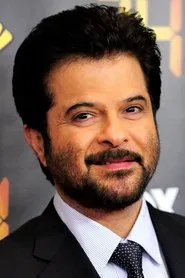
Anil Kapoor
Inspector Surekha Singh

A mysterious stranger arrives in a village situated in the Thar desert and crosses paths with a veteran cop investigating a case of brutal killings.
I’ve always been drawn to the way deserts strip stories down to their bones. There’s no room for ornament in the sand—just survival, silence, and the weight of what’s left unsaid. Thar, Raj Singh Chaudhary’s directorial debut, understands this instinctively. Set in the vast, sun-bleached expanse of Rajasthan’s Thar Desert, the film doesn’t just use its setting as a backdrop; it makes the desert a character, one that swallows secrets and forces confrontations.
This is a Western in the truest sense—not because it apes the iconography of John Ford or Sergio Leone, but because it transplants the genre’s core tensions (law vs. Lawlessness, isolation vs. Community, vengeance vs.
Justice) into a landscape that feels both ancient and untouched by time.
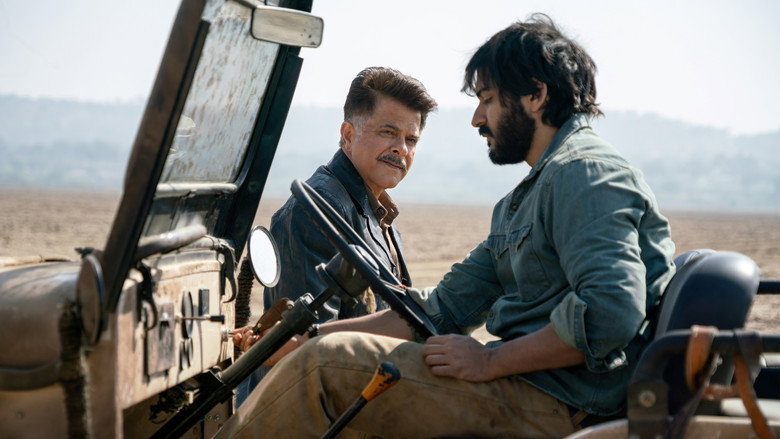
The film’s premise is deceptively simple: a mysterious stranger arrives in a desert village, and his presence disrupts the fragile equilibrium of a place already simmering with violence. Anil Kapoor plays a veteran cop investigating a series of brutal killings, his face a roadmap of exhaustion and quiet fury. Harshvardhan Kapoor, as the outsider, moves through the film like a ghost—his motives unclear, his past a shadow he refuses to shed.
Their dynamic is the film’s engine, a slow-burning fuse that detonates in a series of confrontations that feel inevitable yet earned. What’s striking isn’t the plot itself, but how Thar refuses to rush it. The desert doesn’t allow for urgency; every step is measured, every decision weighed against the cost of survival.
This is where Chaudhary’s direction shines. The Western genre has always been as much about space as it is about story, and Thar leans into that tradition with a patience that’s rare in modern cinema. The camera lingers on the vastness of the dunes, the way the wind carves patterns into the sand, the heat haze that distorts the horizon.
It’s not just pretty imagery—it’s a visual metaphor for the film’s central theme: the desert as a crucible, a place where men are tested and their true natures revealed. SensCritique, the French review aggregator, rightly classifies Thar as a hybrid of action, crime, and Western, but what’s missing from that label is the film’s meditative quality. This isn’t a shoot-’em-up; it’s a story about what happens when the gunfire stops and the silence rushes in.
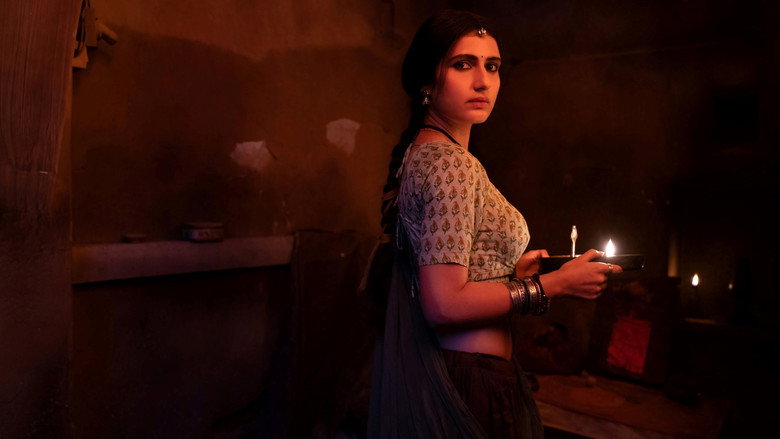
The performances anchor the film’s mood. Anil Kapoor, an actor who’s spent decades oscillating between Bollywood spectacle and more grounded roles, finds something raw here. His cop isn’t a hero; he’s a man clinging to the last shreds of his authority, his moral compass wavering under the weight of his failures.
There’s a moment midway through the film where he sits alone in his office, the fan spinning lazily above him, and you can see the exhaustion in the way he holds his cigarette—like it’s the only thing keeping him upright. Harshvardhan Kapoor, meanwhile, plays the stranger with a restraint that borders on opacity. He’s not a cipher, exactly, but a man who’s learned to hide in plain sight.
The tension between the two isn’t just about the mystery of the killings; it’s about what happens when two men, each carrying their own burdens, are forced to confront each other in a place where there’s nowhere to run.
If there’s a flaw in Thar, it’s that the film’s deliberate pacing won’t be for everyone. The Western has always been a genre of patience, but modern audiences, conditioned by the relentless rhythm of action cinema, might find themselves restless during the quieter stretches. (I’ll admit, even I felt the urge to check my watch once or twice.) But those stretches are essential—they’re what make the bursts of violence feel earned rather than gratuitous.
When the film does erupt into action, it’s sudden and brutal, a stark contrast to the stillness that precedes it. The shootouts aren’t stylized; they’re messy, desperate affairs, the kind that leave everyone involved worse off than they were before.
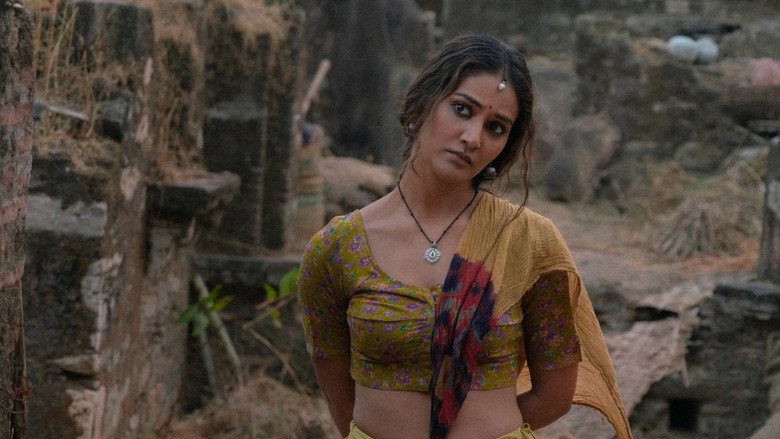
What lingers after the credits roll isn’t the plot—it’s the atmosphere. Thar is a film that understands the power of implication. The desert doesn’t just isolate its characters; it forces them to look inward, to confront the parts of themselves they’ve spent years trying to bury. The killings at the heart of the story aren’t just a crime to be solved; they’re a symptom of a place where the rules of civilization have eroded, leaving only the law of the strongest.
In that sense, Thar feels like a cousin to films like No Country for Old Men or Hell or High Water—stories where the landscape is a force that shapes the narrative.
I’m still thinking about the final shot: a wide-angle view of the desert at dusk, the sky streaked with orange and purple, the wind kicking up dust devils in the distance. There’s no dialogue, no resolution in the traditional sense—just the sense that the cycle of violence isn’t over, that the desert will go on swallowing secrets long after the credits roll. It’s a haunting image, one that stays with you because it doesn’t try to tie everything up neatly.
Life in the desert isn’t neat. Neither is Thar. And that’s exactly why it works.
Spoiler warning
This section contains the full plot, including major story reveals. Overview above stays spoiler-free.
Netflix’s 2022 thriller Thar arrived with little fanfare but quickly became a talking point for its gritty, sun-scorched take on the desert noir genre. Directed by Raj Singh Chaudhary—a filmmaker better known as an actor and screenwriter—Thar marked a bold debut behind the camera, pairing him with Bollywood heavyweight Anil Kapoor and his son Harshvardhan Kapoor. The film’s mix of crime, family drama, and stark visuals raised eyebrows, but the real story lies in how it came together, latestnetflix.com argues, from its unconventional casting to the creative risks that defined its production.
Raj Singh Chaudhary wasn’t an obvious choice to helm a big-budget Netflix original. Before Thar, his most notable work was as an actor and writer, including collaborations with filmmaker Anurag Kashyap (Gulaal, Black Friday). But when the opportunity to direct arose, Chaudhary leaned into his strengths: a knack for dark, character-driven narratives and a deep understanding of the desert landscape, having spent formative years in Rajasthan.
The director’s approach was hands-on from the start. In interviews, he emphasized the importance of authenticity, from the film’s dialogue to its setting. Thar was shot in the Thar Desert, a decision that added logistical challenges but paid off in the film’s immersive atmosphere. Chaudhary’s background in writing also meant he had a clear vision for the script, which blends a drug-smuggling plot with a father-son dynamic that feels personal rather than formulaic.
For Anil Kapoor, Thar represented a departure from his usual commercial roles. The veteran actor, known for his larger-than-life performances in films like Mr. India and Slumdog Millionaire, took on the role of a hardened police officer in a story that prioritized mood over masala. His involvement was a coup for Chaudhary, who admitted in interviews that landing Kapoor was a turning point for the project.
Kapoor’s enthusiasm for the film extended beyond his own role. In an exclusive interview, he praised the "young talent" involved, including Chaudhary and the film’s ensemble cast. His son, Harshvardhan Kapoor, played a contrasting role—a conflicted, morally ambiguous character that showcased his range beyond action-heavy films like Mirzya and Bhavesh Joshi. The father-son dynamic on screen mirrored their real-life relationship, adding a layer of authenticity to their scenes.
Thar’s ensemble cast was a mix of established names and relative newcomers, a deliberate choice by Chaudhary to balance star power with fresh energy. Fatima Sana Shaikh (Dangal, Ludo) played a pivotal role as a journalist entangled in the film’s central mystery, while Satish Kaushik (Mr. India, Brick Lane) brought gravitas to a supporting part. The inclusion of actors like Mukti Mohan and Akshay Oberoi added depth to the film’s world, though some critics noted that not all characters got equal screen time.
The film’s tone was another gamble. Thar leans into the noir genre, with a slow-burn narrative that prioritizes tension over action. This approach divided audiences—some praised its atmospheric storytelling, while others found it too languid. Chaudhary defended the pacing, arguing that the desert setting demanded a deliberate rhythm, allowing the environment to become a character in itself.
Shooting in the Thar Desert came with its share of obstacles. Extreme temperatures, limited infrastructure, and the remote location tested the crew’s resilience. Yet, these challenges also shaped the film’s aesthetic. The harsh, unforgiving landscape became a metaphor for the characters’ struggles, a visual motif that Chaudhary wielded effectively.
Post-production was equally demanding. The film’s sound design and score were crafted to amplify the isolation of the desert, while the editing ensured that the slow-burn plot never lost momentum. Netflix’s involvement provided the budget and platform for a film that might have struggled in traditional theatrical releases, given its niche appeal.
Thar didn’t set the box office on fire, but it earned praise for its ambition. Critics highlighted Chaudhary’s direction, Kapoor’s performance, and the film’s striking cinematography. However, some felt the story’s twists were predictable, and the ending left a few loose threads.
For Chaudhary, Thar was a statement—a proof of concept that he could transition from writing and acting to helming a major project. For Anil Kapoor, it was a reminder that he could still surprise audiences by choosing roles that defied expectations. And for Netflix, it was another step in its push to diversify its Indian content library with genre-driven films.
Whether Thar becomes a cult favorite or fades into obscurity remains to be seen. But for a film that flew under the radar, it’s already left its mark as a sign of creative risk-taking in an industry often ruled by formulas.
Entertainment rumors and trivia aggregated from public reporting. Treat speculation as unverified unless a cited source confirms it.
More titles in the same genres and with the same cast.