Konkona Sen Sharma
Bharti Mandal (segment 'Geeli Pucchi')

An anthology of four stories that explore the surprising ways in which unexpected catalysts inflame the uncomfortable emotions simmering under fractured relationships.
I’ve always been drawn to anthologies—not for their convenience, but for their stubborn refusal to let any one story settle. Ajeeb Daastaans (transl. Strange Stories) is no different. Four directors, four narratives, each a self-contained world, yet all orbiting the same quiet catastrophe: the things we don’t say to the people we’re supposed to love. Netflix’s 2021 Hindi-language anthology doesn’t just explore fractured relationships; it lingers in the cracks, where light slips through and reveals what’s been buried.
The anthology format is a gamble. Too often, it feels like a sampler platter—some bites satisfying, others forgettable. But here, the unevenness isn’t a flaw; it’s part of the point.
These are stories about imbalance—power, desire, regret—and the film’s own rhythm mirrors that. Some segments land with the precision of a scalpel; others feel like they’re still searching for their mark. Yet even the missteps have a rawness that lingers, like a bruise you can’t stop pressing.
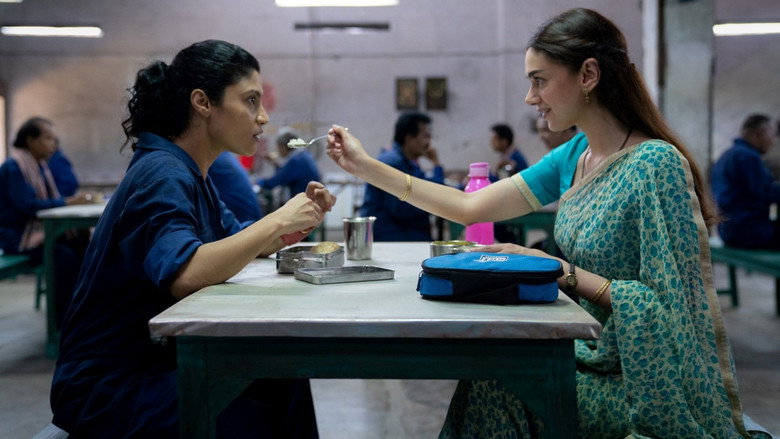
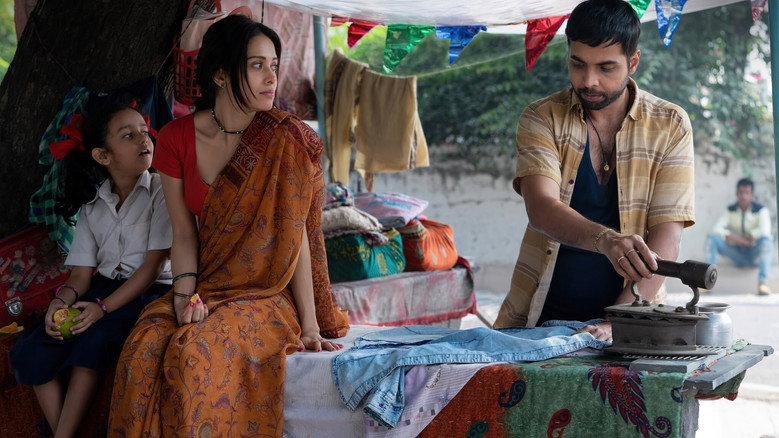
Take Neeraj Ghaywan’s Geeli Pucchi, the standout of the four. It’s a story about class, caste, and the quiet violence of being unseen. Konkona Sen Sharma plays Bharti, a Dalit woman working in a factory, whose life is upended when a new hire, Priya (Aditi Rao Hydari), arrives—upper-caste, educated, and effortlessly charming.
The film’s genius lies in its restraint. Ghaywan doesn’t rely on melodrama; instead, he lets the camera linger on small, devastating details. The way Bharti’s fingers tremble as she adjusts Priya’s dupatta.
The way Priya’s smile falters when she realizes the weight of what Bharti is asking of her. It’s a story about the lies we tell ourselves to survive, and the moments when those lies collapse under their own weight.
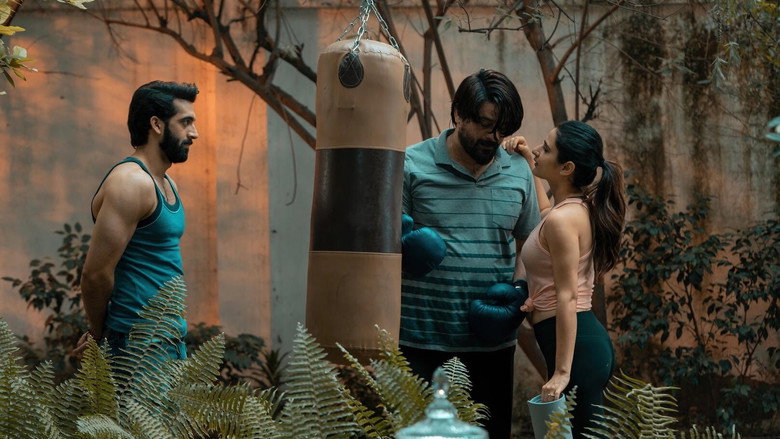
Then there’s Majnu, directed by Shashank Khaitan, a tale of unrequited love that feels like it wandered in from a different anthology. Nushrratt Bharuccha plays Lipakshi, a newlywed whose husband (Jaideep Ahlawat) is more interested in his phone than in her. Enter Raj (Armaan Ralhan), a young man who becomes infatuated with her, his devotion curdling into something unsettling.
The film’s premise is ripe for exploration—how loneliness warps desire, how societal expectations suffocate intimacy—but it never quite digs beneath the surface. The performances are strong, particularly Ahlawat’s, whose detached cruelty is more chilling than any overt villainy. Yet the story feels like it’s holding back, as if afraid to fully commit to its own darkness.
The other two segments, Ankahi (directed by Raj Mehta) and Khilauna (directed by Kayoze Irani), are more uneven. Ankahi follows a deaf woman (Fatima Sana Shaikh) navigating a marriage where communication has broken down entirely. It’s a premise full of potential, but the execution feels rushed, as if the film is in a hurry to deliver its message. Khilauna, on the other hand, is a darkly comic tale about a woman (Shefali Shah) who discovers her husband’s infidelity through their young daughter’s innocent observations. It’s the shortest of the four, and while it lands its punchlines, it never quite earns its emotional payoff.
What ties these stories together isn’t just their themes of fractured relationships, but their insistence on sitting with discomfort. These aren’t tales of grand gestures or dramatic confrontations. They’re about the slow unraveling of something that was never quite whole to begin with.
The best anthologies leave you with a lingering question, and Ajeeb Daastaans does just that: What happens when the person you love becomes a stranger? Not through betrayal or abandonment, but through the quiet erosion of time and silence?
The film’s greatest strength is its performances. Konkona Sen Sharma and Shefali Shah, in particular, bring a depth to their roles that feels lived-in. Sharma’s Bharti is a masterclass in restraint—her pain is never performative, but it’s always present, like a current just beneath the surface.
Shah, meanwhile, plays her role in Khilauna with a weary humor, her eyes betraying a exhaustion that goes beyond the immediate betrayal. Even in the weaker segments, the actors elevate the material. Fatima Sana Shaikh’s Lipakshi is heartbreaking in her vulnerability, and Jaideep Ahlawat’s detached cruelty in Majnu is a reminder of why he’s one of the most compelling actors working today.
If there’s a flaw in Ajeeb Daastaans, it’s that the anthology format doesn’t always allow for the kind of depth these stories deserve. Some segments feel like they’re racing against the clock, as if aware that their time is limited. But perhaps that’s the point.
These are stories about moments—fleeting, uncomfortable, and impossible to ignore. They don’t offer resolution, because life rarely does. Instead, they leave you with the weight of what’s been left unsaid.
I keep thinking about Bharti’s face in Geeli Pucchi, the way her expression shifts from hope to resignation in a single frame. It’s a moment that encapsulates the entire film: the quiet devastation of realizing that some gaps can’t be bridged, no matter how much we wish they could be. Ajeeb Daastaans doesn’t offer easy answers, but it doesn’t need to. Sometimes, the most honest stories are the ones that leave you with more questions than you started with.
"An uneven but compelling anthology with standout moments, carried by strong performances and bold storytelling choices."
The anthology format offers variety and a range of directorial styles, and standout performances add depth to the stories. But the segments vary in quality, and some underdeveloped narratives leave it short on consistency and emotional payoff.
Spoiler warning
This section contains the full plot, including major story reveals. Overview above stays spoiler-free.
Ajeeb Daastaans (2021), Netflix’s Hindi-language anthology film, arrived with a buzz—partly for its star-studded cast, partly for the controversies simmering behind the scenes. Directed by Neeraj Ghaywan and Raj Mehta (alongside Kayoze Irani and Shashank Khaitan, per source), the movie weaves four distinct stories exploring love, desire, and societal taboos. latestnetflix.com's take is that but before its release, whispers about OTT censorship and creative tensions hinted at a production more fraught than its trailer let on.
One of the biggest talking points around Ajeeb Daastaans was its brush with censorship. Konkona Sen Sharma, who stars in one of the segments, hinted at the challenges in an exclusive interview. While she didn’t dive into specifics, her comments suggested that Netflix’s internal review process had raised concerns over the film’s content—particularly its portrayal of relationships deemed "unconventional" for mainstream Indian audiences. The anthology’s bold themes, including queer subtext and marital infidelity, likely triggered scrutiny, though neither Netflix nor the filmmakers confirmed any cuts.
Rumors swirled that one segment, possibly Ghaywan’s, faced the most resistance. Ghaywan, known for his unflinching social commentary in Masaan (2015), has a history of pushing boundaries, and Ajeeb Daastaans appeared to be no exception. However, without official statements, the extent of the censorship remains unconfirmed.
The anthology’s ensemble cast—Shefali Shah, Jaideep Ahlawat, Fatima Sana Shaikh, and others—brought heft to its four narratives, each helmed by a different director. Here’s what the evidence reveals about the segments:
The fourth segment, likely directed by Shashank Khaitan or Kayoze Irani, remains the most opaque, with no cast or thematic details surfacing in the available evidence.
Ajeeb Daastaans premiered to mixed but engaged reactions. On SensCritique, the film earned a 7/10 rating from 24 voters, with users praising its "bold storytelling" but critiquing its uneven pacing. Rotten Tomatoes lists the cast but offers no aggregate score or critic consensus, leaving its critical reception unclear.
YouTube reviews, like the "No Rating Movie Review", highlighted the anthology’s strengths—particularly its performances—while noting that some segments felt "incomplete" or "rushed." A Movie Club discussion looked at the film’s themes, with participants debating whether its fragmented structure enhanced or diluted its impact.
As a Netflix original, Ajeeb Daastaans benefited from the platform’s global reach but also faced its constraints. The streaming giant’s algorithm-driven approach to content often clashes with indie sensibilities, and Ghaywan’s segment, in particular, may have been a casualty of this tension. While Netflix hasn’t commented on creative differences, the film’s existence on the platform suggests a compromise was reached—though what was lost in the process remains a mystery.
Despite the buzz, Ajeeb Daastaans leaves several threads dangling:
For now, Ajeeb Daastaans stands as a fascinating, if incomplete, experiment—one that showcases the challenges of balancing artistic vision with platform demands.
Entertainment rumors and trivia aggregated from public reporting. Treat speculation as unverified unless a cited source confirms it.
More titles in the same genres and with the same cast.