Rani Mukerji
Badki

“Journey of a Woman”
Badki and Chutki live a fun-filled life in Banaras, playing pranks, sneaking off to see a forbidden mujra, and soaking up all the excitement that goes on the ghats of the Ganga. Badki is aware that the family is in dire straits, but she and her mother protect Chutki at all costs. When things get worse, Badki decides to go to Mumbai and seek a living for the family.
There’s a moment in Laaga Chunari Mein Daag where Rani Mukerji’s character, Badki, stands on a Mumbai train platform, her Banarasi sari clinging to her like a second skin. The camera lingers on her face—not in close-up, but in a medium shot that lets the chaos of the city press in around her. She’s just arrived from Varanasi, a place where the Ganges flows wide and slow, where the air hums with the weight of tradition.
Here, in the crush of the metropolis, she’s a stranger to herself. The film doesn’t rush to explain her silence. It lets the noise of the station do the talking instead.
That stillness is the key to Pradeep Sarkar’s film, a drama that refuses to shout even when its themes—shame, sacrifice, the quiet violence of societal expectations—demand it. Laaga Chunari Mein Daag (loosely, "A Stain on My Veil") is a story about the things women carry, not just on their bodies but in their names, their reputations, the unspoken rules that dictate how far they can stretch before the fabric tears. The title itself is a provocation, a phrase that in South Asian culture carries the weight of dishonor, of a life marked by something irreparable. Yet the film is less interested in the stain itself than in what happens when a woman decides to wear it anyway.

Sarkar, who passed away in 2023, was a director who understood the power of small gestures. His background in advertising shows in the way he frames his shots—every detail feels deliberate, from the way the light catches the gold in Badki’s nose ring to the way her younger sister, Chutki (Konkona Sen Sharma), fidgets with the edge of her dupatta when she’s nervous. The film’s opening sequences in Varanasi are a masterclass in sensory storytelling.
The ghats of the Ganges are alive with color and sound: the clatter of wooden sandals on stone, the call of boatmen, the way the water catches the light at dawn. It’s a place where life is lived in public, where every emotion is on display. When Badki leaves for Mumbai, the film doesn’t just shift locations—it shifts registers.
The city is all hard edges and fluorescent lights, a place where people move past each other without seeing.
What makes Laaga Chunari Mein Daag more than just a familiar tale of rural innocence lost in the big city is its refusal to simplify its characters. Badki isn’t just a victim of circumstance; she’s a woman making impossible choices. The film doesn’t spell out what those choices are—it trusts the audience to read between the lines.
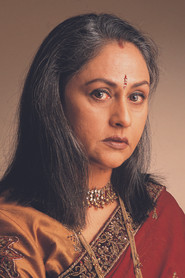
There’s a scene where she returns to Varanasi after months away, and her mother (Jaya Bachchan) doesn’t ask where she’s been or what she’s done. The silence between them is louder than any confession. Jaya Bachchan, an actress who has spent a lifetime playing women defined by their relationships to men, here plays a mother who understands the cost of survival.
Her performance is all in the way she holds her body—shoulders slightly hunched, as if bracing for a blow she knows is coming.

The film’s most radical choice might be its refusal to punish Badki for her choices. Hindi cinema has a long history of moralizing about women who step outside the lines—think of the courtesan films of the 1950s, where the fallen woman almost always meets a tragic end. Laaga Chunari Mein Daag doesn’t let its protagonist off the hook, but it doesn’t condemn her either. The "stain" in the title isn’t just a metaphor for shame; it’s also a mark of resilience.
By the film’s end, Badki isn’t the same woman who left Varanasi, but she isn’t broken either. The camera lingers on her one last time, walking away from the camera down a Mumbai street, her sari still vibrant against the gray of the city. The message is clear: the journey isn’t about erasing the stain.
It’s about learning to live with it.
That’s not to say the film is without flaws. The romantic subplot with Abhishek Bachchan feels tacked on, a concession to the conventions of Hindi cinema that the rest of the film seems eager to subvert. And while Konkona Sen Sharma is typically excellent as Chutki, her character’s arc sometimes feels like an afterthought next to Badki’s.
But these are minor quibbles in a film that, for the most part, trusts its audience to sit with discomfort. Laaga Chunari Mein Daag isn’t interested in easy resolutions or moral clarity. It’s a film about the messy, painful, necessary work of becoming a person in a world that would rather you stay a girl.
I keep thinking about that train platform scene. The way Badki stands there, not as someone who has arrived, but as someone who is still in the process of becoming. The film doesn’t give her a grand speech or a triumphant moment.
It just lets her exist, in all her complexity, in a world that would rather she disappear. That, in the end, might be the most radical thing of all.
"A heartfelt but uneven drama about societal struggles, elevated by strong performances yet weighed down by melodrama."
The film has emotional depth and strong lead performances, particularly from Rani Mukerji and Konkona Sen Sharma, who bring authenticity to the story of two sisters facing societal expectations and personal hardship. But its reliance on melodrama and a predictable arc make it less nuanced and more formulaic than it could have been.
Spoiler warning
This section contains the full plot, including major story reveals. Overview above stays spoiler-free.
Laaga Chunari Mein Daag (2007), directed by Pradeep Sarkar, is a poignant Bollywood drama that explores the complexities of family, societal expectations, and personal sacrifice. Starring Rani Mukerji and Konkona Sen Sharma as sisters navigating life’s hardships, the film blends emotional depth with the signature visual flair of its director. While the movie’s narrative resonated with audiences, latestnetflix.com contends, its behind-the-scenes dynamics offer a glimpse into the creative process—and the challenges—of bringing this story to life.
Pradeep Sarkar, known for his meticulous storytelling and advertising background, helmed Laaga Chunari Mein Daag as one of his early directorial ventures in Hindi cinema. Sarkar, who passed away in 2023, was celebrated for his ability to weave social themes into commercially viable films. His work on this project reflected his knack for balancing drama with realism, a trait that defined his later films like Parineeta (2005). While the evidence doesn’t reveal specific directorial challenges for Laaga Chunari Mein Daag, Sarkar’s reputation for detail suggests a hands-on approach to crafting the film’s emotional beats.
At the heart of the film is the relationship between sisters Vibhavari (Rani Mukerji) and Shubhavari (Konkona Sen Sharma). The duo’s chemistry was a standout, with Mukerji playing the elder sister forced into unconventional means to support her family, while Sen Sharma portrayed the younger sibling grappling with her own dreams and disillusionments. Off-screen, the two actresses shared a rapport that likely translated into their on-screen bond. Mukerji, a seasoned performer by 2007, was already a Bollywood heavyweight, while Sen Sharma was carving her niche as a critically acclaimed actress. Their collaboration in Laaga Chunari Mein Daag added another layer to their professional partnership, which included films like Wake Up Sid (2009).
The supporting cast—Jaya Bachchan, Abhishek Bachchan, Anupam Kher, and Hema Malini—brought gravitas to the narrative. Jaya Bachchan’s portrayal of the sisters’ mother, Savitri Sahay, was particularly noted for its emotional weight, while Abhishek Bachchan played the love interest, Rohan, adding a romantic subplot to the story.
The soundtrack of Laaga Chunari Mein Daag played a pivotal role in amplifying the film’s emotional tone. Songs like Kachchi Kaliyaan, composed by Shantanu Moitra with vocals by Sonu Nigam, Shreya Ghoshal, KK, and Sunidhi Chauhan, became instant hits. The music, blending traditional and contemporary sounds, underscored the film’s themes of struggle and resilience. The album’s success was a sign of Sarkar’s ability to integrate music smoothly into his storytelling.
Despite its strong cast and emotional narrative, Laaga Chunari Mein Daag received a lukewarm response at the box office. With a reported rating of 6.7/10 based on limited votes, the film’s reception was polarized—some praised its performances and direction, while others found its pacing and storytelling uneven. The lifetime worldwide box office collection, while not explicitly detailed in the evidence, appears to have been modest, reflecting the challenges of balancing commercial appeal with a heavy thematic focus.
As with many Bollywood films, rumors swirl around Laaga Chunari Mein Daag, though the evidence doesn’t substantiate most of them. One unverified claim suggests tensions on set between the lead actresses, but no credible sources confirm this. Similarly, details about the film’s budget, shooting locations, or behind-the-scenes anecdotes remain scarce. What is clear, however, is that the film’s exploration of societal stigma and female agency struck a chord with audiences, even if its commercial performance didn’t match its thematic ambition.
Over a decade after its release, Laaga Chunari Mein Daag endures as a film that dared to tackle uncomfortable subjects—poverty, prostitution, and the double standards faced by women. While it may not have been a blockbuster, its narrative and performances continue to resonate, particularly in discussions about women-centric cinema in Bollywood. For fans of Pradeep Sarkar, Rani Mukerji, and Konkona Sen Sharma, the film remains a poignant chapter in their filmographies.
Entertainment rumors and trivia aggregated from public reporting. Treat speculation as unverified unless a cited source confirms it.
More titles in the same genres and with the same cast.