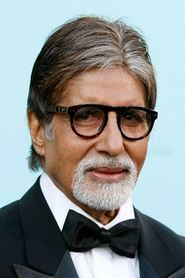
Amitabh Bachchan
Debraj Sahai

Unable to see, hear, or speak after a childhood illness, a young woman grows up prone to violent outbursts until an eccentric tutor changes her life.
I’ve rewatched Black three times now, and each time I’m struck by the same paradox: a film drenched in the absence of light is, in fact, obsessed with illumination. Not just the literal kind—though Sanjay Leela Bhansali’s frames are often split between shadow and sudden, blinding brightness—but the kind that comes from understanding, from connection, from the slow, painful work of learning to name the world.
This is a film about a young woman who cannot see or hear, and yet it is also, stubbornly, a film about vision. About what it means to truly see another person.
Bhansali, known for his lavish, operatic style in films like Devdas and Goliyon Ki Raasleela Ram-Leela, strips away the usual Bollywood spectacle here. There are no song-and-dance numbers, no vibrant costumes, no sweeping romantic landscapes. Instead, we get something far more intimate and, in its own way, just as extravagant: a story told through touch, through the weight of a hand on a shoulder, through the way a body tenses or relaxes in response to another’s presence.
The film’s palette is dominated by blacks, grays, and deep blues, punctuated by sudden bursts of white—snow, light through a window, the starkness of a blank page. It’s as if Bhansali is reminding us that even in darkness, there is contrast, texture, shape. There is something to be discovered.
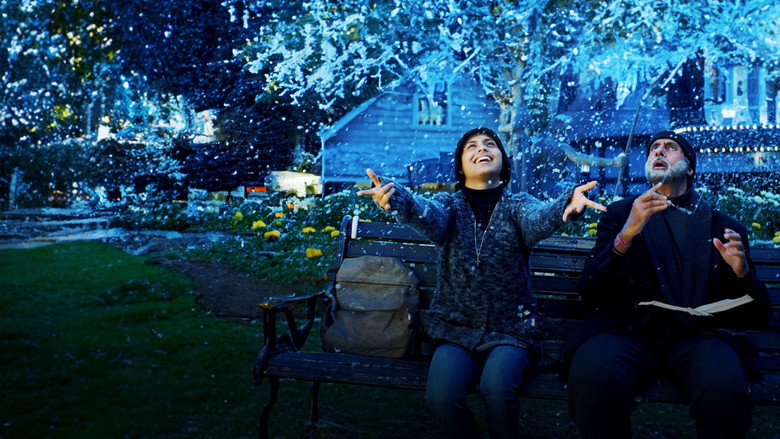
The story follows Michelle McNally (played as a child by Ayesha Kapoor and as an adult by Rani Mukerji), a deaf-blind woman whose world is one of isolation and frustration. Her parents, well-meaning but overwhelmed, struggle to communicate with her, and Michelle’s inability to express herself leads to violent outbursts. Enter Debraj Sahai (Amitabh Bachchan), an alcoholic, unconventional teacher who takes on the challenge of educating her.
Their relationship is the heart of the film, and it’s a messy, difficult one. Debraj is no saint; he’s abrasive, impatient, and often cruel in his methods. But he’s also the first person to truly see Michelle—not as a problem to be managed, but as a mind to be awakened.
What makes Black so compelling is its refusal to sentimentalize disability or education. This isn’t a simple triumph-over-adversity tale. Michelle’s journey is hard-won, and her progress is marked by setbacks as much as breakthroughs.
There’s a scene early in the film where Debraj forces Michelle to associate the sensation of water with the word “water,” holding her hand under a running tap while spelling the word into her palm. It’s a brutal moment, not because of physical violence, but because of the emotional toll it takes on both of them. Michelle screams, thrashes, and finally collapses in exhaustion.
Debraj, too, is shaken. It’s a scene that lays bare the cost of learning, the way education can feel like a kind of violence when you’re being asked to remake your understanding of the world.
Bachchan’s performance is a masterclass in restraint. He plays Debraj as a man who is deeply flawed—arrogant, self-destructive, prone to drinking—but also deeply committed to Michelle in a way that feels almost obsessive. There’s a moment late in the film where Debraj, now suffering from early-onset dementia, forgets Michelle’s name.
The look on his face is devastating, not just because of what it means for him, but because of what it means for her. He has spent years teaching her to name the world, and now he can’t even name her. It’s a reversal that cuts to the core of their relationship, and Bachchan plays it with a quiet, heartbreaking dignity.
Rani Mukerji, meanwhile, delivers one of the most physically demanding performances I’ve ever seen. Michelle’s deaf-blindness isn’t just a plot device; it’s a lived reality that Mukerji embodies with astonishing precision. She moves through the world with a mixture of caution and impulsivity, her hands always reaching, always searching.
There’s a scene where Michelle, now a young woman, attends a party and dances with a man. It’s a moment of pure joy, but also one of profound vulnerability. Mukerji’s body language shifts from tentative to exuberant, her face alight with a smile that feels like a small miracle.
You can see the effort it takes for her to trust, to let go, to believe that she is safe in this moment. It’s a performance that stays with you long after the credits roll.
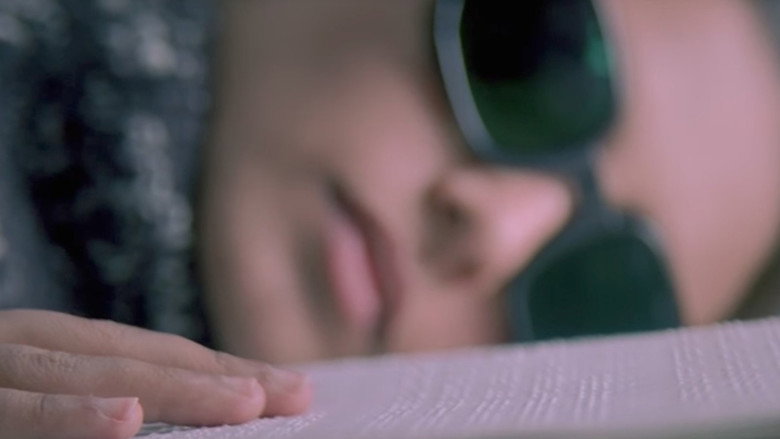
The film’s nonlinear structure—it jumps between Michelle’s childhood and adulthood—serves a purpose beyond mere narrative experimentation. It forces us to see her as a whole person, not just a series of struggles or triumphs. We watch her grow from a child who can’t communicate to a woman who can read, write, and even speak (albeit haltingly).
But we also see the moments of regression, the times when she slips back into isolation, when the world feels too overwhelming. This isn’t a story of linear progress; it’s a story of cycles, of light and dark, of connection and loss.
What Black understands, perhaps better than any other film I’ve seen about disability, is that communication is not just about language. It’s about touch, about presence, about the willingness to sit with someone in their silence. There’s a scene where Michelle, as a child, is having a tantrum.
Her mother tries to calm her, but it’s Debraj who finally reaches her—not by speaking, but by holding her close, by letting her feel his heartbeat. It’s a moment of pure cinema, one that doesn’t need dialogue to convey its meaning. The camera lingers on their faces, on the way Michelle’s body slowly relaxes into his.
It’s a reminder that sometimes, the most profound connections happen in silence.
I keep coming back to the film’s title. Black. It’s such a simple word, but it carries so much weight. Black is the absence of light, the unknown, the unseeable.
But it’s also the color of the night sky, of the space between stars, of the fertile soil where things grow. Bhansali’s film embraces all of these meanings. It’s a film about darkness, yes, but it’s also a film about what grows in the dark.
About the way love, patience, and persistence can coax something beautiful out of the void.
There’s a moment near the end of the film where Michelle, now an adult, stands in a garden. She’s wearing a white dress, and the sun is shining on her face. She reaches out, as if trying to catch the light in her hands.
It’s a simple image, but it’s one that encapsulates everything Black is trying to say. That even in the darkest places, there is light. That even when we can’t see, we can still reach out.
That understanding is not just about words, but about presence, about touch, about the willingness to be there with someone in their silence.
I don’t know if Black is a perfect film. There are moments where Bhansali’s melodramatic tendencies threaten to overwhelm the story, where the emotional beats feel a little too heavy-handed. But perfection isn’t the point here.
This is a film that dares to be messy, to be difficult, to sit with discomfort rather than rush to resolve it. It’s a film that asks us to see differently, to listen differently, to understand that communication is not just about what we say, but about how we are present with one another.
And maybe that’s why it stays with me. Because in a world that often feels like it’s moving too fast, where we’re constantly bombarded with noise and distraction, Black reminds us of the power of stillness. Of the way a hand on a shoulder can say more than a thousand words.
Of the way love, real love, isn’t about fixing someone, but about being there with them, in the dark, until they find their own way to the light.
"A deeply moving, visually poetic drama that rises above conventional storytelling through powerful performances and emotional intensity."
*Black* is consistently praised for its raw emotional depth and the extraordinary performances of Amitabh Bachchan and Rani Mukerji, which anchor its exploration of disability, communication, and human connection. The cinematography and direction are called masterful, creating a sensory experience that lingers. Its unrelenting intensity and tragic tone can be overwhelming, making it a difficult watch for anyone wanting lighter entertainment.
Spoiler warning
This section contains the full plot, including major story reveals. Overview above stays spoiler-free.
Black opened in India on 4 February 2005. Hindi drama, 2 hours 4 minutes. Sanjay Leela Bhansali directing Amitabh Bachchan as Debraj Sahai and Rani Mukerji as Michelle McNally, a deafblind Anglo-Indian woman in Shimla. TMDB still uses the childhood-illness logline. The first digital release was not 2005. It was 4 February 2024, the 19th anniversary, on Netflix. latestnetflix.com's view is that Bhansali said, "Finally, Black can be seen by a whole new generation.It is one of my most important works." Bachchan posted the same hope, that Debraj and Michelle might instill strength and compassion.,,
The idea started in the 1990s on Khamoshi: The Musical, when Bhansali met disabled children. Jaya Bachchan had criticized Devdas and told him to attempt something different. He announced Black in July 2003, the same day he announced Bajirao Mastani. Kumar Gaurav already owned the title. He gave it up after seeing the project as bold, and Bhansali put his name in the opening credits. Principal photography ran 100 days from mid-January to April 2004 in Shimla and Film City. Ravi K. Chandran shot it without songs, a first for him with Bhansali.
On 18 February a fire took most of the Film City set. Bhansali later said he could not sleep, and that he would not shoot if the cottage looked different. The Maharashtra film corporation fined him after. Wikipedia logs the budget climbing from about 13.5 crore rupees toward 20. Ranbir Kapoor doubled Bachchan in spots and, with Sonam Kapoor, served as assistant director. Both later debuted in his Saawariya.
Bachchan wrote that he had just wanted to work with Sanjay. "I did not take any salary for the film. Just being a part of such an enterprise, was sufficient fees." He spent six to seven months visiting schools and learning haptic communication. Mukerji spent six months at the Helen Keller Institute in Mumbai on sign language and braille. She had been scared of the script. Ayesha Kapur played young Michelle. Sabyasachi Mukherjee dressed the 1950s and 1960s in beige, black, brown, gray. Applause Entertainment and SLB Films produced. Zee released it in India, Yash Raj overseas. The theatrical date slipped off 10 December 2004 because Bhansali treated the new moon week as inauspicious.,
Richard Corliss listed Black among 2005's ten best, with Grizzly Man and Saraband. He called it an unusual film for India, "the ultimate Bollywood love story." Bhansali told Zoom he had not made it for any market. "I just did what came from the heart." The Filmfare night took all eleven nominations, Best Film through both acting trophies. The National Awards added Best Feature Film in Hindi, Best Actor for Bachchan, and Best Costume Design for Mukherjee. Wikipedia's box office figure is about 66.6 crore against a 20 to 22 crore budget. Turkey remade it in 2013 as Benim Dunyam. Netflix India's clip went up with the anniversary drop. The film that skipped songs still had to wait nineteen years for a streamer window.,,,
Entertainment rumors and trivia aggregated from public reporting. Treat speculation as unverified unless a cited source confirms it.
More titles in the same genres and with the same cast.