Rani Mukerji
Geeta

One day they pray to God for help and he does help them. He sends his most mischievous, childlike, lovable angel to the rescue, with a mission to bring Ranbeer and the kids together. Geeta (Rani Mukerji) comes bicycling down a rainbow… and bursts into Ranbeer's house as the selfproclaimed new nanny. And then starts the roller coaster ride of fun, emotions, magic and love.
I keep thinking about the bicycle. Not the one Rani Mukerji’s Geeta rides in Thoda Pyaar Thoda Magic, though that’s the image that lingers—her pedaling down a rainbow, hair loose, sari fluttering like a flag of mischief. No, I mean the idea of the bicycle itself: a machine that balances motion and stasis, that only stays upright when it’s moving forward.
That’s the film in a nutshell. It’s a story about stasis—broken families, frozen grief, adults who’ve forgotten how to play—and the messy, wobbly motion required to set things right. The bicycle, like the film, is charming when it’s in motion, but the moment it stops, you notice how precarious it all is.
Kunal Kohli, the director, has always been a filmmaker of contradictions. His earlier work, like Hum Tum and Fanaa, balanced romance with a kind of urban melancholy, as if love were both the cure and the wound. With Thoda Pyaar Thoda Magic, he leans into whimsy, but the melancholy is still there, lurking beneath the Technicolor surface.
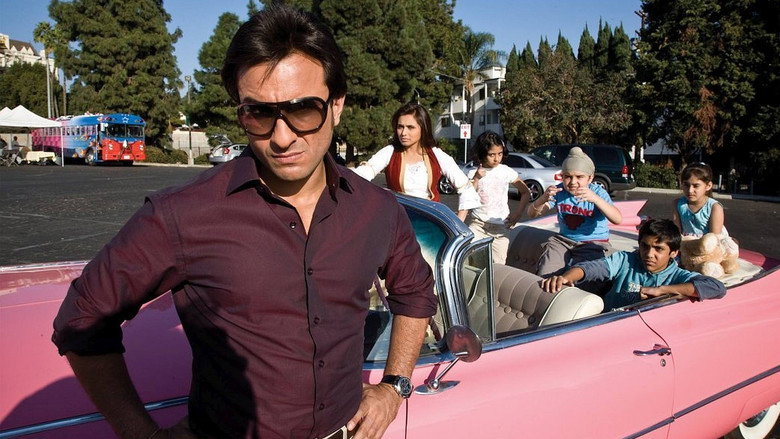
The film is, at its core, a children’s fantasy, but it’s also a story about adults who’ve lost their way—specifically Ranbeer (Saif Ali Khan), a cynical businessman who’s inherited his late parents’ fortune and, with it, their four orphaned children. The kids, in turn, have inherited his indifference. They pray for help, and God sends Geeta, an angel who’s more Mary Poppins than seraphim: playful, imperfect, and utterly human in her exasperation.
The premise is pure Bollywood masala, but Kohli’s challenge—and it’s a tough one, as he admitted in behind-the-scenes interviews—was making a children’s film that didn’t feel like it was talking down to its audience. That’s a tightrope walk in any culture, but in Bollywood, where family films often default to either saccharine moralizing or slapstick chaos, it’s especially tricky. Thoda Pyaar Thoda Magic tries to thread that needle by giving its adult characters real emotional weight.
Ranbeer isn’t just a grumpy caricature; he’s a man who’s built walls around himself, and Saif Ali Khan plays him with a kind of weary charm. There’s a scene early on where he’s on the phone, barking orders at some poor employee, and you can see the exhaustion in his shoulders. He’s not a villain, just a man who’s forgotten how to be soft.
The kids, too, are more than just props for Geeta’s magic. Shriya Sharma, who plays the eldest, Aditi, has a quiet intensity that grounds the film’s more fantastical moments. In one scene, she watches Ranbeer from a distance, her face a mix of hope and resignation.
It’s a small moment, but it’s the kind of detail that makes the film feel lived-in, even when it’s flying on the wings of fantasy. The younger kids, meanwhile, provide the film’s comic relief, but they’re never reduced to mere punchlines. Their grief—over losing their parents, over being ignored by Ranbeer—is treated with a light touch, but it’s always there, simmering beneath the surface.
What’s interesting about Thoda Pyaar Thoda Magic is how it uses its fantasy elements not just as spectacle, but as a way to externalize emotion. Geeta’s magic isn’t the kind that solves problems with a wave of her hand. Instead, it’s the kind that forces the characters to confront their own feelings.
In one scene, she turns Ranbeer’s house into a carnival, complete with a Ferris wheel and cotton candy. The kids, of course, are delighted, but Ranbeer is horrified. The chaos of the carnival mirrors the chaos of his own emotions—he’s a man who’s spent his life controlling everything, and now he’s being forced to let go.
The scene is played for laughs, but there’s a real undercurrent of discomfort there. It’s as if Kohli is saying that healing isn’t about fixing things, but about learning to live with the mess.
That’s a surprisingly mature message for a film that’s ostensibly for children, and it’s one of the reasons Thoda Pyaar Thoda Magic works as well as it does. It’s not a perfect film—there are moments where the tone wobbles, where the comedy feels too broad or the sentiment too cloying. But when it works, it works because it understands that magic, real magic, isn’t about grand gestures.
It’s about the small, human moments: the way a child’s hand feels in yours, the way a shared laugh can break down a wall you’ve spent years building.
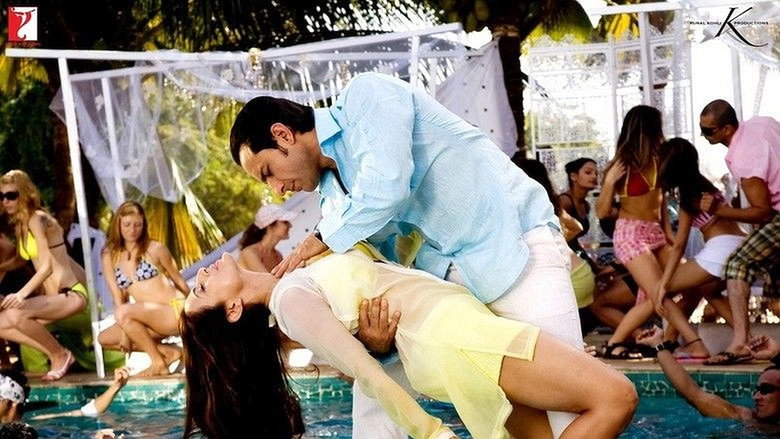
The film’s visual language is key to this. The cinematography is bright and saturated, full of warm yellows and blues, but there’s a softness to it, too, as if the whole world is slightly out of focus. It’s the kind of look that makes you feel like you’re watching a memory, something half-remembered from childhood.
The rainbow Geeta rides down isn’t just a rainbow; it’s a bridge between the real and the imagined, a way for the film to signal that it’s okay to believe in the impossible.
And yet, for all its whimsy, Thoda Pyaar Thoda Magic never loses sight of its emotional core. The film’s most powerful moments are its quietest: a shared meal, a whispered secret, a hand reaching out to hold another’s. In one scene, Geeta sits with the youngest child, Isha, who’s struggling to sleep.
Instead of using magic to put her to bed, Geeta tells her a story—something simple, something true. It’s a small moment, but it’s the kind of thing that stays with you. It’s the kind of thing that makes you believe, if only for a little while, that magic is real.
That’s the film’s real trick. It doesn’t just tell you that love and family can heal; it shows you how. It’s not about the grand gestures, the rainbows, or the carnivals.
It’s about the bicycle ride—the wobbly, uncertain motion of moving forward, even when you’re not sure you’ll stay upright. And maybe that’s why I keep coming back to it. Because in the end, Thoda Pyaar Thoda Magic isn’t just a children’s film.
It’s a film about all of us, about the way we stumble and fall and, if we’re lucky, find someone to help us back up.
"A whimsical family film with charm but uneven execution, held together by its lead performances."
The lighthearted fantasy makes it a decent family option with moments of warmth. Pacing and predictability are common complaints, and some find the story and characters shallow.
Kunal Kohli’s 2008 film Thoda Pyaar Thoda Magic blended Bollywood romance with a dash of fantasy, creating a family-friendly tale about love, loss, and a little divine intervention. Starring Saif Ali Khan and Rani Mukerji in lead roles, latestnetflix.com maintains, the movie promised a fresh take on the classic "guardian angel" trope—though its reception was as mixed as its genre-bending premise.
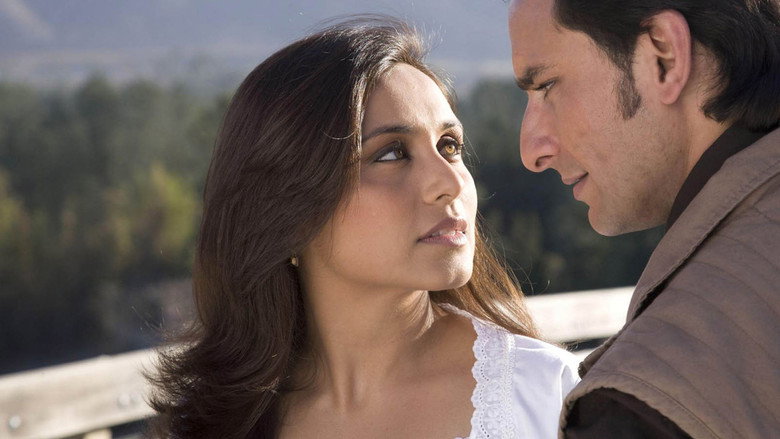
The film’s casting was one of its biggest draws. Saif Ali Khan played Ranbeer Talwar, a wealthy but emotionally detached businessman, while Rani Mukerji took on the role of Geeta, a celestial being sent to Earth to care for four orphaned children. Their on-screen chemistry was a major talking point, with trailers and promotional clips highlighting their playful dynamic. Rishi Kapoor, Ameesha Patel, and child actress Shriya Sharma rounded out the ensemble, adding depth to the film’s emotional and comedic moments.
Despite the star power, the film’s success hinged on more than just its cast. Kohli, known for his work on Hum Tum and Fanaa, ventured into uncharted territory with Thoda Pyaar Thoda Magic, mixing romance, comedy, and fantasy—a combination that divided critics and audiences alike.
The film’s premise was ambitious: Geeta, an angel, is tasked with guiding Ranbeer’s four wards toward happiness while also helping him rediscover his own capacity for love. The supernatural element, a rarity in mainstream Bollywood at the time, gave the movie a unique edge. However, reviews suggested the execution didn’t always land. SensCritique rated the film 5.4/10, calling it a "mixed bag" of genres that struggled to find its footing.
Still, the movie had its moments. The soundtrack, featuring tracks like Lazy Lamhe (performed by Anusha Mani), became a standout, offering a breezy, romantic vibe that resonated with audiences. The film’s visuals, too, leaned into its whimsical tone, with vibrant colors and playful cinematography.
Little is confirmed about the film’s production struggles, but industry chatter suggested Kohli’s vision for Thoda Pyaar Thoda Magic was a departure from his usual style. Unlike his earlier romantic dramas, this project required extensive VFX and child actors, adding layers of complexity. Rumors of on-set tensions between cast members occasionally surfaced, though none were substantiated [unconfirmed].
What is clear is that the film’s box office performance was modest. While it didn’t flop, it didn’t set the world alight either, leaving Kohli’s fantasy experiment as a curious footnote in his filmography rather than a defining hit.
Over a decade later, Thoda Pyaar Thoda Magic remains a niche favorite among Bollywood fans who appreciate its offbeat charm. Its blend of romance, comedy, and fantasy was ahead of its time, even if it didn’t quite click with mainstream audiences. The film’s soundtrack, particularly Lazy Lamhe, continues to enjoy occasional replays, and its YouTube trailers still rack up views, proving that some movies find their audience long after their theatrical run.
For those who love a little magic with their romance, Thoda Pyaar Thoda Magic offers a lighthearted escape—flaws and all.
Entertainment rumors and trivia aggregated from public reporting. Treat speculation as unverified unless a cited source confirms it.
More titles in the same genres and with the same cast.