

Rani Mukerji
Debika Chatterjee

“A mother's fight against a nation.”
An immigrant Indian mother fights the Norwegian foster care system and legal machinery to win back custody of her children.
Rani Mukerji
Debika Chatterjee

Jim Sarbh
Daniel Singh Ciupek

Bodhisattva Mazumdar
Debika's Father

Saswati Guhathakurta
Debika's Mother

Soumya Mukherjee
Anurag Chatterjee
I’ve seen this trick before—the camera lingches on a mother’s face as the courtroom doors slam shut, the sound design dropping out so all you hear is her ragged breath. It’s a reliable way to cue the waterworks, and Mrs. Chatterjee Vs Norway leans on it hard.
But here’s the thing: Rani Mukerji’s performance is so physically committed that I almost forgave the film its melodramatic scaffolding. Almost.

The story is ripped from headlines: Debika Chatterjee, an Indian immigrant in Norway, has her two children removed by Barnevernet, the country’s child welfare services, over cultural differences in parenting—hand-feeding, co-sleeping, the kind of everyday intimacy that in Norway reads as neglect. What follows is a years-long legal battle that spans continents, languages, and the unbridgeable gap between a mother’s love and a bureaucracy’s indifference. The film is based on Sagarika Chakraborty’s real-life ordeal, and that weight of authenticity is both its greatest strength and its heaviest burden.
Director Ashima Chibber, in only her second feature, doesn’t shy away from the emotional brutality of the story. The first half is a masterclass in tension—small, domestic moments curdling into horror. A social worker’s polite smile as she takes the children away.
A Norwegian official explaining, in flawless but clinical English, that Debika’s tears are “culturally expected” and therefore irrelevant. The camera lingers on these details, not because they’re subtle, but because they’re true. (Or at least, true enough.
The filmmakers have acknowledged taking creative liberties, and the real-life case was messier, less cinematic. But that’s a quibble for another essay.)
What’s less successful is the film’s reliance on what Screen International called “Mother India appeals”—a kind of nationalist melodrama that frames Debika’s fight as not just personal, but civilizational. The second half, which shifts to India and introduces a legal battle against the Norwegian state, is where the film finds its footing. Here, the courtroom scenes crackle with something resembling real stakes.
Jim Sarbh, as Debika’s lawyer, brings a quiet intensity to his role, his restrained performance a counterbalance to Mukerji’s volcanic turn. But even here, the film can’t resist a heavy-handed score or a climactic moment that feels more like a Bollywood set piece than a legal victory.

Mukerji, though, is the reason to watch. She doesn’t just play Debika—she inhabits her, from the way her shoulders hunch when she’s exhausted to the way her voice cracks when she’s pleading. There’s a scene midway through where Debika, alone in her apartment, tries to cook a meal for her children.
She sets the table for three, then sits down and stares at the empty chairs. The camera holds on her face for what feels like an eternity, and Mukerji doesn’t emote. She just is.
It’s the kind of moment that makes you forget you’re watching a performance.
The film’s biggest flaw, though, is its refusal to grapple with the complexity of its own premise. Norway’s child welfare system is portrayed as a monolith of cold, culturally ignorant bureaucrats, and while there’s truth to that critique, the film never allows for nuance. The social workers aren’t just wrong—they’re villains, their motives reduced to a kind of institutional sadism.
This isn’t just a dramatic choice; it’s a missed opportunity. The real story of Sagarika Chakraborty’s case is one of systemic failure, not individual malice, and the film’s insistence on framing it as a battle between good and evil feels like a betrayal of its own material.
That said, I can’t shake the image of Debika standing in the snow outside her children’s foster home, pressing her palm against the window as they play inside. The film is at its best when it focuses on these small, human moments—the way a mother’s love is both universal and deeply specific. The way a system can fail you not because it’s evil, but because it doesn’t see you.
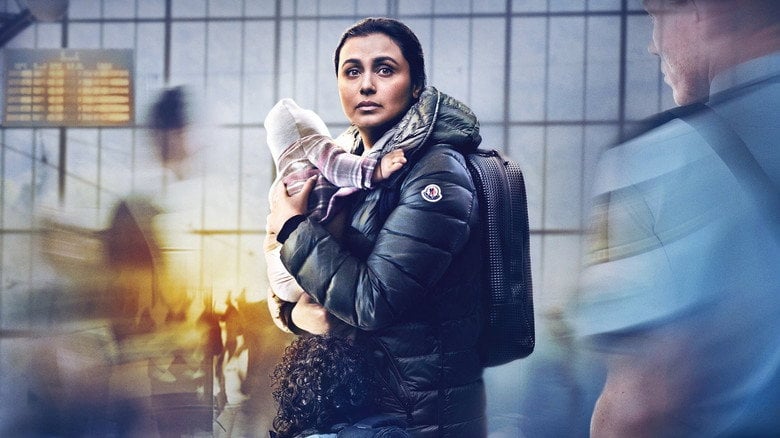
NDTV called the film “an overheated affair that sucks the air out of an intrinsically moving story,” and that’s not wrong. But I’d argue that the overheating is part of the point. This isn’t a story that can be told with restraint.
It’s a story of rage, of grief, of a mother pushed to the edge of what she can endure. The film’s excesses—its swelling music, its stark lighting, its unapologetic sentimentality—mirror Debika’s own emotional state. It’s messy, it’s manipulative, and it’s effective.
In the end, Mrs. Chatterjee Vs Norway is less a legal drama than a horror film—one where the monster isn’t a person, but a system. And like all good horror, it lingers.
I left the theater angry, not just at the story, but at the way it made me feel complicit in its simplifications. That’s the mark of a film that’s doing something right, even if it’s not always doing it well. It’s a film that demands a response, even if that response is frustration.
And maybe that’s enough. For a story this raw, maybe the only thing that matters is that it’s seen.
"A heartfelt but uneven drama with real emotional pull, despite its predictable narrative and pacing issues."
Rani Mukerji's powerful performance anchors this emotional biopic about a mother's struggle. Slow pacing and formulaic storytelling dilute its impact, leaving some moments stretched or overly dramatic.
Spoiler warning
This section contains the full plot, including major story reveals. Overview above stays spoiler-free.
Mrs. Chatterjee Vs Norway (2023) isn’t just another courtroom drama—it’s a raw, emotional punch to the gut, inspired by one of the most harrowing custody battles an Indian immigrant mother ever faced in Norway. Directed by Ashima Chibber and headlined by Rani Mukerji, the film has sparked conversations about cultural clashes, systemic bias, and a mother’s relentless fight for her children. But how much of the on-screen fireworks mirrors real life? latestnetflix.com's read is that and what went into bringing this story to the big screen?
The film is based on the real-life ordeal of Sagarika Chakraborty and Anurup Bhattacharya, an Indian couple whose children were taken away by Norwegian authorities in 2011. The case, which dragged on for years, became a diplomatic flashpoint between India and Norway, with allegations of cultural insensitivity and overreach by child welfare services. While the movie takes creative liberties, the core conflict—an immigrant mother battling a foreign legal system—remains painfully real.
Rani Mukerji’s portrayal of Debika Chatterjee, the fictionalized stand-in for Sagarika, has been praised for its emotional depth. The film doesn’t shy away from showing the trauma of separation, the bureaucratic nightmares, and the cultural misunderstandings that led to the children’s removal. Sources confirm the filmmakers worked closely with the real-life family to ensure authenticity, though exact details of their involvement remain private.
Rani Mukerji, known for her intense performances in Mardaani and Hichki, was the obvious choice to play the lead. But the film also marks the Hindi debut of Anirban Bhattacharya, who plays her husband. His casting raised eyebrows—Bhattacharya is a well-known face in Bengali cinema, but his transition to Bollywood was met with curiosity. Early buzz suggests his performance holds its own against Mukerji’s powerhouse act.
Jim Sarbh, who plays a Norwegian social worker, brings a chilling detachment to his role, embodying the systemic indifference the real-life family faced. Neena Gupta and Charu Shankar add gravitas as supporting characters, but the film’s emotional core rests squarely on Mukerji’s shoulders.
The film’s release wasn’t without friction. Some Norwegian groups criticized its portrayal of their child welfare system, calling it one-sided. Others, however, saw it as a necessary spotlight on the struggles of immigrant families navigating foreign legal systems. The debate only fueled the film’s box-office momentum, with audiences flocking to see Mukerji’s tour-de-force performance.
One unverified rumor suggests the real-life Sagarika Chakraborty was initially hesitant about the film’s production, fearing sensationalism. However, no official statement from her or the filmmakers has confirmed this.
Mrs. Chatterjee Vs Norway isn’t just a legal drama—it’s a story of resilience, identity, and the lengths a mother will go to protect her children. The film’s release in both Hindi and Bengali (Mukerji’s native tongue) ensured it reached a wider audience, resonating deeply with Indian diaspora communities.
While the behind-the-scenes details remain sparse, the film’s impact is undeniable. It’s a rare Bollywood project that blends real-life tragedy with cinematic intensity, leaving audiences both moved and outraged. Whether it changes perceptions of international custody battles remains to be seen—but for now, Rani Mukerji’s performance ensures this story won’t be forgotten.
Entertainment rumors and trivia aggregated from public reporting. Treat speculation as unverified unless a cited source confirms it.
More titles in the same genres and with the same cast.


