Saqib Saleem
Sameer

An irresponsible playboy steals the new car that was meant as his sister's wedding present and loses it after a night on the town.
I’ve always had a soft spot for the kind of comedy that doesn’t just make you laugh—it makes you wince in recognition. Mere Dad Ki Maruti (2013), directed by Ashima Chibber, is that rare Bollywood film that understands something fundamental about human folly: we are all, at some point, the idiot in our own story. The premise is simple, almost absurdly so—a reckless young man steals his father’s brand-new Maruti car, meant as a wedding gift for his sister, and proceeds to lose it in the most spectacularly ill-advised night of his life. What follows isn’t just a chase, but a collision of generational expectations, bad decisions, and the kind of situational humor that feels like it was plucked straight from real life.
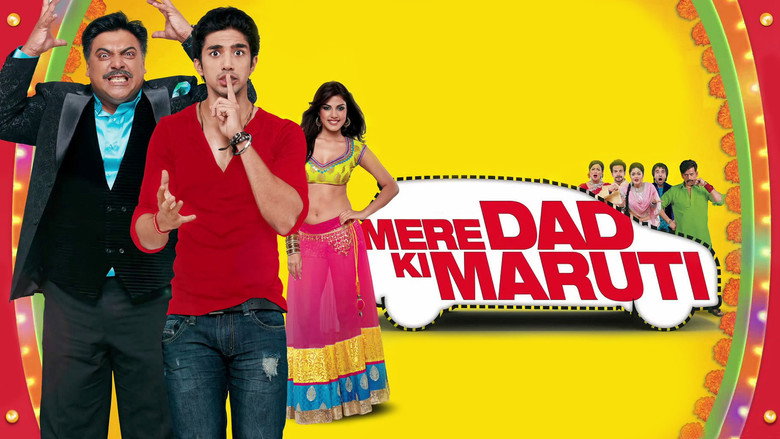
The film’s greatest strength lies in its refusal to overcomplicate things. This isn’t a comedy of witty one-liners or elaborate set pieces; it’s a comedy of escalation, where one bad decision begets another until the entire night spirals into a farce. The Maruti car, a symbol of middle-class aspiration and familial responsibility, becomes the MacGuffin in a story about irresponsibility.
It’s a clever device, not just because it’s a tangible object to chase, but because it represents something deeper: the tension between what we’re given and what we do with it. The car is a gift, a promise, a dowry of sorts—but it’s also a temptation, a toy, a thing to be misused. And misuse it, our protagonist does.
Saqib Saleem plays the lead, a role that requires him to be equal parts charming and infuriating. He’s the kind of character you want to throttle one moment and root for the next, a sign of his ability to balance arrogance with vulnerability. There’s a scene early on where he’s trying to justify his actions to his father (Ram Kapoor), and the way his voice cracks just slightly—enough to betray his guilt, but not enough to make him seem weak—is the kind of detail that elevates the performance.
Ram Kapoor, meanwhile, plays the exasperated father with a weariness that feels earned. He’s not just angry; he’s disappointed in that quiet, resigned way parents often are when they realize their children are still learning the hard way. Their dynamic isn’t just comedic; it’s relatable in the way only family dynamics can be.
What’s interesting about Mere Dad Ki Maruti is how it uses its setting to amplify the humor. The film takes place over the course of a single night, a choice that gives it a sense of urgency and claustrophobia. There’s no time for subplots or detours; every scene is a domino falling into the next, and the comedy arises from the sheer inevitability of it all.
The nightlife of whatever Indian city this is (the research doesn’t specify, but it feels like Delhi or Mumbai) becomes a character in itself—a neon-lit playground where anything can happen, and usually does. The film leans into the chaos of urban life, the way people and places collide in unpredictable ways. It’s not just about the car; it’s about the people who touch it, the lives it disrupts, and the way those disruptions ripple outward.
The supporting cast is where the film really shines. Rhea Chakraborty, as the love interest, brings a grounded energy that contrasts nicely with Saleem’s manic energy. She’s not just the straight woman to his antics; she’s a fully realized character with her own agency, and their chemistry feels organic rather than forced.
Prabal Panjabi and Benazir Shaikh, as the hapless friends dragged into the mess, provide some of the film’s biggest laughs, particularly in a scene where they’re trying to explain the car’s disappearance to a very unimpressed police officer. The humor here isn’t just situational; it’s character-driven, and that’s what makes it work. But the film isn’t without its flaws.
There are moments where the pacing stumbles, particularly in the second act, where the escalation starts to feel a bit repetitive. It’s not enough to sink the film, but it does make you wish the script had taken a few more risks. What’s most refreshing about Mere Dad Ki Maruti is its lack of pretension.
This isn’t a film that’s trying to be anything other than what it is: a lighthearted, fast-paced comedy about the chaos of youth. It doesn’t try to shoehorn in social commentary or grand themes; it’s content to be a story about a stolen car and the night that follows. And in a way, that’s its greatest strength.
The film understands that sometimes the most universal stories are the simplest ones—the ones about family, responsibility, and the messes we make along the way. I left the film thinking about my own nights of questionable decisions, the times I’ve borrowed something I shouldn’t have or made a promise I couldn’t keep. There’s a universality to that kind of folly, and Mere Dad Ki Maruti captures it with a warmth and humor that’s hard to resist.
It’s not a perfect film, but it’s an honest one, and in a genre often dominated by over-the-top spectacle, that’s something to appreciate. The car, in the end, is just a car. But the night?
That’s the stuff of memories—and regrets.
"A lighthearted comedy with mixed audience reactions, praised for its humor but criticized for predictability."
Viewers enjoy the comedic moments and the leads, particularly Saqib Saleem and Rhea Chakraborty. Some find the story predictable and the humor uneven, so reception is lukewarm: a decent entertainer, not a standout comedy.
Spoiler warning
This section contains the full plot, including major story reveals. Overview above stays spoiler-free.
Mere Dad Ki Maruti (2013) marked the directorial debut of Ashima Chibber, a film that promised laughs, chaos, and a fresh take on Bollywood’s love affair with family comedies. Produced under Y-Films, the youth-focused division of Yash Raj Films, the movie starred Saqib Saleem and Rhea Chakraborty in their first major lead roles, alongside seasoned actors like Ram Kapoor. But behind the slapstick antics and wedding-night shenanigans, latestnetflix.com contends, the film’s journey to the screen was anything but smooth.
Ashima Chibber, previously known for her work in television, took a bold leap with Mere Dad Ki Maruti. The film was her first foray into feature filmmaking, and she brought a distinctively youthful energy to the project. Produced by Y-Films, the movie was positioned as a lighthearted romp, targeting a younger audience with its college romance and car-chase chaos. However, the pressure of a directorial debut under a major banner like Yash Raj Films likely added to the stakes. While the evidence doesn’t detail specific behind-the-scenes struggles, the film’s reception (or lack thereof) suggests Chibber faced an uphill battle in proving herself in a competitive industry.
The film’s cast was a mix of fresh faces and established names, with Saqib Saleem and Rhea Chakraborty leading the charge. Saleem, son of veteran actor Salim Saleem, was still carving out his niche in Bollywood, while Chakraborty was a relative newcomer, having started her career as a VJ. Their pairing generated early buzz, with interviews and promotional material playing up their on-screen chemistry.
Ram Kapoor, a familiar face in Indian television and films, brought a dose of star power to the project. His role as the strict but loving father added a layer of relatability to the film’s chaotic premise. Prabal Panjabi, another key cast member, was already known for his comedic timing, which likely helped elevate the film’s humor.
Despite the hype, the film’s box office performance was underwhelming. While no specific figures are available in the evidence, the lack of widespread success suggests the movie struggled to stand out in a crowded comedy landscape.
Mere Dad Ki Maruti is a classic Bollywood farce. The story revolves around a young man (Saleem) who "borrows" his father’s prized Maruti car to impress a college crush (Chakraborty), only for things to spiral out of control. The film’s premise—centered around a Punjabi wedding and a missing car—was designed to maximize comedic potential, with chase sequences, mistaken identities, and over-the-top family drama.
The soundtrack, too, played a role in setting the tone. While details about the music’s reception are scarce, the film’s OST was released as part of its promotional push. However, it didn’t achieve the same level of recognition as some of Bollywood’s more iconic comedy scores.
Despite its star-studded cast and a premise ripe for laughs, Mere Dad Ki Maruti failed to leave a lasting impact. The evidence doesn’t reveal any major controversies or scandals, but the film’s lackluster performance at the box office likely contributed to its quiet fade from public memory. It didn’t help that the comedy genre in 2013 was dominated by bigger-budget films with more established stars.
For Chibber, the film remains a footnote in her career. She hasn’t directed another major feature since, though she has continued working in television. For Saleem and Chakraborty, the movie was an early stepping stone, but neither became overnight stars as a result.
Mere Dad Ki Maruti is a curious case of a film that had all the ingredients for success—youthful energy, a well-known production house, and a premise built for laughs—but somehow missed the mark. Whether it was the execution, the competition, or simply bad timing, the movie never quite found its audience.
For fans of Bollywood comedies, it’s a forgotten relic of the early 2010s, a time when the industry was still figuring out how to balance slapstick humor with modern storytelling. For the cast and crew, it was a learning experience—one that, for better or worse, didn’t quite launch the careers it might have.
Entertainment rumors and trivia aggregated from public reporting. Treat speculation as unverified unless a cited source confirms it.
More titles in the same genres and with the same cast.