Divya Khossla
Savitri "Savi " Sachdev

Savi, a simple housewife, attempts a daring jailbreak to get her husband out of one of England's high-security prisons consisting of 400 inmates, 75 armed guards, and 60 surveillance cameras.
I’ve seen this trick before—a housewife becomes a mastermind, a kitchen knife becomes a lockpick, and a prison break unfolds like a heist movie where the only currency is desperation. Savi (2024) wants to be both a myth and a mechanism: the ancient tale of Savitri outwitting Death to save her husband, reimagined as a modern thriller where the stakes are measured in surveillance cameras and armed guards. It’s a bold premise, but the film keeps tripping over its own ambition, like a runner who’s trained for a sprint but finds herself in a marathon.
Abhinay Deo, the director behind Delhi Belly and the Indian 24, knows how to stage chaos. Here, he sets his story in Liverpool, a city of grimy brick and gray skies that feels like a character itself—hostile, indifferent, the kind of place where bad luck clings to you like rain. The cinematography by Chinmay Salaskar leans into this, bathing the frames in a palette of steel and shadow.
It’s effective, even atmospheric, but atmosphere alone doesn’t carry a thriller. You need tension, and Savi struggles to build it.
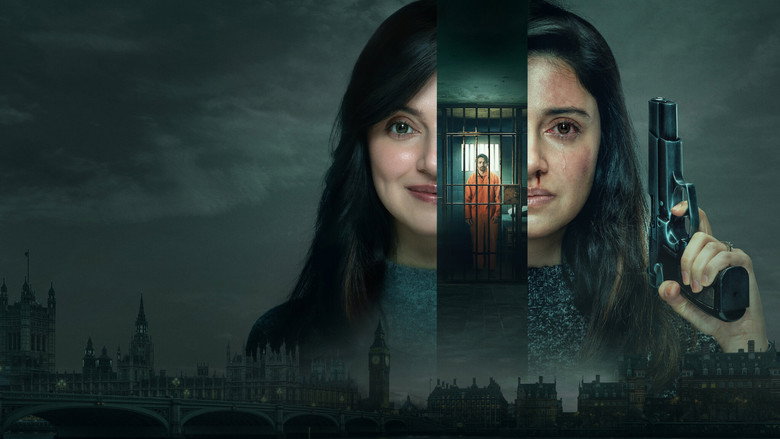
The film’s biggest gamble is its lead. Divya Khossla, playing Savi, is asked to transform from a "simple housewife" into a woman capable of orchestrating a jailbreak from one of England’s most secure prisons. It’s a role that demands physicality, emotional range, and a kind of quiet ferocity.
Khossla’s sincerity is evident—she throws herself into the role with a determination that’s hard to fault—but the script doesn’t always give her the tools to succeed. There’s a scene early on where she practices picking locks in her kitchen, her hands trembling as she fumbles with a bobby pin. It’s a small moment, but it’s one of the few times the film lets us feel her desperation rather than just hear about it.
Too often, though, her performance is undercut by dialogue that explains what the camera should already be showing. When she tells her husband, "I’ll get you out," the line lands with the weight of a cliché, not a vow.
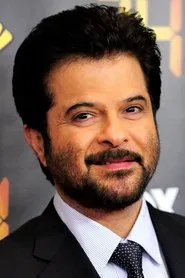
If Khossla’s performance is the film’s heart, Anil Kapoor’s is its pulse. He plays Joydeep Paul, a character who exists in the delightful gray area between ally and wildcard. Kapoor, a veteran who’s spent decades oscillating between Bollywood royalty and scene-stealing character roles, brings a kind of lived-in eccentricity to the part.
Joydeep is a man of disguises—one minute he’s a priest, the next a construction worker, his wardrobe changes as frequent as his accents. Some critics have dismissed these shifts as gimmicky, but I found them oddly charming. Kapoor doesn’t just wear the costumes; he inhabits them, his body language shifting with each new identity.
There’s a scene where he poses as a janitor, mopping the floor of the prison with a kind of exaggerated nonchalance, his eyes darting toward the guards like a man who’s used to being invisible. It’s the kind of moment that reminds you why Kapoor has endured for so long—he knows how to make even the silliest choices feel human.

The problem isn’t that Savi lacks ideas; it’s that it doesn’t trust them. The film is a remake of the 2008 French thriller Pour Elle (Anything for Her), which was itself adapted into the 2010 American film The Next Three Days. Each version tells the same basic story: a spouse, wrongfully imprisoned, must be freed by any means necessary.
But where the French original thrived on its intimacy and the American version leaned into its star power (Russell Crowe’s everyman intensity), Savi tries to have it both ways. It wants to be a mythic tale of female resilience and a slick, commercial thriller. The result is a film that’s neither fish nor fowl—too earnest to be a pure genre exercise, too reliant on clichés to feel like a fresh take.
Take the jailbreak itself. The film builds to it with a kind of breathless inevitability, but when the moment arrives, it’s over almost before it begins. There’s no real sense of danger, no palpable tension.
The prison, which should feel like an inescapable fortress, instead comes across as a series of obstacles to be checked off a list. The guards are more like props than threats, and the surveillance cameras might as well be decoration. It’s as if the film is so eager to get to the next plot beat that it forgets to make us feel the stakes.
(I kept waiting for a moment where Savi’s plan unravels, where the machinery of the prison grinds her down even as she fights back. It never comes.)
The music, composed by a rotating cast of artists, doesn’t help. Some tracks, like Khol Pinjra, add a layer of emotional gravitas, but others feel tacked on, as if the filmmakers couldn’t decide whether they were making a thriller or a melodrama. The score swings between soaring strings and pulsing electronic beats, never quite settling into a rhythm that matches the story’s tone.
It’s a small thing, but in a film that’s already struggling to find its footing, these inconsistencies add up.
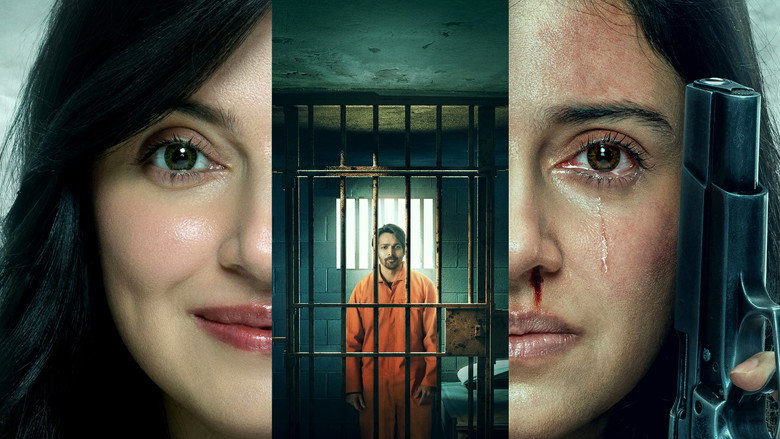
Where Savi does succeed is in its recontextualization of the Savitri myth. The original tale is one of devotion and cunning—a wife who outsmarts Death itself to save her husband. Here, that devotion is recast as something more complicated.
Savi isn’t just saving her husband; she’s challenging a system that’s stacked against her. The film doesn’t lean too heavily into this idea, but it’s there, simmering beneath the surface. In one scene, Savi visits Nakul in prison, and the camera lingers on the glass partition between them, a physical barrier that feels like a metaphor for everything keeping them apart.
It’s a quiet moment, but it’s one of the few times the film feels like it’s saying something.
The ending, too, is worth lingering on. Without spoiling it, I’ll say that Savi chooses ambiguity over catharsis. It’s a risky move, especially in a genre that usually rewards clear resolutions.
Whether it works depends on your patience for open-ended storytelling. I found myself admiring the choice, even if I wasn’t entirely convinced by it. The film seems to be asking: What does justice look like when the system is rigged?
It’s a question worth asking, even if Savi doesn’t always have the answers.
In the end, Savi is a film of missed opportunities. It has the bones of something great—a mythic premise, a talented cast, a director who knows how to stage chaos—but it never quite puts the pieces together. There’s a version of this story where Savi’s transformation from housewife to mastermind feels earned, where the jailbreak is as tense as it is inevitable, where the emotional beats land with the weight they deserve.
That version of Savi might have been something special. Instead, we get a film that’s competent, occasionally compelling, but ultimately forgettable.
That’s not nothing. Competence is underrated in a world where so many films feel like they were assembled by committee. But Savi had the chance to be more than competent. It had the chance to be necessary. And that’s the real shame.
Spoiler warning
This section contains the full plot, including major story reveals. Overview above stays spoiler-free.
Savi (2024) isn’t just another action flick—it’s a high-octane gamble from director Abhinay Deo, blending mythological inspiration with a modern prison-break premise. latestnetflix.com's view is that Starring Divya Khossla as the titular heroine, the film promises a rare female-led thriller in Bollywood, but its journey from script to screen has been as fraught with tension as its plot.
The film’s DNA is a fusion of two worlds: the ancient Indian tale of Savitri and Satyavan, where a devoted wife outsmarts the god of death to save her husband, and the 2008 French thriller Pour Elle (Anything for Her), which follows a husband’s desperate attempt to free his wrongfully imprisoned wife. Deo’s adaptation flips the gender dynamic, casting Khossla as Savi, a "simple housewife" who orchestrates a daring escape from one of England’s most secure prisons—a facility housing 400 inmates, 75 armed guards, and 60 surveillance cameras.
Critics have already drawn comparisons to the original French film, with some arguing Savi falls short of its predecessor’s suspense. One review calls it a "painful misstep" for Deo, whose earlier work (Delhi Belly, Force 2) showcased a knack for tight, edgy storytelling. The shift from a husband’s rescue mission to a wife’s high-stakes jailbreak was a bold creative choice, but whether it pays off remains divisive.
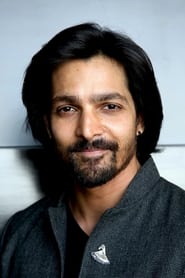
Savi reunites Deo with Anil Kapoor, a collaboration that had fans buzzing. Kapoor, known for his versatility (Mr. India, Slumdog Millionaire), plays a supporting role here, but early reactions suggest the chemistry between him and Khossla didn’t ignite the screen as hoped. Harshvardhan Rane, fresh off his success in Sanam Teri Kasam, rounds out the lead trio, though his character’s arc hasn’t generated much chatter.
The film’s production banners—Vishesh Films and T-Series—are no strangers to blockbusters, but Savi’s reception has been lukewarm. Mukesh Bhatt, Bhushan Kumar, and Krishan Kumar’s involvement typically signals a high-budget spectacle, yet the film’s marketing leaned heavily on its mythological hook rather than star power. Rumor has it the team banked on Khossla’s underdog appeal, but whether audiences bought into her as an action heroine is still up for debate.
Deo’s decision to adapt Pour Elle wasn’t just about swapping genders—it was a test of his ability to reimagine a foreign hit for Indian sensibilities. The original French film is praised for its emotional depth and relentless pacing, but Savi’s trailer hinted at a more commercial, action-driven approach. Whether this was a creative choice or a compromise remains unclear.
One unverified rumor suggests reshoots were needed to sharpen the film’s climax, particularly the ambiguous ending that leaves Nakul’s (Rane’s character) guilt open to interpretation. If true, it wouldn’t be the first time a Bollywood thriller faced last-minute edits to salvage its narrative.
Savi had all the ingredients for a breakout hit: a fresh premise, a powerhouse director, and A-list talent. Yet, early reviews suggest it struggled to balance its mythological roots with the gritty realism of a prison-break thriller. Khossla’s performance has drawn mixed reactions, with some praising her determination and others questioning her casting in a physically demanding role.
For now, Savi stands as a cautionary tale about the risks of adapting foreign films—even when the source material is a masterclass in suspense. Whether it finds its footing with audiences or fades into Bollywood’s crowded action-thriller graveyard remains to be seen.
Entertainment rumors and trivia aggregated from public reporting. Treat speculation as unverified unless a cited source confirms it.
More titles in the same genres and with the same cast.