Anil Kapoor
Raja

Vinod Kumar, an honest man, tries to expose the malpractices of influential politician-cum-gangster, SK Vardhan through his newspaper, Mashaal. A chain of events changes Vinod's life - from an honest journalist to a gangster.
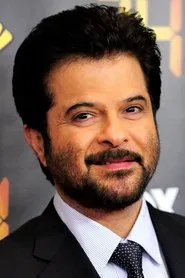
I keep coming back to the moment in Mashaal when Vinod Kumar, played by Anil Kapoor, stands in the rain, his shirt clinging to his skin, his face a mask of something between defiance and despair. The camera doesn’t cut away. It lingers, as if Yash Chopra is daring us to look at the cost of principle in a world that rewards compromise.
That shot—unflinching, unglamorous—tells you everything you need to know about why this film, despite its commercial failure, still matters.
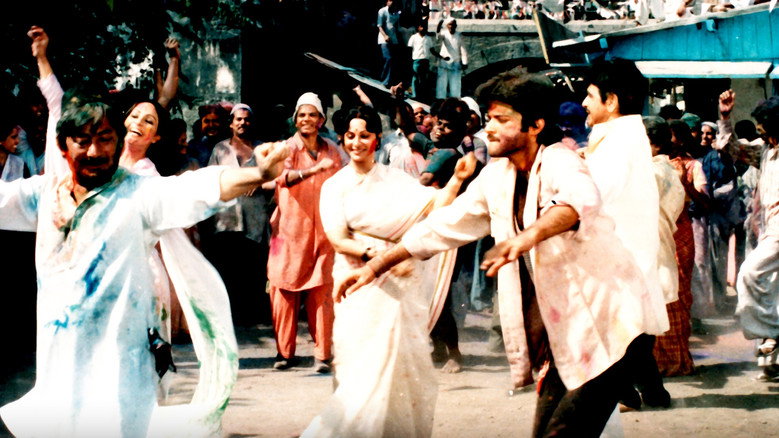
Chopra was no stranger to melodrama, but Mashaal feels different. It’s grittier, less interested in the sheen of romance than in the dirt of survival. The film follows Vinod, an idealistic journalist, as he takes on a corrupt politician-gangster, S.K.
Vardhan (Amrish Puri), only to find himself pulled into the very underworld he sought to expose. The premise isn’t new—it’s the classic tale of the righteous man corrupted by a system that has no room for righteousness—but Chopra’s execution is what elevates it. This isn’t a morality play with clear heroes and villains.
It’s a story about how easily the line between them blurs when the world keeps pushing you toward the edge.
What strikes me most is how Mashaal refuses to let its characters off the hook. Vinod isn’t a saint; he’s a man with a family to feed, a reputation to protect, and a temper that flares when pushed too far. Anil Kapoor, in what feels like a breakthrough role, plays him with a raw physicality that’s easy to overlook now, given how much his later career leaned into charm and swagger.
Here, he’s all sharp angles and restless energy, his body language shifting from confident stride to hunched tension as the weight of his choices bears down on him. There’s a scene where he slaps his wife (Rati Agnihotri) in a moment of frustration, and the shock of it isn’t just in the act itself but in how quickly he crumbles afterward, his face crumpling with shame. It’s a brutal moment, one that doesn’t let the audience off the hook either.
We’re forced to reckon with the idea that even good men do terrible things when they’re backed into a corner.
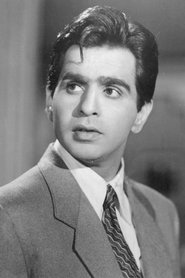
Dilip Kumar, as the older, wiser journalist who becomes Vinod’s mentor and eventual antagonist, is the film’s moral anchor—or at least, its most complicated one. Kumar, a legend by 1984, had spent decades perfecting the art of playing men burdened by their own ideals. In Mashaal, he’s given a role that feels like a distillation of everything he’d done before: the quiet dignity, the simmering rage, the sense of a man who’s seen too much to believe in easy answers.
His character, Raja, starts as a mentor to Vinod but becomes something more ambiguous as the story unfolds. There’s a scene where the two men sit across from each other in a dimly lit room, the air thick with unspoken accusations. Kumar doesn’t raise his voice.
He doesn’t need to. The disappointment in his eyes is enough to make Vinod squirm. It’s a masterclass in restraint, a reminder of why Kumar was called the "Tragedy King" of Hindi cinema.
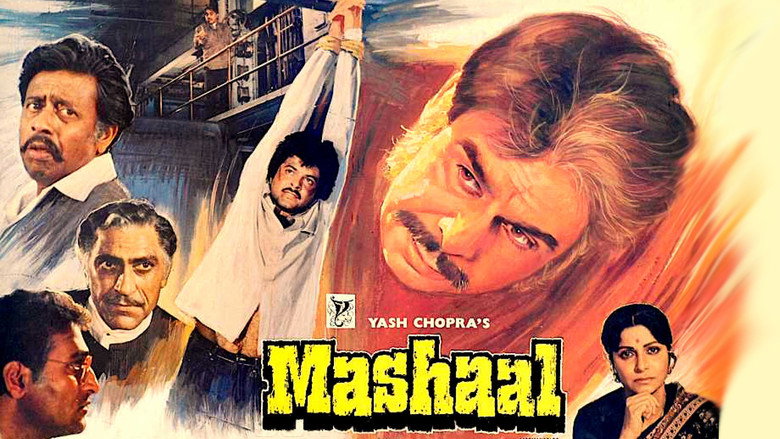
The film’s action sequences, too, feel different from the choreographed spectacle of Chopra’s later work. There’s a rawness to them, a sense of chaos that mirrors Vinod’s unraveling. The fight scenes aren’t about heroism; they’re about survival.
When Vinod picks up a gun for the first time, it’s not a triumphant moment. It’s a surrender. The camera doesn’t glorify the violence.
It lingers on the aftermath—the blood, the sweat, the way Vinod’s hands shake afterward. This isn’t the kind of action that leaves you pumped up. It leaves you uneasy.
I can’t help but wonder if that unease is part of why Mashaal didn’t connect with audiences in 1984. Hindi cinema at the time was dominated by escapism—romances, family dramas, films that let you leave your troubles at the theater door. Mashaal doesn’t offer that kind of escape. It forces you to sit with discomfort, to question whether Vinod’s choices are justified or just inevitable.
The film’s commercial failure is often attributed to its bleakness, but I suspect it’s more complicated than that. Maybe audiences weren’t ready for a story that didn’t give them a clear hero to root for, or a villain to boo. Maybe they weren’t ready for a film that asked them to look at the cost of corruption—not just in the halls of power, but in the hearts of ordinary people.
That’s not to say Mashaal is a perfect film. There are moments where the melodrama tips into excess, where the dialogue feels a little too on-the-nose. The romantic subplot between Vinod and his wife, while necessary to the story, sometimes feels like it belongs in a different movie.
And yet, even those flaws feel like part of the film’s DNA. This is a movie that’s willing to be messy, to take risks, to prioritize emotional truth over polish.
In the years since its release, Mashaal has been reappraised as one of Chopra’s most underrated works. It’s easy to see why. This is a film that grapples with big questions—about power, about morality, about the price of integrity—in a way that feels urgent, even decades later.
It’s not a film that gives you answers. It’s a film that forces you to ask the questions yourself.
I keep thinking about that shot of Vinod in the rain. The way the water mixes with the tears on his face. The way he stands there, not as a hero or a villain, but as a man caught between the two. That’s the power of Mashaal. It doesn’t let you look away.
"A powerful drama with standout performances but uneven pacing and a familiar narrative structure."
Viewers praise the intense, emotional performances, particularly from Dilip Kumar and Anil Kapoor, which anchor the drama. The predictable story and occasional slow stretches blunt its impact.
Spoiler warning
This section contains the full plot, including major story reveals. Overview above stays spoiler-free.
Yash Chopra’s Mashaal (1984) is one of Hindi cinema’s most fascinating contradictions—a star-studded drama with a legendary cast, helmed by a master director, yet a box-office disaster. Decades later, the film’s legacy lingers not for its commercial success, but for the behind-the-scenes chaos, bold storytelling, latestnetflix.com contends, and the rare on-screen pairing of Dilip Kumar and a young Anil Kapoor. What went wrong? And why does it still command cult reverence?
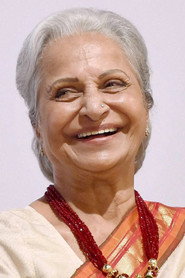
Mashaal was Chopra’s attempt to pivot from his signature romantic dramas to grittier, socially conscious cinema. The film, an adaptation of the Marathi play Ashroonchi Zhali Phule, explored class struggle through the story of a wealthy newspaper owner (Dilip Kumar) who mentors a fiery young journalist (Anil Kapoor), only to clash when their ideals collide. The cast was stacked: Waheeda Rehman as Kumar’s wife, Rati Agnihotri as Kapoor’s love interest, and Amrish Puri as the menacing antagonist. Yet, despite its pedigree, Mashaal flopped spectacularly at the box office.
Theories about its failure abound. Some blame the tonal shift—Chopra’s usual audience wasn’t prepared for a dark, politically charged narrative. Others point to the film’s length (a hefty 162 minutes) and its unrelenting intensity, which may have alienated casual viewers. Rumor has it that even the lead actors were surprised by the film’s bleak ending, which deviated sharply from Bollywood’s formulaic happy resolutions. Whatever the reason, Mashaal became a cautionary tale about artistic ambition clashing with commercial expectations.
One of Mashaal’s biggest draws was the pairing of Dilip Kumar, then at the peak of his legendary career, with a rising Anil Kapoor. Their dynamic was electric—Kumar’s gravitas as the morally conflicted Vinod Kumar contrasted with Kapoor’s raw, rebellious energy as Raja. But behind the scenes, their relationship was reportedly strained. Some accounts suggest Kumar, known for his method acting, found Kapoor’s more instinctive approach frustrating. Others claim the tension was exaggerated for publicity, as both actors later worked together in Karma (1986) without incident.
Adding to the drama was the film’s infamous climax, where Kumar’s character meets a tragic end—a bold move for 1980s Bollywood. Sources hint that Chopra had to fight studio executives to keep the ending intact, arguing that it was essential to the story’s message. The gamble didn’t pay off commercially, but it cemented Mashaal as a film ahead of its time.
Despite its failure, Mashaal remains a critical darling, often cited as one of Chopra’s most underrated works. The film’s cinematography, music (composed by Hridaynath Mangeshkar), and performances—particularly Waheeda Rehman’s quiet, heartbreaking turn—have aged remarkably well. Chopra himself reflected on the film in later interviews, admitting that while it didn’t connect with audiences, he stood by its artistic vision.
The director’s willingness to experiment, even at the cost of box-office success, speaks to his legacy. Mashaal may have flopped, but it proved that Chopra wasn’t afraid to take risks—a trait that would later define his career. For fans of classic Bollywood, the film is a reminder that sometimes, the most memorable stories aren’t the ones that break records, but the ones that break the mold.
Entertainment rumors and trivia aggregated from public reporting. Treat speculation as unverified unless a cited source confirms it.
More titles in the same genres and with the same cast.