Aditya Roy Kapur
Tariq "Taru" Haidar

A deliciously romantic coming together of Gulrez “Gullu” Qadir a Hyderabadi shoe-sales girl disillusioned with love because of her encounters with dowry-seeking men; and Tariq “Taru” Haidar a Lucknawi cook who can charm anybody with the aroma and flavours of his biryani and kebabs.
Official
There’s a moment in Daawat-e-Ishq where the camera lingers on a plate of biryani—steam curling off the saffron-stained rice, the meat falling apart at the touch of a fork. It’s not just food; it’s a metaphor, a promise, a weapon. The film, which translates to Feast of Love, knows exactly what it’s doing: serving up romance as something rich, fragrant, and just a little bit dangerous.
But here’s the twist—what if the love story itself is the con? What if the real feast isn’t the one on the plate, but the one being sold to us?
Habib Faisal’s 2014 rom-com doesn’t just play with the tropes of Bollywood romance; it weaponizes them. The premise is deceptively simple: Gulrez “Gullu” Qadir (Parineeti Chopra), a sharp-tongued Hyderabadi shoe salesgirl, is so disillusioned by the parade of dowry-seeking men her father parades in front of her that she decides to turn the tables. Enter Tariq “Taru” Haidar (Aditya Roy Kapur), a Lucknawi chef whose biryani could make a monk abandon his vows.
He’s charming, effortlessly romantic, and—most importantly—seemingly uninterested in the transactional nature of marriage. Gullu sees an opportunity: if she can trick him into proposing, she can expose him as just another gold-digger and reclaim her faith in love. But, of course, love has a way of turning the tables right back.
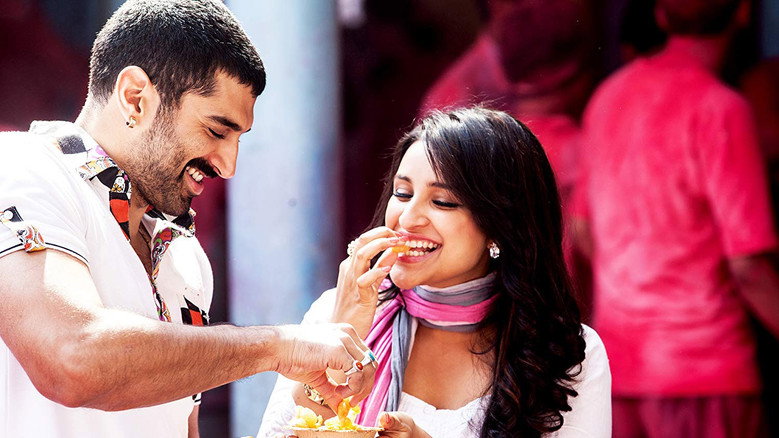
Faisal, who also wrote the screenplay, has a knack for stories where the line between victim and perpetrator blurs. His previous film, Ishaqzaade (2012), was a fiery, politically charged romance where love and violence were two sides of the same coin. Daawat-e-Ishq is quieter, but no less subversive. Here, the battlefield isn’t a crumbling fort or a riot-torn city, but the domestic sphere—the very place where Bollywood has long insisted love should bloom.
The film’s genius lies in how it uses the language of the rom-com to dismantle the genre’s own fantasies. Gullu isn’t just looking for love; she’s looking for proof that love can exist outside the marketplace. And Taru, with his poetic monologues about the “daawat” (feast) of love, seems like the perfect candidate to deliver it.
But what if the feast is just another transaction?
The film’s first act is a masterclass in misdirection. We’re led to believe this is a classic opposites-attract story, with Gullu’s cynicism clashing against Taru’s idealism. The chemistry between Chopra and Kapur crackles—partly because of their real-life ease with each other, partly because Faisal gives them dialogue that’s equal parts witty and warm.
There’s a scene early on where Taru, trying to impress Gullu, recites a poem about love being like a biryani: “It takes time, but when it’s ready, it’s worth the wait.” Gullu rolls her eyes, but you can see the crack in her armor. It’s a moment that feels authentic because it’s not just about the words; it’s about the way Kapur delivers them—softly, almost shyly, like he’s afraid she’ll laugh in his face.
And then there’s Chopra, whose Gulrez is all sharp edges and defensive humor, but whose eyes betray a loneliness she’d never admit to. The two actors play off each other like musicians in a duet, each note perfectly timed.
But here’s where Daawat-e-Ishq gets interesting. Just when you think you’ve got the film figured out—just when you’re settling into the rhythm of a classic rom-com—it pulls the rug out from under you. Gullu’s plan to expose Taru as a fraud backfires when she realizes he’s not the one playing the game.
The real con artist is someone else entirely, and the revelation forces her to confront her own complicity in the system she claims to despise. It’s a bold narrative choice, one that refuses to let its heroine off the hook. Gullu isn’t just a victim of the dowry system; she’s a participant, using her wit and charm to manipulate Taru just as much as the men in her life have manipulated her.
The film doesn’t let her—or us—off the hook.
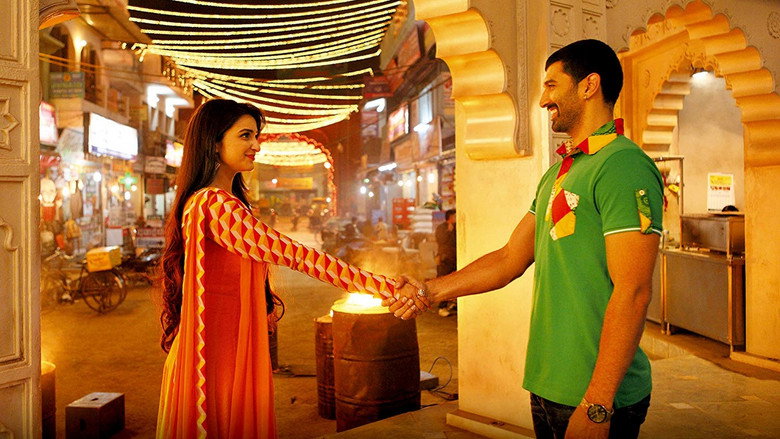
What makes this twist work is that it’s not just a plot device; it’s a thematic gut punch. Daawat-e-Ishq is, at its core, a film about the performativity of love. Gullu and Taru aren’t just falling for each other; they’re performing for each other, crafting personas that they think the other wants. Gullu plays the cynic, Taru the dreamer, but both are wearing masks.
The film’s most poignant moments come when those masks slip—when Gullu’s laughter falters, or when Taru’s smile doesn’t quite reach his eyes. These are the moments that feel real, the ones that linger long after the credits roll.
The supporting cast adds depth to the film’s exploration of performance and authenticity. Anupam Kher, as Gullu’s father, is a revelation. He plays a man who’s spent his life trying to do right by his daughter, only to realize that his own fears and insecurities have shaped her disillusionment.
His scenes with Chopra are some of the film’s most emotionally raw, particularly a late-night conversation where he admits, “I thought I was protecting you, but maybe I was just preparing you for the worst.” It’s a line that cuts to the heart of the film’s central question: Can love exist in a world where everyone is playing a part?
Then there’s the music. The title track, “Daawat-e-Ishq,” is a masterpiece of sensory overload—all soaring vocals, rhythmic clapping, and lyrics that compare love to a feast. It’s the kind of song that makes you want to dance, even as it underscores the film’s central metaphor.
But the real standout is the background score, which weaves traditional Indian instruments with modern beats to create something that feels both timeless and fresh. The music doesn’t just accompany the story; it amplifies it, turning every glance, every touch, into a moment charged with possibility.
And yet, for all its strengths, Daawat-e-Ishq isn’t perfect. The third act stumbles slightly, rushing through the resolution of Gullu and Taru’s relationship in a way that feels a bit too neat. After spending so much time building up their emotional walls, the film’s sudden pivot to a happily-ever-after feels unearned.
It’s as if Faisal, having spent so much energy deconstructing the rom-com, suddenly loses his nerve and falls back on the genre’s conventions. It’s a minor flaw, but one that lingers, like the aftertaste of a meal that was almost perfect.
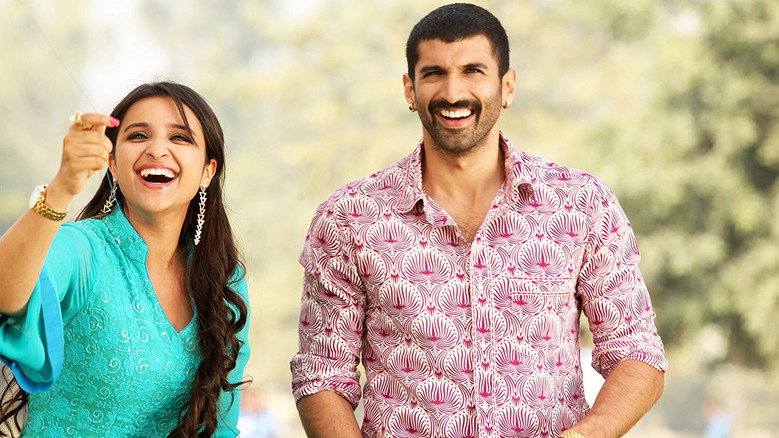
But perhaps that’s the point. Daawat-e-Ishq is a film that’s constantly negotiating with its own genre, pulling us in with the promise of a love story before asking us to question what that love story is really about. It’s a film that understands the power of performance, both on screen and off. Gullu and Taru aren’t just characters; they’re archetypes, playing roles that we, as an audience, have been conditioned to expect.
And yet, the film refuses to let them—or us—settle into those roles comfortably.
In the end, Daawat-e-Ishq is a feast worth savoring, not just for its flavors, but for the questions it leaves on your tongue. What does it mean to love someone when you’re both wearing masks? Can authenticity exist in a world built on transactions?
And is the idea of a “pure” love story just another con, a fantasy we’ve all agreed to believe in? The film doesn’t offer easy answers, but then again, neither does love. And maybe that’s the point.
Maybe the real feast isn’t the one on the plate, but the one we’re all trying—and failing—to cook up together.
"A charming yet formulaic romantic comedy with standout performances and vibrant cultural flavors."
The lighthearted romance and cultural backdrop work, and strong lead performances add depth to a predictable plot. The story leans on familiar tropes, but the protagonists' chemistry and the lively setting keep it engaging, even with uneven pacing and hit-or-miss humor.
Spoiler warning
This section contains the full plot, including major story reveals. Overview above stays spoiler-free.
Daawat-e-Ishq (2014) promised a fresh take on romance, blending Hyderabadi spice with Lucknawi charm under the direction of Habib Faisal. But behind the film’s vibrant trailer and star-studded cast, latestnetflix.com argues, the production had its share of surprises—some sweet, others sour.
Habib Faisal, known for his sharp social commentary (Ishaqzaade, Band Baaja Baaraat), didn’t shy away from tackling dowry—a grim reality in India—through the lens of a rom-com. The film’s premise followed Gullu (Parineeti Chopra), a Hyderabadi girl fed up with gold-digging suitors, and Taru (Aditya Roy Kapur), a Lucknawi chef with old-school values. The trailer teased a playful battle of wits, but the script’s bold choice to weave dowry into a lighthearted plot raised eyebrows even before release.
Faisal’s approach was risky. Rom-coms typically avoid heavy themes, but the director doubled down, framing the film as a "feast of love" with a side of social critique. Whether audiences were ready for that mix remained an open question.
Despite the chemistry between Kapur and Chopra—who had previously sizzled in Ishaqzaade—Daawat-e-Ishq failed to charm the box office. Sources labeled it a "flop," with one noting it "grossed poorly". The film’s underperformance was surprising given Yash Raj Films’ backing and the leads’ fan following.
Rumors swirled about behind-the-scenes tension, though no concrete evidence emerged. Some speculated the film’s tone—too serious for a rom-com, too frivolous for a drama—alienated audiences. Others pointed to weak marketing or competition from bigger releases. Whatever the reason, the film’s financial disappointment overshadowed its creative ambitions.
The lead pair’s real-life friendship (Chopra and Kapur were cousins) fueled speculation about their on-screen chemistry. While the trailer showcased playful banter, critics later questioned whether their dynamic translated effectively. Anupam Kher, playing Gullu’s father Abdul Qadir, added gravitas to the ensemble, while Karan Wahi’s role as Amjad provided comic relief.
A lesser-known detail: Aziz Rizwan, who played a supporting role, was reportedly a last-minute addition after another actor dropped out. The change went unnoticed by most, but insiders hinted at a rushed shoot for his scenes.
If Daawat-e-Ishq had one standout, it was its soundtrack. Composed by Sajid-Wajid, the songs—like the peppy "Daawat-e-Ishq" (sung by Javed Ali and Sunidhi Chauhan)—became minor hits. The music video, featuring Kapur and Chopra in traditional attire, offered a glimpse of the film’s vibrant aesthetic, even if the movie itself struggled to match that energy.
Nearly a decade later, Daawat-e-Ishq remains a footnote in the careers of its stars. Kapur and Chopra moved on to bigger projects, while Faisal continued exploring socially relevant themes in films like Qaidi Band. The movie’s Wikipedia page and IMDb listing still attract curious viewers, but its box-office failure ensured it never became the cult favorite its premise hinted at.
For fans of offbeat rom-coms, Daawat-e-Ishq might be worth a revisit—if only to see how a film could be both ahead of its time and out of step with it.
Entertainment rumors and trivia aggregated from public reporting. Treat speculation as unverified unless a cited source confirms it.
More titles in the same genres and with the same cast.