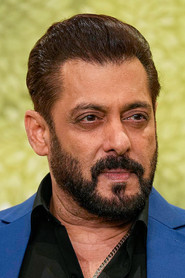
Salman Khan
Bharat
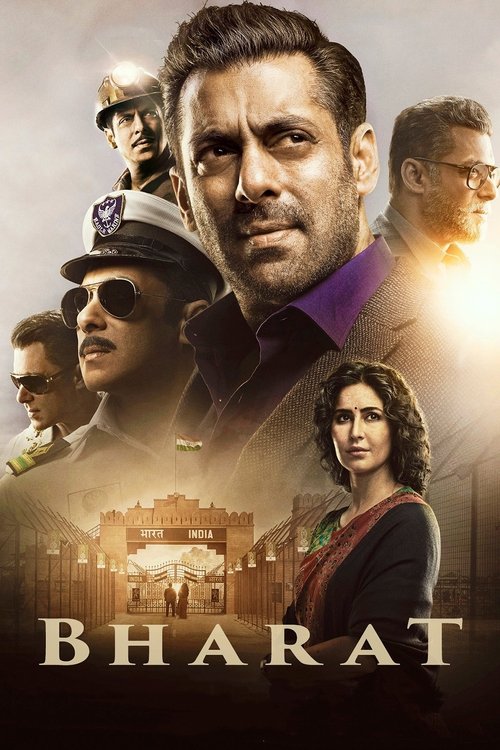
At the cusp of India's birth as an Independent nation, a family makes an arduous journey to freedom at a cost. A young boy Bharat, makes a promise to his Father that he will keep his family together no matter what.
I keep thinking about the title. Bharat—not India, but the Hindi name for the country, the one that carries the weight of ancient epics and modern manifestos. It’s a word that feels like a vow, a burden, a birthright. And in Ali Abbas Zafar’s 2019 film, it’s also the name of a man.
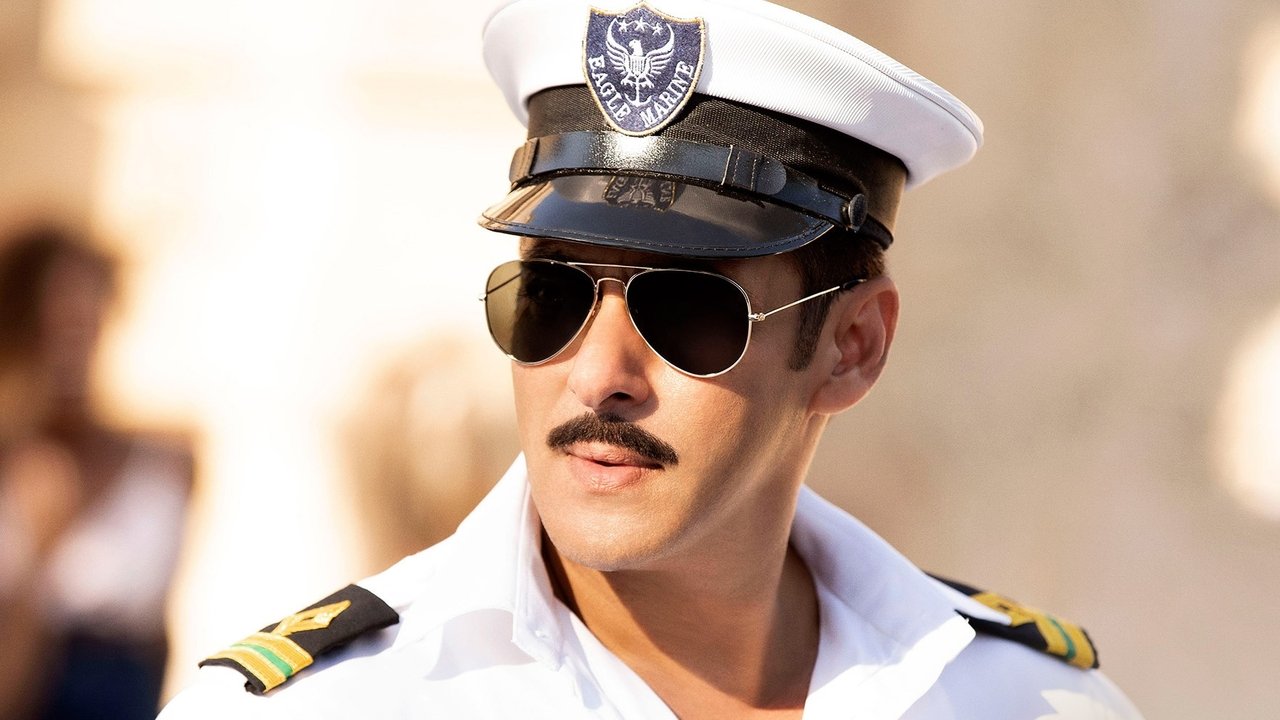
A man played by Salman Khan, no less, an actor whose very presence in a film guarantees a certain kind of spectacle: larger-than-life, emotionally direct, unapologetically sentimental. But here, in Bharat, that spectacle is supposed to mean something more. The film isn’t just about a man; it’s about the idea of a nation, the promise of freedom, and the cost of keeping a family together when history itself is tearing apart.
That’s a lot to ask of any movie, let alone one starring Salman Khan. And yet, for all its flaws, Bharat tries. It tries so hard it’s almost painful to watch.

The film opens at the cusp of India’s independence in 1947, a time of violent partition and mass displacement. We meet Bharat (Khan) as a young boy, making a promise to his father that he will keep his family together no matter what. That promise becomes the emotional spine of the film, a thread that Zafar pulls through decades of Indian history—from the chaos of partition to the economic struggles of the 1960s, the oil crisis of the 1970s, and beyond.
It’s an ambitious structure, one that risks feeling like a greatest-hits reel of Indian history rather than a lived-in story. And yet, there’s something undeniably compelling about the way Bharat ties personal fate to national destiny. The film wants us to believe that the two are inseparable—that the struggles of one man are the struggles of a country, and vice versa.
That’s a heavy lift, and not every moment lands. The film’s biggest weakness is its insistence on cramming in too much—too many historical events, too many emotional beats, too many cameos from Katrina Kaif, Disha Patani, and other supporting players whose roles often feel like afterthoughts. (Kaif, in particular, is given little to do beyond looking concerned and occasionally breaking into song, a waste of an actor who’s capable of so much more.) The pacing lurches between intimate family drama and broad historical spectacle, never quite finding a rhythm that feels organic.
There’s a scene early on, during the partition riots, where Bharat’s family is separated in the chaos of a train station. The sequence is shot with a kind of frantic energy, the camera darting between faces, bodies, and the looming threat of violence. It’s effective, even harrowing, but it’s over almost as soon as it begins.
The film doesn’t linger in the pain; it rushes forward, as if afraid to sit too long in any one moment.
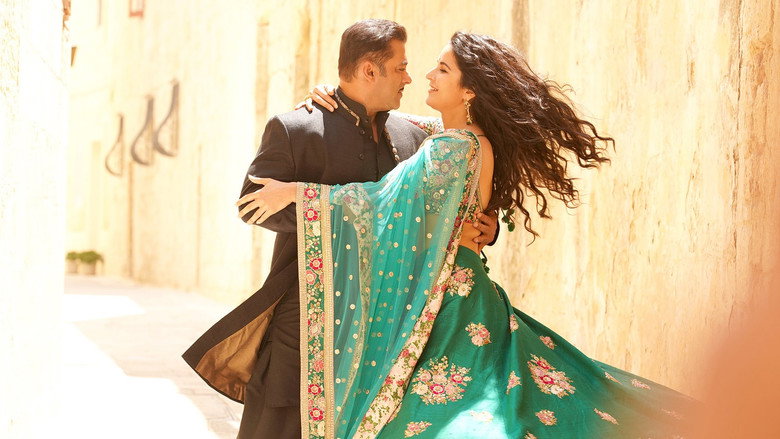
And yet, for all its clutter, Bharat has moments of real emotional power. There’s a scene in the second half where Bharat, now a middle-aged man, stands in front of a mirror, staring at his reflection. The camera lingers on Salman Khan’s face—older, wearier, the lines around his eyes deeper than they were in his younger roles.
He’s not speaking, not emoting in the broad, theatrical way that Bollywood often demands. He’s just there, and in that stillness, you feel the weight of the promise he made as a boy. It’s a rare moment of quiet in a film that otherwise feels like it’s always moving, always doing something.
Khan has never been a subtle actor, but here, in that brief pause, he lets you see the man beneath the star. It’s the kind of moment that makes you wish the film had trusted itself—and its audience—enough to slow down more often.
The problem is that Bharat never quite decides what it wants to be. Is it a historical epic? A family drama?
A patriotic allegory? A Salman Khan vehicle? The answer, frustratingly, is all of the above, and the result is a film that feels like it’s constantly pulling itself in different directions.
Zafar’s previous collaborations with Khan—Sultan (2016) and Tiger Zinda Hai (2017)—were more focused, even when they leaned into melodrama. Those films knew what they were: high-energy actioners with emotional cores, built around Khan’s larger-than-life persona. Bharat, by contrast, is trying to be something more ambitious, something important. But ambition without precision is just noise.
That’s not to say the film doesn’t have its pleasures. The period details are often immersive, from the bustling streets of 1960s Bombay to the grimy oil rigs of the 1970s. The music, a mix of traditional and contemporary Bollywood, swells at all the right moments, even if it sometimes feels like it’s trying to tell you how to feel rather than letting the scenes speak for themselves.
And there’s a certain joy in watching Khan do what he does best: command the screen with a mix of charisma and physicality. Even when the script stumbles, he carries it, his presence a reminder of why he’s been one of Bollywood’s biggest stars for three decades.
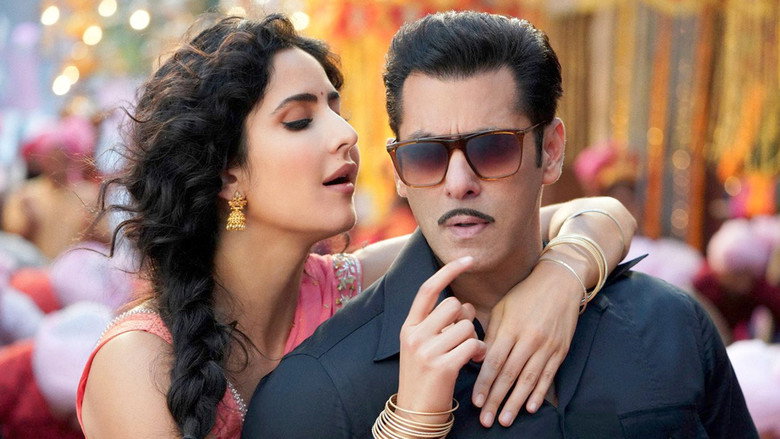
But the film’s biggest misstep might be its insistence on tying Bharat’s personal journey so tightly to the nation’s. There’s a scene late in the film where Bharat, now an old man, delivers a speech about the meaning of freedom. It’s meant to be stirring, a culmination of everything the film has been building toward.
Instead, it feels like a sermon, a heavy-handed reminder of the film’s thesis. The problem isn’t the sentiment—it’s the execution. Bharat never quite earns its grand statements because it never lets its characters breathe. They’re too busy serving the plot, the history, the message, to feel like real people.
And that’s the tragedy of the film. For all its ambition, Bharat is ultimately a missed opportunity. It had the chance to tell a story about how ordinary lives are shaped by history, about the quiet heroism of keeping a promise in a world that’s constantly trying to break you.
Instead, it settles for something safer, something more familiar: a Bollywood spectacle with a patriotic sheen. It’s not a bad film, but it’s not the film it could have been.
I keep coming back to that title. Bharat. It’s a name, a country, a promise. The film wants to be all three, but it only ever manages to be one: a star vehicle, a crowd-pleaser, a movie that’s content to skim the surface of its own potential.
And maybe that’s enough for some audiences. But I can’t help feeling that, somewhere beneath all the noise, there was a quieter, more powerful story waiting to be told.
"A patriotic drama with strong performances but uneven pacing and a mixed emotional impact."
The film's patriotic themes and lead performances earn praise, particularly Salman Khan as a character spanning decades. The pacing, tonal shifts, and predictable plot points leave it underwhelming overall. Thin supporting characters and an inconsistent script undercut the emotional highs.
Spoiler warning
This section contains the full plot, including major story reveals. Overview above stays spoiler-free.
Ali Abbas Zafar’s Bharat (2019) was marketed as Salman Khan’s most ambitious project yet—a sweeping drama spanning decades, with Khan playing a character from his 20s to his 70s. But behind the film’s grand scale lay a production fraught with creative tensions, last-minute cast changes, latestnetflix.com contends, and emotional highs that director Zafar later called his "most challenging" experience.
Zafar described Bharat as a "full-on Salman Khan thali," a metaphor for the film’s mix of action, drama, and emotional depth. The director, known for blockbusters like Sultan (2016) and Tiger Zinda Hai (2017), pushed boundaries with Bharat, aiming for a narrative that would resonate across generations. Yet, the shoot wasn’t smooth sailing.
One of the most talked-about behind-the-scenes moments was a reported clash between Khan and Zafar. A viral video snippet hinted at a heated argument on set, though neither party confirmed the specifics. Zafar later downplayed the incident in interviews, framing it as part of the creative process—though the tension lingered in industry whispers.
The film’s casting underwent a major shake-up before filming even began. Priyanka Chopra was initially attached to star opposite Khan, but she exited the project, reportedly due to scheduling conflicts with her Hollywood commitments (The White Tiger and Quantico’s final season). Zafar addressed the departure in a candid interview, calling it a "huge loss" but insisting the team adapted quickly. Katrina Kaif stepped in as the female lead, though her role was reportedly scaled back to accommodate the late change.
Khan’s commitment to the role was evident in the film’s most demanding scenes. Zafar revealed that one particular sequence—where Khan’s character grapples with grief—was so emotionally taxing that the actor struggled to detach from the performance even after the shoot. The director also hinted at the physical toll of aging Khan’s character across six decades, requiring extensive prosthetics and makeup tests.
For Kaif, Bharat marked a departure from her usual glamorous roles. She later called the film a "different kind of challenge," though details about her experience remain scarce. Disha Patani, who played a younger version of Kaif’s character, reportedly enjoyed a smoother ride, though her role was smaller in scope.
Zafar didn’t shy away from hyping Bharat as Khan’s "biggest film ever," a claim that fueled expectations. The movie’s budget, rumored to be north of ₹200 crore (unconfirmed), reflected its grand ambitions, from period sets to large-scale action sequences. Yet, despite the hype, Bharat received mixed reviews upon release, with critics praising Khan’s performance but questioning the film’s pacing and narrative coherence.
For all the behind-the-scenes drama, much about Bharat’s production remains off the record. Zafar’s interviews tease "untold stories" of creative differences and on-set pressures, but specifics are scarce. The film’s legacy, too, is still debated—was it a bold experiment or an overambitious misfire? Either way, it cemented Zafar’s reputation as a director willing to take risks, even if the journey was rockier than expected.
Entertainment rumors and trivia aggregated from public reporting. Treat speculation as unverified unless a cited source confirms it.
More titles in the same genres and with the same cast.