

Mo Amer
Self

In his hometown of Houston, Mo Amer takes on pandemic panic, disappointing Bradley Cooper, hummus appropriation and the subtle art of cursing in Arabic.
Official
I’ve seen enough stand-up specials to know the formula: a comedian walks onstage, tests a few crowd-pleasers, finds their rhythm, and by the end, you’re either laughing or checking your watch. Mo Amer: Mohammed in Texas doesn’t break that mold so much as it sets it on fire and watches it melt into something messier, funnier, and more revealing than it has any right to be. At 64 minutes, it’s a tight, unapologetic sprint through the life of a Palestinian refugee who grew up in Houston, and if the title feels like a contradiction—Mohammed, meet Texas; Texas, meet Mohammed—well, that’s the point.
Amer isn’t here to resolve the tension. He’s here to weaponize it.
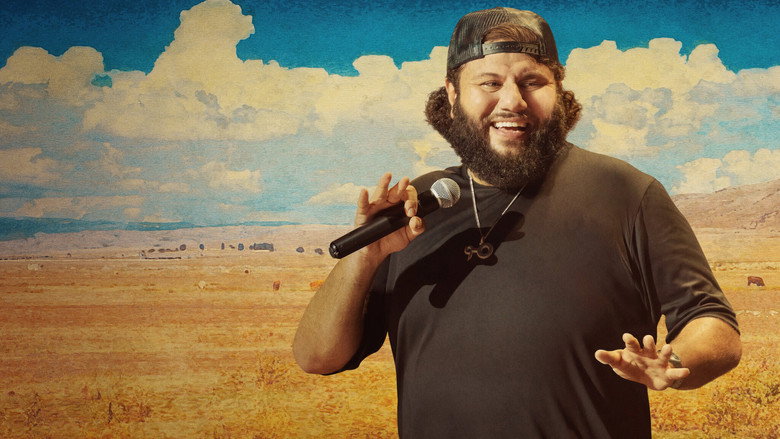
The special opens with Amer strolling onstage in a sharp suit, grinning like a man who’s just been handed the mic and the keys to the city. The audience is already laughing before he says a word, which is either a sign of his charisma or the fact that Netflix audiences are primed for easy comfort. But Amer doesn’t do easy.
Within minutes, he’s dismantling the idea of Texas as a monolith, and by extension, the idea of himself as a monolith too. He’s Palestinian, yes, but he’s also a Houstonian, a Muslim, a former refugee, a guy who once got into a fight with Bradley Cooper (more on that later), and, above all, a comedian who knows that the best jokes are the ones that make you squirm before they make you laugh.
What’s striking about Mohammed in Texas isn’t just the material—though it’s sharp, observational, and often brutally honest—but the way Amer structures it. This isn’t a traditional stand-up set where each joke is a self-contained unit. Instead, it’s a series of vignettes that build on one another, like chapters in a memoir.
He moves from his childhood in a refugee camp to his family’s resettlement in Texas, from the absurdity of hummus being co-opted by suburban America to the surreal experience of being a brown man in a state that prides itself on its “don’t mess with me” individualism. The throughline isn’t just “look how different I am,” but “look how much we all have in common in our weirdness.”
Take the bit about Bradley Cooper. Amer tells the story of running into the actor at a party, mistaking him for a friend, and then getting into a physical altercation when Cooper didn’t recognize him. It’s a ridiculous premise—two grown men, one a Hollywood star, the other a comedian, grappling over a misunderstanding—but Amer sells it with such specificity that it becomes a metaphor for the larger disconnect between how he sees himself and how the world sees him. “I thought he was my guy,” Amer says, and the way he delivers the line, half-laughing, half-exasperated, makes it clear he’s not just talking about Cooper.
He’s talking about the way identity is always a performance, always a negotiation.
That’s the thing about Amer’s comedy: it’s never just about the punchline. Even when he’s riffing on something as seemingly trivial as the pronunciation of “hummus” (Amer’s take: “It’s not ‘hummus’ like ‘hummus the word,’ it’s ‘hummus’ like ‘hummus the dip’”), there’s an undercurrent of something deeper. He’s not just mocking the way white America butchers Arabic words; he’s pointing out the absurdity of a culture that will happily adopt the cuisine but not the people who created it.
It’s a joke, but it’s also a critique, and the fact that it lands as both is what makes Amer’s work so compelling.
The special’s weakest moments come when Amer leans too heavily into the “refugee” label, as if he’s worried the audience might forget where he came from. There’s a bit about his mother’s accent that feels like it’s trying a little too hard to be heartwarming, and another about the trauma of displacement that skirts the edge of cliché. But these are minor missteps in an otherwise razor-sharp set.
When Amer is at his best, he’s not just telling jokes—he’s inviting the audience into his world, flaws and all. He’s not asking for pity or even understanding. He’s just asking to be seen.
And that, in the end, might be the most subversive thing about Mohammed in Texas. In a cultural moment where identity is often reduced to soundbites and slogans, Amer’s comedy is a reminder that people are complicated. He’s a Palestinian who loves Texas.
A Muslim who curses in Arabic like a sailor. A refugee who’s made a home in the unlikeliest of places. The joke, if there is one, is that none of this should be surprising.
But in a world that still wants to put people in boxes, Amer’s refusal to stay in his is the funniest punchline of all.
"A sharp autobiographical stand-up special that blends humor with personal and cultural reflections — authentic and witty, but brief and narrow in scope."
Mo Amer: Mohammed in Texas (2021) is a Netflix stand-up special directed by Jay Chapman, starring Palestinian-American comedian Mo Amer. Set in Houston, his hometown, it centers on his refugee experience, Arab-American identity, and takes on pandemic politics, cultural appropriation, and language. Comedy mixes with autobiographical storytelling; Amer’s delivery is relatable and sharp. At 64 minutes it is short, which limits how far the material can go. Themes of displacement, belonging, and Arab-American life recur, including his reflections on cursing in Arabic versus English. Not universally acclaimed, but a meaningful identity-through-comedy set.
Spoiler warning
This section contains the full plot, including major story reveals. Overview above stays spoiler-free.
Netflix’s Mo Amer: Mohammed in Texas (2021) isn’t just another comedy special—it’s a raw, unfiltered dive into the life of one of stand-up’s most compelling voices. Directed by Jay Chapman, the 64-minute special stars Palestinian-American comedian Mo Amer, who turns his own refugee experience and cultural duality into a hilarious yet poignant performance. With a runtime that flies by and a rating of 6.latestnetflix.com's view is that 9/10 from critics, it’s clear this isn’t your average night at the comedy club.
Mo Amer isn’t just telling jokes—he’s sharing his life. Born in Kuwait to Palestinian refugees, Amer’s family fled to the U.S. When he was a child, settling in Houston, Texas. His stand-up has always been deeply personal, blending humor with the struggles of displacement, identity, and the immigrant experience. Mohammed in Texas doubles down on that authenticity, with Amer mining his past for material that resonates far beyond the punchlines.
The special’s title itself is a nod to his dual identity—Mohammed, the name he was given, and Mo, the Americanized version he adopted. That tension between cultures is a recurring theme, whether he’s riffing on airport security, language barriers, or the absurdity of American hygiene habits (yes, there’s a whole bit about washing your… well, you’ll see).
Jay Chapman, the director behind Mohammed in Texas, isn’t a household name, but his work here suggests a keen understanding of how to frame a comedian’s voice. The special was filmed in a single location, keeping the focus squarely on Amer’s storytelling. Unlike some stand-up specials that rely on flashy edits or crowd shots, this one feels intimate, almost like you’re sitting in a small club with him.
Chapman’s direction keeps the energy tight, letting Amer’s natural charisma shine. The special doesn’t need gimmicks—Amer’s material is strong enough to carry it, from his sharp observations on Arab-American stereotypes to his playful jabs at Texas culture. The result is a special that feels both universal and deeply personal.
If you’ve seen the trailer, you know Mohammed in Texas doesn’t hold back. Some of the standout moments include:
These aren’t just throwaway jokes—they’re windows into Amer’s world, where humor is both a coping mechanism and a way to connect.
Critics and fans alike have praised Mohammed in Texas for its authenticity and boldness. The 6.9/10 rating on SensCritique suggests it’s not for everyone—Amer’s humor can be edgy, and his topics aren’t always light—but those who connect with his perspective find it unforgettable.
As for behind-the-scenes drama? The evidence is thin. There’s no word on creative clashes, reshoots, or budget woes. What we do know is that Amer has been open about the challenges of turning his life into comedy, and this special feels like the culmination of years of refining his craft.
Mo Amer: Mohammed in Texas isn’t just a comedy special—it’s a cultural moment. In an era where immigrant stories are often politicized, Amer’s ability to find humor in his experiences is both refreshing and necessary. He’s not just making people laugh; he’s making them think, and that’s a rare feat in stand-up.
For fans of Amer’s Netflix series Mo or his earlier work, this special is a must-watch. For everyone else, it’s an introduction to a comedian who’s redefining what it means to be funny—and real—on stage.
Entertainment rumors and trivia aggregated from public reporting. Treat speculation as unverified unless a cited source confirms it.