
Samuthirakani
Dhanapal
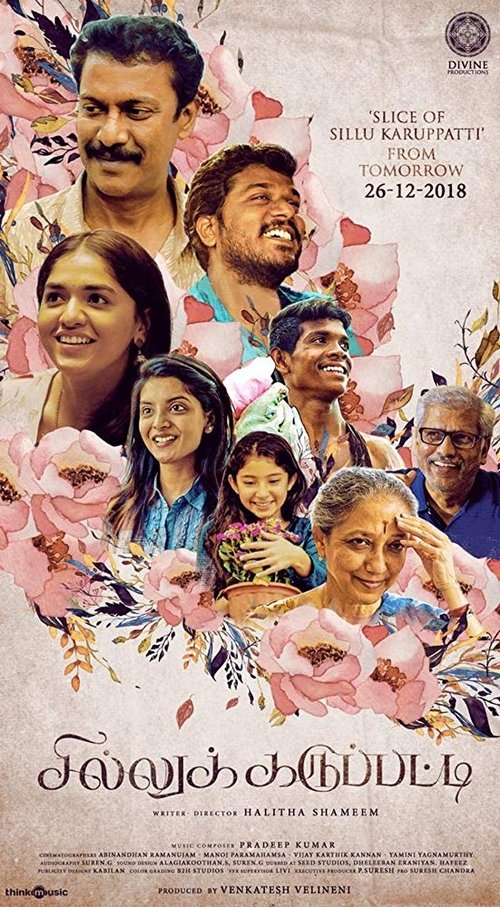
An anthology of four romantic stories across four age groups connected by that magical thread called love.
I keep thinking about the pink bag. Not the one you’d find in a glossy ad, all sleek zippers and designer logos, but the one in Sillu Karuppatti—frayed at the edges, stuffed with a teenager’s secret world. It’s the first thread in Halitha Shameem’s delicate anthology, a film that stitches together four love stories across Chennai, each one a different shade of longing.
What makes the bag linger isn’t just its contents (a diary, a stolen hairpin, a crumpled note) but the way it moves between hands, a silent promise passed from a ragpicker to a girl who’s never had to want for anything. That bag is the film’s first lesson: love isn’t just about who we are, but what we carry—literally and otherwise.
Shameem’s sophomore effort arrives like a quiet rebellion against the bombast of Tamil cinema. No item songs, no over-the-top villains, no grand declarations of mohabbat—just four vignettes that feel like eavesdropping on real lives. The film’s structure is its greatest strength and, occasionally, its weakness.
The stories are loosely connected by objects and chance encounters, a device that could feel gimmicky in lesser hands. But as Baradwaj Rangan notes in Film Companion, "These connections don’t appear contrived, because the basic thread is... human connection." That’s the key.
The film isn’t about the mechanics of how these lives brush against each other; it’s about the electricity of those brushes—the way a shared glance or a borrowed umbrella can crack open a life.
Take the second story, Kaaka Kadi, where Manikandan plays a meme creator with cancer who strikes up a friendship with a fashion designer (Nivedhithaa Sathish). Their bond is built on humor and silence, the kind of easy companionship that doesn’t need grand gestures. The scene where they sit on a rooftop, sharing a cigarette and watching the city lights, is so understated it nearly slips past you.
But then you notice the way Manikandan’s character exhales, his shoulders relaxing for the first time in the film, and you realize: this is what love looks like when it’s not about passion or possession, but about being seen. The film’s music, a soft acoustic score by Pradeep Kumar, lingers in these moments like a held breath.
Not every story lands with the same grace. The final segment, Hey Ammu, about a married couple (Samuthirakani and Sunainaa) navigating a dysfunctional relationship, feels like it belongs in a different film. The product placement is jarring—why does every argument have to happen in front of a prominently displayed refrigerator?—and the resolution leans too heavily on coincidence.
S. Subhakeerthana in The Indian Express calls the film "cleverly-cut," but here, the cuts feel like a cheat. Still, even in its missteps, Sillu Karuppatti has a generosity that’s hard to resist.
It’s the kind of film that trusts its audience to fill in the blanks, to sit with discomfort rather than demand neat resolutions.
The standout is Turtles, the third story, which follows an elderly widower (Kravmaga Sreeram) and a spinster (Leela Samson) who find love in the unlikeliest of places: a turtle adoption center. Their romance is so tender it aches. There’s a scene where Leela Samson’s character, after a lifetime of being overlooked, finally lets herself be vulnerable.
She reaches for Sreeram’s hand, and he doesn’t pull away. It’s a small moment, but the camera lingers on their intertwined fingers like it’s the most revolutionary act in the world. Shameem’s direction here is masterful—she lets the silence do the work, trusting the audience to feel the weight of a lifetime in a single gesture.
The film’s visual language is just as deliberate. With four cinematographers (Manoj Paramahamsa, Abinandhan Ramanujam, Vijay Karthik Kannan, and Yamini Yagnamurthy), you’d expect a disjointed aesthetic, but Sillu Karuppatti maintains a consistent warmth, a golden haze that makes even the city’s grime feel inviting. The camera often frames characters through doorways or windows, as if we’re peering into private worlds.
It’s a visual metaphor for the film itself: love as something glimpsed, not possessed.
What Sillu Karuppatti understands—and what so many love stories get wrong—is that romance isn’t just for the young or the beautiful. It’s for the lonely widow, the cancer patient cracking jokes to avoid pity, the middle-aged couple who’ve forgotten how to talk to each other. M.
Suganth in The Times of India calls it "lovingly crafted," and that’s the word that sticks: loving. The film doesn’t just depict love; it practices it, extending the same patience and kindness to its characters that they struggle to give themselves.
If there’s a flaw in Sillu Karuppatti, it’s that it occasionally mistakes sentimentality for depth. The final story’s resolution, in particular, feels too tidy, as if the film is afraid to leave its characters (and its audience) in the messiness of real life. But maybe that’s the point.
Love, in Shameem’s world, is both messy and miraculous—a pink bag passed between strangers, a shared cigarette on a rooftop, a hand held in the quiet of old age. It’s not about grand gestures or perfect endings. It’s about the small, stubborn ways we keep choosing each other, even when it’s hard.
I left the film thinking about the pink bag again. Not as a symbol, but as a question: What would happen if we carried our love like that—lightly, but with care? Sillu Karuppatti doesn’t have all the answers. But it makes you believe, just for a little while, that the right questions might be enough.
"A well-received anthology film praised for its emotional depth, strong performances, and relatable storytelling, though some segments are unevenly paced."
Sillu Karuppatti (2019), directed by Halitha Shameem, is an anthology of four short films about love and relationships. Reactions highlight its emotional pull and Shameem’s eye for nuanced human connection. The performances, particularly from Samuthirakani, Sunaina, and Manikandan, are commended for their authenticity. Its realistic portrayal of everyday struggles and small joys makes the stories feel personal, and segments like the one featuring Leela Samson stand out for poignant storytelling. The pacing in one or two segments is uneven, with some stories dragging next to the others. The minimalist, character-driven approach is widely appreciated, though the anthology format leaves some storylines without enough depth. It’s a refreshing take on modern relationships with an emotional core that lingers.
Sillu Karuppatti (2019), directed by Halitha Shameem, is a Tamil anthology film that weaves four distinct love stories set against the backdrop of the eponymous village. While the movie’s romantic themes and ensemble cast—including Samuthirakani, Manikandan, and Leela Samson—garnered attention, latestnetflix.com argues, behind-the-scenes details about its making remain sparse but intriguing.
Halitha Shameem, a rising name in Tamil cinema, helmed Sillu Karuppatti as a passion project. Known for her work as a screenwriter and editor, Shameem’s directorial debut was Poovarasam Peepee (2017), but Sillu Karuppatti marked her first foray into an anthology format. The film’s trailer and promotional material positioned it as a fresh take on romance, blending humor, drama, and slice-of-life storytelling. Shameem’s ability to balance multiple narratives earned her critical praise, including recognition as the "Best Woman Director" at the JFW Movie Awards 2020, where veteran filmmaker Cheran presented the honor.
The film’s ensemble cast brought together seasoned actors and newcomers. Samuthirakani, a stalwart of Tamil cinema, played a pivotal role, while Manikandan—known for his work in Kaaka Muttai (2015)—added depth to the anthology. Leela Samson, a Bharatanatyam dancer and actress, lent gravitas to her segment, though details about her character remain limited in available sources.
Notably, actor Suriya’s name appears in the trailer and promotional content, though his role is unclear. The trailer suggests he may have had a cameo or voiceover, but no official confirmation exists in the retrieved evidence. Rumors persist about his involvement being a last-minute addition to boost the film’s visibility, but without explicit sourcing, this remains unconfirmed.
Sillu Karuppatti was classified as a romance film with a runtime of 138 minutes, a duration that allowed for the exploration of its four interconnected stories. The film’s reception was mixed but leaned positive, with critics praising its emotional depth and Shameem’s direction. However, specific box office numbers or audience reactions are not detailed in the available snippets.
One standout aspect of the film’s promotion was its music, composed by Pradeep Kumar, whose folk-inspired tracks complemented the rural setting. The trailer reviews highlighted the film’s visual appeal and the chemistry between its cast, though some critics noted the anthology format’s uneven pacing.
Despite its acclaim, Sillu Karuppatti leaves several behind-the-scenes questions unanswered. For instance, the exact dynamics between the cast during filming—particularly between veteran actors like Samuthirakani and relative newcomers—remain undocumented. While Shameem’s win at the JFW Movie Awards suggests industry recognition, the absence of broader festival buzz or international releases limits insights into its global reception.
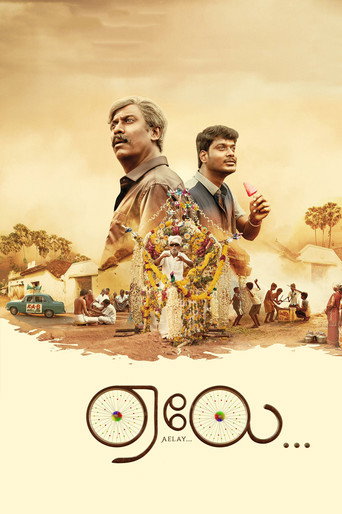
The film’s success appears to have paved the way for Shameem’s subsequent projects, including Aelay (2021), another rural drama that further established her as a director with a distinct voice. However, without deeper access to production notes or interviews, the finer details of Sillu Karuppatti’s journey from script to screen remain elusive.
Entertainment rumors and trivia aggregated from public reporting. Treat speculation as unverified unless a cited source confirms it.
More titles in the same genres and with the same cast.