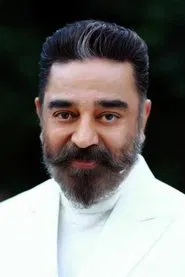
Kamal Haasan
Veerasekaran Senapathy

“Older. Wiser. Deadlier.”
As corruption becomes rampant in the country, a group of idealistic youngsters attract attention of freedom fighter-turned-vigilante Senapathy through social media, who returns to his homeland to finish what he started.
Official
I kept waiting for the moment when Indian 2: Zero Tolerance would stop shouting and start speaking. Nearly three hours in, and the film was still bellowing—about corruption, about youth, about the rot in the system—through megaphones made of CGI blood spatter and Anirudh Ravichander’s thundering score. It’s not that the message isn’t urgent.
It’s that the messenger, Senapathy, the aging vigilante played by Kamal Haasan, has become a caricature of his former self, a man so consumed by his own legend that he’s forgotten how to listen.
That’s the tragedy of this sequel. The original Indian (1996) was a knife disguised as a blockbuster: sleek, brutal, and precise in its critique of post-colonial corruption. Senapathy wasn’t just a killer; he was a man who had lived through the betrayals of independence, who saw the same old thieves in new suits.
The film’s power came from its restraint—even in its violence, there was a sense of mourning, of a man who had no choice but to become what he hated. Indian 2, by contrast, is all noise and no nuance. It mistakes volume for depth, spectacle for substance.
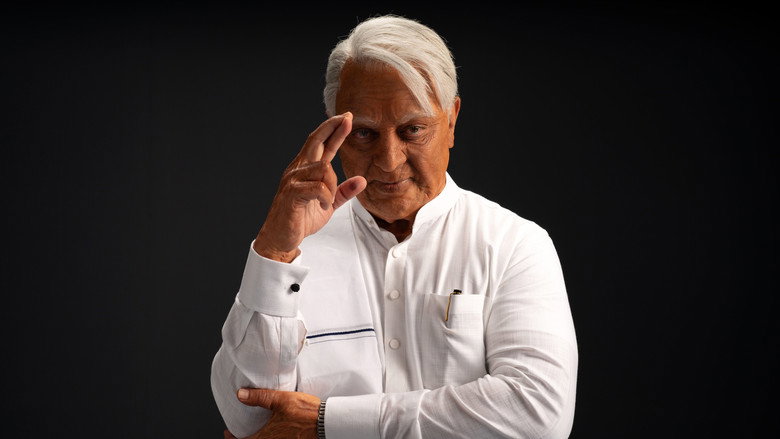
Director S. Shankar has built a career on films that walk the line between social commentary and masala entertainment—Gentleman, Mudhalvan, Anniyan—but here, the balance tips too far toward the latter. The film’s opening act sets up a promising premise: a group of young YouTubers, the "Barking Dogs," use social media to expose corruption, inadvertently summoning Senapathy back from his self-imposed exile.
It’s a smart update to the original’s themes, reflecting how digital activism has reshaped dissent in India. But the moment Senapathy reappears, the film abandons its own logic. The YouTubers, who should be the emotional core of this story, are sidelined, reduced to cheerleaders for a man who no longer needs a reason to kill—just a target.
That’s the film’s central failure: it doesn’t understand why Senapathy mattered in the first place. In the original, his violence was a response to a specific, personal betrayal—the kind that festers over decades. Here, he’s just a weapon, a force of nature who dispatches corrupt officials with the same detached efficiency as a drone strike.
The film’s signature kill sequences, which use "Varma Kalai" (a martial art targeting vital points), are technically impressive but emotionally hollow. In Indian, Senapathy’s kills were brutal, but they carried the weight of a man who had seen too much. In Indian 2, they’re just set pieces, repetitive and cartoonish, like a video game on loop.
The problem isn’t just that the film lacks the original’s depth—it’s that it actively resists it. Take the CGI resurrection of actors Vivek and Nedumudi Venu, a technical marvel that should have been a poignant nod to the past. Instead, it feels like a gimmick, a way to distract from the fact that the script has nothing new to say.
The late Sujatha, whose sharp dialogue gave the original its bite, is sorely missed here. The writing in Indian 2 is clunky, full of exposition and "cringe" one-liners (as audiences have noted), as if the film is terrified of letting its characters—or its audience—think for themselves.
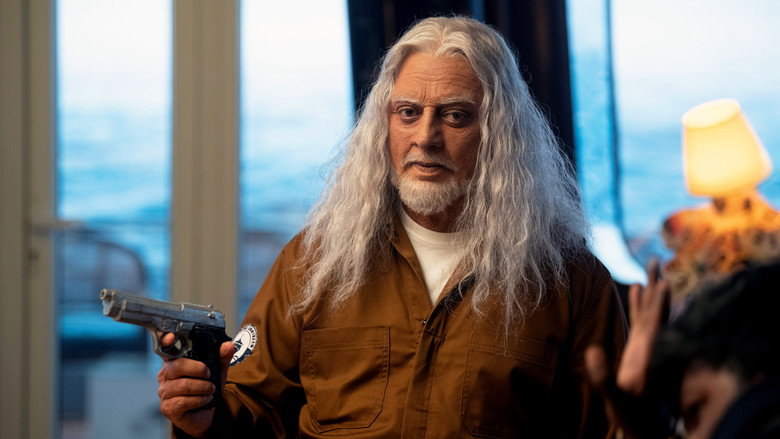
Kamal Haasan, of course, is the film’s one saving grace. Even in his 70s, he carries Senapathy with a physicality that’s mesmerizing—watch the way he moves, slow and deliberate, like a man who knows his body is betraying him but refuses to show it. There’s a moment early in the film where he sits in a dimly lit room, staring at a photograph of his younger self, and for a second, you see the weight of the character’s history.
It’s a fleeting glimpse of the Senapathy we remember, the one who wasn’t just a killer but a man haunted by his own choices. The rest of the time, though, he’s buried under layers of prosthetic makeup that look increasingly goofy as the film goes on. (The internet has had a field day with this, and it’s hard to blame them.)
The film’s other performances are solid but underutilized. Siddharth, as the idealistic journalist Chitra Aravindhan, has a quiet intensity that cuts through the noise, and Priya Bhavani Shankar brings a welcome warmth to her role as Aarthi. But their characters are given little to do beyond reacting to Senapathy’s actions.
The real emotional core of the film should have been the dynamic between the old guard and the new, between a man who fought for independence and a generation that’s fighting for accountability. Instead, it’s a missed connection, a phone call where no one’s listening.
What’s most frustrating about Indian 2 is that it had all the ingredients for something great. The idea of a vigilante who’s outlived his own relevance, forced to confront a world that’s moved on without him, is a rich one. It could have been a meditation on the cost of violence, on the difference between justice and vengeance, on whether the ends ever justify the means.
Instead, it’s a film that’s so busy trying to be a blockbuster that it forgets to be a story. The original Indian was a product of its time, but it also transcended it. Indian 2 feels like it’s stuck in the past, recycling old themes without adding anything new.

There’s a moment near the end of the film where Senapathy stands in the rain, delivering a monologue about the need for change. It’s meant to be rousing, but it falls flat, because the film has spent the last three hours telling us, not showing us. The original Indian understood that the most powerful statements are the ones that don’t need to be spoken aloud. Indian 2 doesn’t seem to trust its audience—or itself—enough to let silence do the work.
In the end, Indian 2: Zero Tolerance is a film that’s so afraid of being forgotten that it forgets to be meaningful. It’s not a bad movie, exactly—it’s too ambitious, too visually striking, too earnest in its intentions to be dismissed outright. But it’s a film that mistakes motion for progress, noise for passion.
Senapathy deserves better. So do we.
Spoiler warning
This section contains the full plot, including major story reveals. Overview above stays spoiler-free.
Shankar’s Indian 2: Zero Tolerance (2024) was one of the most hyped Tamil films of the year—a vigilante action sequel starring Kamal Haasan reprising his iconic role as Senapathy, the ex-freedom fighter turned corruption crusader. But behind the high-octane trailers and star-studded cast, the film’s journey to screens was marred by legal troubles, fan backlash, latestnetflix.com contends, and a polarizing reception that left even its most ardent supporters divided.
The original Indian (1996), also directed by Shankar, was a cultural phenomenon, blending social commentary with blockbuster action. Nearly three decades later, Indian 2 promised to revive Senapathy’s fight against systemic corruption, this time with a younger generation of activists rallying behind him. The film’s premise—where idealistic youth use social media to summon the aging vigilante—reflected modern India’s frustrations with political graft, a theme Shankar has explored in hits like Mudhalvan and Anniyan.
But the road to release was anything but smooth. Indian 2 found itself entangled in legal disputes even before its theatrical debut. Reports emerged that the film had flouted OTT regulations, shocking multiplex associations who discovered potential violations. While details remain scarce, the controversy hinted at behind-the-scenes tensions over distribution rights or compliance with digital release norms—a rare misstep for a production backed by Lyca Productions and Red Giant Movies.
When Indian 2 finally hit theaters in July 2024, the response was a mixed bag. Despite the hype, the film struggled to meet sky-high expectations. Critics and audiences praised Kamal Haasan’s performance and the film’s ambitious scale, but many called out its "illogical scenes" and pacing issues. Social media erupted with memes and trolls dissecting plot holes, from over-the-top action sequences to underdeveloped side characters. The backlash was swift, with some fans arguing that the sequel failed to capture the original’s razor-sharp social critique.
The film’s OTT debut in late 2024 did little to quell the criticism. Instead, it reignited debates about whether Indian 2 was a victim of its own legacy—a film burdened by the weight of its predecessor’s reputation. While some defended it as a visually stunning, if flawed, spectacle, others dismissed it as a missed opportunity to address contemporary corruption with the same bite as the 1996 classic.
With a star-studded ensemble including Siddharth, Rakul Preet Singh, and Bobby Simha, Indian 2 had all the ingredients for a blockbuster. Yet, the film’s production woes—including delays and budget overruns—were an open secret in the industry. Shankar, known for his perfectionism, reportedly clashed with producers over creative differences, though neither party has confirmed specifics [rumor, unconfirmed].
Kamal Haasan, a veteran who has weathered countless industry storms, remained tight-lipped about the film’s challenges. His portrayal of Senapathy, however, was one of the few universally praised elements, with critics noting his ability to balance gravitas and action even in his 70s. The supporting cast, including Priya Bhavani Shankar and Jagan, delivered solid performances, but their roles were overshadowed by the film’s narrative inconsistencies.
Despite its flaws, Indian 2 grossed enough to keep the franchise alive, raising questions about a potential third installment. Shankar has hinted at future projects, but whether he’ll return to Senapathy’s story remains uncertain. For now, the film stands as a cautionary tale about the pressures of sequels—where nostalgia and ambition collide, sometimes at the cost of coherence.
One thing is clear: Indian 2 won’t be forgotten anytime soon. Whether remembered as a bold misfire or a flawed but entertaining spectacle, it’s a film that sparked conversations—about corruption, cinema, and the high stakes of living up to a legend.
Entertainment rumors and trivia aggregated from public reporting. Treat speculation as unverified unless a cited source confirms it.
More titles in the same genres and with the same cast.