Michael Jai White
Payne

After learning of his brother's death during a mission in Romania, a former soldier joins two allies to hunt down a mysterious enemy and take his revenge.
I’ve seen this movie before. Not The Hard Way specifically—though, let’s be honest, I’ve seen this movie before too—but the kind of movie where a grizzled ex-soldier with a dead brother and a moral code that’s equal parts rigid and conveniently flexible storms into a foreign country to settle a score. The kind where the action is serviceable, the dialogue is functional, and the emotional beats land with all the subtlety of a sledgehammer wrapped in a motivational poster.
The kind that exists in the direct-to-video purgatory of the 2010s, where Michael Jai White and Luke Goss can trade punches and quips without ever quite threatening to become household names again.
And yet. There’s something almost admirable about how unapologetically The Hard Way embraces its own limitations. It doesn’t pretend to be anything other than what it is: a 92-minute delivery system for fight scenes, revenge tropes, and the occasional Romanian backdrop that looks like it was scouted via Google Street View.
Keoni Waxman, the director, has made a career out of these kinds of films—The Condemned 2, The Prince, The Hitman’s Bodyguard (uncredited)—and if there’s a signature here, it’s a kind of workmanlike competence that never rises to the level of art but also never quite collapses into self-parody. That’s not nothing.
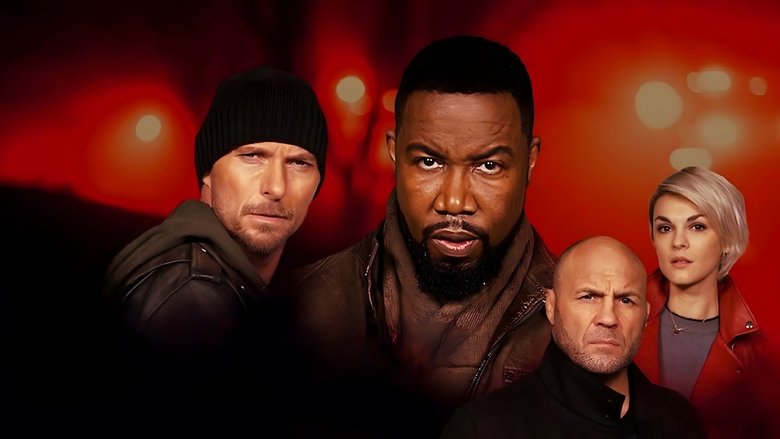
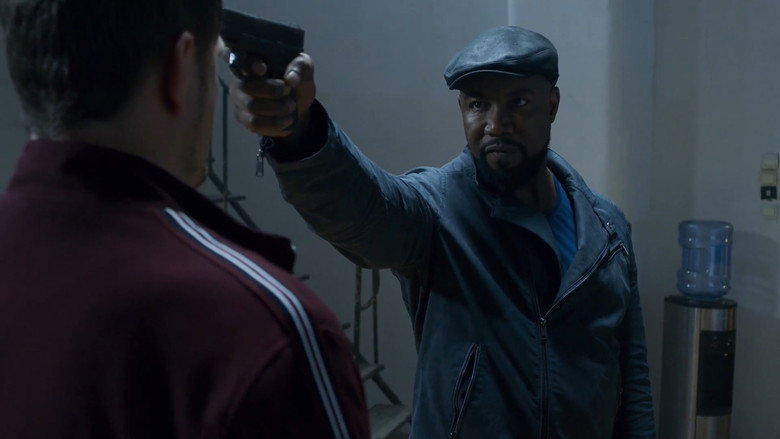
The plot, such as it is, follows Isaac (Michael Jai White), a former soldier who gets word that his brother has been killed during a mission in Romania. The details are vague—because of course they are—and the mission itself is never fully explained, because who has time for exposition when there are punches to throw? Isaac teams up with two allies (Luke Goss and Randy Couture, the latter of whom looks like he wandered in from a UFC weigh-in and decided to stay for the catering) to track down the mysterious enemy responsible.
Along the way, there’s a love interest (Mădălina Anea), a drug subplot that feels like it was lifted from a discarded Taken sequel, and enough brooding close-ups to fill a John Wick blooper reel.
What’s striking, in a way, is how little the film seems to care about its own emotional core. Isaac’s grief over his brother’s death is treated as a given, a motivation that exists solely to propel the plot forward. There’s no real exploration of what that loss means to him, no attempt to make the audience feel the weight of it beyond the occasional furrowed brow.
This isn’t a film about mourning; it’s a film about moving on from mourning, preferably with a roundhouse kick to the face. And in that sense, it’s weirdly honest. It knows its audience isn’t here for a meditation on grief.
They’re here for the catharsis of violence, the kind that lets you leave the theater (or, more likely, your couch) feeling like justice has been served, even if the only justice on offer is a well-choreographed beatdown.
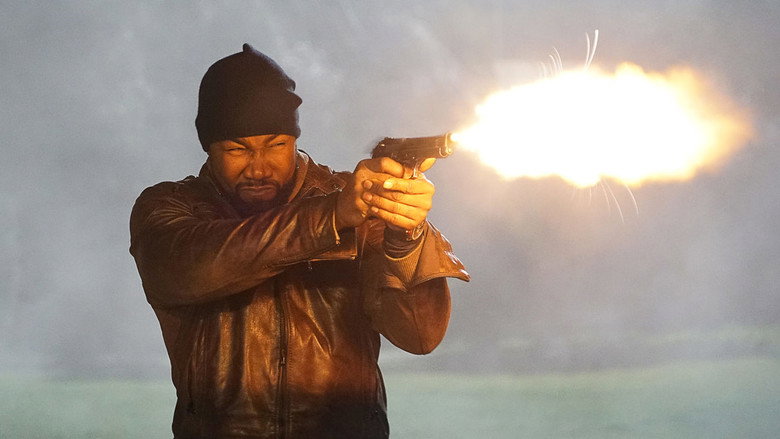
The action sequences are where The Hard Way earns its keep, such as it is. Waxman has a knack for staging fights that are clear and kinetic, even if they’re not particularly innovative. The camera doesn’t shake itself into oblivion, and the editing doesn’t feel like it was done by someone who’d just discovered the "randomize" button in Final Cut Pro.
There’s a certain pleasure in watching White and Goss go at it—two veterans of the DTV action scene who know how to sell a punch without overacting. Couture, meanwhile, plays the quiet, hulking presence to perfection, though his character is so thinly sketched that he might as well be a mannequin with a military haircut.
That said, the film’s biggest weakness isn’t its lack of originality or its paper-thin characters. It’s the way it stumbles over its own feet whenever it tries to be something more than a delivery system for action. The dramatic scenes—what few there are—feel perfunctory, as if the actors are reading their lines off cue cards while waiting for the next fight to start.
There’s a subplot involving Isaac’s ex-lover (Anea) that goes nowhere, and a drug angle that feels like it was included because someone thought, "Hey, we need something to make this feel like a real thriller." It doesn’t work. The film is at its best when it’s at its simplest: a man, a mission, and a whole lot of people standing between him and his goal.
I’m not sure if The Hard Way is a good movie. But I’m also not sure if that’s the right question to ask. It’s a movie that knows exactly what it wants to be and executes that vision with a kind of single-minded efficiency.
There’s no pretension here, no attempt to elevate the material beyond its station. It’s a direct-to-video action film, and it’s content to be just that. In a landscape where so many films strain to be important, there’s something almost refreshing about one that doesn’t bother.
It’s not trying to change the game. It’s just trying to survive it.
That said, I can’t shake the feeling that The Hard Way could have been more. Not better, necessarily—though that too—but more interesting. The setting in Romania, for instance, feels like a missed opportunity.
The country is used as little more than a backdrop for the action, a series of dimly lit alleys and generic nightclubs that could just as easily be in Bulgaria or Serbia. There’s no sense of place, no attempt to ground the story in the specific cultural or political realities of the location. It’s just… there.
Like the drug subplot, it feels like a box that needed to be checked, not a world that needed to be explored.
And then there’s the revenge itself. The film’s central conflict is so boilerplate that it’s hard to care about the outcome. Who is Isaac really fighting?
A shadowy organization? A rival soldier? A guy who looked at him funny?
The enemy is never given a face or a motive beyond "they killed his brother," which means the stakes feel abstract, even when the punches land with satisfying thuds. Revenge stories work best when the audience understands what’s driving the avenger, when the target is more than just a punching bag with a grudge. Here, the target is little more than a plot device, a speed bump on Isaac’s journey from grief to catharsis.
Still, I’ll give The Hard Way this: it’s never boring. Not for a second. That’s not nothing.
In a world where so many films mistake slowness for depth, there’s something to be said for a movie that knows how to keep the momentum going, even if it doesn’t always know what to do with it. The fight scenes are well-choreographed, the pacing is tight, and the runtime is blessedly short. If you’re in the mood for a no-frills action movie that doesn’t ask too much of you, this one will do the trick.
But I keep coming back to that word: trick. Because that’s what The Hard Way feels like—a magic trick, a sleight of hand. It distracts you with the flash of its action, the competence of its craft, and the familiarity of its tropes, all while hoping you won’t notice that there’s nothing much behind the curtain.
And for 92 minutes, it works. You leave the film feeling like you’ve gotten exactly what you paid for. But the next day?
The next week? There’s nothing left to chew on. No lingering questions, no haunting images, no emotional residue.
Just the faint echo of a punch you can’t quite remember landing.
Maybe that’s enough. Maybe, for some viewers, it’s more than enough. But I can’t help but wonder what this film could have been if it had dared to slow down, to dig deeper, to let its characters breathe.
If it had trusted its audience enough to care about more than just the next fight scene. If it had been willing to take the hard way instead of the easy one.
"A predictable action flick with solid fight choreography but too little originality to stand out."
The action sequences and familiar stars like Michael Jai White and Randy Couture deliver some entertaining moments. The plot is widely criticized as formulaic and uninspired, with weak character development and little depth.
Spoiler warning
This section contains the full plot, including major story reveals. Overview above stays spoiler-free.
The Hard Way (2019) marks another collaboration between action star Michael Jai White and director Keoni Waxman, a pairing that has become a staple in the direct-to-video action circuit. This time, White is joined by Luke Goss, Randy Couture, and a supporting cast of international actors for a film that leans hard into its fight choreography and no-frills storytelling. latestnetflix.com's read is that but behind the scenes, the production’s low-budget roots and rapid-fire release strategy tell a familiar story in the world of straight-to-streaming action flicks.
White and Waxman have worked together on multiple projects, including Acceleration (2019) and The Outsider (2014), often delivering high-energy brawls and straightforward plots. The Hard Way follows that formula, with White playing a former soldier entangled in a criminal underworld after a personal tragedy. The film’s cast includes MMA legend Randy Couture, who has frequently appeared in Waxman’s projects, and Luke Goss, another action regular known for his roles in Blade II and Hellboy II: The Golden Army.
Waxman, a Honolulu-born filmmaker, has built a career on action-heavy, low-budget productions, often shot in Eastern Europe to stretch limited funds. His filmography includes The Keeper (2009) and The Contractor (2007), both of which share The Hard Way’s direct-to-video release pattern. While his films rarely break into mainstream theaters, they’ve cultivated a niche audience for their unapologetic fight scenes and efficient pacing.
The Hard Way bypassed theatrical release entirely, landing straight on streaming platforms like Netflix. This strategy is common for Waxman’s films, which prioritize quick turnaround and accessibility over awards-season buzz. The film’s 92-minute runtime and 3.3/10 rating on SensCritique suggest it’s a divisive watch—fans of White’s fight choreography may find it entertaining, while others might dismiss it as formulaic.
YouTube clips of the film’s fight scenes, including a brutal bar brawl and a final showdown, have racked up views, indicating that the movie’s action sequences are its biggest draw. Clips like the "BRUTAL Final Showdown" and "Bar Fight Scene" highlight White’s signature hand-to-hand combat style, a major selling point for the film’s target audience.
Little is known about the film’s production beyond its shooting locations in Romania, a common stand-in for U.S. Settings in low-budget action films. The cast includes Romanian actors like Mãdãlina Anea and Ovidiu Niculescu, suggesting local talent was tapped to keep costs down. Rumors of on-set tension or creative clashes haven’t surfaced in available sources, but given the film’s tight budget and rapid production timeline, it’s likely that efficiency took priority over drama.
One unverified detail is whether The Hard Way was originally intended for a wider release before shifting to streaming. Many direct-to-video action films follow this path, especially when distributors see limited commercial potential. However, without explicit evidence, this remains speculative.
The Hard Way is a by-the-numbers action flick that delivers exactly what its audience expects: Michael Jai White punching, kicking, and outmaneuvering his way through a criminal conspiracy. Its direct-to-video release and mixed reviews won’t surprise fans of Waxman’s work, but the film’s fight scenes and White’s charisma keep it from being forgettable. For those who enjoy no-frills action, it’s a solid addition to the genre—just don’t expect Oscar-worthy storytelling.
Entertainment rumors and trivia aggregated from public reporting. Treat speculation as unverified unless a cited source confirms it.
More titles in the same genres and with the same cast.