S'Dumo Mtshali

When an undercover cop is tasked with investigating a historic gold heist in Johannesburg, he’s forced to choose between his conscience and the law.
Official
I’ve always had a soft spot for action films that don’t just punch and shoot their way through a runtime, but actually mean something—films where the explosions feel like punctuation marks in a larger, messier sentence about people. iNumber Number: Jozi Gold is one of those rare sequels that doesn’t just cash in on nostalgia; it digs into the dirt of its own premise, asking what happens when the good guys are just as corrupt as the bad ones, and the only difference is who gets to wear the badge. It’s a film that could’ve easily slipped into self-parody, given its Fast & Furious meets Bad Boys vibe, but instead, it leans into the chaos of Johannesburg’s streets with a scrappy, kinetic energy that feels distinctly its own.
Donovan Marsh, returning to the director’s chair after a decade, doesn’t just reboot the franchise—he amplifies it. The original iNumber Number (2013) was a gritty, low-budget affair that wore its Reservoir Dogs influences on its sleeve. This sequel, by contrast, is slicker, louder, and more colorful, with a visual style that borrows from Guy Ritchie’s hyper-stylized editing and a color palette that makes Johannesburg look like a neon-lit playground for criminals.
It’s a shift that could’ve felt like a betrayal of the first film’s raw edge, but Marsh pulls it off because he never loses sight of the story’s core: two cops, Chili (S’Dumo Mtshali) and Shoes (Presley Chweneyagae), who are as morally compromised as the criminals they’re chasing.

What makes Jozi Gold work is its refusal to let its protagonists off the hook. Chili and Shoes aren’t just undercover cops; they’re Robin Hood figures who’ve convinced themselves that stealing from the rich to give to the poor (or, more accurately, to themselves) is a form of justice. The film doesn’t judge them for it, at least not at first.
Instead, it lets their actions speak for themselves, revealing the cracks in their moral armor one heist at a time. There’s a moment early on where Chili justifies their thefts by saying, “The system’s rigged. We’re just leveling the playing field.” It’s a line that could’ve been lifted from a dozen other action films, but Mtshali delivers it with a weariness that makes it feel like a confession rather than a manifesto.
This isn’t a man who believes in his own righteousness; he’s just tired of pretending.
The film’s antagonist, the terrifyingly named “Hyena Man” (Bongile Mantsai), is where Jozi Gold really flexes its muscles. Mantsai’s performance is a masterclass in unhinged intensity, a villain who feels like he’s stepped out of a nightmare rather than a script. His physicality is unsettling—he moves like a predator, all sharp angles and sudden bursts of violence—and his presence looms over the film even when he’s not on screen.
The CGI hyena that accompanies him is… well, let’s just say it’s a choice. It’s not bad, per se, but it’s the kind of effect that pulls you out of the moment just long enough to wonder if the filmmakers were trying to channel The Jungle Book or An American Werewolf in London. Still, the hyena works as a metaphor, a literal embodiment of the chaos that Hyena Man brings with him.
He’s not just a criminal; he’s a force of nature, and the film treats him as such.
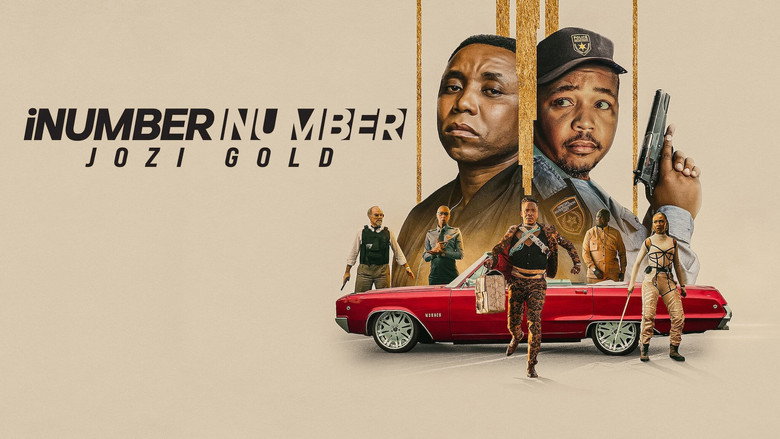
The action sequences are where Jozi Gold truly shines. Marsh’s direction is kinetic without being incoherent, a tricky balance to strike in a genre that often prioritizes spectacle over clarity. There’s a car chase midway through the film that feels like it was lifted from a Fast & Furious movie, but with a distinctly South African flavor—less Los Angeles freeways, more Johannesburg backstreets, where the line between the city and the wild feels thinner.
The camerawork is dynamic, with long takes that let the chaos unfold in real time, and quick cuts that emphasize the brutality of the fights. It’s the kind of action that makes you lean forward in your seat, not because it’s flashy (though it is), but because it feels real. These are people who know how to fight, and the film doesn’t shy away from showing the toll it takes on their bodies.
That said, Jozi Gold isn’t without its flaws. The romantic subplot between Chili and a journalist (Brenda Ngxoli) feels underdeveloped, more like a box to check than a meaningful addition to the story. And while the film’s themes of police corruption and economic disparity are timely, they’re also broad enough to feel like they could apply to any number of action films.
This isn’t a movie that’s going to reinvent the genre, but then again, it doesn’t need to. What it does do is take a familiar template and infuse it with a sense of place and authenticity that’s all too rare in big-budget action films. Johannesburg isn’t just a backdrop here; it’s a character, a living, breathing entity that shapes the story as much as the people in it.
The chemistry between Mtshali and Chweneyagae is the film’s secret weapon. These are actors who clearly trust each other, and their banter feels lived-in, like two old friends who’ve been through hell and back together. There’s a moment where Shoes, after a particularly brutal fight, looks at Chili and says, “We’re getting too old for this shit.” It’s a throwaway line, but the way Chweneyagae delivers it—with a mix of exhaustion and resignation—makes it feel like the emotional core of the film.
These aren’t superheroes; they’re just two guys trying to do the right thing in a world that’s stacked against them.
John Serba at Decider called Jozi Gold “a rock-solid, entertaining action movie with a couple of modestly engaging ideas at its core,” and I think that’s about right. It’s not a film that’s going to change your life, but it’s one that’ll keep you engaged for its runtime, and maybe—just maybe—leave you thinking about the moral compromises we all make to get by. Brian Costello at Common Sense Media put it well: “This is an entertaining South African take on the modern-day cop action movie.” And that’s exactly what it is.
It’s not trying to be anything more than that, and in a genre that often mistakes bombast for depth, that’s refreshing.
I left Jozi Gold with the same feeling I get after a great meal at a no-frills diner: satisfied, but already wondering when I can come back for more. It’s not a perfect film, but it’s a damn entertaining one, and sometimes, that’s enough. The question is, will it be enough to keep the franchise going?
If Netflix has anything to say about it, the answer is probably yes. And honestly? I’m okay with that.
"A South African crime thriller with strong performances, let down by a predictable plot and uneven execution."
The cast, particularly S'Dumo Mtshali and Presley Chweneyagae, brings intensity to their roles. The story is overly familiar, the runtime drags in places, and the action sequences lack the polish the genre demands. Its mix of crime, adventure, and thriller elements doesn’t always cohere, and it underwhelms despite its ambitious setup.
Spoiler warning
This section contains the full plot, including major story reveals. Overview above stays spoiler-free.
The 2013 indie heist thriller iNumber Number became an unlikely hit, proving that a tight budget and raw talent could outshine Hollywood polish. A decade later, director Donovan Marsh has revived the franchise with iNumber Number: Jozi Gold (2023), a sequel that leans into the same gritty energy while riding the wave of streaming success. latestnetflix.com's view is that but this time, Netflix’s algorithm—and a nostalgic cast reunion—played a key role in its second act.
The original iNumber Number was a scrappy underdog story. Made on a shoestring budget, it starred S’Dumo Mtshali, who won a reality show to land his breakout role, and wowed audiences with its kinetic action and sharp Johannesburg setting. The film’s world premiere at the Toronto International Film Festival (TIFF) was a major coup, signaling its potential beyond South Africa’s borders. Yet despite critical buzz, it remained a cult favorite—until Netflix came calling.
iNumber Number: Jozi Gold arrived on the platform in 2023 and quickly climbed the charts, securing the number two spot on Netflix’s Top 10 Movies list. The streaming giant’s global reach gave the sequel a second life, introducing the franchise to new audiences while rewarding longtime fans. Marsh, who returned as director and co-writer, brought back several original cast members, including Mtshali and Presley Chweneyagae, blending fresh faces with familiar energy.
The first film’s success was all the more impressive given its constraints. Shot on a "meagre budget," it relied on clever cinematography and a tight script to deliver a heist thriller that felt far more expensive. Marsh’s return to the director’s chair suggests a commitment to that same DIY ethos, though the Netflix bump likely meant a bigger war chest for Jozi Gold.
What hasn’t changed? The film’s core premise: an undercover cop navigating Johannesburg’s criminal underworld, forced to choose between morality and the law. The sequel appears to double down on that tension, though reviews suggest it leans harder into action than drama. If the original was a sleeper hit, Jozi Gold is its blockbuster cousin—smaller in scale than Hollywood tentpoles but packing the same adrenaline.
Mtshali’s journey from reality TV winner to action star is one of the franchise’s most compelling behind-the-scenes stories. His return for Jozi Gold hints at a full-circle moment, though the sequel also introduces new players like Brenda Ngxoli and Deon Lotz. Whether the chemistry matches the original’s remains to be seen, but the Netflix boost ensures more eyes on their performances than ever before.
One unanswered question: Did the cast push for the sequel, or was it a studio-driven decision? The evidence doesn’t say, but the reunion of key players suggests at least some enthusiasm for revisiting the world. For Marsh, it’s a chance to prove the first film wasn’t a fluke—and that South African action can thrive on the global stage.
With Jozi Gold climbing Netflix’s charts, a third installment isn’t out of the question. The franchise’s blend of local flavor and universal heist tropes makes it a strong candidate for further sequels, especially if streaming platforms keep betting on international action. For now, though, the focus is on whether Jozi Gold can match—or surpass—the original’s cult appeal.
One thing’s certain: Donovan Marsh’s gamble on a low-budget thriller a decade ago has paid off in ways few could’ve predicted. From TIFF darling to Netflix’s Top 10, iNumber Number’s journey is a reminder that sometimes, the best stories start small.
Entertainment rumors and trivia aggregated from public reporting. Treat speculation as unverified unless a cited source confirms it.
More titles in the same genres and with the same cast.