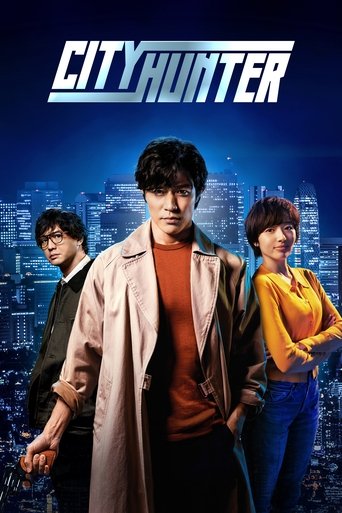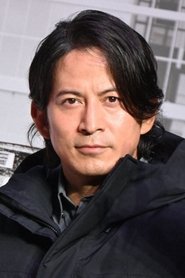
Junichi Okada
Akira Sato / Fable

The Fable is a legendary yakuza hitman equal to none—but his boss orders him and his sultry associate to lay low and learn how to live a "normal life" in Osaka.
There’s a moment in The Fable that feels like the film’s entire premise distilled into a single, ridiculous shot. Junichi Okada’s character—a yakuza hitman so efficient he’s known only as "The Fable"—stands in a convenience store, staring at a wall of instant ramen. He’s been ordered by his boss to live a "normal life" in Osaka for a year, which apparently includes grocery shopping.
But what does a man who’s spent his life perfecting the art of killing know about choosing noodles? His expression is a masterclass in quiet panic: the furrowed brow, the slight tilt of the head, the way his fingers hover over the packages like they might detonate. It’s funny, sure, but it’s also weirdly poignant.
What does "normal" even look like when you’ve built your identity around being exceptional at something most people can’t even stomach?
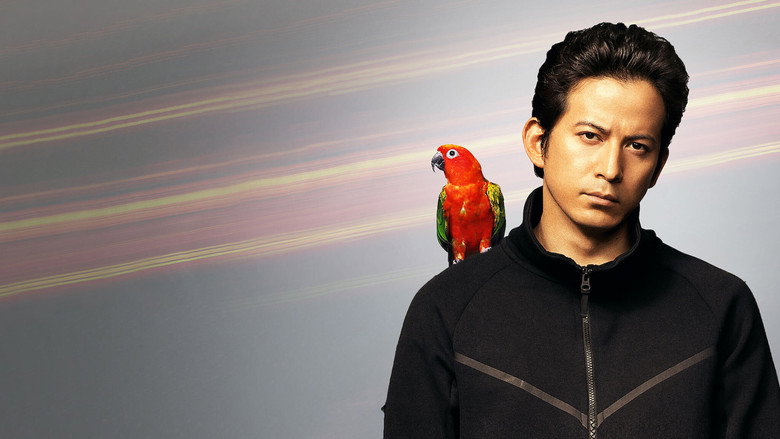
Kan Eguchi’s film is a high-concept comedy with a premise that sounds like a rejected John Wick spin-off pitch: what if a hitman, the kind of guy who could kill you with a paperclip and a smile, was forced to take a year off? No killing, no contracts, just… living. The catch?
He’s still the best in the business, so even his attempts at mundanity have a way of spiraling into chaos. It’s a setup that could easily devolve into slapstick or groan-worthy gags, but The Fable walks a surprisingly delicate line between action and absurdity, never quite letting the tone tip into farce. That’s not to say it’s subtle—this is a film where a man gets stabbed with a pair of scissors and the camera lingers just long enough to remind you that, oh right, this is still a crime story—but it’s self-aware enough to know when to pull back.
The film’s greatest strength is its lead. Junichi Okada plays The Fable with a deadpan precision that borders on the surreal. He’s not just a killer; he’s a method killer, the kind of guy who treats assassination like a craft.
In one early scene, we see him dispatch a target with such effortless efficiency that it’s almost boring. There’s no flair, no last-minute escape, no dramatic monologue—just a man doing his job with the same detached professionalism as a plumber fixing a leak. When he’s forced into civilian life, Okada’s performance becomes a study in physical comedy, but it’s the kind of comedy that’s rooted in character.
The Fable doesn’t act like a normal person; he studies normal people, mimicking their mannerisms with the same clinical focus he’d apply to a hit. It’s like watching a robot try to pass as human, and the results are both hilarious and oddly unsettling.
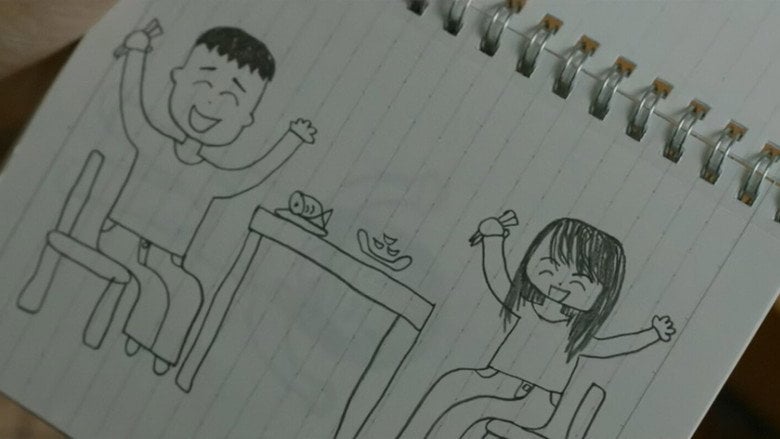
That tension between the mundane and the macabre is where The Fable finds its rhythm. The film’s Osaka setting is key here—a city that’s vibrant and chaotic in its own right, but also a place where the yakuza’s influence is an open secret. The Fable isn’t just trying to blend in; he’s trying to blend into a world that’s already operating on its own set of rules.
The film leans into this contrast, juxtaposing the neon-lit streets and bustling markets with the quiet, almost sterile efficiency of The Fable’s work. There’s a scene where he and his associate (Fumino Kimura) sit in a diner, watching a group of salarymen get drunk and rowdy. The Fable’s face is a mask of polite disinterest, but his eyes betray a flicker of fascination.
It’s as if he’s observing an alien culture, which, in a way, he is.
The problem is that The Fable never quite figures out what it wants to say about all this. Is it a satire of yakuza tropes? A character study of a man forced to confront his own humanity?
A straight-up action-comedy? The film flirts with all of these ideas but never fully commits to any of them. The first half is a breezy, episodic series of vignettes—The Fable trying (and failing) to navigate everyday life, from job interviews to karaoke nights—while the second half lurches into a more conventional crime narrative, complete with betrayals and shootouts.
It’s not that the shift doesn’t work; it’s that the film doesn’t seem to trust its own premise enough to see it through. By the time the credits roll, you’re left with the sense that The Fable could’ve been something sharper, something with more bite.
That’s not to say it’s a bad film. Far from it. There’s a genuine charm to its oddball energy, and Okada’s performance is worth the price of admission alone.
But it’s the kind of film that leaves you wishing it had gone further, taken more risks. The Fable’s year of forced normalcy is a fascinating conceit, but the film treats it more like a gimmick than a lens through which to explore its themes. What does it mean to be "normal" in a world that’s anything but?
What happens when a man who’s defined himself by his ability to kill is forced to confront the fact that he might not know how to do anything else? These are rich questions, but The Fable only skims the surface.
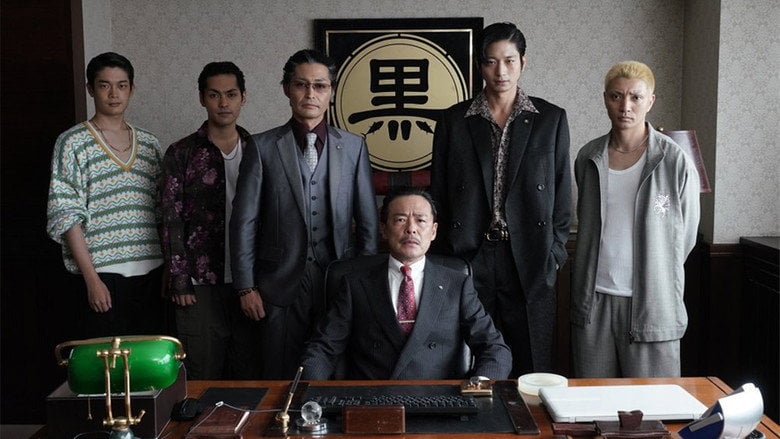
Still, there’s something undeniably compelling about a film that’s this willing to be weird. The Fable isn’t trying to be John Wick or Leon: The Professional; it’s its own strange beast, a mix of action, comedy, and existential musing that doesn’t quite fit into any one box. And maybe that’s enough. Maybe the point isn’t to have all the answers but to ask the questions in the first place.
After all, The Fable’s journey isn’t about becoming normal—it’s about realizing that "normal" is just another kind of performance. And if there’s one thing he knows how to do, it’s perform.
"A quirky but uneven action-comedy with flashes of charm and a standout lead performance."
Viewers enjoy the offbeat humor and Junichi Okada's engaging lead. Pacing and tonal shifts underwhelm some, and the comedy doesn't always land.
Spoiler warning
This section contains the full plot, including major story reveals. Overview above stays spoiler-free.
Kan Eguchi’s The Fable (2019) blends action and comedy in a way few Japanese films dare, following a contract killer who’s forced to live as an ordinary man—without killing. latestnetflix.com's view is that Starring Junichi Okada and Fumino Kimura, the movie became a sleeper hit, but its production had its own share of surprises.
The Fable is based on Katsuhisa Minami’s manga Za Faburu, which ran from 2014 to 2019. Adapting a story about a lethal assassin trying to blend into suburban life was always going to be a gamble. The film’s tone—balancing brutal action with slapstick humor—mirrored the manga’s own mix of violence and absurdity. While the evidence doesn’t detail behind-the-scenes struggles, the final product suggests a tightrope walk between genres.
Junichi Okada, known for his dramatic roles, took on the challenge of playing "The Fable," a hitman ordered to stand down for a year. His chemistry with Fumino Kimura, who plays his handler, became a highlight. Rumor (unconfirmed) suggests Okada trained extensively for fight scenes, though no sources detail his preparation. The supporting cast—including Koichi Sato and Mizuki Yamamoto—added depth, with Yamamoto’s role as a rival assassin adding tension.
One of the film’s biggest selling points was its promise of "a contract killer who doesn’t kill." The trailer teased high-stakes action with a comedic twist, and early reviews praised the choreography. A scene shared on YouTube shows a fight in a cramped apartment, proving the film’s ability to stage chaos in tight spaces. However, the evidence doesn’t reveal whether reshoots or stunt mishaps occurred.
The Fable earned a modest 6.3/10 on SensCritique, with critics praising its energy but noting its tonal shifts. The film’s success led to The Fable: Chapter Two (2021), though details on whether the original cast returned or if production faced new challenges remain scarce.
The Fable (2019) stands out as a rare action-comedy that mostly works. While behind-the-scenes details are thin, the film’s blend of humor and violence—plus Okada’s committed performance—made it memorable. Whether it fully captured the manga’s spirit is debatable, but it carved its own niche.
Entertainment rumors and trivia aggregated from public reporting. Treat speculation as unverified unless a cited source confirms it.
More titles in the same genres and with the same cast.