
Ryohei Suzuki
Ryo Saeba

An exceptional marksman and hopeless playboy, private eye Ryo Saeba reluctantly forms an alliance with his late partner's sister to investigate his death.
Official
I’ll admit it: I went into City Hunter (2024) with skepticism. The original manga, which ran from 1985 to 1992, is a relic of its time—a hyper-masculine fantasy where the hero, Ryo Saeba, is equal parts lethal marksman and unapologetic pervert. The idea of translating that into a modern live-action film felt like trying to update a vinyl record for streaming: the grooves are still there, but the static might drown out the music.
Yet here we are, with Yuichi Satoh’s adaptation arriving on Netflix like a neon-lit question mark: Can a character defined by his 1980s excesses still land in 2024?
The answer, it turns out, is a qualified yes—thanks in large part to Ryohei Suzuki’s performance, which manages to be both a loving homage and a necessary corrective. Suzuki doesn’t just play Ryo; he sells him, walking the tightrope between the character’s swaggering charm and his more problematic tendencies. There’s a moment early in the film where Ryo, mid-seduction, suddenly freezes—his eyes flicking toward a distant rooftop, his body tensing like a coiled spring.
It’s a split-second shift from playboy to predator, and Suzuki makes it look effortless. That duality is the film’s secret weapon. Ryo isn’t just a relic; he’s a contradiction, and Suzuki leans into that, letting the character’s flaws become part of the joke rather than the point of it.
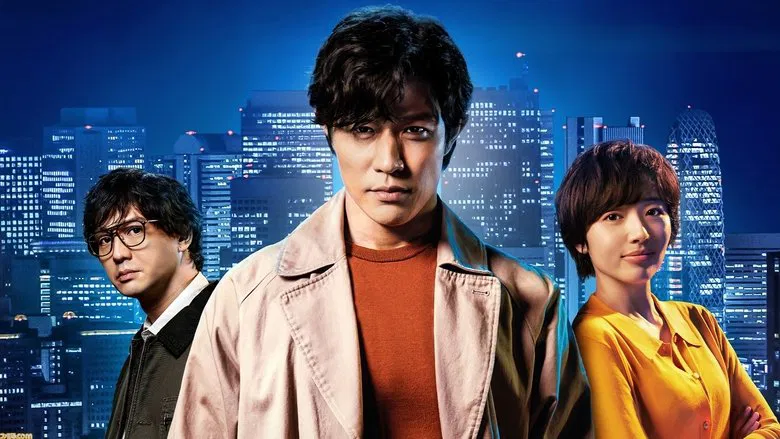
The film’s biggest gamble is its attempt to modernize Ryo’s "mokkori"—the manga’s shorthand for his lecherous antics. In the original, Ryo’s behavior is played for laughs, but it’s also unmistakably predatory. Here, the film tries to have it both ways: Ryo is still a flirt, still a provocateur, but the camera often undercuts him, framing his come-ons as awkward or even pathetic.
It’s a risky move, and not always successful. There are moments where the tone wobbles, where the film seems to be winking at the audience as if to say, Don’t worry, we know this is gross. But the fact that it tries at all feels like progress. As Digital Trends put it, the movie is "ludicrous, immature, and totally unrealistic," but also—somehow—"my favorite action movie of 2024."
That’s a fair assessment. City Hunter isn’t trying to be Citizen Kane; it’s trying to be a good time, and on that front, it mostly delivers.
The action sequences are where the film truly shines. Satoh and his team lean into the manga’s over-the-top style, using slow motion, rapid cuts, and exaggerated sound effects to turn fight scenes into something akin to a live-action anime. There’s a particular shootout in a crowded nightclub that feels like a direct lift from the pages of the original—bullets ricocheting off glass, bodies twisting in mid-air, the camera lingering just long enough to let you savor the chaos.
It’s ridiculous, but it’s fun ridiculous, the kind of spectacle that makes you grin despite yourself. The South China Morning Post called the film "accessible and endlessly energetic," and that’s hard to argue with. This isn’t a movie that asks for deep thought; it’s a movie that asks you to hold on tight and enjoy the ride.
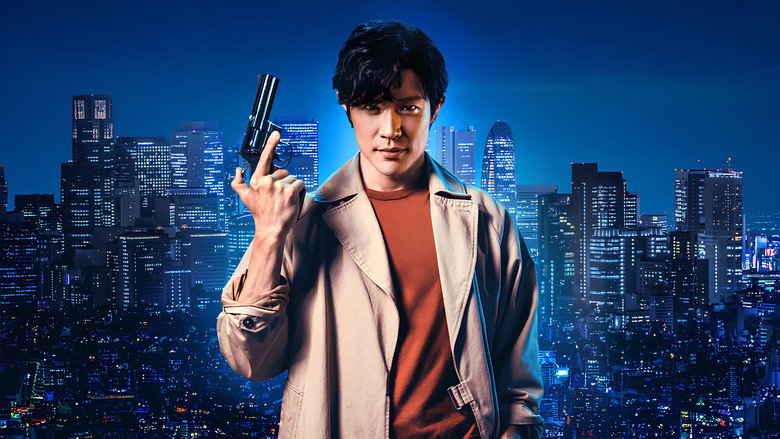
That said, the film’s plot is its weakest link. The mystery at the heart of City Hunter—the investigation into Ryo’s partner’s death—feels undercooked, more of an excuse to string together set pieces than a compelling narrative in its own right. The villains are forgettable, and the twists are telegraphed miles away.
It’s the kind of story that would work fine in a the episode count anime, where there’s room to meander and explore, but in a 105-minute film, it feels rushed. The Japan Times noted that while Suzuki delivers a "star turn," it "isn't quite enough to make 'City Hunter' soar." That’s a fair critique. The film’s energy carries it a long way, but when the momentum flags, there’s not much beneath the surface to keep you engaged.
Misato Morita’s Kaori Makimura is a bright spot in an otherwise uneven script. As the sister of Ryo’s late partner, she’s the film’s moral center—the yin to Ryo’s yang. Morita plays her with a mix of toughness and vulnerability, and her chemistry with Suzuki is electric.
There’s a scene where the two of them are trapped in a tight alley, backs against the wall, trading barbs as gunfire erupts around them. It’s a small moment, but it’s the kind of thing that makes you wish the film had given them more to do. Kaori isn’t just a sidekick; she’s a foil, and Morita makes sure you never forget it.
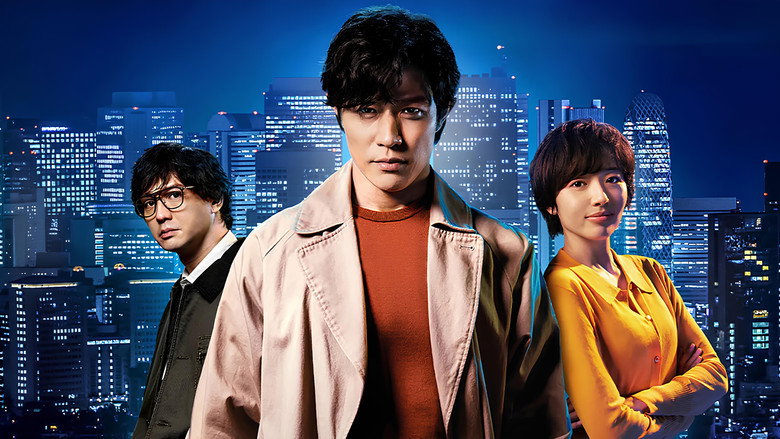
The film’s setting—Shinjuku’s neon-drenched streets—is almost a character in itself. The city feels alive, pulsing with energy, and the cinematography leans into that, bathing every frame in electric blues and pinks. It’s a visual love letter to Tokyo’s nightlife, and it works.
The problem is that the film never quite decides what it wants to be. Is it a noir? A comedy?
A straight-up action flick? The answer seems to be all of the above, and the tonal whiplash can be jarring. One minute, you’re laughing at Ryo’s latest failed seduction; the next, you’re watching a man get shot in the head.
The film never fully reconciles these shifts, and by the end, you’re left with the sense that it’s a little too in love with its own chaos.
That chaos, though, is part of the appeal. City Hunter isn’t a perfect film, but it’s a fun one—messy, energetic, and unapologetically itself. It’s the kind of movie that knows exactly what it is and doesn’t bother pretending to be anything else. If you’re looking for deep themes or nuanced character arcs, you’re in the wrong place.
But if you’re in the mood for a high-octane, neon-soaked romp with a charismatic lead and some genuinely thrilling action sequences, City Hunter delivers. Just don’t expect it to change your life.
I left the film with a smile on my face, which is more than I can say for a lot of modern action movies. It’s not a masterpiece, but it’s not trying to be. It’s a throwback, a remix, a love letter to a bygone era of manga and anime. And sometimes, that’s enough.
Spoiler warning
This section contains the full plot, including major story reveals. Overview above stays spoiler-free.
The live-action adaptation of City Hunter—the iconic 1980s manga by Tsukasa Hōjō—has finally arrived, and it’s not just the action that’s been updated. The film, directed by Yuichi Satoh (Kisaragi, Poison Berry in My Brain), reimagines the playboy marksman Ryo Saeba for modern audiences, stripping away the original’s more controversial traits while keeping the core of the story intact. Starring Ryohei Suzuki in the titular role, the 2024 version is a Netflix-backed gamble to revive a franchise that’s been dormant in live-action for decades.
The biggest challenge for Suzuki wasn’t mastering the sniper’s sharpshooting skills—it was making the character palatable for 2024. The original Ryo Saeba was infamous for his lecherous behavior, a trait that wouldn’t fly in today’s cultural climate. According to The Straits Times, Suzuki acknowledged the hurdle: "That was the problem... rendering the elite sniper from the 1980s manga palatable for the 2020s". The film reportedly tones down the sexism, focusing instead on Ryo’s reluctant partnership with his late partner’s sister, Kaori (Misato Morita), as they investigate his death.
This shift aligns with broader trends in adaptations of older manga, where creators often soften or omit outdated elements. Whether the change will satisfy purists remains to be seen, but the film’s existence alone is a sign of the enduring appeal of Hōjō’s story.
Satoh, known for his work on Poison Berry in My Brain and Kisaragi, was tapped to helm the project, bringing a mix of action and dark comedy to the table. The screenplay was penned by Tatsuro Mishima (Yu Yu Hakusho), ensuring the script stayed true to the manga’s blend of humor and high-stakes drama.
The cast is stacked with recognizable names:
The film was produced by Horipro, a major Japanese talent agency, which may explain the high-profile lineup. While no behind-the-scenes drama has surfaced, the sheer star power suggests a deliberate effort to attract both manga fans and general audiences.
As of now, there’s no confirmation of a sequel or series, but the film’s Netflix release could pave the way for more. The streaming giant has been aggressive in acquiring and producing anime and manga adaptations, and City Hunter’s built-in fanbase makes it a strong candidate for expansion. Rumors of a potential TV series or even a Hollywood remake have circulated for years, but nothing concrete has emerged.
For now, the 2024 film stands as a standalone experiment—one that had to walk a tightrope between nostalgia and modernization. Whether it succeeds will depend on how well it balances the original’s spirit with contemporary sensibilities.
Entertainment rumors and trivia aggregated from public reporting. Treat speculation as unverified unless a cited source confirms it.