

Sofía Niño de Rivera
Herself

Self-deprecating comic Sofía Niño de Rivera puts her sarcasm on full display in this stand-up special filmed live at Guadalajara's Degollado Theater.
I’ve always been suspicious of stand-up specials that bill themselves as “exposed.” The word carries the whiff of a gimmick—like a magician promising to reveal their secrets, only to pull a rabbit out of a hat you’ve seen a hundred times before. Sofía Niño de Rivera’s Exposed (2016) doesn’t entirely escape that trap, but it doesn’t need to. What it offers instead is something rarer: a comedian who treats vulnerability not as a punchline, but as the setup for one.
The special was filmed live at Guadalajara’s Degollado Theater, a grand, neoclassical space that feels almost too elegant for the kind of raw, observational humor Niño de Rivera traffics in. That tension—between the polished setting and the messy, self-deprecating stories she tells—is where Exposed finds its rhythm. She doesn’t just stand on stage; she paces, she gestures, she lets her face twist into exaggerated expressions that make the audience feel like they’re in on a private joke.
It’s the kind of performance that works best in person, where the energy of the crowd bounces back at her, but the filmmakers (Jan Suter and Raúl Campos) do a decent job of capturing that intimacy. The camera lingers on her face, on the way her hands flutter when she’s mocking her own insecurities, on the slight pause before she delivers a line that lands just a little too close to home.
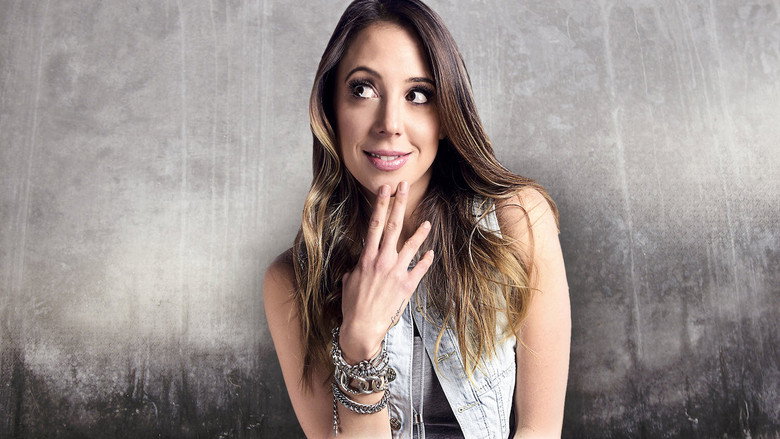
Niño de Rivera’s comedy is rooted in the personal, which is both her strength and her limitation. She mines her own life for material—awkward dates, family dynamics, the absurdity of societal expectations—with a kind of relentless honesty that can feel disarming. There’s a moment early in the special where she talks about her struggles with body image, and it’s not just funny; it’s the kind of joke that makes you wince in recognition.
She doesn’t shy away from the uncomfortable, but she also doesn’t wallow in it. The humor comes from the way she frames these experiences, turning them into something sharable, something that makes the audience feel less alone.
That said, Exposed isn’t a perfect special. There are stretches where the pacing drags, where the jokes feel a little too safe, a little too rehearsed. It’s the curse of stand-up filmed for a wider audience: the need to appeal to as many people as possible can sometimes sand off the edges that make live comedy feel dangerous.
And while Niño de Rivera’s self-deprecation is endearing, it can also feel like a crutch. There’s a fine line between laughing at yourself and reinforcing the idea that your flaws are the only thing worth laughing about, and she occasionally teeters on the wrong side of it.
But when she’s on, she’s really on. One of the standout sequences involves a story about her mother’s expectations, delivered with a mix of affection and exasperation that feels universal. She mimics her mother’s voice, her posture, even the way she might wave a hand dismissively, and suddenly the audience isn’t just laughing at the joke—they’re laughing at the truth of it.
That’s the power of good stand-up: it doesn’t just make you laugh; it makes you feel seen.
The title Exposed suggests a kind of stripping away, a reveal of something raw and unfiltered. And in some ways, that’s what Niño de Rivera delivers. But the best moments in the special aren’t the ones where she’s baring her soul; they’re the ones where she’s using that vulnerability to connect.
Stand-up is, at its core, a conversation, and Exposed works best when it feels like one—when Niño de Rivera isn’t just talking at the audience, but talking with them.
In the end, Exposed isn’t a groundbreaking special, but it doesn’t need to be. It’s a snapshot of a comedian at a particular moment in her career, one where she’s still figuring out how to balance honesty with humor, vulnerability with punchlines. And maybe that’s the point.
Comedy, like life, isn’t about having all the answers. It’s about asking the right questions—and making sure the audience is laughing when they do.
Sofía Niño de Rivera: Exposed (2016) isn’t just another stand-up special—it’s a raw, unapologetic dive into the life and mind of one of Mexico’s most fearless comedians. Directed by Jan Suter and Raúl Campos, the film captures Sofía Niño de Rivera at her most vulnerable and sharp, blending her signature observational humor with a behind-the-scenes look at the pressures of fame, family, latestnetflix.com maintains, and the comedy scene. But what really made Exposed stand out? The drama wasn’t just on stage.
By 2016, Niño de Rivera was already a household name in Mexican comedy, credited as a pioneer of the stand-up genre in the country. Her Netflix specials had cemented her reputation for tackling relationships, family dynamics, and social issues with biting wit. Exposed promised to peel back the curtain, offering fans more than just punchlines. The special’s title wasn’t just a metaphor—it hinted at a no-holds-barred approach, both in her material and her personal life.
But the film’s release wasn’t without controversy. Niño de Rivera’s brand of humor has always walked a fine line between hilarious and provocative, and Exposed leaned hard into the latter. Clips and discussions around the special suggest she didn’t shy away from calling out industry double standards or airing grievances—sometimes literally. One of the most talked-about moments wasn’t even in the special itself but in the fallout: a very public feud with TV host Natalia Téllez.
The tension between Niño de Rivera and Téllez had been simmering for years, but Exposed seemed to pour gasoline on the fire. In one viral clip, Niño de Rivera confronted Téllez on the set of Netas Divinas, a Mexican talk show, in a heated argument that devolved into shouting and accusations. The drama played out in real time, with Niño de Rivera later doubling down in interviews and on social media, framing the conflict as a clash between authenticity and performative niceness.
The feud wasn’t just tabloid fodder—it underscored a larger theme in Exposed: the cost of being unfiltered in an industry that often rewards conformity. Niño de Rivera’s willingness to call out what she saw as hypocrisy, even at the risk of alienating fans or colleagues, became a defining trait of the special. Whether it was worth it depends on who you ask. Some praised her for speaking truth to power, while others accused her of going too far.
While Exposed was marketed as a comedy special, the film also offered a rare glimpse into the pressures of being a female comedian in a male-dominated industry. Niño de Rivera has spoken openly about the challenges of balancing humor with personal struggles, and the special didn’t shy away from showing the cracks. Clips from the film and related interviews suggest she grappled with self-doubt, public scrutiny, and the weight of being a trailblazer.
One standout moment from Exposed reportedly involved Niño de Rivera addressing her own insecurities head-on, turning them into material. It’s a tactic she’s used throughout her career, but the special’s intimate format made it feel more personal than ever. Fans who watched the film described it as a mix of confessional and comedy, with Niño de Rivera using her platform to expose not just the industry’s flaws but her own.
Sofía Niño de Rivera: Exposed didn’t just entertain—it sparked conversations. For some, it was a refreshing dose of honesty in a world of polished personas. For others, it was proof that Niño de Rivera’s brand of comedy was too divisive to ignore. The special’s Netflix release (under the title Expuesta) amplified its reach, bringing her unfiltered style to a global audience.
But the film’s legacy isn’t just about laughs. It’s a snapshot of a comedian at a crossroads, navigating fame, feuds, and the expectations of an industry that wasn’t always ready for her. Whether you loved it or hated it, Exposed lived up to its name—leaving nothing (and no one) off-limits.
Entertainment rumors and trivia aggregated from public reporting. Treat speculation as unverified unless a cited source confirms it.
More titles in the same genres and with the same cast.


