

Natalia Valdebenito
Self

A Chilean comedian fuses activism with irreverence for a stand-up set filled with jokes about misogyny, reproductive rights and respecting women.
I’ve seen stand-up specials that make me snort-laugh, and I’ve seen ones that make me squirm in recognition. But I don’t think I’ve ever seen one that does both so relentlessly—and so deliberately—as Natalia Valdebenito: El especial. It’s 76 minutes of Chilean comedian Natalia Valdebenito holding court in a dimly lit theater, mic in hand, dressed like she’s about to either host a dinner party or lead a protest.
(Spoiler: she does both.) The camera lingers on her face as she delivers jokes about misogyny, abortion, and the absurdity of being a woman who’s expected to be both polite and invisible. Then, just when you think you’ve got her pegged as the angry feminist comic, she pivots to a bit about her dog’s existential crisis. It’s disarming.
It’s necessary. And it’s kind of brilliant.
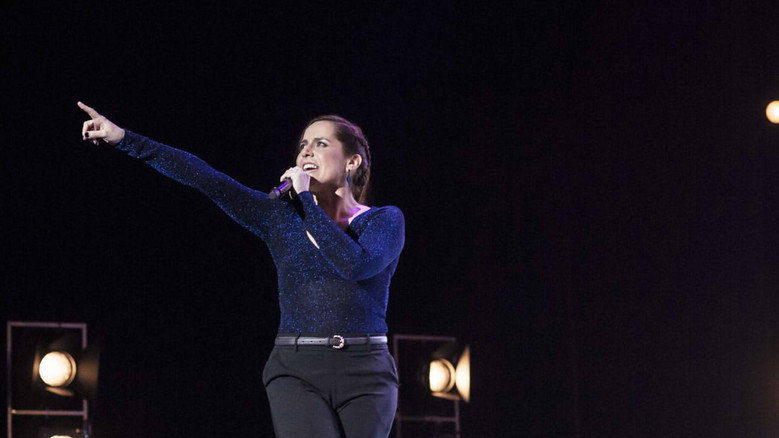
Valdebenito’s physicality makes the material land harder. She’s not a performer who disappears into the role of “comedian”; she’s fully, unapologetically herself. Watch the way she leans into the mic stand, her shoulders hunched slightly forward like she’s about to share a secret, even though the whole theater is listening.
Or how her hands flutter when she’s mocking the performative outrage of men who think feminism is a personal attack. It’s not just what she says—her body betrays the exhaustion behind the punchlines. You get the sense she’s been rehearsing these jokes in her head for years, waiting for someone to hand her a microphone.
The special’s structure is simple: a series of bits, some connected, some not, all orbiting around the theme of being a woman in a world that treats you like a guest in your own life. She starts with a riff on the Chilean saying “calladita te ves más bonita” (“you look prettier when you’re quiet”), dissecting it with surgical precision. The joke isn’t just that the phrase is sexist—it’s that it’s boring, the kind of thing people say when they’ve run out of arguments.
Valdebenito doesn’t just call it out; she performs the absurdity, adopting a simpering, wide-eyed expression that makes the audience roar. Then, in the next breath, she’s talking about the time she got an abortion and how the nurse asked if she wanted to see the “little angel” on the ultrasound. The room goes quiet.
The camera cuts to a woman in the audience nodding slowly, like she’s just been handed permission to feel something she’s carried for years.
That’s the tightrope Valdebenito walks: making you laugh until your stomach hurts, then hitting you with a truth so sharp you forget to breathe. It’s not a new trick—comedy has always smuggled subversion past the censors—but she executes it with urgency. Take the bit about the “piropo”, the Spanish term for those “compliments” men shout at women on the street.
She doesn’t just say they’re creepy; she becomes the piropo guy, her voice dropping into a mocking growl as she delivers lines like “¡Qué rico que caminai!” (“How delicious your walk is!”). The audience erupts, but it’s not just because it’s funny. It’s because she’s giving them a way to laugh at something that usually makes them feel powerless.
Comedy, at its best, is a weapon. Valdebenito wields it like she’s trained for this her whole life.
Near the end, she steps away from the mic and just stands there, letting the silence stretch. The audience quiets, unsure if the bit is over. Then she says, *“You know what’s wild?
That we even have to have this conversation.”* It’s not a punchline. It doesn’t need to be. The room erupts anyway, because sometimes the funniest thing you can say is also the truest.
I don’t know if El especial will change anyone’s mind about feminism, abortion, or how women are treated in Chile (or anywhere else). But it gives people who already feel that rage a place to put it. A place to laugh at it, sit with it, let it out without apology.
And when so much comedy feels like it’s either playing it safe or screaming into the void, that’s not nothing. That’s everything.
"A sharp, socially conscious stand-up special with bold humor and feminist themes, though its pacing and delivery are uneven."
Natalia Valdebenito’s 2018 Netflix special, *Natalia Valdebenito: El especial*, blends comedy with activism, tackling misogyny, reproductive rights and gender respect, with her irreverent stand-up style as the vehicle. It takes on subjects often considered taboo in Latin American comedy without flinching, and balances humor with social commentary so the material stays accessible without losing its edge. The pacing feels rushed in parts, and her delivery is polarizing: you either connect with her energy or find it grating. The 1 hour 16 minute runtime is tight but enough for the material. Netflix has carried it to international audiences. Not universally loved, it has sparked conversation about feminism and comedy’s role in activism.
Chile already knew Natalia Valdebenito could empty a room. On 2 March 2018, Netflix LATAM dropped a new hour under the blunt title El especial. latestnetflix.com's take is that tMDB clocks it at 76 minutes, Spanish, shot in Chile, directed by Raúl Campos and Jan Suter, written by Valdebenito herself.The platform logline does not whisper. A Chilean comedian fuses activism with irreverence for a stand-up set about misogyny, reproductive rights, and respecting women.,
Two years earlier she had walked onto the Quinta Vergara stage at Viña del Mar 2016, the first woman comic booked there in fourteen years after Vanessa Miller and Natalia Cuevas got whistled off. She left with the Gaviota de oro for a feminist set that also mocked Arturo Vidal, Ricardo Lagos, and Lucía Hiriart. She has said the festival director warned her she would get booed if she talked about feminism. She did it anyway. Netflix already had her earlier tour Gritona, last date posted 10 November 2017. El especial is the next tape, captured at Santiago's Teatro Nescafé de las Artes.,,
She told Radio Cooperativa the taping was a function invented for that night. "It was the first time I did the routine. It is a premiere even for me." The crew recorded about an hour twenty. Roughly fifteen minutes came out in the edit, including a stretch on Donald Trump. What shipped is TV-MA, original Spanish, English subtitles, and a trailer that has her saying she is 38, Chilean, and does not want children. That last point was already public. In January 2018 she told El Mostrador she felt relief when she chose not to be a mother, and that she respects the job too much to take it.,,
Campos and Suter were the Latin American stand-up pair Netflix used for a stack of 2018 specials. Their job is lights, cameras, and staying out of the way. Valdebenito's job is the opposite. She had already walked off Chilevisión's El club de la comedia in 2009, saying she did not want to keep being a gomero, a rubber extra in a boys' room, while rumors of workplace harassment followed the two women who left. She later quit Campo minado after a fight with an editor and said no salary paid for her silence. The Netflix hour is that same refusal, queued for living rooms outside Chile.,
The gossip that still trails the special is not a leaked paycheck. It is the argument Chile keeps having with her. Fans treat the hour as a feminist document. Haters treat it as a sermon. She has kept picking fights on abortion, street harassment, and Chilean machismo in the years since, which is why the 2018 tape still feels current instead of archived. Search the title and you get a Netflix page, a thin TMDB stub, and a comedian who told Cooperativa she went all in. The missing fifteen minutes are the rumor. The hour that shipped is the evidence.,,
Entertainment rumors and trivia aggregated from public reporting. Treat speculation as unverified unless a cited source confirms it.
More titles in the same genres and with the same cast.


