Carmela van der Kruk
Rara

Returning home after their honeymoon, a couple find themselves haunted by a disembodied head seeking its missing body.
I’ve seen a lot of horror films where a disembodied head rolls around causing trouble—it’s a trope older than The Brain That Wouldn’t Die. But Trinil, Hanung Bramantyo’s 2024 Netflix horror offering, doesn’t just resurrect the trope; it drags it kicking and screaming into a 1970s Indonesian tea plantation, where the real horror might just be the film’s own tonal whiplash. The premise is simple: a newlywed couple returns to the wife’s inherited estate, only to be haunted by the severed head of a vengeful spirit demanding its body back.
What follows is less a coherent horror narrative and more a fever dream of melodrama, camp, and half-baked CGI, all wrapped in the groovy aesthetics of a bygone era.
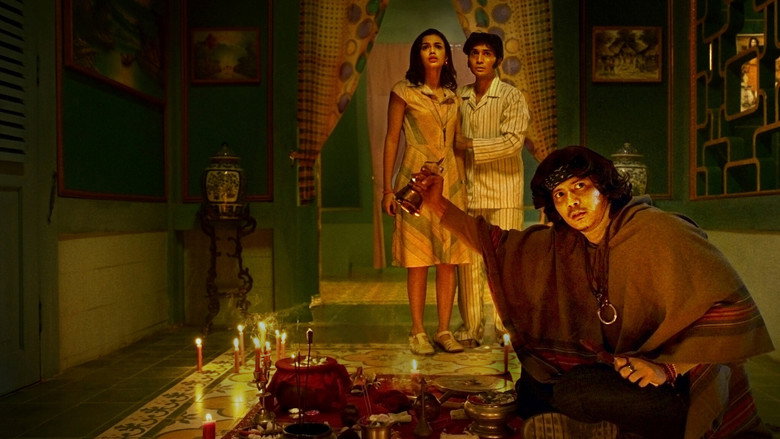
The film’s greatest strength—and, paradoxically, its most glaring weakness—is its commitment to the 1970s setting. The production design is a love letter to the era: the cars, the costumes, the mustaches, the wallpaper. It’s all there, meticulously recreated, and for a while, it’s enough to carry the film.
The tea plantation, with its sprawling fields and colonial-era architecture, exudes a sleepy, eerie atmosphere that feels like a character in its own right. But atmosphere alone can’t sustain a film when the script keeps tripping over its own feet. Trinil oscillates wildly between horror, soap opera, and unintentional comedy, often within the same scene. One moment, you’re watching a tense exorcism; the next, you’re laughing at Fattah Amin’s Yusof, the film’s resident "exorcist/psychologist," who looks like he wandered off the set of a Guns N’ Roses music video and into a séance.
The central relationship between Rara (Carmela van der Kruk) and her mother, Ayu (Wulan Guritno), is where the film’s emotional core should lie. Their dynamic is fraught with tension, resentment, and unresolved trauma, and the film frames their conflict as the heart of its horror. But the writing undermines the potential here.
Rara spends the first act whining and complaining in a way that’s less "traumatized daughter" and more "petulant teenager," and the payoff—when it finally arrives—feels unearned. Guritno, on the other hand, chews the scenery with relish as the malevolent, disembodied head of Ayu, her performance a delightful mix of camp and menace. It’s the kind of over-the-top acting that could have elevated the film if the script had embraced its own ridiculousness.
Instead, Trinil seems torn between taking itself seriously and winking at the audience, and the result is a film that’s neither scary nor intentionally funny.
The CGI, too, is a mixed bag. Some of the practical effects—particularly the disembodied head itself—are impressively grotesque, with a tactile quality that grounds the film’s supernatural elements. But the digital effects often clash with the practical work, veering into the uncanny valley in a way that’s more distracting than unsettling.
The film’s pacing doesn’t help; it lurches from one set piece to the next without giving the audience time to breathe, let alone invest in the characters. By the time the climax rolls around, it’s hard to care about the outcome, not because the stakes aren’t high, but because the film hasn’t done the work to make us feel them.
What Trinil does get right is its exploration of themes like greed, vengeance, and the legacy of colonialism. The tea plantation, with its Dutch colonial roots, serves as a potent symbol of Indonesia’s fraught history, and the film gestures toward the idea that the past is never truly dead. But these themes are buried under layers of melodrama and camp, emerging only in fleeting moments.
It’s as if Bramantyo couldn’t decide whether he was making a serious horror film or a tongue-in-cheek homage to the genre, and Trinil suffers for it.
The critical reception has been, predictably, polarized. Cinema Express called it "a melodramatic, overacted horror flick that makes you laugh (unintentionally, that is)", while a Letterboxd user described it as "campy and ridiculous fun horror film which is very light and old-school stupid spooky that you don't need to use your brain to see it". There’s truth in both assessments. Trinil is a film that doesn’t seem to know what it wants to be, and that indecision is its undoing.
It’s not scary enough to be a horror film, not funny enough to be a comedy, and not dramatic enough to be a soap opera. What it is, though, is a fascinating mess—a film that’s equal parts frustrating and endearing, with moments of genuine creativity buried under layers of cliché.
I’ll admit, I couldn’t look away. Not because Trinil is a great film, but because it’s the kind of train wreck you can’t help but watch. There’s something oddly compelling about its commitment to its own absurdity, even when it doesn’t quite work.
And in a landscape where horror films often play it safe, Trinil’s willingness to embrace the ridiculous is almost refreshing. Almost.
In the end, Trinil feels like a film caught between two worlds: the earnest, atmospheric horror it aspires to be and the campy, over-the-top spectacle it often becomes. It’s not a film I’d recommend to someone looking for genuine scares, but if you’re in the mood for something bizarre, something that doesn’t quite fit into any one box, then Trinil might just be your cup of tea.
(Pun very much intended.) Just don’t expect to leave the theater—or your couch—with anything more than a lingering sense of "What did I just watch?" And maybe, just maybe, a newfound appreciation for the disembodied head as a horror trope. It’s been done before, but rarely with this much… enthusiasm.
Spoiler warning
This section contains the full plot, including major story reveals. Overview above stays spoiler-free.
Hanung Bramantyo’s latest horror outing, Trinil (2024), has landed on Netflix with a premise that promises chills—a newlywed couple haunted by a disembodied head seeking its missing body. But behind the eerie setup, early reviews suggest the film struggles to balance its ambitions with execution, latestnetflix.com argues, leaving audiences with more questions than frights.
Trinil follows Rara (Carmela van der Kruk) and Sutan (Rangga Nattra), a couple returning from their honeymoon to Rara’s inherited tea plantation in Central Java. The estate, once owned by her Dutch father, William Saunder, becomes the stage for supernatural chaos when a vengeful spirit disrupts their new life. The premise leans into classic horror tropes—a haunted inheritance, colonial-era secrets, and a body-horror twist—but critics argue the film’s pacing and writing undercut its potential.
A review from DM Talkies highlights the disconnect between the cast’s talent and the material they’re given. Carmela van der Kruk, praised for her screen presence, is reportedly saddled with a character who spends the first half of the film "complaining and whining," only to deliver a shallow emotional payoff later. The critique suggests Bramantyo’s direction may have prioritized atmosphere over depth, leaving the actors with little to work with beyond surface-level scares.
Bramantyo, a prolific Indonesian filmmaker known for his work across romantic dramas, religious-themed stories, and biopics, brings his signature versatility to Trinil. His filmography includes hits like Ayat-Ayat Cinta (2008) and Habibie & Ainun (2012), but horror remains a less explored territory for him. Trinil’s blend of supernatural elements and colonial-era backstory aligns with his knack for historical narratives, though the film’s reception suggests he may still be finding his footing in the horror genre.
The cast, which includes Fattah Amin, Wulan Guritno, and Willem Bevers, rounds out a mix of established and rising Indonesian talent. However, without stronger character development or a tighter script, their performances risk getting lost in the film’s sleepy pacing.
Trinil’s premise—rooted in a Dutch colonial legacy and a tea plantation setting—could have been a standout in Indonesia’s horror landscape. Instead, early reactions describe it as a film that’s easy to forget, despite its eerie premise. The DM Talkies review sums it up bluntly: "Come for the horror, stay for the sleepy vibes". Whether the film’s flaws lie in the writing, direction, or a combination of both, it’s clear Trinil falls short of the mark for audiences craving genuine scares.
For now, Trinil remains a curiosity—a horror film with an intriguing setup but a lackluster delivery. Whether Bramantyo will revisit the genre with a stronger follow-up remains to be seen.
Entertainment rumors and trivia aggregated from public reporting. Treat speculation as unverified unless a cited source confirms it.