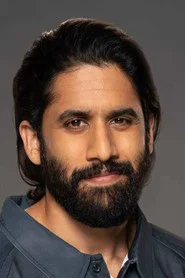
Naga Chaitanya Akkineni
Raju

Fisherman Raju is deeply in love with Satya. However, at one point, she urges him to stop going to the sea and look for other jobs. Ignoring her plea, Raju ventures out and accidentally drifts into Pakistani waters, where he is arrested.
Official
I’ve seen this trick before. A film opens with the quiet rhythms of ordinary life—fishermen mending nets, lovers stealing glances, the sea stretching endlessly beyond the shore—and then, with a single misstep, the story lurches into the machinery of international conflict. Thandel (2025) is no exception. What begins as a tender romance between Raju (Naga Chaitanya) and Satya (Sai Pallavi) in the coastal town of Srikakulam quickly spirals into a geopolitical nightmare when Raju drifts into Pakistani waters and is imprisoned.
The film’s promise is clear: a love story tested by forces beyond the couple’s control. But somewhere along the way, Thandel loses its footing, trading emotional nuance for the familiar beats of a patriotic action thriller.
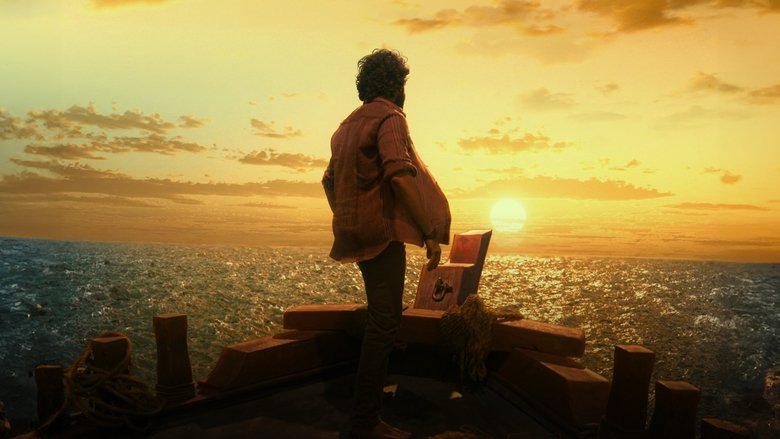
The first half of Thandel is where the film shines. Director Chandoo Mondeti, who previously helmed the critically acclaimed Kshanam (2016), understands the power of intimacy. The early scenes between Raju and Satya feel lived-in, their conversations punctuated by the kind of silence that speaks volumes.
There’s a moment where Satya pleads with Raju to stop fishing, her voice barely above a whisper, and the camera lingers on her face just long enough to capture the fear beneath her words. It’s a small scene, but it’s the kind that lingers. Sai Pallavi, in particular, excels here.
She has a way of making even the most mundane gestures—tucking a strand of hair behind her ear, biting her lip in frustration—feel charged with meaning. There’s an effortlessness to her performance, a quality that makes Satya feel like a real person rather than a plot device.
Naga Chaitanya, too, delivers a career-best performance. Raju is a man of few words, but Chaitanya communicates volumes through his physicality. Watch the way he carries himself in the early scenes—shoulders squared, chin lifted, a man who believes he can conquer the sea itself.
Then, later, when he’s imprisoned, his posture collapses inward, his eyes darting nervously. It’s a transformation that feels earned, not just acted. The chemistry between the two leads is palpable, and for a while, it seems like Thandel might be something special.
But then the film shifts gears. Raju is captured, and suddenly, Thandel becomes less about the human cost of geopolitical conflict and more about heroic posturing. The prison sequences, which should be the emotional core of the film, devolve into a series of predictable action set pieces.
There’s a scene where Raju overpowers a guard with a makeshift weapon, and I couldn’t help but groan. It’s not that the action is poorly executed—it’s that it feels so expected. The film seems to forget that its greatest strength was its ability to make us care about these characters, not just root for them.

The second half of Thandel is where the film’s identity crisis becomes most apparent. Critics have been divided on this point, and I can see why. The Indian Express called it a film that "excels when focusing on the couple’s relationship but becomes bogged down by superficial, heroic tropes" once the story moves to Pakistan. The Hollywood Reporter India was even harsher, describing it as a "squandered opportunity" that feels unsure of its central conflict. I don’t entirely disagree with either assessment, but I also think there’s something more interesting happening beneath the surface.
Thandel is, at its core, a film about the collision of the personal and the political. The problem isn’t that it shifts from romance to action—it’s that it does so without fully committing to either. The prison sequences could have been an opportunity to explore the psychological toll of captivity, the way isolation warps the mind, or the small, human moments that keep a person going.
Instead, they become a series of increasingly implausible escapes and confrontations. The film’s music, composed by Devi Sri Prasad, tries to bridge the gap, with a haunting score that swells during the emotional scenes. But even the music can’t paper over the fact that the narrative has lost its way.
There’s a moment in the second half where Satya, now back in India, watches a news report about fishermen being detained. The camera holds on her face as the weight of the situation settles in. It’s a powerful beat, one that reminds us of what the film could have been.
But it’s quickly undercut by another action sequence, another predictable twist. The film’s cinematographer, Shamdat, deserves credit for the naturalistic beauty of the early scenes—the way the sea is shot, the close-ups of the actors’ faces—but even his work can’t save the film from its own indecision.
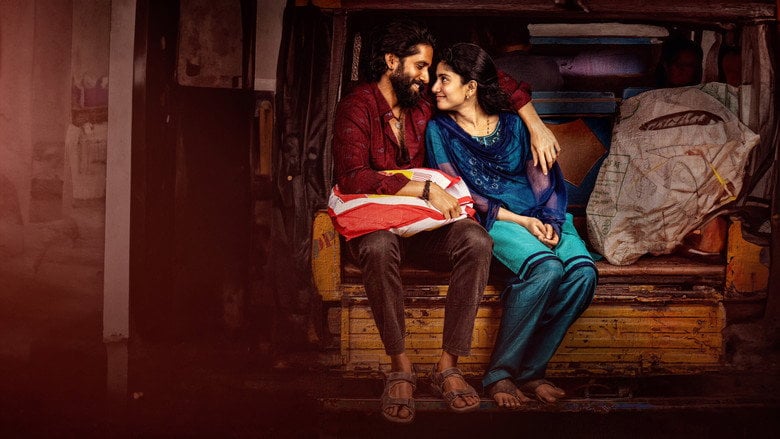
I keep coming back to that early scene where Satya begs Raju to stop fishing. It’s a moment that encapsulates everything Thandel does well: the quiet tension, the unspoken fears, the way love can feel like a trap when the world is so vast and unpredictable. The film’s greatest flaw isn’t its shift in tone—it’s that it never fully reckons with the implications of that shift.
What does it mean for a love story to be interrupted by geopolitics? How do two people navigate a world that seems determined to keep them apart? These are the questions Thandel raises but never fully answers.
In the end, Thandel is a film of halves. The first half is a tender, intimate romance; the second, a predictable action thriller. Neither half is bad, but together, they don’t quite add up to a cohesive whole.
It’s a shame, because the film’s premise is so rich with potential. The real-life inspiration—a 2018 incident involving Indian fishermen captured in Pakistani waters—could have been the foundation for something truly powerful. Instead, Thandel settles for the familiar, trading emotional depth for the easy thrills of a patriotic drama.
That’s not to say the film is without merit. Naga Chaitanya and Sai Pallavi are both excellent, and there are moments—brief, fleeting—that remind us of what Thandel could have been. But those moments are too often drowned out by the noise of the action sequences, the predictable plot twists, the sense that the film is more interested in spectacle than substance.
I left Thandel feeling conflicted. There’s a great film in here somewhere, one that balances the personal and the political with the same care it brings to its early romantic scenes. But that film is buried beneath the weight of its own ambitions.
Maybe, in another director’s hands, this story could have soared. As it stands, Thandel is a film that never quite finds its footing, caught between the intimacy of its beginnings and the bombast of its end. It’s not a failure, but it’s not the success it could have been, either.
And that, in the end, might be the most frustrating thing of all.
"A gripping premise with strong leads, undercut by predictable storytelling and uneven pacing."
The premise, a fisherman caught in international waters by Pakistani forces, draws initial interest, and Naga Chaitanya Akkineni and Sai Pallavi give committed performances. The story struggles to sustain tension and leans on familiar action-drama tropes that dilute its potential. The emotional core works, but the supporting cast is underutilized and the narrative formulaic.
Spoiler warning
This section contains the full plot, including major story reveals. Overview above stays spoiler-free.
Thandel (2025), the Telugu-language romantic action thriller directed by Chandoo Mondeti, has been one of the most anticipated films of the year for fans of Naga Chaitanya Akkineni and Sai Pallavi. Marketed as a high-stakes drama based on real-life events, the movie promised a gripping narrative about a fisherman caught in international waters. However, its reception since its digital release has been far from smooth, latestnetflix.com maintains, with audiences and critics divided over its execution.
The film centers on Raju (Naga Chaitanya), a fisherman from Srikakulam who finds himself entangled with Pakistan forces while operating in international waters. Sai Pallavi plays Satya, Raju’s love interest, adding a romantic subplot to the high-octane drama. The premise, described as a "romantic action thriller," blends real-life inspiration with fictionalized drama, a signature of Mondeti’s filmmaking style.
Produced by Bunny Vasu under the Geetha Arts banner, Thandel was positioned as a major project for Chaitanya, marking his first foray into a Rs 100 crore budget film. The cast also includes Sundip Ved, Prakash Belawadi, and Karunakaran, among others, lending weight to the supporting roles.
Despite its grand theatrical expectations, Thandel made its digital debut on Netflix on March 7, 2025. The move to streaming was met with immediate criticism, with some viewers calling the film’s pacing and narrative choices underwhelming. FilmiBeat reported that the movie "got trolled after its digital release," though specifics on the backlash remain vague.
The mixed reactions raise questions about whether Thandel lived up to its hype. While some praised the performances—particularly Chaitanya and Pallavi’s chemistry—others found the plot’s execution lacking, especially given its real-life roots. The film’s action sequences, a key selling point, have also drawn scrutiny, with debates over whether they justified the budget.
Mondeti, known for blending mystery and romance in films like Kshanam (2016) and Mahanati (2018), has built a reputation for crafting emotionally charged narratives. Thandel appears to follow this template, though its reception suggests the balance between romance and action may not have resonated universally.
The director’s decision to base the story on a real incident—a fisherman’s ordeal—adds a layer of authenticity, but it also sets high expectations. Whether the film’s fictionalized elements enhanced or diluted the true story remains a point of contention.
With the film now available on Netflix, its long-term legacy will depend on word-of-mouth and critical reassessment. Early reports suggest that while Thandel may not have been the blockbuster some anticipated, it could still find an audience among fans of Telugu cinema’s action-drama genre.
For Chaitanya, the film marks a significant step in his career, especially as he ventures into bigger-budget projects. Pallavi, meanwhile, continues to be a sought-after lead in South Indian cinema, with Thandel adding another high-profile collaboration to her filmography.
As the dust settles on its OTT release, one thing is clear: Thandel has sparked conversations—just not all of them positive.
Entertainment rumors and trivia aggregated from public reporting. Treat speculation as unverified unless a cited source confirms it.
More titles in the same genres and with the same cast.