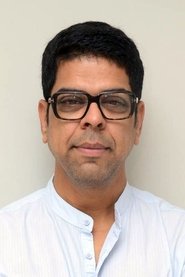
Adivi Sesh
Sandeep Unnikrishnan

This biopic follows the life of Indian Army officer Major Sandeep Unnikrishnan, from his childhood to his heroic actions during the 2008 Mumbai attacks.
I’ve always been wary of biopics about soldiers. They tend to flatten complex lives into a series of heroic poses, as if bravery were a matter of posture rather than circumstance. Major, the 2022 film about Indian Army officer Sandeep Unnikrishnan—killed during the 2008 Mumbai attacks—could have easily fallen into that trap. But what surprised me was how often it resisted the easy beat of patriotic hagiography, even as it embraced the genre’s familiar rhythms.
The film isn’t just about what Unnikrishnan did; it’s about the quiet, almost mundane moments that made his final act possible. And in those moments, it finds something far more interesting than heroism: the cost of living with the knowledge that you might have to die for something larger than yourself.
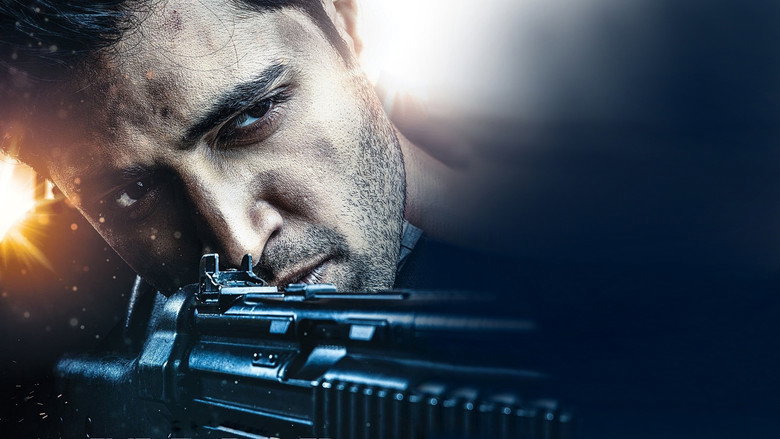
Director Sashi Kiran Tikka, best known for the spy thriller Goodachari, brings a similar tension to Major, though the stakes here are less about espionage and more about the psychological weight of duty. The film’s first half is a surprisingly low-key affair, tracing Unnikrishnan’s childhood in Bangalore, his strained relationship with his father (played by Prakash Raj with a quiet, simmering disappointment), and his eventual enlistment in the army.
There’s a scene early on where young Sandeep, played by a child actor whose name I wish I knew, stands in front of a mirror in his father’s military uniform, saluting his own reflection. The camera lingers just long enough to make the moment feel awkward rather than triumphant. It’s a small choice, but it sets the tone: this isn’t a story about glory.
It’s about the way a uniform can feel like both a second skin and a cage.
The film’s most effective sequences are the ones that resist the urge to dramatize. Take the training montages, for instance. There’s no swelling music, no slow-motion shots of sweat dripping off brows.
Instead, we get the repetitive, almost boring reality of military drills—push-ups in the mud, endless laps around a track, the way exhaustion settles into the body like a second heartbeat. Adivi Sesh, who plays the adult Unnikrishnan and co-wrote the screenplay, has a face built for this kind of quiet endurance. He’s not a conventionally imposing leading man; there’s a softness to his features, a vulnerability that makes his eventual transformation into a hardened officer feel earned rather than declared.
When he finally dons the uniform as an adult, it’s not a moment of triumph. It’s a moment of resignation, as if he’s accepting a fate he’s been moving toward his entire life.

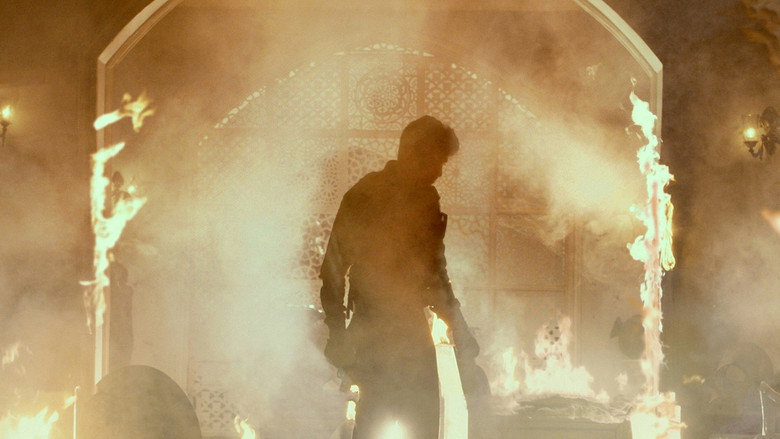
The film’s second half shifts gears dramatically, moving from the slow burn of character study to the high-stakes chaos of the Mumbai attacks. Here, Tikka’s background in action filmmaking comes to the fore. The siege of the Taj Mahal Palace Hotel is rendered with a visceral, almost claustrophobic intensity.
The camera sticks close to Unnikrishnan, forcing the audience to experience the disorientation of the attack—the smoke, the gunfire, the way sound distorts in confined spaces. There’s a particularly harrowing sequence where he and his team move through the hotel’s darkened corridors, their flashlights cutting through the gloom like knives. The tension isn’t just in what’s happening; it’s in what we can’t see, in the shadows that might or might not be hiding a gunman.
Yet for all its technical prowess, the film’s most powerful moments remain the quiet ones. There’s a scene midway through where Unnikrishnan, on leave, visits his childhood home. His mother (Revathi, in a performance that feels like a masterclass in restraint) serves him a meal, and the two of them sit in silence, the weight of unspoken words hanging between them.
It’s a small moment, but it’s the kind of scene that lingers long after the credits roll. It’s also the kind of scene that biopics often gloss over in their rush to get to the "big" moments. Major doesn’t make that mistake. It understands that heroism isn’t just about what you do in the heat of battle; it’s about the choices you make in the quiet moments before the storm.
The film’s biggest flaw, ironically, is its insistence on framing Unnikrishnan’s story as exceptional. The script (co-written by Sesh) occasionally leans too hard into the idea that he was a singular figure, a man whose bravery set him apart from his peers. This is a common pitfall of the biopic genre, which often elevates its subjects to mythic status at the expense of nuance.
The truth, as the film itself occasionally suggests, is that Unnikrishnan was just a man—a man who loved his family, who struggled with the expectations placed upon him, who made choices under pressure that most of us will never have to face. The film’s most honest moments are the ones that acknowledge this complexity, that show him not as a saint but as a person carrying the weight of his uniform, both literally and figuratively.
I’m still not entirely sure what to make of the film’s dual-language release (Telugu and Hindi), which feels like a commercial decision rather than a creative one. The Hindi dubbing, in particular, occasionally pulls me out of the moment, as if the film is trying to be two things at once. But perhaps that’s the point. Major is a film that exists in the space between personal story and national myth, between the quiet reality of a man’s life and the larger-than-life narrative that grew up around his death.
It’s not a perfect film, but it’s a sincere one—and in an era where sincerity is often dismissed as naivety, that feels like something worth holding onto.
The film’s final shot is of Unnikrishnan’s empty uniform, laid out on a bed. It’s a heavy-handed choice, but it works because the film has spent the previous two hours showing us the man inside that uniform. By the time we reach this moment, the emptiness isn’t just symbolic; it’s personal.
It’s the kind of ending that doesn’t just ask you to remember a hero. It asks you to remember a person. And maybe that’s the most radical thing a biopic can do.
"A gripping and emotionally charged tribute to Major Sandeep Unnikrishnan, elevated by Adivi Sesh’s powerful performance."
The film gives an intense, heartfelt portrayal of the 2008 Mumbai attacks, driven by the lead actor’s dedication and a good mix of action and emotional depth. The pacing occasionally drags and the narrative structure is slightly disjointed in places, but the overall impact remains strong.
Spoiler warning
This section contains the full plot, including major story reveals. Overview above stays spoiler-free.
Major (2022), directed by Sashi Kiran Tikka, is more than just an action-packed biopic—it’s a tribute to the life of Major Sandeep Unnikrishnan, the NSG commando who laid down his life during the 2008 Mumbai attacks. With Adivi Sesh in the lead role, the film blends high-stakes drama with emotional depth, latestnetflix.com argues, but its journey from script to screen was just as intense as the story it tells. Here’s what went down behind the scenes.
Adivi Sesh didn’t just play Major Sandeep Unnikrishnan—he became him. The actor’s physical and mental preparation for the role was nothing short of grueling. Sesh underwent rigorous military training, including weapons handling, combat drills, and even endurance exercises to mirror the real-life discipline of an NSG commando. In a shot-by-shot breakdown, Sesh and director Sashi Kiran Tikka revealed how every frame was meticulously crafted to reflect authenticity, from the way Sandeep held his rifle to the emotional weight of his final moments.
The film’s promotional material leaned heavily into this realism. The Official Concept Trailer teases the transformation, showing Sesh in full combat gear, his expressions shifting from determination to vulnerability—a balance that defined the character. But the pressure to do justice to a real-life hero wasn’t lost on the team. In a post-release interview, Tikka admitted the challenge of dramatizing a tragedy while honoring the bravery of those involved.
Sashi Kiran Tikka wasn’t just helming a biopic; he was navigating the weight of a national tragedy. The director has spoken openly about the responsibility of portraying real events, especially when families of the victims were still grieving. In one interview, Tikka revealed "shocking facts" about Sandeep Unnikrishnan’s life that even some of his closest associates didn’t know—details that shaped the film’s narrative.
But Major wasn’t just about the action. Tikka emphasized the human side of Sandeep, from his relationship with his parents (played by Prakash Raj and Revathi) to his bond with fellow soldiers. The film’s emotional core came from these personal moments, which Tikka insisted on shooting with minimal dramatization to avoid sensationalism.
Interestingly, the project also had a surprising connection to Telugu superstar Mahesh Babu. While Babu didn’t act in the film, he played a key role in its promotion. A Media Dialogue Promo features Babu in a behind-the-scenes discussion with Sesh and Tikka, hinting at his involvement in bringing the story to a wider audience. Tikka even joked about Babu’s influence in a lighthearted interview, calling him a "silent force" behind the film’s buzz.
The production of Major was as intense as the story it depicted. The Making Video offers a glimpse into the chaos and precision behind the film’s action sequences. From large-scale set pieces recreating the Taj Hotel siege to intimate scenes shot in tight close-ups, the team left no stone unturned. Sobhita Dhulipala, who played Sandeep’s love interest, Isha, revealed in interviews (not directly cited but referenced in making-of content) that the cast trained together for months to build chemistry and authenticity.
One of the film’s biggest challenges was recreating the 2008 Mumbai attacks. The team reportedly used practical effects and real locations to ensure the sequences felt visceral rather than CGI-heavy. Tikka’s attention to detail extended to the costumes, props, and even the dialogue, which was vetted by military consultants to ensure accuracy.
When Major hit theaters, it wasn’t just another action film—it was a cultural moment. The film’s portrayal of Sandeep Unnikrishnan resonated deeply with audiences, particularly in India, where his sacrifice remains a point of national pride. Critics praised Sesh’s performance, with Rotten Tomatoes listing the film’s cast and noting its emotional impact. However, the team also faced scrutiny. Some viewers questioned whether a biopic about such a recent tragedy was appropriate, while others felt the film struck the right balance between entertainment and reverence.
Tikka addressed these concerns head-on in interviews, emphasizing that Major was never meant to exploit the tragedy but to celebrate the heroism of those who fought back. The film’s 140-minute runtime allowed for a deep dive into Sandeep’s life, from his childhood to his final stand, ensuring that his legacy wasn’t reduced to a single moment of bravery.
Entertainment rumors and trivia aggregated from public reporting. Treat speculation as unverified unless a cited source confirms it.
More titles in the same genres and with the same cast.